
Few household disasters are more stressful than walking into the laundry room to find a flooded floor and a pile of sopping-wet towels. Most washing machines do not fail overnight; they drop clear mechanical clues weeks or months before a major breakdown. By spotting these seven warning signs early, you can handle simple DIY adjustments right away and decide whether your machine is worth repairing or replacing.
1. Loud Jet-Engine Roaring During the Spin Cycle
A healthy washer hums and whooshes during high-speed spin cycles, but a loud, metallic roaring or rumbling sound that gets louder every week points to failing tub bearings. Once water seeps past a worn inner tub seal, it washes away bearing grease and rusts the steel balls inside.
- Unplug the washing machine from the wall outlet and wait for the door lock to release completely.
- Open the washer door or lid and make sure the wash basket is completely empty.
- Place both hands on the top edge of the stainless steel inner drum and push it firmly up and down toward the outer cabinet.
- Spin the empty drum briskly by hand and listen closely near the back of the basket.
- If you feel more than a quarter-inch of clunky vertical play or hear a dry, gravelly grinding noise as the drum turns, the main tub bearings are worn out.
2. Puddles of Water Underneath the Cabinet
Finding water on the laundry room floor is a major red flag, though the source can range from a loose $15 rubber hose to a cracked outer wash tub. Catching a drip early protects your subfloor and helps you figure out if the machine is nearing the end of its life.
- Unplug the washer immediately so you are never standing near electrified components in a wet area, then shut off both the hot and cold water supply valves.
- Pull the machine gently away from the wall and inspect the hot and cold fill hoses at the back for rusted fittings, blisters, or cracked rubber washers.
- On a front-load washer, run your fingers along the bottom fold of the rubber door boot seal to check for tears or punctured holes from stray clothing zippers.
- Shine a flashlight underneath the cabinet frame to look for white crusty detergent tracks or rusty water trails dripping from the center of the tub.
- Tighten loose hose connections by a quarter-turn with pliers, or stop using the washer if water is dripping directly from the center motor shaft.
3. Clothes Come Out Sopping Wet After Spinning
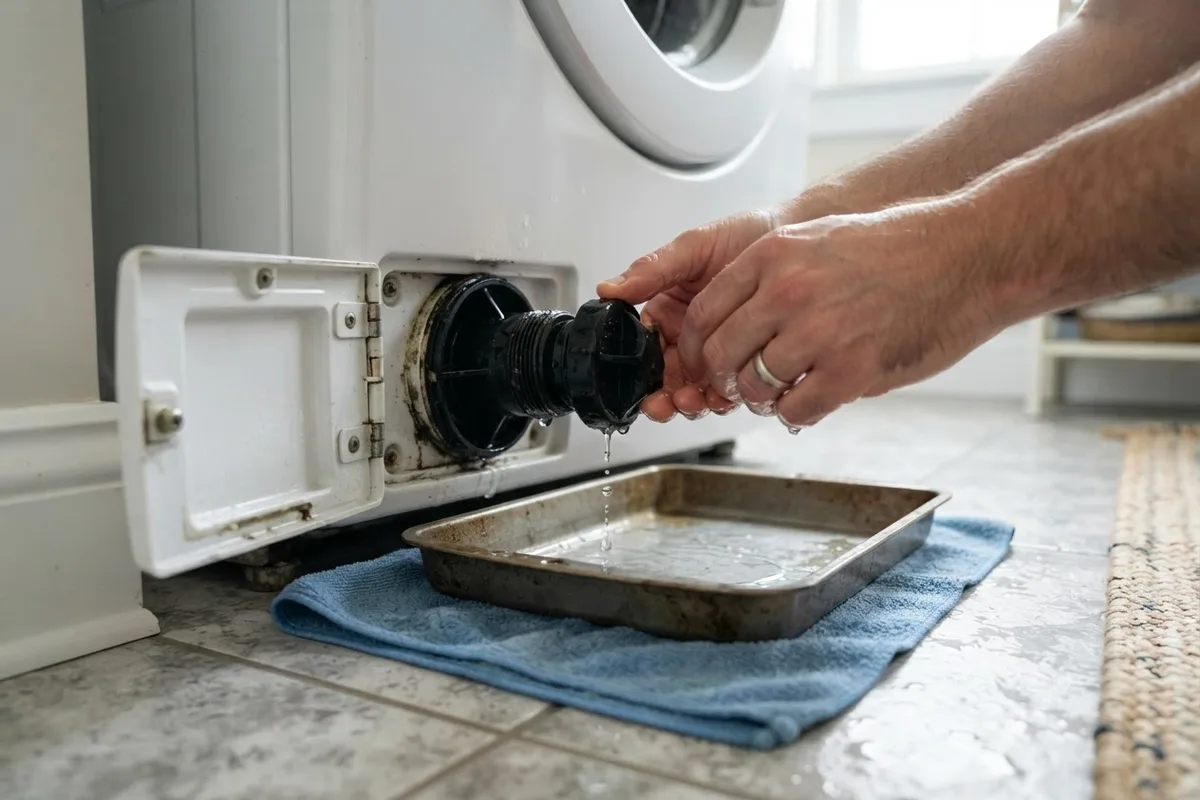
When a wash load finishes and your jeans are still dripping heavy water, the washer is either failing to pump water out or failing to reach high spin speeds. Before assuming the motor is dead, rule out a clogged drain trap or an unbalanced load. For a deeper walkthrough on drainage clogs, read our guide on why your washing machine is not draining.
- Unplug the washing machine and lay a thick bath towel and a shallow baking dish under the small lower access door on the front of the cabinet.
- Open the access panel, unclip the small drain tube if present, and slowly unscrew the round drain pump filter counterclockwise to let trapped water flow into your dish.
- Clear out any coins, hairpins, lint clumps, or baby socks blocking the filter screen, then rinse it clean and thread it snugly back into place.
- On a top-load washer, plug the machine back in, start a spin cycle, and listen when you close the lid—if you do not hear a sharp click, a worn lid switch may be blocking the spin.
- Test the machine with a medium load of four or five bath towels so the weight distributes evenly around the drum.
4. Violent Shaking and Walking Across the Floor
A washer that bangs against the laundry room walls during every spin cycle is suffering from either uneven leveling legs or worn-out internal suspension parts. Left unchecked, violent vibration can crack internal plastic fittings and damage your flooring.
- Unplug the washer and place a carpenter's bubble level across the top metal cabinet from front to back and side to side.
- Push down diagonally on opposite top corners of the washer; if the cabinet rocks at all, loosen the locking nut on the front leveling feet and twist the feet until all four corners sit solidly on the floor.
- Open the washer door and push down firmly on the bottom of the inner wash drum, then let go suddenly.
- Watch how the drum rebounds: a healthy suspension settles back into place immediately, while worn shock absorbers or suspension rods let the drum bounce up and down several times like a pogo stick.
- Ensure all four rubber foot pads are clean and dry so the cabinet grips the laundry floor during high-speed extraction.
5. Burning Rubber or Hot Electrical Odors
Your nose will often catch a failing motor or slipping drive belt before the machine stops turning altogether. Unlike sour mildew odors caused by leftover soap, a sharp smell of hot rubber or melting plastic signals an active mechanical or electrical fault.
- Unplug the washing machine immediately if you smell burning rubber, ozone, or melting plastic, and do not restart the cycle.
- Feel the wall plug and outlet faceplate with the back of your hand; if the plug is hot or discolored, stop using that outlet until an electrician inspects it.
- Let the appliance cool down for 30 minutes with the laundry room door or window open for ventilation.
- Check the size of the load inside the drum—stuffing heavy comforters or rugs past the rim can stall the drum and cause a rubber drive belt to smoke against the motor pulley.
- Remove half the heavy laundry and inspect the floor underneath the back of the washer for black rubber dust shaved off a fraying belt.
6. The Drum Will Not Agitate or Turn at All
When the washer fills with water and hums quietly, yet the wash basket sits completely still, the mechanical link between the motor and the drum has broken. Depending on the design of your machine, this could be a snapped belt, a broken motor coupler, or a bad shift actuator.
- Unplug the washer and remove the wet clothes from the drum so the basket isn't weighed down.
- Spin the inner drum by hand; if it spins with zero resistance and feels unusually light, the drive belt on the back or bottom of the machine has likely slipped off or snapped.
- On older direct-drive top-load washers, look under the center of the cabinet for small black rubber shavings on the floor, which point to a broken $20 plastic-and-rubber motor coupling.
- On newer top-loaders with a central wash plate, wiggle the plastic agitator or impeller by hand to see if the center bolt has come loose or the plastic splines have stripped smooth.
- Leave the machine unplugged if the drum is completely seized and cannot be turned by hand.
7. Blinking Error Codes and Dead Control Panels
Modern washers rely on a central electronic control board and dozens of sensors to manage water levels, door locks, and motor speeds. If your machine freezes mid-cycle, flashes cryptic error codes, or stops responding to button presses, the electronics may be failing.
- Write down the exact alphanumeric error code flashing on the digital display (such as F21, UE, or dE) before turning the machine off.
- Perform a hard power reset by unplugging the washing machine from the wall outlet (or flipping the laundry room circuit breaker off) for a full 5 minutes.
- While the unit is unplugged, inspect the plastic door strike and latch assembly for lint buildup or bent pieces that prevent the door lock switch from engaging.
- Plug the washer back directly into the wall outlet—never use an extension cord or power strip—and test a quick rinse-and-spin cycle.
- If the control panel remains unresponsive or flashes a main board communication error after a reset, compare the cost of a replacement control board against the age of the machine.
Repair vs. Replace: Washing Machine Quick Reference
| Warning Sign | Most Likely Failed Part | Typical Pro Repair Range* | Best Move (Under 7 Years Old) | Best Move (Over 8–10 Years Old) |
|---|---|---|---|---|
| Clogged drain or no spin | Drain pump or lid switch | $130 – $280 | Repair | Repair if cabinet is rust-free |
| Bouncing drum | Suspension rods or shocks | $160 – $300 | Repair | Borderline—check overall wear |
| Dead buttons or error codes | Main electronic control board | $250 – $450 | Repair | Replace washer |
| Jet-engine roar in spin | Main tub seal and bearings | $350 – $600+ | Borderline | Replace washer |
| Cracked outer tub leak | Outer wash tub assembly | $400 – $650+ | Replace if out of coverage | Replace washer |
Prices are broad US averages and vary by region, brand, and model.
When to Call a Pro
Many washing machine headaches—like a clogged lower pump trap, a kinked fill hose, or unlevel legs—cost nothing to fix on a Saturday morning. Even mid-level repairs like replacing a drain pump, door boot seal, or lid switch are well worth doing if your washer is under seven or eight years old and otherwise in good shape. However, if your machine is over a decade old and needs a main control board, a drive motor, or a full tub bearing rebuild that exceeds half the price of a new unit, putting that money toward a replacement is usually the smarter financial call. Check out our complete appliance lifespan guide to decide whether to repair or replace for more budgeting rules of thumb.
Whenever a repair involves disassembling the main cabinet, testing high-voltage motor circuits, or diagnosing a mystery leak, leave the heavy lifting to an experienced technician. True Appliance Repair can connect you with a local pro for dependable washer and dryer repair so you can get an honest diagnosis before buying a new machine.
FAQ
How many years does an average washing machine last?
Most modern residential washing machines last between 8 and 12 years with regular household use. Traditional top-load washers with fewer electronic sensors often reach 10 to 13 years, while high-efficiency front-load washers average 8 to 11 years depending on how well the door seal, drain filter, and suspension are maintained.
What is the 50% rule for washing machine repairs?
The 50% rule is a straightforward budgeting guideline: if your washing machine is more than halfway through its expected 10-year lifespan AND the estimated repair cost is more than 50% of the price of a comparable new washer, it is more cost-effective to replace the appliance than to fix it.
Is it worth fixing a washing machine with bad tub bearings?
In most cases, replacing bad tub bearings on a residential washer is not cost-effective unless you are comfortable doing a full day of heavy mechanical disassembly yourself. Because a technician has to dismantle the entire washer cabinet and split the outer tub in half to press in new bearings and seals, labor costs often approach the price of a brand-new machine.
How can I make my next washing machine last longer?
You can add years to your washer's life by never overloading the drum with heavy blankets, measuring no more than two tablespoons of high-efficiency detergent per load, and cleaning the lower drain pump filter every two to three months. Keeping the machine perfectly level on the floor also prevents premature wear on the tub bearings and suspension rods.