
Opening your washer to find a heavy pile of soaking wet clothes sitting in murky, standing water brings laundry day to a sudden halt. Fortunately, a washing machine not draining is rarely a sign of total appliance failure—most of the time, a stray sock, a kinked hose, or a clogged filter is to blame. Follow these six safe, practical checks to drain the tub and get your washer flowing again.
Safety First: Before inspecting any hoses, filters, or internal parts, always unplug the washing machine from the wall outlet or switch off its circuit breaker. Turn off both the hot and cold water supply valves behind the machine. Keep old towels and a shallow baking pan or wet-dry vacuum nearby, as trapped water will spill out once you clear the blockage.
1. Straighten a Kinked or Clogged Drain Hose
The corrugated plastic hose running from the back of your washer to the wall standpipe or utility sink carries every gallon of wastewater out of the tub. If you recently pushed the machine back against the wall, that hose can easily pinch shut.
- Unplug the washer and carefully pull it a few inches forward so you can see behind the cabinet.
- Inspect the entire length of the drain hose for sharp bends, flattened spots, or heavy lint buildup.
- Check how far the hose sits inside the wall standpipe; pushing it in more than 6 to 8 inches can create an airtight siphon that traps water inside the drum.
- Place a bucket on the floor, unhook the hose from the standpipe, and lower it into the bucket. If water rushes out, the standpipe or household drain is backed up. If nothing comes out, disconnect the hose from the back of the washer (have towels ready) and flush it outside with a garden hose.
2. Clean the Front-Load Coin Trap and Drain Filter
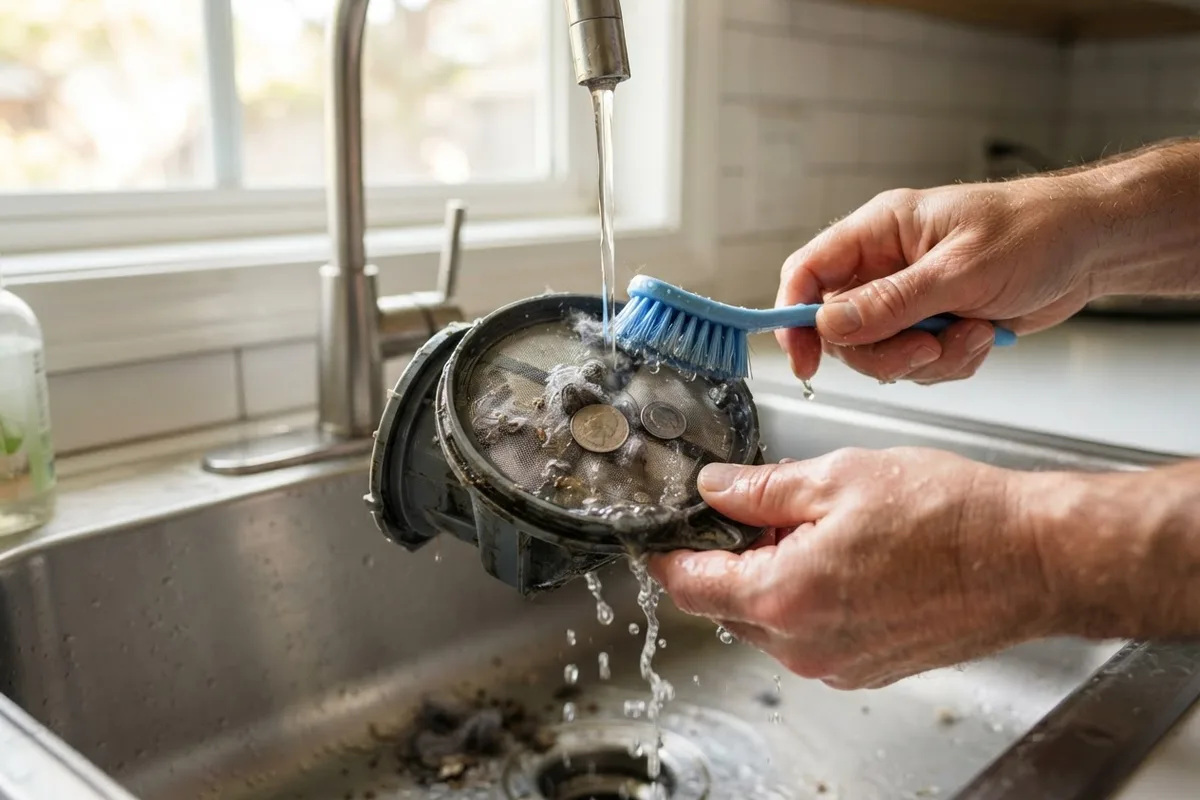
Most front-load washers—and select high-efficiency top-loaders—feature an accessible drain pump filter designed to catch coins, hairpins, buttons, and stray baby socks before they ruin the pump impeller. When this trap fills with debris, water cannot exit the drum.
- Locate the small rectangular access door near the bottom front corner of your washing machine and pop it open.
- Lay a folded bath towel and a shallow baking pan directly underneath the housing.
- If your model includes a thin rubber emergency drain tube next to the main cap, pull the plug and drain the standing water into your pan first, recapping it whenever the pan fills.
- Slowly twist the main filter cap counterclockwise. Expect another cup or two of smelly water to spill out.
- Pull the filter screen out, remove any tangled lint, coins, or small garments, and scrub the mesh under warm running water with an old toothbrush and dish soap.
- Shine a flashlight into the opening and reach in carefully (watch for sharp objects) to make sure the plastic pump impeller blades spin freely before threading the cap tightly back in place.
3. Clear Suds Locks From Excess Detergent
Using too much detergent—or pouring standard soap into a high-efficiency (HE) machine—creates thick foam that cushions the water and prevents the drain pump from creating suction. Modern washers detect this "suds lock" and pause the drain cycle automatically to protect the motor.
- Look inside the drum or through the glass door for thick pockets of soapy foam sitting on top of the standing water.
- Dissolve half a cup of distilled white vinegar or a tablespoon of vegetable oil mixed into a cup of hot water and pour it directly into the drum to break the surface tension of the bubbles.
- Let the machine sit unplugged for 30 minutes so the foam collapses.
- Plug the washer back in and run a standalone "Drain & Spin" cycle without adding any soap.
- Once the clothes are out, run an empty hot rinse cycle to flush leftover detergent residue from the outer tub and drain lines. Going forward, measure no more than two tablespoons of HE detergent per full load.
4. Test or Replace a Broken Lid Switch or Door Lock
As a built-in safety feature, no washing machine will advance into a high-speed drain and spin cycle unless it confirms the lid or door is securely shut. If the plastic strike on the lid snaps off or the internal switch fails, the washer simply stops with a tub full of water.
- On a top-load washer, open the lid and look along the underside of the lid rim for a plastic or metal pin (the strike) that drops into a slot on the top deck.
- Wiggle the strike to ensure it is not cracked, bent, or missing.
- Use the eraser end of a pencil to press down into the switch slot on the washer frame. You should hear a crisp, mechanical click. If the switch feels mushy, silent, or coated in hardened detergent, wipe the slot clean and test again.
- On a front-load washer, inspect the door latch hook and rubber boot seal. Often, a bundled hoodie string or small washcloth gets pinched in the lower lip of the gasket, keeping the door fractionally open so the electronic lock cannot engage.
5. Remove a Sock Stuck in the Drain Pump
If your top-load washer does not have an exterior coin trap, small items like ankle socks, underwear, or fabric color-catcher sheets can slip over the top edge of the inner basket during an overloaded cycle and travel straight down the internal tub-to-pump hose.
- Bail out as much standing water from the tub as possible using a plastic cup and a bucket, then unplug the machine.
- Locate the drain pump, which is typically mounted at the bottom of the cabinet behind a removable front or rear access panel.
- Place thick towels underneath the pump assembly and use pliers to squeeze the spring clamps on the black rubber hose connecting the bottom of the tub to the pump inlet.
- Slide the clamp back and pull the rubber hose off the pump nozzle, catching the remaining water in a pan.
- Check inside both the rubber boot hose and the pump intake port for a wedged sock or buildup of lint and coins. Pull the obstruction out with needle-nose pliers, reconnect the hose securely, and tighten the clamp.
6. Reset the Master Control Board and Run Drain Only
Sometimes a momentary power flicker, an off-balance load of heavy winter blankets, or a sticky water-level pressure switch causes the electronic control board to freeze right before the final pump-out phase.
- Unplug the washing machine from the wall outlet (or flip the breaker off) and leave it disconnected for a full 5 minutes to let the internal capacitors discharge.
- While waiting, reach into the wet laundry and redistribute heavy items like jeans or bath towels evenly around the drum so an out-of-balance sensor does not halt the cycle again.
- Plug the washer back in, close the door or lid firmly, and select the dedicated "Drain & Spin" or "Rinse & Spin" setting rather than starting a full wash cycle.
- Press Start and listen closely during the first 60 seconds. You should hear the low hum of the drain pump engaging followed by water gurgling through the standpipe.
Once your washer is draining properly again, pairing that fix with our guide on how to clean a dryer vent and lint trap will keep your entire laundry room running safely and efficiently.
Quick-Reference Washer Drain Troubleshooting Guide
| What You Notice | Most Likely Cause | DIY Difficulty | Typical Repair Cost Range* |
|---|---|---|---|
| Washer silent at drain step; lid doesn't click | Broken lid switch or door latch | Easy to Moderate | $85 – $200 |
| Loud humming or grinding, but no water moves | Coin or sock jammed in drain pump | Moderate | $150 – $320 (if pump needs replacement) |
| Water drains very slowly; error code on screen | Clogged front-load coin trap filter | Easy | $0 (DIY cleaning) |
| Thick foam left in tub; clothes dripping wet | Excess detergent causing suds lock | Easy | $0 (vinegar flush) |
| Water backs up onto laundry room floor | Kinked drain hose or clogged standpipe | Easy | $20 – $180 |
Note: Typical US price ranges include parts and labor when hiring a technician; actual costs vary by area, brand, and model.
When to Call a Pro
If you have cleared the drain hose, cleaned the pump filter, and verified the lid switch clicks properly, the problem likely points to a burned-out drain pump motor, a failed main control board, or a worn drive belt and transmission assembly on older belt-driven top-loaders. If you hear the pump humming loudly after removing all visible debris, the internal motor windings or impeller shaft have likely seized. Stop troubleshooting if you notice a burning electrical smell, scorch marks near the wiring harness, or water leaking onto live electrical components.
Deciding whether a major pump or control board repair makes financial sense works much like the math in our guide on whether to repair or replace a dishwasher—if your washer is under 8 to 10 years old and the repair costs less than half the price of a comparable new unit, fixing it is usually the smarter call. When you need hands-on help with a stubborn drainage failure, True Appliance Repair can match you with a local pro for dependable washer and dryer repair.
FAQ
How do I manually drain a washing machine full of water?
Unplug the washer first. Next, unhook the rear drain hose from the wall standpipe and lower the open end into a bucket or floor drain sitting lower than the bottom of the washer drum—gravity will siphon most of the water out automatically. On a front-load model, you can also drain the tub slowly through the small rubber drain tube behind the lower front filter door.
Why is my washing machine spinning but not draining water?
If the drum spins while water remains trapped inside, the drain path is physically blocked rather than electrically dead. Check for a kinked rear drain hose, a coin trap packed with lint, or a small sock pulled into the rubber sump hose beneath the tub.
Can an overloaded washer keep it from draining?
Yes. Stuffing the drum too tightly prevents clothes from tumbling evenly, which triggers the out-of-balance sensor and stops the machine before the high-speed drain and spin phase. Overloading also pushes small items over the top lip of a top-load basket, where they can drop down and clog the pump.
How often should I clean my washing machine drain filter?
Clean the front-load drain pump filter every 4 to 6 weeks, or immediately if you wash heavy shedding items like pet beds, fleece blankets, or sandy beach towels. Routine cleaning prevents foul odors and saves the drain pump motor from overheating.