
When a major household machine stops working, you face a stressful financial choice: pay for a repair bill now, or spend hundreds more on a brand-new unit. Guessing wrong means either sinking cash into a dying machine or throwing away an appliance that only needed a minor part. This appliance lifespan guide gives you seven practical rules and average life expectancies so you can make the smartest call for your budget.
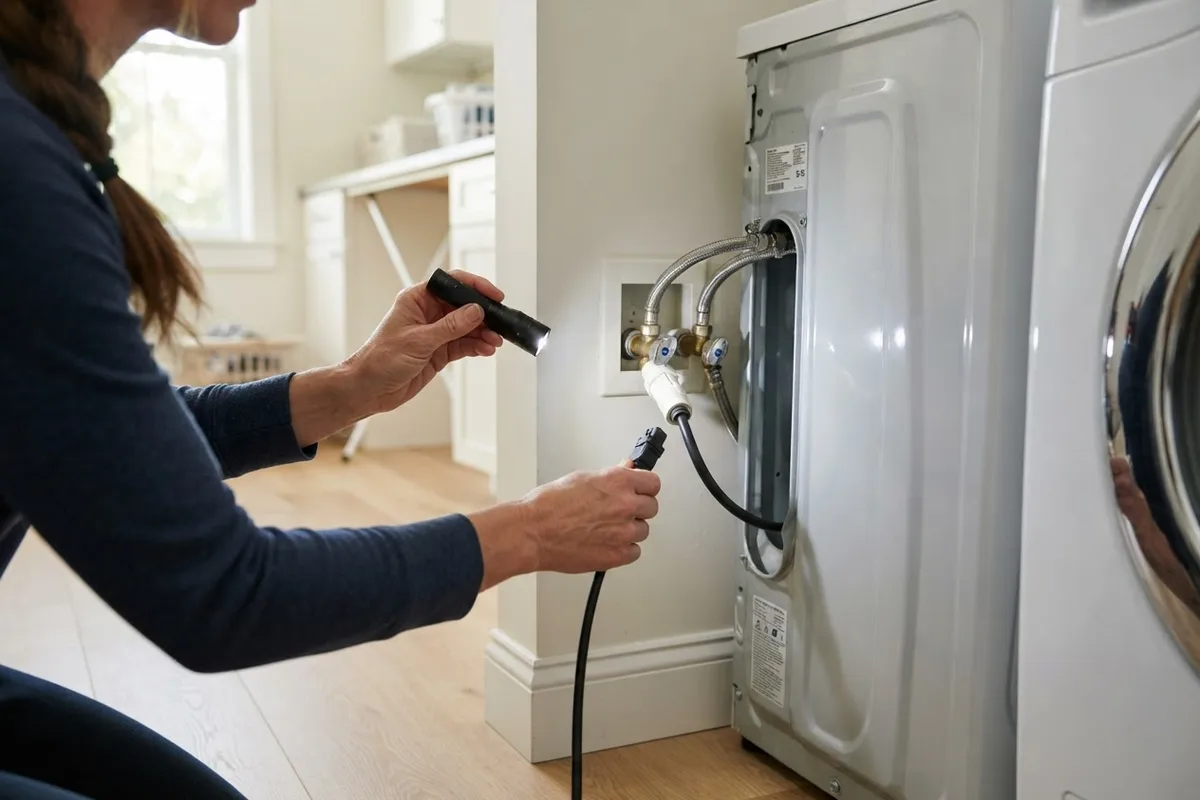
Before inspecting any appliance yourself, always unplug the power cord from the wall outlet or flip the dedicated circuit breaker off, and shut off the water or gas supply valve.
1. Check the Average Appliance Lifespan First
Every machine has a natural mechanical limit based on how hard its motors, pumps, and heating elements work each week. Before you schedule a service visit or browse a showroom, find out how old your unit actually is and compare it against typical US household averages.
- Locate the serial and model tag: Check inside the refrigerator wall, around the oven door frame, along the dishwasher tub rim, or under the washing machine lid.
- Decode the manufacturing date: Look for a printed manufacture month and year, or type the model and serial number into an online appliance age lookup tool.
- Compare against average life expectancy: Use the reference chart below to see how much typical service life your unit has left.
- Factor in household usage: A washing machine running ten loads a week for a family of five wears out years faster than the same model used twice a week.
| Household Appliance | Typical Lifespan (Years) | Common End-of-Life Failure |
|---|---|---|
| Garbage Disposal | 8 – 12 years | Seized motor or rusted grinding chamber |
| Dishwasher | 8 – 12 years | Failed circulation pump or control board |
| Microwave (Over-the-Range) | 7 – 10 years | Magnetron failure or burned high-voltage diode |
| Washing Machine (Front/Top) | 8 – 12 years | Worn drum bearings or failed main control board |
| Clothes Dryer (Electric/Gas) | 10 – 13 years | Motor failure or cracked drum support rollers |
| Refrigerator | 10 – 14 years | Sealed compressor failure or refrigerant leak |
| Electric Range / Oven | 12 – 15 years | Burned-out bake control relays or wiring harness |
| Gas Range / Oven | 13 – 17 years | Cracked manifold valve or failed electronic control |
2. Apply the 50% Age-and-Cost Rule
Once you know the age of your unit, combine it with the estimated repair cost to take the emotion out of your decision. Homeowners and technicians often rely on the 50% rule to prevent overspending on aging machines.
- Check the 50% age threshold: Determine if your machine has already passed half of its expected lifespan from the chart above.
- Get a clear repair estimate: Typical minor appliance repairs in the US range from $120 to $300, while major component swaps run $350 to $700 or more (varies by area and model).
- Price out a comparable replacement: Look up the current retail price of a similar model—not a luxury upgrade—and remember to include delivery, installation, new hookup hoses, and haul-away fees.
- Run the math: If the appliance is more than 50% through its expected lifespan and the repair estimate costs more than 50% of a comparable new machine, replacement is usually the wiser financial move.
3. Separate Cheap Wear Parts From Major Failures
Not all breakdowns mean a machine is dying. Appliances are built with sacrificial wear-and-tear parts designed to fail cleanly so the rest of the unit stays protected. Even on an older machine, replacing a simple wear component often buys you several more years of reliable service.
- Identify low-cost wear parts: Door gaskets, dryer belts, idler pulleys, oven bake elements, gas igniters, water inlet valves, and drain pumps are routine fixes that typically cost $120 to $280 with labor (varies by area and model).
- Spot simple maintenance clogs: Before assuming a pump is dead, check for trapped debris. For example, if you are wondering why your washing machine is not draining, a coin or sock blocking the filter trap is a free fix you can do after unplugging the unit.
- Recognize major core failures: Sealed refrigerator compressors, cracked washer outer tubs, seized spider arms, and rusted-through dishwasher sumps require massive labor teardown.
- Draw the line on core components: If an eight-year-old refrigerator needs a $700 sealed-system repair or an older front-load washer needs a $550 rear bearing job, put that money toward a new machine.
4. Count Breakdowns Over the Last Two Years
A single repair bill is normal maintenance, but a string of unrelated failures is a strong warning sign that internal components are degrading all at once. Heat, vibration, and moisture eventually wear down wiring harnesses, plastic mounts, and circuit boards across the entire machine.
- Pull out your service receipts: Add up every dollar you have spent on parts or service calls for that specific unit over the past 24 months.
- Check for cascading failures: If you replaced a dryer heating element six months ago, the belt last month, and now the motor is humming and refusing to turn, the unit has reached mechanical exhaustion.
- Inspect for rust and structural rot: Unplug the appliance and use a flashlight to check the frame, tub mounts, and underside for flaking rust, water trails, or brittle wiring insulation.
- Watch for cluster warning signs: When multiple symptoms appear together—such as loud grinding noises, temperature swings, and error codes—review specific checklists like 7 signs your refrigerator is dying before paying for another patch job.
5. Check Replacement Part Availability and Wait Times
Even if a repair makes financial sense on paper, a fix is only practical if you can actually get the replacement part within a reasonable timeframe. Manufacturers regularly discontinue electronic boards and cosmetic parts once a model line is seven to ten years old.
- Look up the exact part number: Use your appliance's complete model number on a parts diagram to identify the exact OEM component needed.
- Check stock status: See if the part is in stock, on indefinite factory backorder, or marked "No Longer Available" (NLA).
- Weigh the cost of downtime: Waiting three weeks for a special-order control board might be tolerable for a secondary basement freezer, but going three weeks without a primary kitchen refrigerator or family washing machine quickly costs more in takeout meals and laundromat trips than the savings of a repair.
- Beware of unverified board rebuilds: While some third-party services refurbish discontinued circuit boards, if a main control board on a 12-year-old oven is obsolete, replacing the unit is usually safer and faster.
6. Factor In Energy and Water Efficiency Gains
Sometimes keeping an old appliance running quietly drains your bank account through your monthly utility bills. However, energy savings vary wildly depending on the type of machine you are evaluating.
- Prioritize old refrigerators and washers: Refrigerators built more than 12 to 15 years ago and older top-load washers with full-tub water fills use significantly more electricity and water than modern models.
- Don't overestimate cooking and drying upgrades: Standard electric ovens, gas ranges, and standard electric dryers have not changed drastically in energy consumption over the past decade, as generating heat still takes roughly the same amount of energy.
- Check for utility rebates: Before buying a new dishwasher, washer, or refrigerator, check your local electric and water company websites for cash rebates on high-efficiency models, which typically save $50 to $200 (varies by area and utility).
- Keep the old machine clean while it runs: Often, high energy bills come from poor airflow rather than old age. Learning how to clean a dryer vent and lint trap or vacuuming dusty refrigerator coils restores efficiency right away without buying a new machine.
7. Weigh Built-In Installation Costs Before Replacing
A common trap homeowners fall into is comparing a $350 repair quote against the sticker price of a new appliance while forgetting the hidden costs of installation. For built-in or gas-connected appliances, swap-out labor can easily add $200 to $500 to the total bill (varies by area and model).
- Measure cabinet cutouts carefully: Older wall ovens, built-in microwaves, and counter-depth refrigerators often sit in custom cabinetry that may not fit modern standard dimensions without carpentry work.
- Account for plumbing and electrical updates: Installing a new dishwasher, gas range, or dryer often requires upgrading old shutoff valves, swapping a 3-prong cord for a 4-prong cord, or installing a new gas flex line.
- Compare total landed cost: Add delivery, installation labor, new hookup kits, cabinet modifications, and haul-away fees to the new machine's price before comparing it to a repair bill.
- Favor repairs on complex built-ins: Because wall ovens, cooktops, and built-in refrigerators are expensive to remove and reinstall, repairing them often makes sense even when they are slightly past the midpoint of their lifespan.
When to Call a Pro
While you can safely clean filters, swap a snapped dryer belt, or replace a worn door gasket on an unplugged machine, some diagnostics should never be tackled as a DIY project. Always stop and call a professional technician for any issue involving gas lines or gas valves, sealed refrigeration systems (compressors, refrigerant tubing, and evaporator coils), high-voltage microwave components, or household electrical panel wiring.
If you are on the fence about a broken machine, paying a modest diagnostic fee for an accurate quote is often the smartest way to avoid throwing away a perfectly fixable appliance. True Appliance Repair can connect you with an independent local technician for honest home appliance repair diagnostics so you know exactly what failed and what it will cost before you decide.
FAQ
Which household appliances last the longest?
Gas ranges and electric ovens consistently last the longest in American kitchens, averaging 12 to 17 years of service because they have fewer moving parts and don't handle water. Dishwashers, washing machines, and over-the-range microwaves tend to have the shortest lifespans—typically 7 to 12 years—due to constant exposure to moisture, heat, food acids, and heavy mechanical vibration.
Is it worth fixing a 10-year-old appliance?
It depends on the appliance type and the specific part that failed. Fixing a 10-year-old gas stove, electric oven, or clothes dryer that only needs a $150 igniter, heating element, or belt is almost always worth it. However, if a 10-year-old dishwasher or washing machine needs a $450 control board or pump assembly, putting that money toward a replacement is usually the smarter financial choice.
Why do newer appliances seem to break faster than older ones?
Modern appliances use sensitive electronic control boards, digital touchpads, variable-speed inverter motors, and strict water-saving valves that are much less forgiving of power surges, hard water scale, and overloading than older mechanical timers. You can help newer machines reach their full lifespan by using surge protectors, descaling water-using units regularly, and cleaning hidden filters every few months.
Should I replace all my kitchen appliances at the same time?
You only need to replace functioning appliances alongside a broken one if matching finishes are a top priority or if a package bundle discount outweighs the remaining value of your working machines. From a budget standpoint, it is much more cost-effective to run your working appliances until they show clear signs of end-of-life wear and replace them individually as needed.