
Pulling heavy, dripping laundry out of your machine wastes time, strains your dryer, and invites musty odors. When a washer leaves clothes wet, the culprit is usually an unbalanced load, excess detergent, a clogged drain filter, or a worn mechanical part. Follow these six practical checks to restore a strong, dry spin cycle safely at home.
1. Check Load Size and Rebalance Heavy Laundry
Modern washing machines use imbalance sensors that slow down or skip the final spin when wet weight bunches on one side of the drum. Heavy winter blankets, coats, and thick bath towels trigger this protective pause most often.
- Pause the cycle and wait for the drum to stop spinning completely before opening the lid or door.
- Pull tangled sheets, jeans, or bulky blankets apart so they do not form one heavy ball.
- Redistribute laundry evenly around the outer wall of the basket rather than piling it in the center.
- Remove one or two soaked items if the tub is packed more than three-quarters full, or balance a single comforter with two similar-weight towels.
- Run a Rinse & Spin or Drain & Spin cycle and listen for smooth acceleration without loud thumping.
2. Verify Spin Speed and Cycle Settings
Sometimes nothing is broken at all—the active cycle simply limits drum speed to protect fragile fabrics. Delicate, hand-wash, and permanent press settings intentionally leave extra moisture behind so clothes wrinkle less.
- Check the cycle dial to make sure you did not select Delicate, Bulky/Bedding, or No Spin by mistake.
- Press the Spin Speed button and raise it from Low or Medium to High for everyday cottons, denim, and towels.
- Confirm that Rinse Hold or Soak is turned off, since both options leave water sitting in the tub at the end of a wash.
- Start a dedicated Spin Only cycle on the damp laundry to see if the motor ramps up to full speed.
3. Clear Suds Lock From Excess Detergent
Pouring too much soap—or using regular detergent inside a high-efficiency (HE) machine—creates thick foam that cushions the drum and blocks drainage. This condition, known as suds lock, tricks water-level sensors and cuts the spin cycle short.
- Open the door or lid and look for thick foam clinging to the glass, rubber gasket, or wet clothes.
- Skip the soap completely and run a plain cold Rinse & Spin cycle to flush trapped detergent out of the fibers.
- Add one cup of distilled white vinegar to the fabric softener compartment during a second rinse if suds still linger.
- Switch to HE-labeled detergent and measure using the lowest cap line—typically one to two tablespoons for average loads.
- Wipe soap buildup from the door seal and dispenser drawer as part of your monthly appliance maintenance checklist.
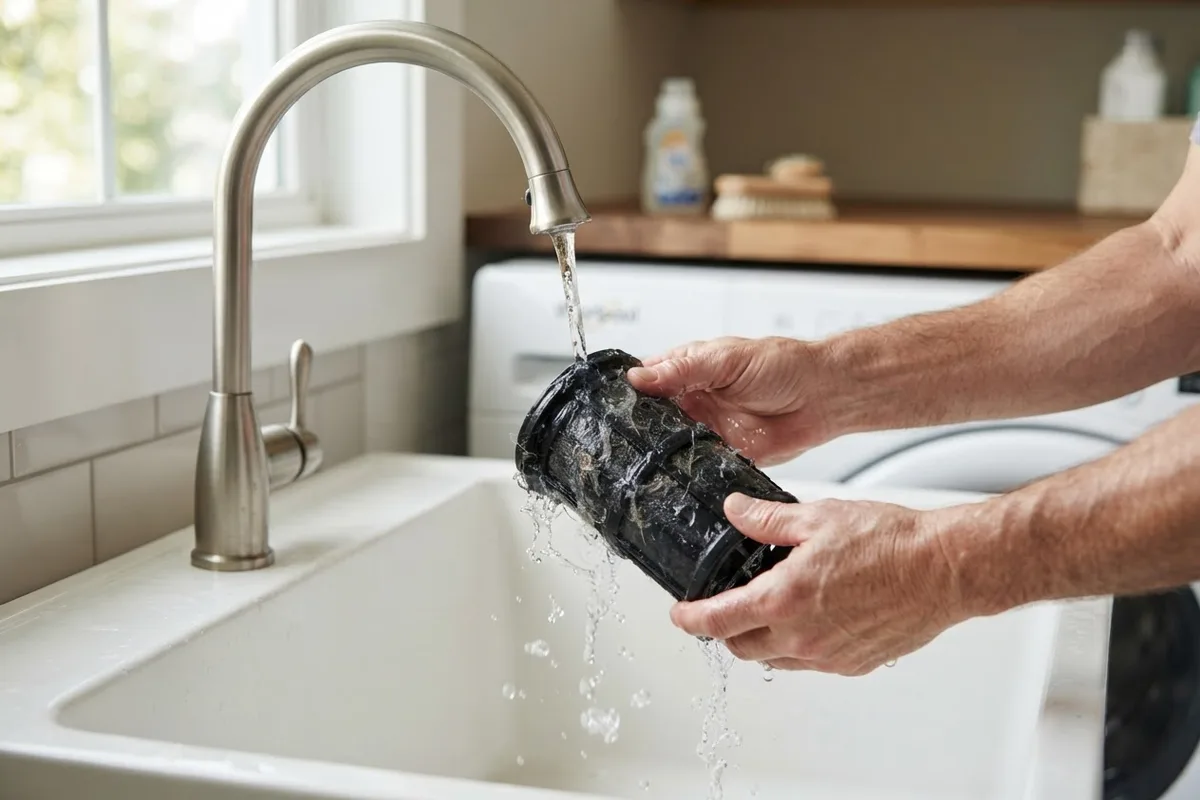
4. Clean the Drain Pump Filter and Hose
A partially blocked drain path slows water removal so much that the machine starts spinning with water still pooling beneath the basket. Coins, hairpins, pet fur, and pocket lint collect quickly inside the pump trap.
Before touching any hose or access panel, unplug the washing machine from the wall outlet and shut off both hot and cold water supply valves.
- Slide a shallow baking pan and old towels under the small access door at the lower front of a front-load washer.
- Unclip the emergency drain tube, pull the plug over the pan, and let trapped water empty completely.
- Twist the drain pump filter cap counterclockwise, pull it out, and rinse away lint and debris under warm tap water.
- Check the ribbed drain hose behind the machine for sharp kinks or crushing against the wall.
- Reinstall the filter snugly, restore power and water, and test a short rinse cycle for proper draining.
5. Test the Lid Switch or Door Lock Latch
For safety, a washing machine will not enter high-speed spin unless its control board confirms the lid or door is locked shut. A misaligned strike, lint-packed latch, or failing switch lets the tub wash normally while refusing to spin clothes dry.
Always unplug the power cord before cleaning or inspecting latches and switches around the washer opening.
- Inspect the plastic lid strike on top-load machines or the metal hook on front-load doors for cracks, bending, or loose screws.
- Clear packed lint and dried detergent out of the latch slot using a dry cotton swab and a flashlight.
- Close the lid or door firmly and listen for a crisp mechanical click before starting a cycle.
- Plug the machine back in, run a Spin cycle, and check the display for a door-lock light or flashing error code.
6. Inspect the Drive Belt and Drain Pump
If the tub drains completely yet the basket barely turns—or the motor hums without spinning—a stretched drive belt, worn motor coupler, or jammed pump impeller may be at fault. Repeatedly washing heavy loads accelerates wear on these drive parts.
Unplug the washer and turn off both water valves before moving the cabinet or removing any rear service panel.
- Pull the machine gently away from the wall and remove the rear access panel screws with a nut driver or screwdriver.
- Shine a flashlight onto the rubber drive belt connecting the motor pulley to the large drum pulley.
- Look for fraying, glossy glazing, cracks, or a belt that has slipped completely off its track.
- Rotate the drum pulley carefully by hand to check for smooth motion without grinding or stiff resistance.
- Reattach the back panel securely before reconnecting water and power if you spot damaged parts that need replacement.
When to Call a Pro
| What You Notice | Most Likely Cause | Best Next Step |
|---|---|---|
| Heavy thumping and wet load | Unbalanced or bulky items | Redistribute laundry and re-spin |
| Thick foam left in drum | Excess detergent (suds lock) | Run cold rinse with no soap |
| Standing water in the tub | Clogged drain filter or hose | Unplug washer and clean trap |
| Door stays unlocked or blinks | Faulty lid switch or latch | Clean latch or replace switch |
| Motor hums but drum will not spin | Worn belt, coupler, or pump | Schedule a pro inspection |
Stop DIY checks and call a technician if you smell burning rubber or hot electronics, notice tripped breakers, or spot water leaking underneath the cabinet during a spin. Never open your home electrical panel, bypass a safety lid switch, or tamper with internal wiring or nearby gas utility lines.
Typical US washer repairs—such as replacing a drain pump, door lock assembly, or drive belt—generally cost $150 to $350 for parts and labor, though exact prices vary by area and model. If your machine is over eight years old or faces a major transmission or control board failure, check our washing machine repair or replace guide before booking service. When you need hands-on diagnostics, True Appliance Repair can match you with an independent local pro.
FAQ
Why are my clothes still soaking wet if the washer finished the cycle?
Even when the timer reaches zero, your machine may have skipped its high-speed spin due to an unbalanced load, excess detergent suds, or a partial drain clog. Heavy fabrics like denim and winter bedding also retain extra water if the cycle used a low spin speed. Running a quick Drain & Spin cycle after redistributing the load often solves the problem.
Is it safe to put soaking wet clothes straight into the dryer?
Putting dripping laundry into the dryer forces the heating element and motor to work much harder, raising energy bills and wearing out drum rollers and belts. It can also overload the dryer drum and trigger thermal cutoffs. Wring out small items by hand or run a Spin Only cycle in the washer first.
How often should I clean my washing machine drain pump filter?
Most households should inspect and rinse the drain pump filter every two to three months, or monthly if you wash pet bedding and heavy-lint towels often. Clearing trapped coins, hairpins, and lint keeps water flowing freely so the drum hits full spin speed. Always unplug the washer and set towels underneath before opening the filter cap.
Can overloading a washer break the spin cycle?
Yes, packing the drum tightly blocks water from escaping through the basket holes and overwhelms the suspension system. Running oversized loads repeatedly stretches the drive belt, strains shock absorbers, and wears out motor couplers early. Leave about a hand's width of space at the top of the drum so laundry can balance freely.