
Catching a sharp whiff of burning plastic, hot rubber, or scorched wiring from across the kitchen while your dishwasher is running is enough to make any homeowner panic. Fortunately, most burning odors come from a stray plastic lid or utensil that slipped through the bottom rack rather than an active electrical fire. Follow these five step-by-step checks to safely track down the source, clear away melted debris, and know when a worn component needs attention.
Safety First: Before inspecting or touching the interior of a dishwasher that smells like burning, press Cancel to stop the cycle. Next, unplug the unit under the sink or switch off its dedicated circuit breaker at your main electrical panel, and shut off the water supply valve. Let the interior cool for at least 30 to 45 minutes—exposed heating elements stay scorching hot long after the cycle ends.
1. Remove Melted Plastic From the Heating Element
The number one reason a dishwasher smells like burning plastic is a lightweight item—like a Tupperware lid, measuring spoon, baby bottle part, or disposable takeout container—falling onto the exposed circular heating element at the bottom of the tub. During the heated wash and dry phases, this metal loop reaches temperatures high enough to liquefy thin plastics.
- Once the unit is disconnected from power and completely cool, pull out the bottom dish rack and set it aside.
- Run your fingers along the circular metal heating coil at the base of the tub, paying close attention to the undersides and mounting brackets where melted plastic drips and hardens.
- Gently pry off large chunks of cooled plastic by hand or with a wooden or plastic putty knife. Avoid metal scrapers, which can nick the element's protective outer sheathing.
- If a thin, stubborn glaze of plastic remains, wrap a cloth soaked in rubbing alcohol or white vinegar around the spot for 10 minutes, then scrub it clean with a non-scratch scouring pad.
- Inspect the coil afterward. If the metal tubing looks blistered, cracked, or warped, the element should be replaced before you run the machine again.
2. Check the Bottom Tub for Dropped Utensils or Foil
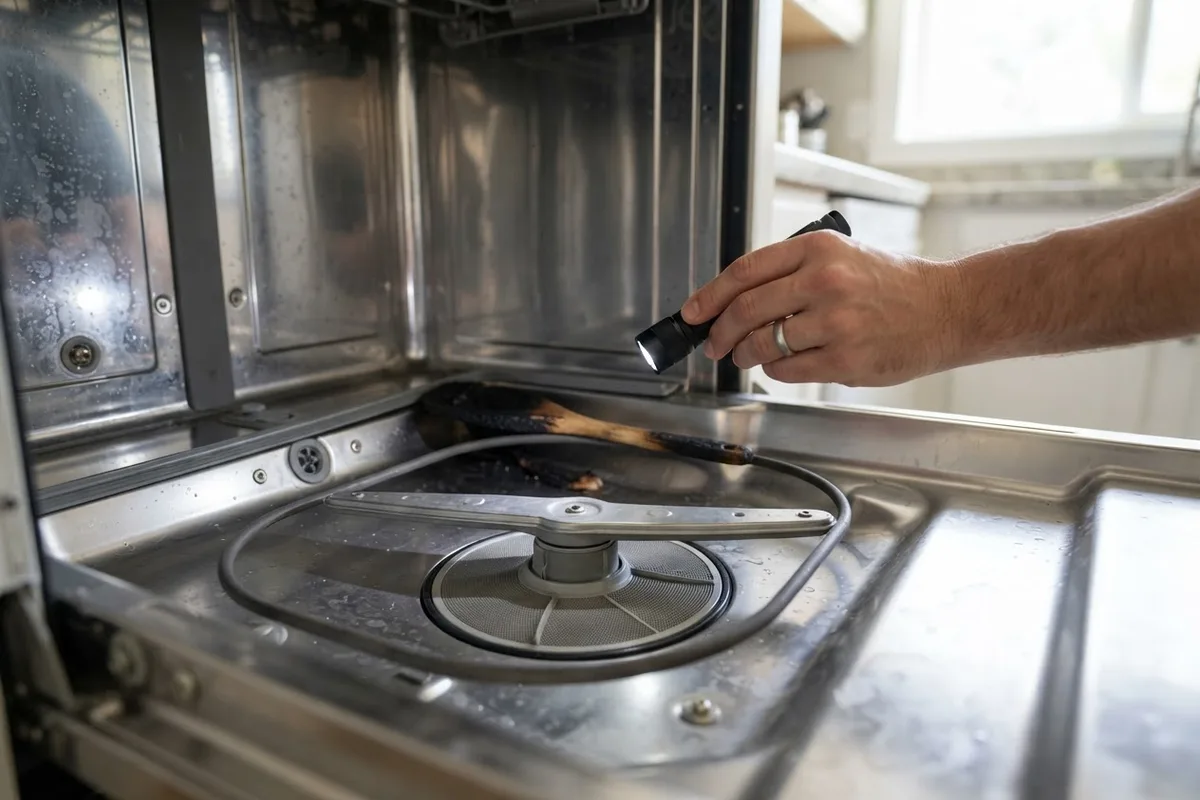
Sometimes the item causing the burning smell isn't resting directly on the coil, but sits right underneath it or wedged against the sump housing. Wooden spoons, silicone spatulas, plastic bread tags, or even greasy aluminum foil wrappers can get trapped near the heater and char slowly over multiple cycles.
- Keep the lower rack out and shine a flashlight across the floor of the dishwasher tub.
- Check underneath the heating coil and around the central spray arm tower for small items like plastic bottle caps, wooden chopsticks, or foil labels.
- Reach around the outer perimeter where the tub meets the door seal, as lightweight debris often washes into the corners.
- Wipe down the bottom tub with warm, soapy water to remove any scorched grease residue or blackened marks left behind by the overheated item.
- When reloading, always secure lightweight plastics on the top rack or inside a covered cutlery basket so water jets cannot flip them onto the floor.
3. Inspect the Power Cord and Junction Box
If the odor smells distinctly like fishy, acrid, or electrical burning rather than sweet melted plastic, the issue may be a loose wire connection where the house power meets the dishwasher. Over time, normal machine vibrations—especially if you've recently had to troubleshoot why your dishwasher is vibrating—can loosen wire nuts inside the junction box, causing heat buildup and melting wire insulation.
- Double-check at your home's breaker box that the circuit powering the dishwasher is switched completely off.
- Use a screwdriver to remove the metal or plastic toe-kick panel along the very bottom front of the dishwasher.
- Locate the small metal junction box (usually on the front right or left underside frame) and remove its single retaining screw.
- Look closely at the black, white, and green wires inside. Check for blackened wire nuts, melted plastic insulation, or a brown scorch mark on the metal box cover.
- If you see any melted wire nuts or charred insulation, do not turn the breaker back on. Stop here and schedule a professional repair to have the wiring harness safely pigtailed or replaced.
4. Listen for a Seizing Wash or Drain Motor
Your dishwasher relies on two separate electric motors: a circulation pump motor that pushes water through the spray arms, and a smaller drain pump motor that pushes dirty water into your sink drain or disposal. When bearings inside either motor wear out or get jammed with debris, the motor overheats and gives off a hot, metallic, or rubbery burning smell.
- Before turning power back on, think back to how the machine sounded right before you noticed the smell. A loud hum, whine, or grinding noise points toward a struggling motor.
- With the power still off, remove the bottom rack and twist out the cylindrical filter at the base of the tub to check the drain pump inlet for glass shards, fruit pits, or toothpicks.
- Clear any debris blocking the small impeller fan blades (wear thick work gloves to protect your fingers from broken glass).
- Look underneath the machine behind the kickplate with a flashlight. Check the main circulation motor for dark oil streaks, rust trails from a leaking shaft seal, or a burnt odor coming directly from the motor windings.
- If the pump area is clean inside the sump but the motor housing underneath smells burnt, the motor itself is failing and will need replacement.
5. Examine the Control Board Inside the Door
When the burning odor seems to drift directly out of the top vents of the dishwasher door or around the buttons on the console, a relay on the main electronic control board may have overheated. Because the heater circuit draws heavy amperage, the solder joints on the control board can degrade over years of use.
- With the breaker switched off, open the dishwasher door and inspect the top edge and outer control panel for any warm spots, warping, or discoloration.
- Sniff near the latch assembly and console seams—an acrid, ozone-like electronics smell is a strong indicator of a burnt circuit board.
- Remove the inner door Torx or Phillips screws around the top perimeter of the inner door panel if you are comfortable inspecting the console housing.
- Look at the plastic housing around the main circuit board and the wire harness plugs connected to the door latch switch for brown heat marks or melted plastic connectors.
- If you find a scorched board or melted wire plug, close the panel back up and leave the breaker off until the board and damaged harness section are replaced.
Quick Guide: Identifying Dishwasher Burning Smells
Not all burning odors mean the same thing. Use this quick reference table to match what you smell and hear to the most likely culprit.
| What It Smells Like | Where It's Strongest | Likely Culprit | Typical Repair Cost (US) |
|---|---|---|---|
| Sweet or chemical melted plastic | Inside the tub when you open the door | Plastic lid or utensil on the heating element | $0 DIY cleanup ($120–$220 if element is damaged) |
| Hot metal, rubber, or oil | Underneath the bottom toe-kick panel | Overheating circulation or drain pump motor | $180–$350 (varies by area and model) |
| Fishy or sharp electrical odor | Near the floor or under the kitchen sink | Loose wire nuts in the junction box or power cord | $120–$250 (varies by area and model) |
| Acrid ozone or burnt electronics | Top of the door around the buttons | Burnt relay on the main electronic control board | $200–$400 (varies by area and model) |
| Scorched food or campfire smoke | Bottom of the tub near the coil | Baked-on food grease or foil on the heating coil | $0 DIY scrubbing with vinegar and baking soda |
Note: Typical US repair ranges include parts and labor and vary by local rates, brand, and dishwasher model.
When to Call a Pro
Scraping a melted Tupperware lid off a cooled heating element or pulling a wooden spoon out of the bottom tub is an easy Saturday morning DIY win. However, if you open the door and find the heating coil completely clean, the burning smell is almost always electrical or mechanical. Never ignore a fishy electrical odor, flickering console lights, or a breaker that trips repeatedly—continuing to run the dishwasher can damage your kitchen wiring or create a serious fire hazard.
Stop immediately and bring in a technician if you spot charred wiring inside the bottom junction box, smell burnt electronics near the top control panel, or hear the circulation motor humming loudly without spraying water. If you are also hearing strange grinding noises under the sink, you may want to check why your garbage disposal is making noise to be sure the sound isn't coming from next door. When the problem points to internal dishwasher wiring, motors, or control boards, True Appliance Repair can match you with a local pro for reliable dishwasher repair.
FAQ
Is it safe to run my dishwasher after scraping melted plastic off the heating element?
Yes, as long as you have scraped off all visible plastic residue and the metal heating tube itself isn't cracked, blistered, or bent. You may still notice a very faint plastic scent during the first hot rinse cycle as microscopic residue burns off, so stay nearby and ventilate the kitchen until the test cycle finishes.
Why does my dishwasher smell like burning wires even when it is turned off?
If you smell burning wires while the dishwasher is completely off, shut off the dishwasher breaker at your home's electrical panel immediately. This usually means there is a short circuit in the main junction box, a damaged power cord behind the machine, or a stuck heater relay on the control board drawing continuous power.
Why does a burning electrical smell sometimes smell like rotting fish?
Heat-resistant plastics used in electrical wire nuts, circuit boards, and terminal blocks release chemicals called amines when they overheat. To the human nose, overheating electrical components often smell strongly like dead fish or ammonia before any visible smoke appears.
Can a clogged dishwasher filter cause a burning smell?
Indirectly, yes. When the bottom filter is heavily clogged with grease and food debris, the circulation pump gets starved of water and has to work much harder, causing the motor windings to overheat and give off a hot, metallic odor.