
Walking into your kitchen only to be greeted by a sour, rotting smell from the sink drain is frustrating, especially after you have already wiped down the counters and taken out the trash. When homeowners ask "why does my garbage disposal smell?", the culprit is almost always trapped food sludge hiding in places the spinning blades never touch. With a few pantry staples and 15 minutes of targeted cleaning, you can flush out hidden grease, sanitize the grinding chamber, and leave your kitchen smelling fresh again.
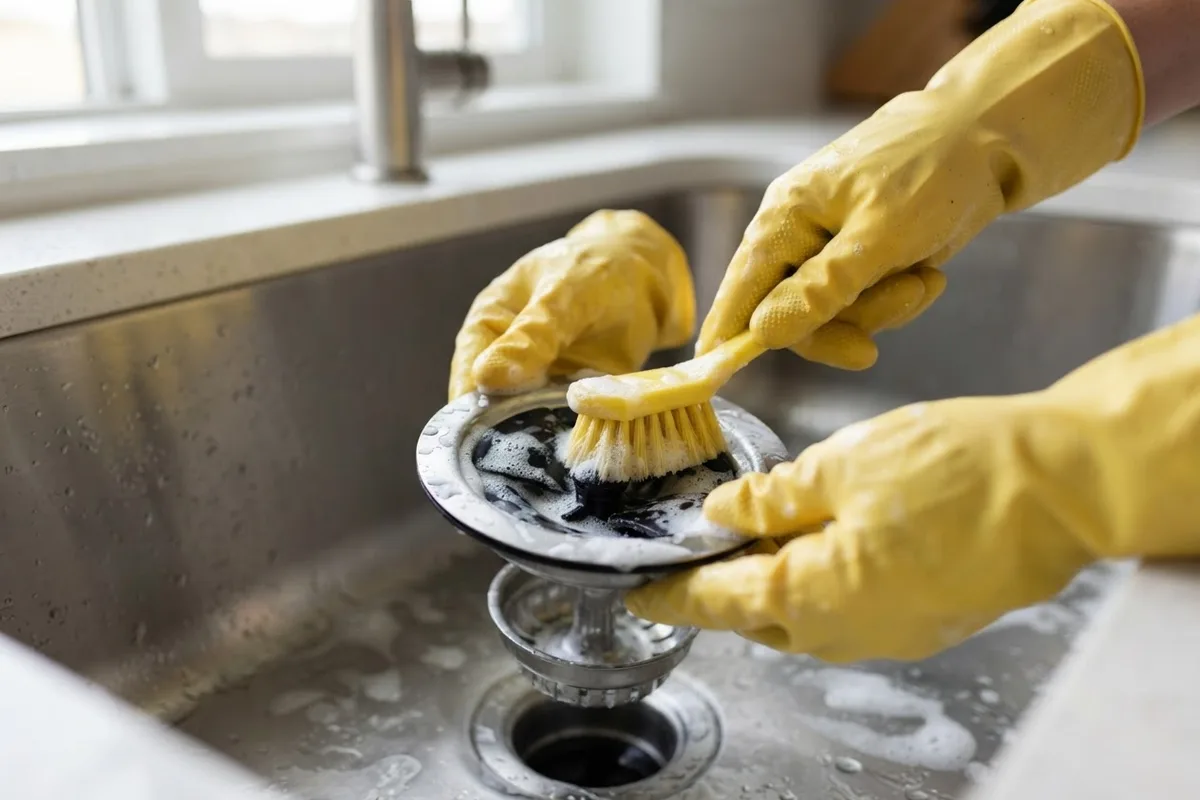
1. Scrub the Underside of the Rubber Splash Guard
The black rubber baffle sitting in your sink opening—called the splash guard—is the number one source of garbage disposal odors. Every time you run the unit, microscopic food particles and grease splash upward and cling to the textured grooves on the underside of those rubber flaps. Because tap water only flows down through the top of the guard, the bottom rarely gets rinsed clean.
- Cut the power: Turn the wall switch off and unplug the garbage disposal under the sink (or flip its circuit breaker off at the electrical panel) before putting your hands near the drain.
- Lift or remove the baffle: If your model has a removable sink baffle, pull it straight out. If it is mounted permanently with the sink flange, turn the rubber flaps inside out with your fingers.
- Scrub away the slime: Squirt dish soap onto an old toothbrush or stiff dish brush, dip it in warm water, and thoroughly scrub the underside of every rubber flap until no dark grease or biofilm remains.
- Rinse thoroughly: Turn on the cold tap to wash the loosened grime down the drain.
2. Grind Ice Cubes and Rock Salt to Scour Blades
Food residue, coffee grounds, and starchy pastes from potatoes or pasta often coat the grinding ring and impellers (the small metal lugs on the spinning flywheel). Running water alone will not peel this sticky layer off the steel surfaces. Crushed ice mixed with coarse salt acts as a natural, non-toxic abrasive that knocks hardened sludge off the walls while chilling congealed grease so it breaks apart and washes away.
- Reconnect power safely: Make sure the drain is completely clear of utensils or brushes, then plug the disposal back in.
- Fill the chamber: Pour two cups of ice cubes into the disposal opening, followed by half a cup of coarse rock salt or kosher salt.
- Run cold water and grind: Turn on a strong stream of cold water—never hot, which melts grease so it coats the pipes further down—and flip the disposal switch on.
- Flush for 30 seconds: Let the unit grind until all the ice is pulverized, then keep the cold water running for another 30 seconds to carry the loosened debris through the trap. If your unit locks up instead of spinning, follow our guide on safe DIY fixes for a jammed garbage disposal.
3. Deodorize the Chamber With Baking Soda and Vinegar
Even after physical scrubbing, odor-causing bacteria can linger in tiny crevices along the bottom seal and upper shredder ring. A foaming baking soda and white vinegar treatment neutralizes acidic food smells and lifts remaining residue without harsh chemical drain cleaners, which can corrode metal blades and damage rubber gaskets.
- Pour in baking soda: With the disposal turned off, pour half a cup of baking soda directly down the sink opening so it settles across the flywheel.
- Add white vinegar: Slowly pour one cup of distilled white vinegar over the baking soda. The mixture will immediately fizz and foam up toward the rubber splash guard.
- Cover and wait: Place the sink stopper over the drain opening to trap the expanding foam inside the chamber, and let it sit for 10 to 15 minutes.
- Rinse with hot water: Remove the stopper and flush the drain with a steady stream of hot tap water for one minute to wash away neutralized odors and residue.
4. Perform a Deep Citrus Peel and Cold Water Flush
Once the sticky buildup and bacteria are gone, natural citrus oils help break down any faint greasy film left on the stainless steel walls while leaving a clean scent behind. The citric acid in lemon, lime, or orange peels cuts through remaining oil, though the peels must be cut small so they do not strain the motor.
- Slice the citrus: Cut half a lemon, lime, or orange into small wedges no larger than one inch across. Remove any large seeds.
- Start the water first: Turn your cold tap on to a medium-strong flow.
- Feed wedges gradually: Turn on the disposal and drop two or three citrus pieces in at a time, waiting for them to grind completely before adding more.
- Flush thoroughly: Let the cold water run for a full 30 seconds after the grinding sound stops so fibrous pulp does not settle in the drain line. Making this part of your annual appliance maintenance routine keeps kitchen odors from sneaking back.
5. Clear Out the Dishwasher Drain Hose Connection
In most American kitchens, the dishwasher drain hose connects directly to a small nipple on the upper side of the garbage disposal body. Over time, dirty dishwater and food scraps can back up into this corrugated hose or collect at the sink-top air gap, creating a foul, stagnant smell that wafts right up through the disposal opening.
- Unplug the disposal: Disconnect power under the sink and place a shallow bucket and old towel beneath the disposal.
- Inspect the hose: Locate the ribbed rubber or plastic hose running from the dishwasher to the side of the disposal. Check for kinks or low sags where dirty water can pool.
- Clean the air gap or high loop: If you have a small cylindrical air gap fitting on top of your sink deck, pull off its decorative cap, unscrew the plastic top, and remove any trapped food debris with paper towels and a bottle brush.
- Flush the line: Reassemble the cap, restore power, and run a hot rinse cycle on your empty dishwasher with a cup of white vinegar sitting in a bowl on the top rack to flush the hose clean.
6. Clean the P-Trap and Stop Pipe Siphoning
Sometimes the smell is not inside the disposal at all—it is decaying sludge trapped in the U-shaped pipe (the P-trap) just below the disposal outlet, or sewer gas escaping because the water seal in that trap has dried out or been siphoned away.
- Prepare for water: Make sure the disposal is unplugged. Position a bucket directly beneath the curved P-trap pipe under your sink.
- Loosen the slip nuts: Unscrew the two large plastic or metal slip nuts at either end of the U-shaped bend by hand (or gently with channel-lock pliers). Lower the trap carefully and dump the trapped water and sludge into the bucket.
- Scrub the pipe: Take the curved pipe to another sink or outside with a garden hose and scrub the interior clean with dish soap and a flexible bottle brush.
- Reinstall and check for leaks: Inspect the rubber washers for cracks, thread the slip nuts back on firmly by hand plus a quarter turn with pliers, and run cold water for one minute while checking the joints with a dry paper towel to confirm they are watertight.
Quick Guide: Matching Disposal Odors to Their Cause
| What It Smells Like | Most Likely Culprit | Best DIY Fix |
|---|---|---|
| Sour, spoiled milk or rotting food | Greasy slime under the rubber splash guard | Scrub underside of baffle with dish soap and a stiff brush |
| Rancid oil or stale cooking grease | Congealed fat coating the grinding ring and chamber | Grind 2 cups of ice cubes with 1/2 cup rock salt under cold water |
| Musty, swampy, or stagnant water | Buildup in the dishwasher drain hose or air gap | Clean the sink air gap and run a hot vinegar rinse in the dishwasher |
| Rotten eggs or raw sewage | Sludge in the P-trap or a dry/siphoned water seal | Remove and scrub the P-trap, then refill the trap by running tap water |
| Hot electrical or burning plastic | Overheated motor windings or a jammed flywheel | Unplug immediately; let cool, check for jams, or call a pro |
When to Call a Pro
While surface buildup and clogged traps are easy Saturday morning DIY projects, certain disposal problems point to failing internal components or plumbing vent issues. If you smell acrid, burning rubber or hot electrical wiring when the switch is flipped, turn the unit off immediately—the motor windings may be overheating due to a seized bearing or internal short. Likewise, if water is dripping from the bottom housing of the disposal itself (indicating a failed internal shaft seal), if the unit repeatedly trips the household circuit breaker, or if a heavy sewer gas smell persists even after cleaning the P-trap, it is time to bring in an experienced technician.
Replacing a hardwired disposal, reconfiguring under-sink drain geometry, or diagnosing a blocked roof vent typically runs between $150 and $400 for labor depending on your plumbing setup, though pricing varies by area and model. Whenever a repair goes beyond basic cleaning, True Appliance Repair can match you with a local pro for reliable professional appliance repair so your kitchen sink is back in safe working order.
FAQ
Can I use bleach or chemical drain cleaners in my garbage disposal?
No, you should avoid pouring liquid bleach or harsh chemical drain openers into a garbage disposal. These chemicals can corrode the metal grinding blades, dry out and crack the rubber splash guard and internal watertight seals, and splash back up when the unit is turned on. Stick to dish soap, ice, salt, baking soda, and white vinegar for safe cleaning.
Should I run hot or cold water when using the garbage disposal?
Always use a strong stream of cold water while grinding food waste. Cold water keeps any fats, oils, or grease solid so the blades can chop them into tiny pellets that wash easily down the drain. Hot water melts grease into a liquid that clings to the disposal walls and re-solidifies inside your kitchen pipes, trapping food particles and causing foul odors.
Why does my garbage disposal smell even when I never put food in it?
Even if you scrape every plate into the trash and never turn the disposal on, everyday sink rinse water—containing microscopic food crumbs, coffee, dairy, and dish soap scum—passes through the chamber on its way to the P-trap. Without the spinning flywheel to fling that debris outward and flush it down, stagnant sludge settles inside the motionless chamber and begins to rot. Run the disposal with cold water for 15 seconds every couple of days to keep the chamber clear.
How often should I clean my garbage disposal to prevent odors?
Wiping the underside of the rubber splash guard with a soapy brush once a week prevents 90 percent of sink odors before they start. Follow up with an ice-and-salt grind or a baking soda and vinegar flush once a month to keep the internal grinding ring and drain trap clean.