
Nothing ruins a refreshing iced drink faster than a mouthful of stale, metallic, or garlic-flavored ice cubes. If your refrigerator ice tastes bad or smells off, the problem is rarely a permanent mechanical failure. More often, it stems from trapped odors, stagnant water lines, or depleted filtration media inside your appliance.
Because ice absorbs surrounding airborne molecules rapidly, simple household oversights can ruin your entire ice supply. By following a systematic approach to cleaning your water delivery line, filter, and freezer compartment, you can restore crisp, clean-tasting ice without expensive service calls. Here are five easy DIY solutions to troubleshoot and fix bad-tasting refrigerator ice.
Replace Your Refrigerator Water Filter
The most frequent cause of bad-tasting or foul-smelling ice is an old, clogged, or saturated water filter. Refrigerator filters use activated carbon to trap chlorine, sediment, and volatile organic compounds from municipal water lines. Over time, the carbon becomes completely saturated and loses its ability to filter incoming water, allowing contaminants straight into your ice maker mold.
- Shut off the water line: Turn off the water shutoff valve behind the refrigerator or under the kitchen sink to prevent accidental pressure spikes.
- Locate the filter housing: Refrigerator filters are typically situated inside the upper right corner of the fresh food compartment or along the bottom front base grille.
- Remove the old filter: Twist the cartridge counterclockwise a quarter-turn, or press the filter release button to eject the spent cartridge.
- Install the new filter: Remove the protective caps from the new filter, line up the orientation indicators, insert the filter, and twist clockwise until it snaps firmly into place.
- Flush the system: Turn the water supply back on and dispense 1 to 2 gallons of water into a large pitcher. Flushes purge trapped air and loose carbon fines from the fresh cartridge before you start making ice again.
Manufacturer guidelines generally suggest changing your water filter every six months, but households with hard water or high daily ice consumption may need to replace it every four months.
Deep Clean and Flush the Ice Storage Bin
Plastic ice storage bins naturally absorb odors over time. When ice sits unused in the bin for weeks, it slowly evaporates and absorbs lingering food smells from the freezer air. Moisture on the container's interior surface can also foster microscopic film or mildew growth if neglected.
- Remove and empty the bin: Pull the ice storage container out of the freezer cabinet and discard all old, stale ice into the sink.
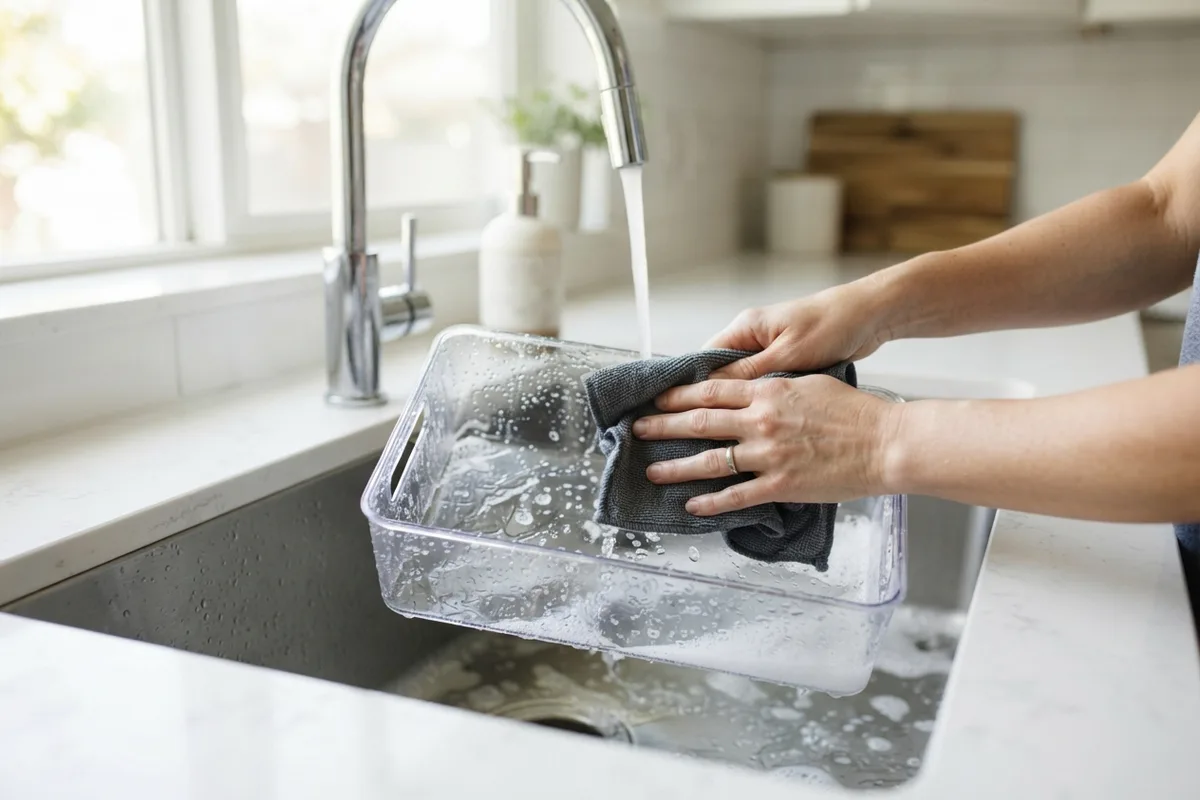
- Wash with warm soap and water: Wash the interior and exterior of the bin thoroughly with warm water and a few drops of mild dish soap using a soft microfiber cloth. Avoid harsh abrasive scouring pads that scratch the plastic, as scratches create crevices for odor-causing bacteria to hide.
- Sanitize with vinegar: Rinse off all soapy residue, then wipe down the entire interior surface with a solution of equal parts distilled white vinegar and warm water. Vinegar naturally neutralizes stubborn organic odors and breaks down light mineral film.
- Dry completely before reinstalling: Wipe the bin entirely dry with a clean towel and let it air-dry for 20 minutes. Reinstalling a damp ice bucket causes fresh ice cubes to instantly freeze together into a solid block.
Sanitize the Refrigerator Water Supply Line
If changing the filter and cleaning the bucket does not fix the problem, the issue may lie within the flexible water line feeding your refrigerator. Over years of use, copper, PEX, or braided stainless steel supply lines can accumulate mineral scale, standing water residue, or harmless slime mold.
- Safety first: Unplug the refrigerator from the electrical outlet and turn off the main water shutoff valve.
- Disconnect the supply tube: Carefully disconnect the water line from the inlet valve on the lower back panel of the appliance using an adjustable wrench. Keep a small bucket and towels nearby to catch residual water trapped in the line.
- Inspect the tubing: Look inside the ends of the supply line. If you notice dark sediment, heavy white mineral buildup, or stiff, yellowed plastic tubing, the line should be thoroughly flushed or replaced entirely.
- Flush or replace: Run a diluted mixture of warm water and food-grade hydrogen peroxide through the disconnected line if possible, or swap out old plastic tubing for a fresh flexible braided stainless steel line.
- Reconnect and test: Reattach the line securely, turn the water valve back on, plug the unit back in, and carefully check for leaks around all compression fittings. Proper line setup is essential to avoid costly household water damage; reviewing appliance maintenance steps to prevent water leaks can help keep your connection point dry.
Clear Out Stale Uncovered Food from the Freezer
Refrigerators continuously circulate cold air between the freezer and fresh food sections using an internal evaporator fan. If you store uncovered leftovers, open bags of frozen seafood, or unsealed aromatic foods anywhere in the appliance, those food odors migrate directly into the ice maker area.
- Audit your freezer inventory: Take everything out of the freezer and inspect all items carefully. Toss any food showing freezer burn, expired meats, or torn packaging.
- Seal all food airtight: Store all frozen goods in airtight glass containers, heavy-duty freezer bags, or sealed plastic bins. Never leave uncovered foods exposed to the circulating airflow.
- Clean internal freezer surfaces: Mix 2 tablespoons of baking soda into a quart of warm water. Wipe down all interior freezer walls, shelves, and door gaskets with a clean sponge. Baking soda neutralizes acidic food smells without leaving chemical fragrances behind.
- Add an odor absorber: Place an open box of specialized freezer baking soda or an activated charcoal deodorizer in the back corner of the freezer to absorb future odors before they penetrate fresh ice cubes. For broader cabinet odor problems, review our complete guide on why your refrigerator smells.
Clean and Sanitize the Internal Freezer Drain
During every automatic defrost cycle, melted frost flows down a small drain trough located beneath the evaporator coils into a drain tube leading to the drip pan under your fridge. If this drain trough gets partially clogged with food crumbs, dust, or mold, standing warm water sits inside the freezer cabinet during defrost cycles, emitting a dirty or sour smell directly into your ice compartment.
- Unplug the appliance: Disconnect electrical power to the refrigerator before opening internal component panels.
- Expose the drain hole: Remove the lower freezer drawers and back interior wall cover panel (if applicable on your model) to access the defrost drain trough beneath the cooling coils.
- Clear standing debris: Inspect the drain hole for ice buildup, mold, or food residue. Use a soft pipe cleaner or flexible plastic tube to gently clear any obstruction in the drain orifice.
- Flush with warm water: Fill a turkey baster with warm water and a drop of dish soap, then flush it through the drain hole. Follow up with a 50/50 mix of warm water and white vinegar to sanitize the internal drain tube entirely.
Refrigerator Ice Troubleshooting Guide
| Ice Flavor / Smell | Likely Root Cause | Recommended Solution |
|---|---|---|
| Chlorine / Chemical | Exhausted carbon water filter | Replace water filter cartridge & flush line |
| Garlic, Fish, or Food Odors | Unsealed freezer food / stink transfer | Wipe freezer with baking soda & seal food |
| Musty / Moldy | Dirty ice storage bin or clogged drain | Wash bin with vinegar & flush defrost drain |
| Metallic or Plastic | New plastic tubing or mineral scale | Flush 2 gallons through dispenser / replace supply line |
| Stale / Flat | Old ice sitting in bin unused | Empty bin monthly & increase ice usage |
When to Call a Pro
Most causes of bad-tasting ice are easily resolved with simple cleaning and filter swaps. However, certain complex plumbing or electrical issues warrant expert technical assistance. You should consult an experienced service professional if:
- Your water inlet solenoid valve is buzzing loudly, leaking, or failing to close properly.
- The internal plastic water lines routed through the refrigerator cabinet door are degraded, cracked, or leaking inside sealed insulation walls.
- Your ice maker mechanism is damaged, rusting, or flaking Teflon coating into the ice mold tray.
- The unit fails to freeze ice properly due to a sealed system or refrigerant control fault.
- You notice persistent electrical or water leaks behind the cabinet. True Appliance Repair can match you with a local appliance pro to inspect complex water line or cooling failures quickly.
Professional diagnostic and repair services typically range from $120 to $300 depending on your region and necessary replacement parts.
FAQ
How often should I change my refrigerator water filter?
Most manufacturers recommend replacing your refrigerator water filter every six months. However, if you live in an area with hard water, high sediment levels, or heavy daily ice usage, you may need to replace the cartridge every three to four months to maintain fresh taste.
Why does my refrigerator ice taste like garlic or onions?
Because cold air circulates continuously between your freezer and fresh food compartments, volatile odor molecules from uncovered aromatic foods (like garlic, onions, or fish) transfer into the ice maker. Ice cubes act as sponges for these airborne compounds, absorbing tastes and smells as they freeze.
How many batches of ice should I discard after installing a new filter?
After installing a new filter and flushing 1 to 2 gallons of water through the door dispenser, you should throw away the first two to three full batches of ice produced by the ice maker. This ensures any loose carbon dust or trapped air is completely purged from the system.
Can bad-tasting ice make you sick?
In most cases, bad-tasting ice is simply caused by trapped food odors, chlorine, or harmless mineral deposits. However, if dirty ice bins or stagnant water lines develop mold, slime, or bacterial growth, consuming the ice could cause minor stomach discomfort. Regular cleaning and timely filter replacements keep your ice safe and fresh.