
A foul odor escaping every time you open the door is one of the most frustrating kitchen problems. Whether it stems from forgotten produce, a clogged drain tube, or mildew trapped inside the door gaskets, a persistent refrigerator smell can quickly ruin fresh groceries and affect your entire kitchen. The good news is that most fridge odors can be permanently eliminated with simple household tools and a methodical cleaning routine.
Before starting any hands-on maintenance, safety comes first: unplug the refrigerator from the wall outlet and turn off the water supply valve if your model has an ice maker or water dispenser. Following standard home appliance safety checks protects both you and your equipment while you work.
Unplug the Fridge and Inspect Spoiled Food
The most common cause of a bad refrigerator smell is decomposing organic matter tucked away in a back corner or drawer. Liquids like milk, meat juices, or pickle brine can seep under shelf tracks and solidify, creating a breeding ground for bacteria even in cold temperatures.
- Pull out all food items and set perishable items in an insulated cooler with ice packs.
- Carefully examine every jar, bottle, and container, checking expiration dates and looking for soft spots on produce or broken seals on dairy products.
- Wipe down the exterior of all reusable glass and plastic food containers before returning them to the fridge later, as lingering residue on jar bottoms often re-introduces smell.
- Discard any item showing signs of mold, rot, or souring.
Removing every food item gives you a clear view of hidden spills and allows air to circulate freely while you clean the interior cabinet.
Wash Shelves and Drawers with Baking Soda
Standard dish soap alone often fails to break down sour food oils absorbed into plastic surfaces. A mild baking soda solution neutralizes acidic odors without leaving behind harsh chemical scents that can transfer to unsealed food.
- Remove all adjustable glass shelves, door bins, and crisper drawers from the cabinet.
- Allow glass shelves to come to room temperature before washing to prevent thermal shock and cracking.
- Mix 2 tablespoons of baking soda with 1 quart of warm water in a clean bucket.
- Scrub every bin, shelf track, and wall surface using a soft microfiber cloth or non-abrasive sponge.
- Pay close attention to the rubber door gasket seals; fold back the flexible accordion folds where crumbs and spilled liquids collect, and wipe them clean.
If you need a complete step-by-step breakdown for scrubbing down the whole interior, refer to our guide on how to deep clean a refrigerator.
Clear and Flush the Evaporator Drain Line
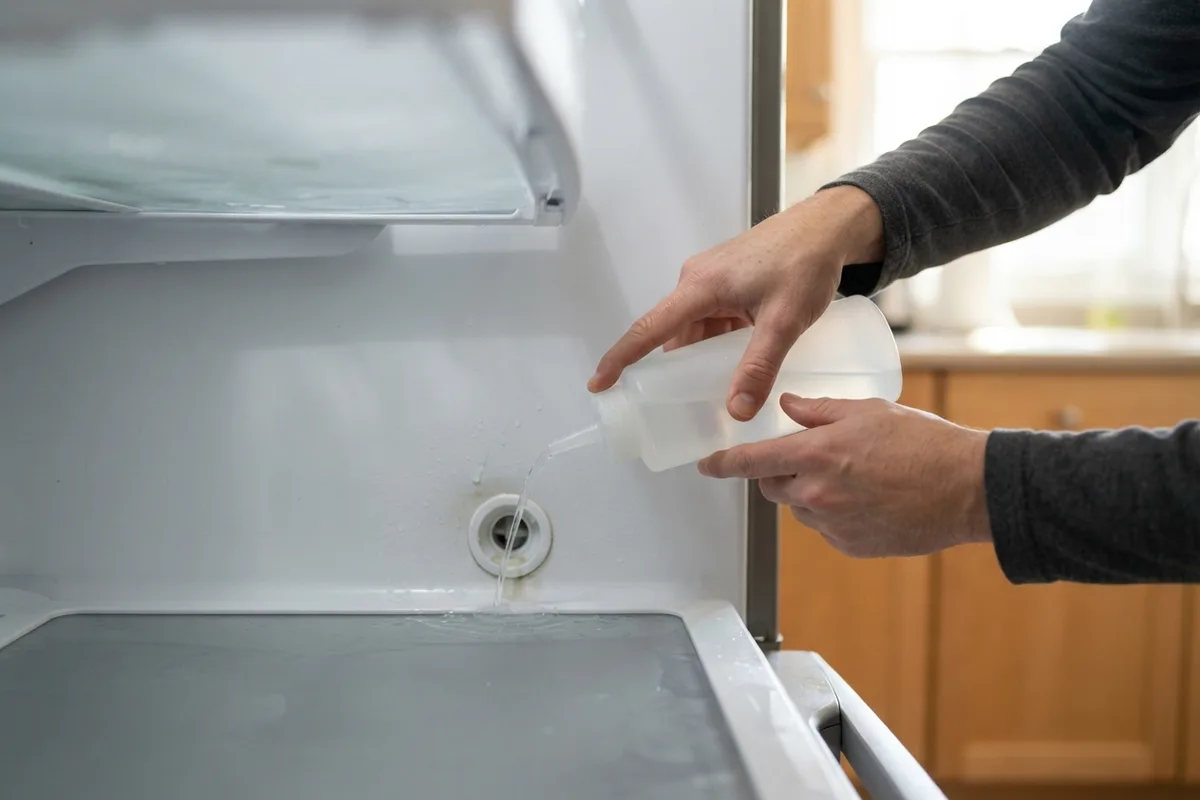
When ice melts off the evaporator coils during the automatic defrost cycle, water drips down a small channel into an evaporator drain hole located at the back of the freezer or fresh food section. If food particles, dust, or mold clog this drain hole, standing water collects beneath the crisper drawers and develops a severe musty odor.
- Locate the drain hole along the lower back wall of the freezer or main refrigerator compartment.
- Clear visible debris using a small soft-bristled brush or pipe cleaner.
- Mix equal parts warm water and white distilled vinegar in a squeeze bottle or turkey baster.
- Gently flush the solution into the drain hole until you hear water running freely into the drip pan below.
- Dry the bottom of the cabinet thoroughly with a clean towel.
Flushing this line regularly prevents standing water from souring and eliminates one of the most overlooked sources of lingering kitchen odors.
Clean the Drain Pan Underneath the Cabinet
Water flushed down the evaporator drain line flows directly into a shallow drain pan located underneath the refrigerator cabinet, near the condenser coils and compressor. Moisture in this pan normally evaporates from compressor heat, but dirty water combined with ambient dust can create a thick layer of foul-smelling sludge.
- Remove the front bottom kick plate or access grill at the rear of the refrigerator.
- Locate the plastic drain pan situated above or beside the compressor assembly.
- Carefully slide the pan out if your model permits, taking care not to spill standing liquid onto your flooring.
- Wash the pan thoroughly with warm water, dish soap, and a cup of white vinegar to kill bacterial growth.
- If the drip pan is permanently fixed, use a damp cloth wrapped around a flexible wand to wipe out the reservoir thoroughly.
Cleaning this area also gives you an ideal opportunity to vacuum dust off the condenser coils, which improves cooling efficiency and prevents overheating.
Replace the Internal Air Filter and Carbon Pads
Many modern refrigerators feature an integrated air filtration system that recirculates cabin air through an activated carbon filter. When this filter reaches capacity—typically every six months—it loses its ability to absorb volatile organic compounds and can actually start releasing trapped odors back into the refrigerator.
- Check your owner's manual to locate the air filter housing, usually situated on the upper back wall or side interior panel.
- Twist or snap open the filter cover and remove the old carbon pad.
- Insert a fresh replacement air filter, ensuring the airflow arrows point in the correct direction.
- Reset the filter change indicator light on your refrigerator control panel if applicable.
If your model does not have a built-in air filter, place an open box of baking soda or an activated charcoal odor absorber on a middle shelf toward the rear of the cabinet.
Deodorize Interior Walls with Activated Charcoal
Plastic interior walls can absorb pungent smells—such as fish, onions, or garlic—deep into their surface pores. Standard wiping removes surface contamination, but deep-set odors require continuous absorption over 48 to 72 hours.
- Spread 2 to 3 cups of activated charcoal granules or fresh, dry coffee grounds onto shallow baking sheets.
- Place one sheet on each main shelf level inside the empty or lightened refrigerator.
- Set the temperature control to its coldest setting temporarily to maximize air circulation through the fan system.
- Keep the doors closed as much as possible for 24 to 48 hours to allow the carbon medium to trap volatile odor molecules.
- Discard the charcoal or grounds after treatment and return the thermostat to its standard operating setting (37°F to 40°F).
| Odor Source | Probable Location | DIY Solution |
|---|---|---|
| Sour, spoiled milk smell | Shelf tracks, door gaskets | Wash with warm water & baking soda solution |
| Musty, stagnant water odor | Clogged drain hole, underlying drip pan | Flush drain tube with warm water & vinegar |
| Rotten, sulfur-like stink | Back interior wall, old air filter | Replace carbon filter pad; scrub coils |
| Fishy or pungent onion smell | Plastic liner wall absorption | Deodorize 48 hrs with activated charcoal |
When to Call a Pro
While most refrigerator odors stem from food spills, clogged drains, or old air filters, some smells signal mechanical or electrical component failures. If you smell burning plastic, chemical ozone, or a strong acrid odor near the bottom rear of the appliance, immediately unplug the unit. Electrical wiring failures, shorted fan motors, or overheating compressor relays require professional diagnostic testing. Furthermore, work involving sealed refrigerant systems or internal wiring panels should always be left to experienced technicians.
Typical minor repairs like replacing a drain assembly or relay switch range from $150 to $300, though final costs vary by area and model. If basic DIY steps fail to resolve the smell or if you suspect electrical issues, True Appliance Repair can match you with a local appliance pro to inspect your unit safely. You can also reach out through our contact page for expert guidance on your home equipment.
FAQ
Why does my refrigerator smell even after I cleaned it?
Odors often linger because spills seeped into hidden crevices, such as under shelf tracks, inside door gasket folds, or down into the lower drip pan beneath the cabinet. Pungent smells can also saturate the plastic interior walls or get trapped inside a saturated activated carbon air filter. Thoroughly flushing the drain line and using activated charcoal over 48 hours will usually pull out stubborn deep-set smells.
Can bleach be used to clean the inside of a refrigerator?
Bleach is not recommended for routine refrigerator cleaning because it can crack or degrade the plastic interior liner and damage rubber door gaskets. Additionally, harsh bleach fumes can pollute closed food compartments and contaminate open groceries. Stick to mild baking soda, white distilled vinegar, and dish soap for safe, effective odor removal.
How often should I replace my refrigerator air filter?
Most manufacturers recommend replacing the internal carbon air filter every six months. If you store high-odor foods regularly or notice localized smells returning despite a clean interior, you may need to replace the filter pad every three to four months to maintain peak absorption.
Is a chemical smell from my refrigerator dangerous?
A chemical, metallic, or sharp ozone smell coming from the refrigerator can indicate an overheating electrical component, a failing fan motor, or a refrigerant leak. Unplug the refrigerator immediately, open windows to ventilate the area, and contact a professional technician for service before plugging the unit back in.