
Opening your fridge to a sour or musty odor—even after tossing expired leftovers—is frustrating and makes fresh groceries unappetizing. Most lingering odors hide in places a quick wipe-down misses, like under crisper drawers, inside rubber door seals, or beneath the appliance. Follow these six safe steps to track down the source and keep your fridge smelling fresh.
1. Unplug and Check Hidden Spoiled Food
Before you pull out drawers or move the unit, unplug the refrigerator from the wall outlet. If your model has an ice maker or water dispenser and you plan to slide it forward later, shut off the water supply valve behind the fridge or under the sink first.
Start by emptying every shelf, door bin, and crisper drawer into a cooler with ice packs so cold items stay safe while you work. Many stubborn odors come from tiny leaks you cannot see with the bins in place:
- Pull out the crisper and deli drawers completely and inspect the glass ledge and bottom floor underneath for meat juices, sticky produce residue, or spilled milk.
- Check jar rims, condiment caps, and the back corners of the top shelf where forgotten leftovers tend to hide.
- Toss anything past its prime, moldy, or leaking, and wipe down sticky bottle bottoms before putting them back.
2. Wash Shelves With a Baking Soda Solution
Skip harsh chemical sprays or bleach inside food storage areas, since strong fumes absorb into plastic liners and linger for days. Instead, use a gentle baking soda wash that neutralizes acidic and sour odors safely.
- Let cold glass shelves reach room temperature for 10 to 15 minutes before washing so warm water will not crack them.
- Mix 2 tablespoons of baking soda into 1 quart of warm water in a clean basin or sink.
- Wash removable shelves, bins, and drawers with a soft sponge, rinse with plain water, and dry every piece with a clean towel.
- Wipe the interior walls, ceiling, and shelf tracks with the same baking soda mix, followed by a damp cloth.
For deeper odor issues across other kitchen units, explore these natural ways to deodorize home appliances for safe pantry-staple cleaning mixes.
3. Scrub Mold From the Door Gaskets
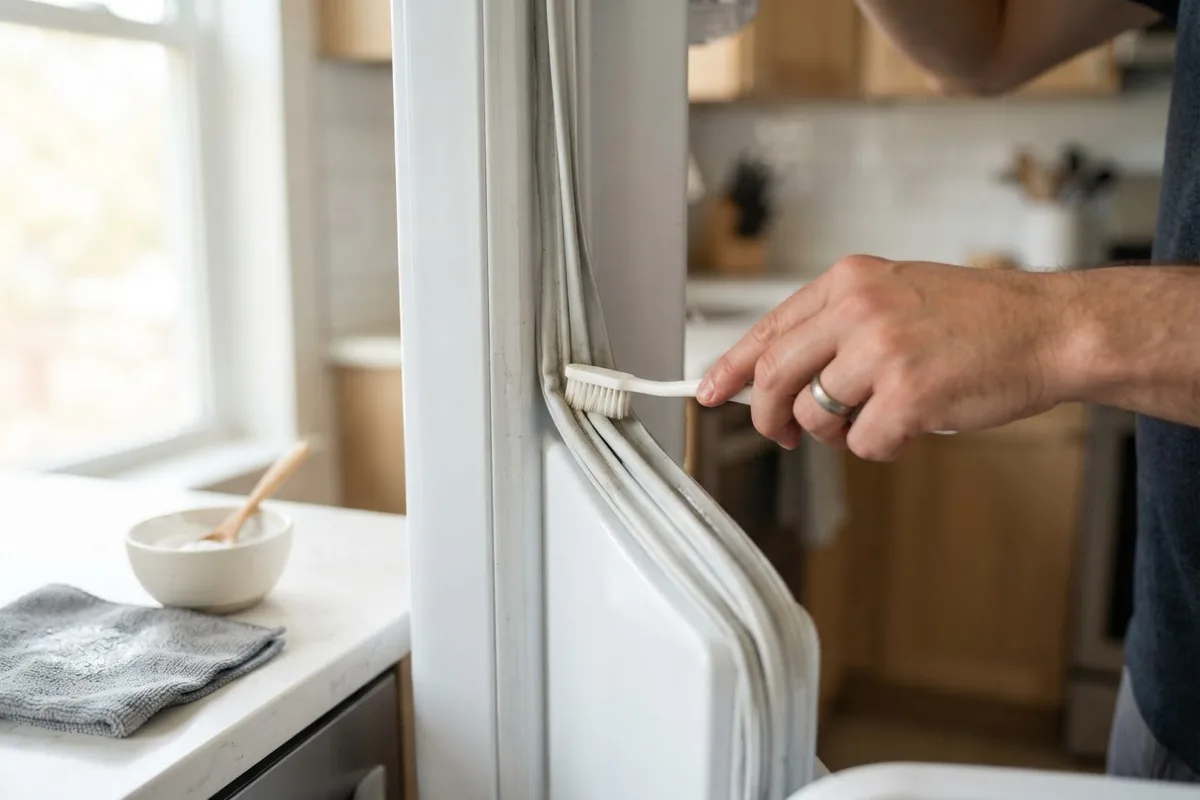
If your fridge has a damp, earthy, or mildew smell, check the flexible rubber door gaskets. Crumbs, spilled drinks, and condensation collect inside the accordion folds, creating an ideal spot for dark mold and bacteria to grow.
- Gently pull back each rubber fold around both the fresh-food and freezer doors to inspect for dark spots or sticky buildup.
- Dip a soft-bristled toothbrush into a mild paste of baking soda and water, or use a diluted solution of equal parts white vinegar and water.
- Scrub lightly inside every groove without tugging or tearing the rubber seal.
- Wipe the gaskets with a clean damp cloth and dry them completely with a microfiber towel.
Make sure the door closes flush all the way around, since a warped or dirty seal lets humid kitchen air inside and speeds up food spoilage.
4. Clean the Drain Line and Drip Pan
When an odor seems strongest near the bottom of the fridge or lingers even after a full interior scrub, check the defrost drain and drain pan. Condensation from the evaporator coils runs down a small drain hole at the back of the freezer or fresh-food section into a pan underneath the unit. Food particles and slime can clog that tube or ferment in the pan.
- Locate the small defrost drain hole along the back interior wall (usually behind or below the crisper area or on the freezer floor).
- Flush the opening with warm water and a pinch of baking soda using a turkey baster until water flows freely.
- Keep the fridge unplugged, remove the bottom front kickplate grille, and slide out the shallow drain pan if your model has a removable tray.
- Wash the pan in warm soapy water, dry it thoroughly, and slide it back securely before restoring power.
5. Swap the Air Filter and Add Odor Absorbers
If the interior looks spotless yet stale smells return within a day or two, check whether your refrigerator has a replaceable charcoal air filter. Over time, saturated carbon filters stop trapping odors and can release trapped smells back into the circulating air.
- Check behind the upper back wall or inside the filter housing near the ceiling for a small rectangular air filter cartridge.
- Twist or unclip the cover, note the airflow arrow direction, and snap in a fresh replacement filter (most models need a new one every six months).
- Place an open box of baking soda, a shallow dish of unused dry coffee grounds, or a small pouch of activated charcoal on a middle shelf for ongoing absorption.
- Toss old ice cubes from the freezer bin and wash the bin, because ice readily absorbs stale food odors.
6. Reset Temperatures and Airflow Habits
Sometimes a lingering odor is actually a cooling or airflow issue in disguise. If warm spots let dairy, meat, or cut produce spoil days too early, odors will keep coming back no matter how often you scrub.
- Plug the refrigerator back in, reopen the water shutoff valve if closed, and give the unit several hours to cool back down.
- Place an appliance thermometer in a glass of water on a middle shelf and verify the fridge holds between 35°F and 38°F, with the freezer at 0°F.
- Keep air vents along the back wall unobstructed so cold air circulates evenly to every shelf.
- Store raw meats in sealed containers on the lowest shelf and learn how to organize a refrigerator for better cooling to prevent hidden drips and warm pockets.
Use this quick chart to match what you smell to the most likely cause:
| Odor Type | Likely Source | First Safe Check |
|---|---|---|
| Sour or rotten food | Hidden spill under crisper drawers | Pull drawers and scrub glass ledges |
| Musty or mildew | Damp door gaskets or dirty drain pan | Scrub gasket folds and wash drip pan |
| Stale or plastic-like | Saturated air filter or old ice cubes | Replace air filter and dump ice bin |
| Sweet or chemical | Possible refrigerant leak | Stop DIY work and call a pro |
| Sharp electrical burning | Overheating wiring or fan motor | Unplug fridge and call a pro |
When to Call a Pro
Stop DIY cleaning right away and contact an appliance technician if you notice a sweet, nail-polish-like, or chemical smell—this can point to a refrigerant leak inside the sealed cooling system, which requires specialized equipment and should never be opened by a homeowner. Unplug the unit immediately if you ever smell burning plastic, hot wiring, or electrical smoke, and shut off the circuit breaker if you see sparks or tripped breakers.
You should also bring in help if your fridge stays above 40°F, frost builds up heavily over the rear panel, or the defrost drain freezes solid again right after cleaning. Minor repairs like replacing a failing evaporator fan motor or thermostat typically cost $150 to $400, while sealed-system work can run $500 to $1,200 or more, though costs vary by area and model. When safe DIY cleaning is not enough, True Appliance Repair can connect you with a local pro to diagnose cooling or odor issues safely.
FAQ
Why does my fridge still smell bad after I cleaned it?
Odors that survive a surface wipe-down usually sit out of sight in the defrost drain pan underneath the unit, inside the accordion folds of the door gasket, or inside an expired charcoal air filter. Old ice cubes in the freezer can also circulate stale food smells back into the fresh-food compartment.
Can I use bleach or vinegar to remove refrigerator odors?
Skip bleach inside food zones because its fumes cling to plastic liners and seals. Diluted white vinegar works well on non-porous surfaces and gasket mold, though baking soda dissolved in warm water is gentler on rubber seals and neutralizes sour food smells without leaving a vinegar scent.
How often should I clean my refrigerator drain pan?
Check and wash a removable drain pan about once every six to twelve months, or anytime you notice a damp, earthy odor near the floor grille. Always unplug the refrigerator before reaching underneath or sliding out the tray.
Does a refrigerator smell mean my appliance is leaking refrigerant?
Not usually—most odors come from spoiled spills, mildew, or a clogged drain line. However, a distinct sweet, ether-like, or chemical odor paired with poor cooling warrants shutting off the unit and calling a repair pro to inspect the sealed system.