
Hot steam escaping from your dishwasher door during a wash cycle isn't just an annoyance—it can warp wooden countertops, peel cabinet veneer, and ruin nearby drywall over time. While a light puff of moisture at the end of a dry cycle is perfectly normal, steam actively billowing out during washing points to a broken seal, improper latch pressure, or a blocked drying vent. In this guide, you will learn five practical DIY troubleshooting steps to locate the leak and fix it before it causes costly kitchen moisture damage.
Before inspecting, touching, or replacing any dishwasher components, always unplug the appliance or shut off its circuit breaker at the main electrical panel. Turn off the water supply valve beneath the sink as well to ensure total safety while performing maintenance.
1. Inspect and Clean the Rubber Door Gasket
The flexible perimeter rubber seal (or door gasket) creates an airtight barrier between the inner stainless steel tub and the door panel. Over time, food crumbs, grease, and hard water minerals accumulate along the channel, preventing the rubber from sealing flush against the frame.
- Open the dishwasher door fully and locate the rubber gasket running along the top and side rims of the tub frame.
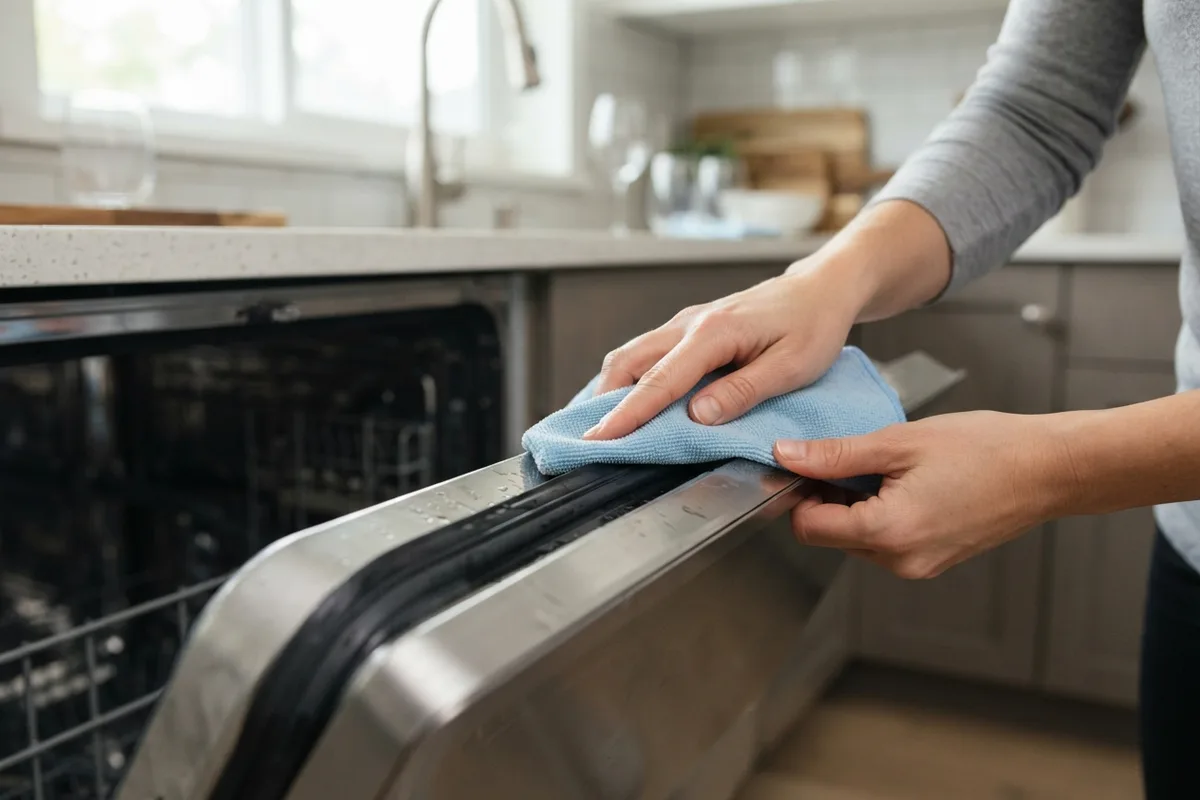
- Dampen a soft microfiber cloth with warm water and mild dish soap. Wipe down both sides of the rubber seal to remove grease and debris.
- Feel along the entire length of the gasket for cracks, flattened sections, tears, or spots where the rubber has slipped out of its mounting track.
- Inspect the lower door seal (a rubber or plastic flap attached along the base of the door). If this bottom flap is brittle or torn, steam will escape near the bottom corners of the unit.
- If the rubber is hardened, permanently deformed, or damaged, pull the old seal out of the groove and press a replacement gasket firmly into place from top center down to the bottom corners. Replacement gaskets generally cost $25 to $60, depending on your brand and model.
2. Realign or Replace a Warped Door Latch
A dishwasher door must latch firmly to create enough mechanical pressure against the rubber gasket to keep steam inside. If the latch strike is loose or the plastic catch inside the handle assembly breaks, the door may rest slightly open during operation, letting moisture escape.
- Open the door and check the strike plate mounted to the top center frame of the tub. Ensure the mounting screws are tight and the strike isn't bent.
- Inspect the latch assembly housed inside the upper door console. Look for cracked plastic housing or worn spring mechanisms.
- Tighten any loose mounting hardware using a screwdriver or Torx driver. If you suspect door alignment is an issue, reviewing our guide on Why Is My Dishwasher Door Not Latching? 5 Easy Fixes provides step-by-step latch adjustment instructions.
- If the latch spring has snapped or the mechanism fails to pull the door snug against the seal, replace the assembly. Replacement door latches usually run between $20 and $50.
3. Check the Dryer Vent Assembly and Damper
Modern dishwashers feature active drying systems equipped with a motorized vent or wax actuator damper that opens at specific points in the cycle to release humid air. If the vent damper becomes stuck closed or its internal wax motor fails, steam pressure builds inside the tub until it forces its way past the door gasket.
- Locate the drying vent port, usually found in the upper corner of the inner door panel.
- Remove the inner door mounting screws to access the internal vent housing behind the panel.
- Visually inspect the flapper damper inside the vent duct. Move it gently by hand to ensure it isn't stuck shut by dried detergent residue.
- Clear away any scale or gunk around the vent louver grid on the front face of the door.
- If the internal wax motor or vent fan fails to open the damper electronically during the dry cycle, install a replacement vent assembly. New vent assemblies typically cost between $35 and $80, depending on area and model.
4. Level the Dishwasher Tub to Prevent Gaps
If your dishwasher is not level, the entire frame tilts slightly forward or to one side. This subtle tilt puts uneven tension on the hinges, creating a microscopic gap between the door and the frame where steam can continuously bleed out. Neglecting frame alignment is one of several 7 Costly Appliance Care Mistakes That Cause Early Breakdowns that lead to avoidable home repairs.
- Place a bubble level across the top front lip of the tub with the door open.
- Check front-to-back leveling by placing the level along the inside top edge of the tub wall.
- Unscrew the lower kick plate at the base of the dishwasher to access the front leveling legs.
- Use an adjustable wrench or socket tool to turn the front legs clockwise to raise a side or counterclockwise to lower it until the bubble is centered.
- Re-check door closure to confirm that the perimeter rubber gasket makes uniform contact with the door frame all the way around.
5. Clear Clogged Spray Arm Venting Passages
Dishwasher spray arms rely on tiny directional nozzles to distribute water evenly. If these holes become blocked by food particles or hard water scale, water streams can shoot directly at the door seam rather than downward onto dishes. This creates violent internal splashing and localized pressure surges that push steam around the door perimeter.
- Remove the lower and upper spray arms by unscrewing their retaining caps or releasing their locking tabs.
- Look closely at each small jet hole along the length of both spray arms.
- Use a wooden toothpick or small plastic tool to pick out food debris or mineral deposits clogging the openings.
- Flush the spray arms under a high-pressure tap in your sink to push out remaining loose particles, then reinstall them. Spin the arms manually to verify they rotate freely without hitting the racks.
Comparing Common Causes of Dishwasher Steam Leaks
Use this quick-reference table to identify why steam is escaping your dishwasher door and plan your repair strategy:
| Problem Cause | Primary Visual Sign | DIY Effort | Typical Part Cost Range |
|---|---|---|---|
| Dirty or Damaged Gasket | Steam coming from top/sides; visible gunk on rubber | Easy (15-20 mins) | $25 - $60 |
| Misaligned Door Latch | Door feels loose; steam rises from upper center handle | Moderate (20-30 mins) | $20 - $50 |
| Faulty Drying Vent Damper | Steam surges past door during main wash cycle | Moderate (30-45 mins) | $35 - $80 |
| Unlevel Appliance Tub | Steam leaks consistently from one upper corner | Easy (15-30 mins) | $0 (Tools only) |
| Clogged Spray Arm Jets | Heavy water splashing sound with steam bursts | Easy (15 mins) | $0 (Tools only) |
When to Call a Pro
While most steam leaks stem from dirty gaskets or minor leveling issues, persistent leaks can sometimes indicate deeper mechanical or structural problems. If you have replaced the door gasket, leveled the machine, and verified the vent assembly, but hot vapor still damages your cabinets, the stainless steel tub frame itself may be twisted or warped.
Working around internal electrical wiring, main control modules, or structural cabinet mounts involves safety risks. Stop work immediately and consult an expert if you observe scorched electrical connectors or if tub alignment cannot be corrected using the leveling legs.
When faced with persistent leaks or complex cabinet modifications, True Appliance Repair can match you with a local appliance pro to inspect your machine and restore proper sealing. Typical professional repair fees for dishwasher issues range from $120 to $280, depending on your geographic area and machine model.
FAQ
Is it normal for steam to come out of a dishwasher?
A small puff of warm air or light steam releasing from the dedicated dry vent at the end of a cycle is normal. However, steam continuously leaking from around the door seal during active wash or rinse cycles indicates a failing gasket, stuck vent, or latch misalignment.
Can a dishwasher steam leak ruin kitchen cabinets?
Yes. Continuous steam leaking onto nearby wooden cabinets or laminate countertops will cause the wood to swell, peel, mold, or rot over time. Addressing a steam leak immediately prevents costly countertop and cabinetry repairs.
How often should I replace my dishwasher door seal?
Dishwasher door seals generally last 5 to 10 years depending on water hardness and usage. You should replace the seal whenever you notice cracking, permanent flattening, loss of flexibility, or visible steam escaping during operation.
Why is steam leaking from the bottom of my dishwasher door?
Steam leaking from the bottom edge usually points to a damaged lower door baffle seal, a clogged lower spray arm directing water jets toward the base seam, or an overfilling tub caused by a sticky float switch.