
Finding a puddle of water dripping from the front door vent of your dishwasher can quickly turn kitchen cleanup into a messy chore. The vent assembly is designed to exhaust hot steam during drying cycles, not channel liquid wash water down the outer front panel of your machine.
When water leaks through the vent opening, the issue is almost always a worn seal, a jammed damper motor, excess suds, or water splashing directly against the internal vent housing. Before you begin troubleshooting, safety comes first: turn off power to the dishwasher at your home breaker panel and shut off the water supply valve beneath the sink.
Here are five practical fixes to identify why your dishwasher vent is leaking water and how to resolve it safely.
Clear Clogged Baffles and Debris Inside the Vent Fan Assembly
Many modern dishwashers use an active vent assembly located inside the upper section of the inner door panel. This assembly includes small plastic louvers, drip baffles, and a channel that redirects normal condensation back down into the wash tub. Over time, grease residue, lime scale, and stray food particles can collect along the condensation return paths, causing standing moisture to spill outward through the exterior vent grille instead of draining back inside.
- Disconnect power to the unit at the circuit breaker.
- Open the door and remove the inner door perimeter screws with a Torx screwdriver to access the internal door cavity.
- Locate the round or rectangular vent duct attached behind the inner door sheet.
- Twist or unsnap the retaining ring on the front face of the inner door to release the vent housing.
- Wash the baffles, louvers, and housing in warm, soapy water with a soft-bristled brush to remove any grime or mineral deposits. If you live in an area with high mineral content, learn how to remove hard water from appliances to keep internal plastic components clear of crusty buildup.
- Let the parts dry completely and reinstall them firmly into position.
Replace a Worn or Distorted Door Vent Gasket
Between the plastic vent assembly and the stainless steel or composite inner door liner sits a specialized rubber or foam gasket. This seal prevents wash water from slipping into the door cavity and dripping out of the lower exterior louvers. Over several years of high-heat cycles, this gasket can dry out, shrink, crack, or flatten.
- Shut off electrical power at the breaker panel.
- Unscrew the outer door panel screws while supporting the door so it does not drop unexpectedly.
- Inspect the rubber ring or foam gasket surrounding the vent opening.
- Check for tears, hardening, flattening, or black mold growth that prevents a snug, watertight seal.
- If the gasket is stiff or brittle, peel it away and wipe down the metal contact surface with isopropyl alcohol.
- Press a new manufacturer-matched vent gasket firmly into the groove, ensuring there are no twists or gaps.
- Reassemble the door panels and tighten the mounting screws evenly to ensure uniform compression.
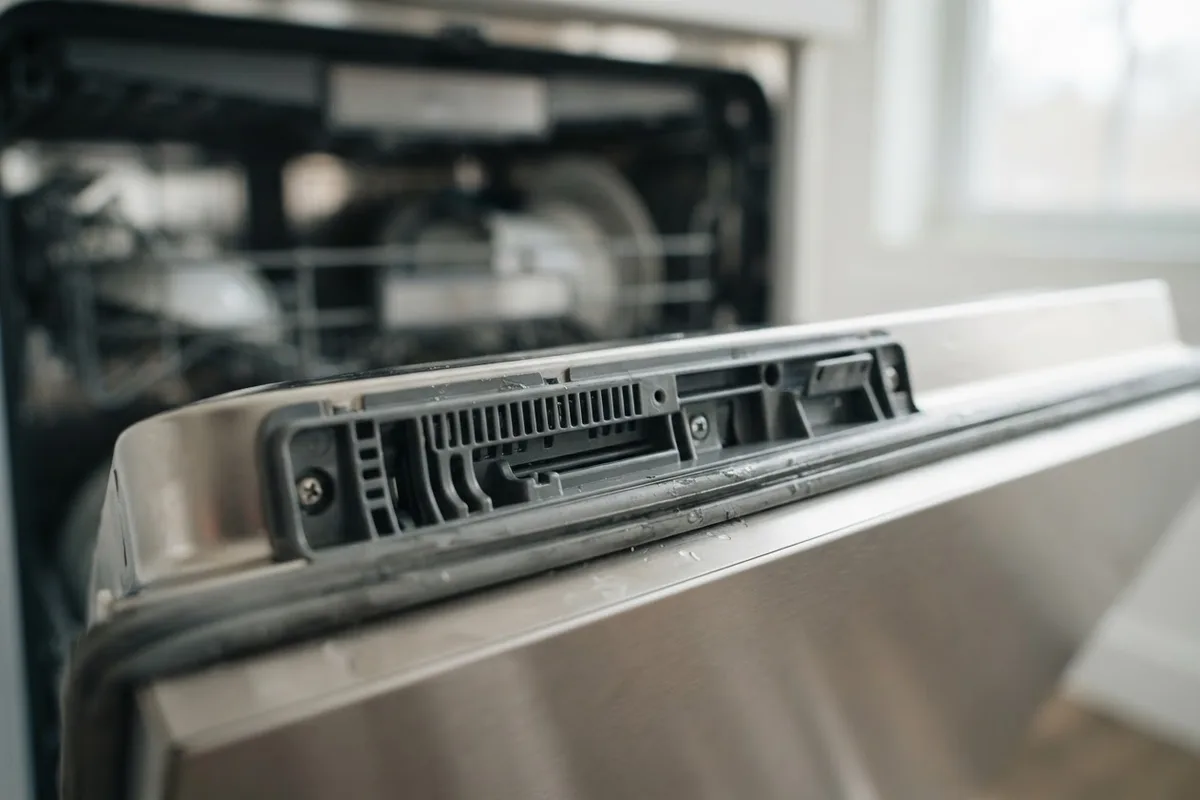
Inspect and Unjam the Active Vent Flapper Motor
Dishwashers with active condensation drying often feature a mechanical flapper door powered by a small thermal wax motor or electronic actuator. During the main wash and rinse cycles, this flapper remains tightly shut to block churning water from entering the vent duct. Once the drying cycle begins, the actuator opens the flapper to let humid air escape.
If the wax motor fails or food debris wedges the flapper open during high-pressure wash phases, the spinning spray arms will shoot water straight through the vent duct and out the front panel.
- Turn off power at the main circuit breaker.
- Remove the inner door screws to expose the vent actuator motor.
- Manually push against the spring-loaded flapper door. It should move smoothly against spring tension and snap firmly back into a sealed position.
- Check around the hinge pins for bits of broken glass, plastic film, or mineral crust obstructing the movement.
- If the flapper does not spring closed on its own, the return spring or the wax motor actuator has likely worn out and needs replacement.
- If your sink area also shows signs of water backup around the same time, check why is dishwasher air gap overflowing to ensure your overall drainage system is breathing properly.
Fix Overfilling from a Misaligned Float or High Water Pressure
If the water level inside the tub rises higher than normal, the lower wash arm sits submerged or partially choked. This disrupts the intended spray pattern and creates forceful wave action that splashes high against the door vent. An overfilling tub is usually caused by a stuck overfill float switch or an incoming water inlet valve that does not close promptly.
- Shut off the circuit breaker.
- Open the dishwasher door and pull out the lower dishrack.
- Locate the dome-shaped float in the front corner of the tub floor. Lift it up and down; it should click freely without sticking.
- Clear away tangled hair, food bits, or detergent buildup beneath the float stem.
- Run a normal cycle and open the door mid-fill to inspect the depth. The water should sit just below the heating element, typically about 1 to 1.5 inches deep in the sump.
- If the water level reaches the bottom lip of the inner door, the inlet valve or float switch requires adjustment or replacement.
Re-Level the Dishwasher Tub to Stop Water Splashing Forward
Dishwashers rely on precise leveling to keep water collected at the center sump and back drainage port. If your machine is tilted slightly forward toward the kitchen, the standing water pool rests closer to the door seal, and forceful spray deflects directly into the upper door vent openings.
- Disconnect power to the appliance.
- Remove the lower kickplate screws and take off the access panel.
- Place a small bubble level along the top front edge of the tub opening and along the side rail.
- Use an adjustable wrench or screwdriver to raise the front leveling legs or lower the rear leveling mechanism until the bubble is centered in both directions.
- Verify that the door hangs straight and does not rub against the cabinet frame when closing.
- Run a short rinse test cycle to verify that no moisture seeps past the vent louvers.
Dishwasher Vent Troubleshooting Quick Reference
| Symptom | Probable Cause | DIY Action |
|---|---|---|
| Fine mist or drips during wash cycle | Vent flap stuck open or wax motor failed | Inspect damper spring; replace actuator |
| Heavy water pouring during fill | Overfilling / Stuck float switch | Clean float stem; check water inlet valve |
| Water seeping from bottom edge of vent | Cracked or degraded vent gasket | Replace rubber/foam vent seal ring |
| Constant moisture marks down front panel | Blocked condensation drain channels | Clean internal vent louvers and baffles |
| Intermittent leak only on heavy cycles | Tub tilted forward out of level | Adjust front leveling legs |
When to Call a Pro
Most vent leaks can be tackled with basic hand tools by clearing out stubborn debris, realigning a float switch, or replacing a deteriorated perimeter seal. However, if water continues to drip through the door panel, the issue might stem from internal wiring faults, a cracked inner door shell, or a damaged electronic main control board that fails to signal the vent damper.
If you are uncomfortable taking apart electrical door harnesses or suspect a deeper structural leak beneath the tub, reaching out to an experienced technician is the safest course of action. In typical situations across the United States, basic dishwasher repairs range between $120 and $300, though final rates vary based on your local area and specific replacement parts. When you need dependable help, True Appliance Repair can match you with an independent local pro for expert dishwasher repair services.
FAQ
Is it normal for some steam to escape the dishwasher vent?
Yes. The vent is specifically designed to release hot steam and moist air during the heated drying cycle. However, visible liquid water should never stream, pour, or puddle down the front exterior panel of the machine.
Why does my dishwasher vent leak only when using pods?
Certain detergent pods generate higher concentrations of suds if your household water is very soft or if dishes are pre-rinsed too thoroughly. Thick suds expand into the door cavity and liquefy inside the vent duct, causing liquid to drip out through the exterior louvers.
Can a warped wash spray arm cause a vent leak?
A cracked, split, or warped spray arm can shoot an uninterrupted high-pressure water stream upward against the upper vent housing instead of rotating in a standard diffuse fan pattern. Check your spray arms for split seam lines or clogged side nozzles if the vent only leaks during active spraying phases.