
A noisy freezer fan can turn a quiet kitchen into an irritating echo chamber. Whether your unit is emitting a harsh rattling sound, a rhythmic ticking, or an intense whining pitch, unusual fan noises usually point to physical obstruction or worn mechanical parts. Left unchecked, a failing fan motor can disrupt airflow, causing temperature spikes that ruin stored frozen groceries.
Before taking anything apart, always prioritize safety. Always unplug your refrigerator from the wall electrical receptacle or turn off the dedicated breaker at your home electrical panel before removing protective interior covers or handling wiring. Here are the five most common causes behind a noisy freezer evaporator fan and how to fix them.
Clear Ice Buildup Around Evaporator Fan Blades
The most frequent culprit behind a loud freezer fan is frost contacting the spinning plastic fan blades. When moist air enters the freezer cabin—or when the automatic defrost cycle fails—thick frost accumulates along the rear evaporator panel. As that frost expands, the spinning fan blades begin scraping against the ice wall, producing a rapid ticking, whirring, or fluttering noise that often quiets down when you open the freezer door.
To resolve this buildup, inspect the back wall inside the freezer compartment:
- Safely unplug the appliance.
- Transfer your frozen food to an insulated cooler.
- Remove the storage bins and shelving to reach the rear evaporator panel screws.
- Take off the rear cover plate using a standard nut driver or screwdriver.
- Inspect the fan housing. If thick rime or frost surrounds the fan blades, use a handheld hair dryer on low heat to gently melt the accumulation, catching runoff moisture with shop towels. Avoid high heat, which can warp thin plastic housing walls.
- Reassemble the back panel, restore power, and listen for smooth operation.
If the ice returns within several days, the root problem is likely a failing defrost timer, bimetal thermostat, or defrost heater element rather than the fan itself.
Replace a Worn Evaporator Fan Motor
Electric fan motors rely on small bronze sleeve bearings or sealed ball bearings to spin freely at high RPMs. Over years of continuous operation, factory lubricant dries out, and internal bearing friction increases. A failing motor typically produces a steady, high-pitched squealing, droning groan, or loud metal grinding noise that continues non-stop whenever the compressor runs.
Testing and replacing the motor is straightforward:
- Unplug the refrigerator and remove the freezer's interior rear panel.
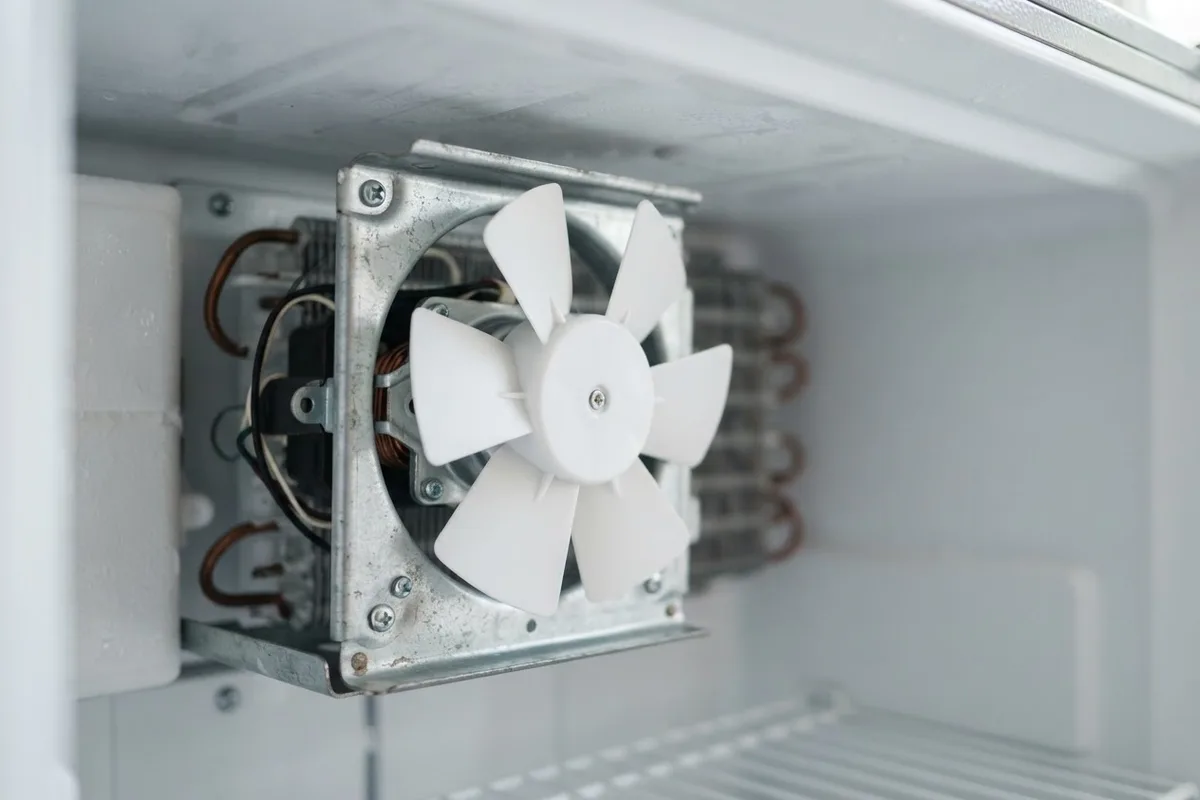
- Locate the evaporator fan assembly mounted directly above the cooling coils.
- Try spinning the fan blade assembly manually with your finger. It should rotate freely with zero resistance. If the blade feels stiff, catches, or wobbles loosely on the shaft, the internal motor bearings have failed.
- Disconnect the wire harness plug attached to the motor body.
- Unfasten the retaining screws or clips holding the motor bracket in place.
- Install a direct OEM-matching replacement motor, reattach the ground wire, secure the bracket, and snap the blade firmly back onto the shaft.
A replacement evaporator fan motor typically runs between $40 and $120 for the part alone, making it an affordable repair that restores quiet operation.
Reseat Loose or Cracked Fan Blades
A freezer fan blade assembly is made of lightweight molded plastic pressed onto a central metal drive shaft. Over time, recurring temperature shifts from below zero to defrost levels cause plastic to expand and contract. This cycle can cause the central plastic hub to crack, slip, or slide forward along the shaft.
When a fan blade slips out of position, it vibrates off-center or clips against the surrounding plastic shroud, creating an annoying chatter or intermittent knocking sound. Here is how to fix it:
- Disconnect the refrigerator from electrical power.
- Remove the rear internal panel to expose the fan blade assembly.
- Grasp the fan hub and pull gently. Inspect the hub for hairline splits, chipped edges, or bent plastic blades.
- If the blade is cracked, replace the plastic fan blade assembly entirely. Glue or tape will quickly fail under sub-zero freezer conditions.
- If the blade is intact but loose, push it firmly down onto the shaft until it seats properly against the retention stop, ensuring at least a quarter-inch clearance from all surrounding housing edges.
- Spin the blade by hand to confirm it runs true without wobbling before reinstalling the cover panel.
Replace Dried-Out Rubber Mounting Grommets
Freezer fan motors are anchored to the metal chassis using small silicone or rubber isolation grommets. These dampeners absorb motor vibrations before they can resonate through the steel walls of your refrigerator cabinet. Over five to ten years of cold, dry exposure, these rubber mounts harden, shrink, or crumble completely.
Without flexible dampening, normal motor vibration transfers directly into the freezer interior, transforming a faint hum into an amplified, deep drumming or rattling noise. If you suspect this is the case, consider how fan issues compare to other common problems like a refrigerator compressor clicking or general cooling airflow drops.
To address vibration dampeners:
- Cut appliance power at the wall outlet.
- Disassemble the rear freezer panel to access the fan motor mounting bracket.
- Inspect the rubber rings surrounding the mounting screws or bracket posts.
- If the grommets feel brittle, flattened, or rock-hard to the touch, unbolt the bracket and slide the worn rings off.
- Press new rubber vibration grommets into the bracket openings.
- Re-tighten the mounting screws snugly, but avoid over-torquing, which compresses the rubber and defeats its noise-dampening capability.
| Noise Characteristic | Most Likely Cause | Typical Difficulty | DIY Fix Approach |
|---|---|---|---|
| Rapid ticking or fluttering | Blade hitting frost buildup | Moderate | Melt frost; inspect defrost system |
| High-pitched squeal or hum | Worn internal motor bearings | Moderate | Replace evaporator fan motor |
| Rhythmic clicking or knocking | Loose, cracked fan blade | Easy | Reseat or replace plastic blade |
| Deep buzzing or drumming | Hardened rubber grommets | Easy | Install new vibration dampeners |
| Intermittent scraping sound | Fan blade off-center in shroud | Easy | Realign blade on drive shaft |
Inspect the Freezer Door Gasket for Air Leaks
A worn or loose door seal might seem unrelated to fan noise, but it is frequently the hidden root cause. When cold air leaks out and warm, humid room air leaks past a damaged gasket, humidity condenses directly on the coldest surfaces inside the freezer—primarily the evaporator coils and fan shroud. That moisture freezes into solid rime, quickly obstructing the fan blades.
If you find yourself repeatedly melting frost away from your fan blades, check your door seal:
- Inspect the flexible magnetic rubber perimeter gasket for tears, folds, or hardened cracks.
- Perform the classic dollar bill test: place a dollar bill across the door frame, close the freezer door, and pull gently. If the bill slides out freely without resistance, the magnetic seal is not making proper contact.
- Clean any sticky food residue from the gasket channels using warm water and mild dish soap.
- For minor gasket folds, gently warm the vinyl using a hair dryer on medium heat to restore flexibility, then close the door firmly to re-seat the magnet.
- If the gasket is torn, detached, or permanently brittle, replace the door seal to block moisture infiltration.
Resolving moisture leaks stops ice buildup at the source, preventing repetitive fan blade strikes. For broader temperature or ice balance issues, our guide on why your freezer is burning food explains additional ways poor airflow impacts preserved groceries.
When to Call a Pro
While clearing frost, tightening blades, and swapping out a basic evaporator motor are approachable DIY projects, some freezer issues require specialized equipment and professional diagnosis. If your fan noise is accompanied by complex defrost control failures, extensive wiring problems, or refrigeration leaks, self-repairs can quickly become overwhelming.
Always stop and call a professional technician if:
- You notice oily residue around the cooling coils, which points to a sealed-system refrigerant leak.
- The freezer compartment remains warm while the compressor runs constantly and the evaporator fan fails to receive electrical voltage.
- You suspect complex electrical control board malfunctions or damaged internal harness wiring.
- The noise persists after replacing both the fan motor and blades.
For major electrical or sealed-system complications, True Appliance Repair can match you with an independent local appliance pro to diagnose and repair your refrigerator safely. Professional labor rates typically range between $130 and $280 depending on your region and the specific brand of your refrigerator.
FAQ
Can I run my refrigerator if the freezer fan is making noise?
You can run it temporarily while diagnosing the issue, but operating a freezer with an obstructed or failing fan is not recommended. If the blades seize, the motor can burn out completely, and without continuous air circulation, the fresh food compartment will steadily warm up, risking food spoilage.
Why does the fan noise stop when I open the freezer door?
Modern refrigerators have a door switch that cuts power to the evaporator fan as soon as the door opens, preventing cold air from blowing into the room. If the noise instantly stops when the door cracks open, that confirms the evaporator fan—not the condenser fan underneath the fridge—is the source of the noise.
How much does it cost to fix a noisy freezer fan?
If you handle the repair yourself, replacement fan blades cost roughly $15 to $35, while a replacement motor generally costs between $40 and $120. If you hire a professional technician, the complete repair typically ranges from $150 to $320 depending on your appliance model and local labor rates.
What is the difference between the evaporator fan and the condenser fan?
The evaporator fan is mounted inside the freezer compartment behind the rear panel to circulate chilled air across both freezer and fresh food sections. The condenser fan is located outside the unit underneath or behind the refrigerator, blowing room air over the compressor and exterior coils to disperse heat. Both can generate noise, but interior squeals and blade clicks originate from the evaporator fan.