
Opening your freezer only to find expensive steaks and homemade sauces covered in chalky ice crystals is frustrating. Freezer burn ruins texture, drains flavor, and leads to wasted food. Fortunately, freezer burn is not a mystery—it is caused by air exposure and moisture loss driven by temperature swings or improper airflow.
With a few simple adjustments to your storage habits and basic appliance maintenance, you can stop the cycle of ruined groceries. Before inspecting mechanical components inside your freezer compartment, always unplug the appliance to protect your safety.
Seal Food in Airtight, Moisture-Vapor-Resistant Packaging
Freezer burn occurs when moisture sublimates directly from frozen food into the surrounding dry air. Standard plastic wrap, cheap sandwich bags, and thin grocery store packaging allow microscopic air leaks. Over weeks or months, the dry freezer air pulls moisture straight out of meat, poultry, and vegetables, leaving behind leathery, discolored patches.
To prevent packaging-related moisture loss, follow these packing steps:
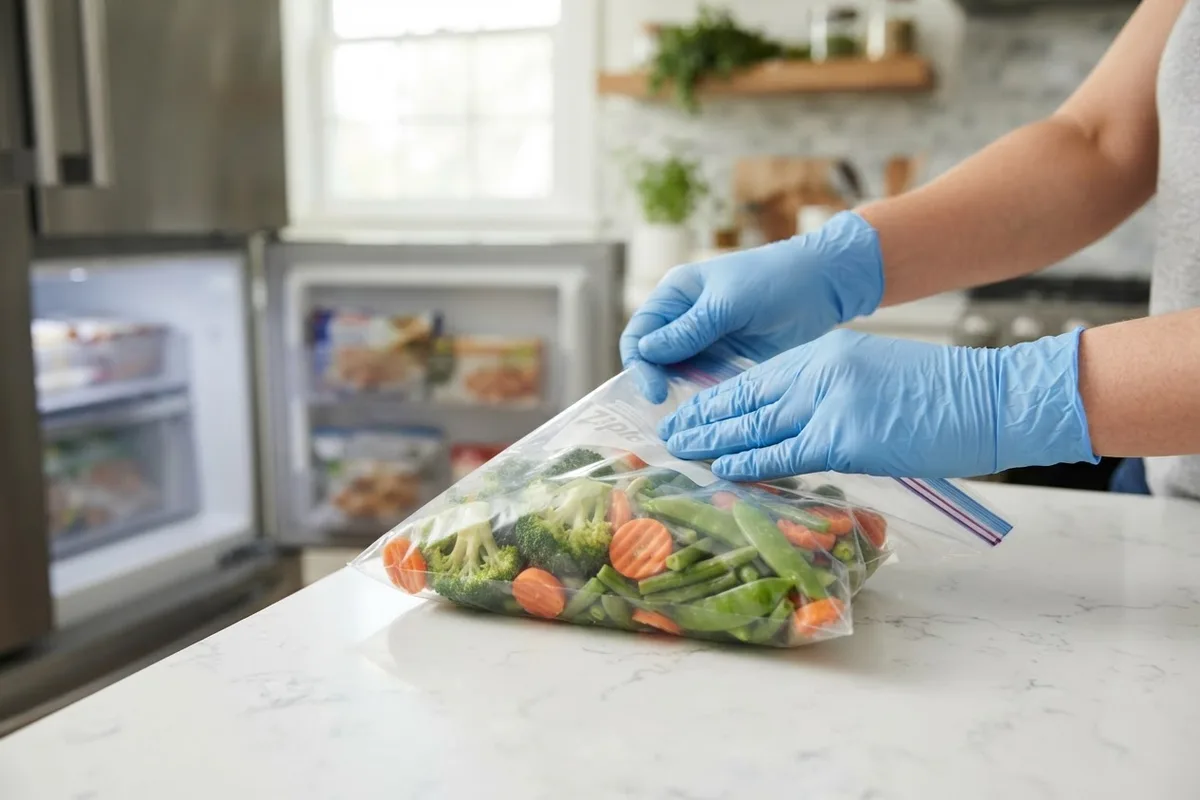
- Use heavy-duty freezer bags: Standard zipper bags are air-permeable over long periods. Choose bags specifically labeled for freezer storage.
- Remove all excess air: Press as much ambient air out of the bag as possible before sealing. You can submerge the bagged food in a bowl of water up to the zipper line to push air out before locking it.
- Double-wrap meats: Wrap cuts of beef, pork, or poultry tightly in aluminum foil or butcher freezer paper before placing them into a thick freezer storage bag.
- Consider a vacuum sealer: For batch cooking or buying in bulk, vacuum sealers remove nearly 100% of oxygen, extending storage life from months to years.
Clean and Inspect the Freezer Door Gasket
Even properly wrapped food will dry out quickly if warm kitchen air continually sneaks into the freezer cabinet. A damaged, dirty, or brittle rubber door gasket allows humid air to enter. That warm air hits the cold internal temperatures, creating heavy frost and rapid moisture evaporation from packages.
Inspect your door seal using these straightforward steps:
- Perform the dollar bill test: Close a crisp dollar bill in the freezer door so half sits inside and half sticks out. Pull the bill gently. If it slides out with zero resistance, the seal is weak or misaligned.
- Test multiple points: Repeat the test around the top, sides, and bottom perimeter of the door.
- Clean the rubber folds: Warm water, mild dish soap, and a soft microfiber cloth will remove sticky spills, crumbs, and syrup that hold the gasket open.
- Check for cracks or tears: If the gasket is hardened, torn, or warped, it needs replacement. You can temporarily reshape minor bends by warming the rubber gently with a hair dryer on low heat.
If you notice cold air leaking around the main compartment as well, our guide on why your refrigerator is sweating inside covers additional cabinet seal issues.
Adjust and Monitor the Internal Temperature
A freezer set too warm—or one that experiences wide temperature swings—dramatically accelerates freezer burn. When the internal temperature rises above optimal levels, the surface moisture on food melts slightly. As the compressor kicks on again, that moisture refreezes as coarse surface crystals, pulling vital juices out of the core of your food.
To stabilize your freezer climate:
- Set the thermostat to 0°F (-18°C): Many people mistakenly run freezers at 10°F to 15°F to save electricity, but 0°F is required to prevent moisture migration.
- Use a standalone appliance thermometer: Built-in dials are rarely precision-accurate. Place an analog or digital refrigerator/freezer thermometer directly between food packages on a middle shelf.
- Avoid frequent, prolonged door openings: Plan what you need before opening the door to minimize how much humid room air rushes in.
- Let hot foods cool first: Placing steaming leftovers directly into the freezer spikes the ambient temperature and creates localized steam that burns adjacent packages.
If your unit struggles to maintain steady cold, you may want to check why your freezer is not freezing or explore professional refrigerator repair.
Organize Shelves to Maintain Proper Airflow
Air circulation is critical for rapid, even freezing. When you stack items tightly against interior vents or overpack shelves, cold air cannot circulate smoothly. Warm pockets form in blocked corners, while items directly in front of the cold air diffuser get hit with intense, desiccating air blasts.
Maintain balanced airflow with these organization habits:
- Keep vents clear: Locate the air return and supply vents along the rear or top wall of the freezer. Keep at least two to three inches of clear space in front of each vent opening.
- Maintain a 70% to 80% fullness rule: An empty freezer loses cold air rapidly every time you open the door, while a crammed freezer stops airflow. Aim for roughly three-quarters full.
- Use wire or ventilated bins: Group smaller items in slotted plastic or wire organizers so air moves under and around individual packages.
- Rotate inventory: Practice first-in, first-out (FIFO). Move older packages to the front and date every package with a permanent marker.
| Food Type | Standard Bag Storage Life | Vacuum Sealed Storage Life | Signs of Freezer Burn |
|---|---|---|---|
| Ground Beef & Poultry | 3 to 4 months | 1 to 2 years | Grayish-brown dry spots, heavy ice layers |
| Steaks & Chops | 6 to 9 months | 2 to 3 years | Tough edges, pale discoloration, leathery surface |
| Vegetables | 6 to 8 months | 18 to 24 months | Shriveled appearance, white frost blanket |
| Soups & Broths | 2 to 3 months | 1 to 2 years | Receded liquid line, ice crystals on lid |
Check for Defrost Cycle and Evaporator Fan Faults
Modern frost-free freezers rely on an automatic defrost cycle that briefly heats the cooling coils once or twice daily to melt frost buildup. If the defrost thermostat, timer, or control board malfunctions, the heating element may stay on too long or turn on too frequently. This creates extreme temperature spikes that bake moisture right out of your food.
Similarly, a failing evaporator fan motor slows air movement, allowing severe frost build-up that chokes off cooling efficiency. If you also hear ticking or clicking from behind the cabinet, see our breakdown on why your refrigerator compressor is clicking.
- Unplug the appliance: Always disconnect power before removing rear interior panels.
- Look for solid frost sheets: Remove the back interior cover. If the evaporator coils are buried in a solid block of ice, the defrost system has failed.
- Listen for fan motor strain: A humming, squeaking, or silent evaporator fan means air is not circulating properly over the coils.
When to Call a Pro
While wrapping food carefully and cleaning door gaskets are simple DIY fixes, internal cooling problems require technical diagnostic tools. Testing defrost control boards, swapping burned-out defrost heaters, or diagnosing refrigerant pressure imbalances involve high-voltage wiring and complex sealed systems.
If your freezer temperature fluctuates wildly despite a clean gasket and proper thermostat settings, stop hands-on troubleshooting and consult an expert. A typical professional diagnostic visit and component repair generally ranges from $150 to $400, depending on your region and appliance model. When you need dependable assistance, True Appliance Repair can match you with a local appliance pro to diagnose and repair your unit quickly.
FAQ
Is food with freezer burn safe to eat?
Yes, freezer-burned food is completely safe to eat because the low temperatures prevent bacterial growth. However, the affected sections will taste bland, dry, or leathery. You can trim away discolored edges before cooking or use the meat in slow-cooked stews and broths where added moisture helps restore texture.
Can you reverse freezer burn once it happens?
Freezer burn cannot be reversed because moisture has physically evaporated from the cellular structure of the food. Once cellular walls dry out and oxidize, the moisture cannot simply be soaked back in. The best approach is to cut away the affected outer layer before preparing the dish.
How full should a freezer be to prevent freezer burn?
A freezer should be kept around 70% to 80% full. Having enough frozen mass helps stabilize cabinet temperatures when the door opens, preventing the temperature fluctuations that trigger freezer burn. However, leaving 20% to 30% open space ensures cold air can circulate freely between shelves.
Why is my ice cream soft but meat getting freezer burn?
Ice cream contains fats and sugars that require precise 0°F temperatures to remain solid. If your freezer runs between 10°F and 20°F, ice cream softens while meat undergoes continuous micro-thawing and refreezing cycles that produce heavy surface crystals and freezer burn.