
A dishwasher that constantly beeps can turn a quiet evening in your kitchen into an annoying guessing game. While a single end-of-cycle chime alerts you that your dishes are clean, rapid, continuous, or mid-cycle beeping usually signals an active operational error. The appliance is attempting to protect its internal components or prevent water damage on your kitchen floor.
Fortunately, you do not always need specialized tools to solve this problem. Many chime alerts stem from simple issues like a loose door latch, an interrupted water supply, or a temporarily glitched main control board. By systematically checking these common failure points, you can quickly diagnose the root cause and get your dishwashing routine back on track.
Before performing any hands-on inspection, safety must come first. Always unplug your dishwasher from the wall outlet or flip the dedicated breaker switch in your home's main electrical panel. If you need to check water lines or valves beneath the machine, make sure to shut off the water supply valve under the sink as well.
1. Reset Power to Clear a Control Board Glitch
Modern dishwashers rely on an electronic control board that functions like a small computer. Sudden power fluctuations, brief electrical surges, or door openings mid-cycle can cause the memory to freeze, resulting in repetitive beeping pattern alerts.
Performing a hard power reset clears temporary error codes from the electronic board's memory without damaging your settings:
- Press the Start/Reset button on your dishwasher console and hold it down for 3 to 5 seconds. On many units, this forces the drain pump to run briefly and cancels the current cycle.
- Unplug the appliance power cord from the wall outlet beneath your sink. If the plug is inaccessible, turn off the dedicated circuit breaker in your electrical breaker box.
- Leave the power completely disconnected for at least 10 to 15 minutes. This allows all electrical capacitors on the main circuit board to discharge fully.
- Restore power to the unit and select a short test wash cycle to see if the random beeping has stopped.
If the chime returns immediately after restoring power, the issue is likely physical rather than a temporary electronic glitch.
2. Inspect and Fasten the Door Latch Assembly
If your dishwasher detects that the door seal is broken or the door latch has slipped even a fraction of an inch during operation, it will stop the cycle and emit warning beeps. This safety precaution prevents hot water from spraying out onto your kitchen flooring.
Over time, plastic latch catches wear down, strike plates shift out of alignment, or bulky items like oversized baking sheets press against the inner door panel, preventing a tight closure. You may also notice your dishwasher running longer than usual if the latch seal periodically breaks mid-cycle.
Inspect the door mechanism using these steps:
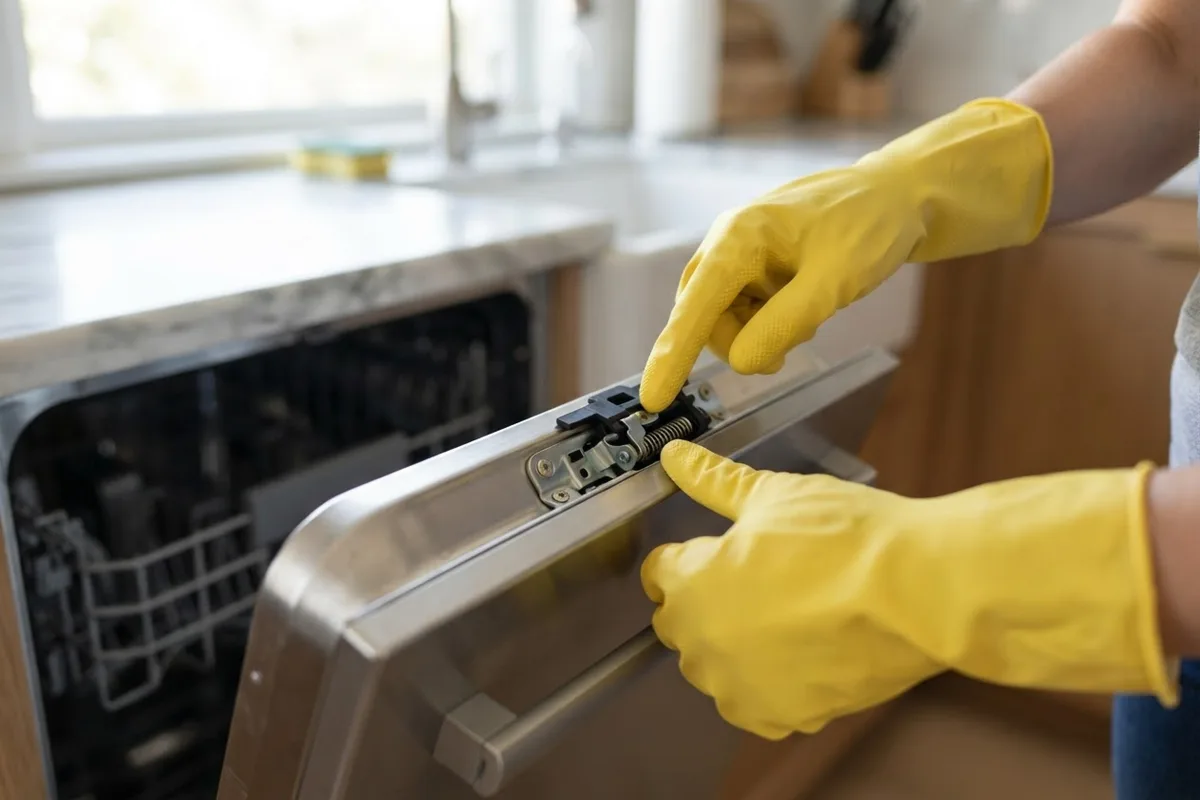
- Open the door and check the mechanical latch assembly located along the top rim or inner frame of the tub.
- Look for bent metal tabs, cracked plastic housing, or accumulated food debris clogging the catch mechanism.
- Wipe down the rubber door gasket with warm water and mild dish soap to remove sticky residue that might prevent the door from sealing flat.
- Re-align the strike plate with a screwdriver if it has loosened over time.
- Firmly close the door until you hear a sharp, solid clicking sound. Start a cycle to test if the latch holds securely.
3. Clear Water Supply and Inlet Valve Obstructions
When a dishwasher cannot pull in sufficient water within a set timeframe, the water inlet valve controller triggers a low-water error beep. This frequently happens if the main shutoff valve under your sink was partially closed or if hard water deposits clog the inlet valve screen.
To safely inspect the water inlet system:
- Shut off the hot water supply valve located underneath your kitchen sink.
- Unplug the dishwasher from its electrical power source.
- Disconnect the flexible stainless steel water fill line from the inlet valve behind the lower access kickplate.
- Place a small bucket under the hose and briefly open the shutoff valve under the sink to confirm strong water pressure is reaching the hose.
- Examine the small wire mesh filter screen sitting inside the inlet valve port. Carefully clean out any rust flakes or lime scale using an old toothbrush and vinegar.
- Reattach the fill hose tightly, restore the water supply, and check for leaks before turning the electrical power back on.
4. Unclog the Drain Line and Check the Basin Float
If water cannot exit the tub quickly enough, an overfill protection float or internal flood sensor will activate, triggering a continuous high-pitched alarm to warn of an impending leak. Taking early action is essential for preventing appliance water leaks in your home.
Inspect your drainage pathway for blockages using this checklist:
- Remove the lower dish rack and examine the bottom basin of the dishwasher tub for standing water.
- Take off the filter assembly and screen located at the bottom of the tub, washing away trapped grease, bones, or glass shards under warm tap water.
- Locate the overfill float—usually a small plastic dome or cylinder in the front corner of the tub floor. Lift it gently up and down to ensure it moves freely and makes a light clicking sound.
- Check your kitchen garbage disposal inlet nipple (if recently installed) to ensure the plastic knockout plug was fully removed.
- Inspect the flexible corrugated drain hose under the sink for kinks, sags, or heavy grease sludge blockages.
5. Adjust Overcrowded Racks and Balanced Dish Loads
Modern dishwashers utilize sensitive internal turbidity and water level sensors. Loading large pots, cutting boards, or long utensils improperly can block the upper or lower spray arms from spinning, or trap the plastic float switch in an up position.
When spray arms bump against tall plates, the motor resistance changes, which can prompt an electronic error chime on select models. To correct loading issues:
- Ensure long spatulas, serving spoons, and tall chef knives are placed horizontally in utensil baskets or top trays so they do not poke down through the rack grids.
- Spin both the lower and upper spray arms by hand before starting a load to confirm full 360-degree clearance.
- Avoid leaning heavy cast-iron pans directly against the side walls where float switches or temperature sensors are mounted.
- Redistribute heavy stoneware evenly across the bottom rack so the tub remains balanced during high-speed wash and drain cycles.
Dishwasher Beep Patterns and Troubleshooting Guide
Use this quick reference table to match the specific sound pattern your machine makes with its most likely cause and recommended fix:
| Beep Pattern | Likely Cause | Primary Fix |
|---|---|---|
| 3 Consecutive Beeps | Door Latch Misalignment | Re-align door latch assembly; clean perimeter rubber seal. |
| Continuous Rapid Beeping | Water Leak or Flood Sensor Activation | Clear drain filter; check overfill float switch in basin floor. |
| Beeping Every 30 Seconds | Power Interruption / Board Glitch | Perform a 15-minute hard power disconnect reset. |
| 2 to 4 Beeps Mid-Cycle | Low Water Flow or Fill Timeout | Inspect water valve under sink; clean inlet screen. |
| Beeping at End of Cycle | Normal Clean Signal | Disable signal in menu settings if feature is unwanted. |
When to Call a Pro
While simple door latch adjustments, drain filter cleaning, and power resets are ideal DIY projects, certain dishwasher failures require specialized technical diagnostics. You should refrain from attempting DIY repairs and instead contact a professional technician if you encounter:
- Persistent water leaks underneath the machine cabinet that do not clear after cleaning the drain line.
- Burnt plastic smells or visible scorching near the main electronic control board wiring.
- Error codes accompanied by a complete failure of the main circulation pump or heating element.
- Internal electrical short-circuits that repeatedly trip your home's main circuit breaker.
When dealing with complex control board diagnostics, heating circuit repairs, or sealed system failures, dishwasher repair services ensure the job is handled safely. True Appliance Repair can match you with a local appliance pro to diagnose the issue quickly and restore your kitchen to full working order.
FAQ
Why does my dishwasher beep 3 times and refuse to start?
Three consecutive beeps usually indicate that the main control board does not detect a firm door latch connection. Inspect the mechanical door latch at the top rim of the door for food debris, check that the latch catch is not bent, and ensure large dishes are not preventing the door from closing completely.
Can a power outage cause a dishwasher to start beeping?
A sudden power outage or voltage spike can cause the dishwasher control board to freeze mid-program, leaving the appliance stuck in an error state once power returns. Unplug the unit or switch off its breaker for 15 minutes to reset the board's internal memory.
Is it safe to leave a beeping dishwasher plugged in overnight?
It is not recommended. Continuous error beeping often signals an active issue, such as a triggered leak sensor or an overheating heating element. If your dishwasher will not stop beeping, switch off its circuit breaker or unplug it until you can investigate the cause.
How much does it typically cost to repair a dishwasher that keeps beeping?
If the fix requires professional component replacement—such as installing a new drain pump, water inlet valve, or main control circuit board—typical repair costs in the US range between $150 and $350. Final pricing varies depending on your geographic area, the age of the machine, and specific manufacturer replacement part costs.