
Modern dishwashers are designed to run longer than older models to save energy, but a cycle that stretches past three or four hours usually indicates a hidden component issue. When internal sensors detect low water temperatures or slow fill times, the control module delays cycle progression until target conditions are met.
Troubleshooting an unusually long wash cycle is straightforward when you know where to look. Before taking anything apart, always turn off the circuit breaker to your dishwasher and shut off the hot water supply valve beneath your sink to keep your workspace completely safe. With basic tools, you can identify and resolve the most common causes behind extended cycle times.
1. Verify Household Hot Water Supply Temperature
Dishwashers rely on incoming tap water reaching a baseline temperature—typically 120°F (49°C)—before beginning the main wash phase. If the water entering the tub is too cold, the machine pauses the cycle timer while internal heating components boost the temperature to proper sanitizing levels. This thermal delay can easily add 30 to 60 minutes to your total run time.
To test your incoming water temperature, run the hot water faucet closest to your dishwasher for 60 seconds. Fill a glass and check the temperature with a standard meat or candy thermometer. If the reading falls below 120°F, adjust your home's main water heater thermostat accordingly.
Additionally, always run the hot water faucet at the kitchen sink for 15 to 30 seconds immediately before pressing start on your dishwasher. This purges cold standing water from the supply pipes, ensuring the tub fills with hot water right away. If your unit still struggles to reach thermal targets, you may have an issue with internal heating, similar to what occurs when dealing with a dishwasher that is not heating.
2. Inspect and Clean the Turbidity Sensor
Most modern dishwashers utilize an optical turbidity sensor (soil sensor) located in the sump area beneath the lower spray arm. This device beams light through the circulating water to measure suspended food particles. When the sensor detects high debris levels, the control unit automatically adds extra rinse cycles and extends wash times.
Over time, grease, mineral film, and food residue coat the glass lens of the turbidity sensor. A dirty lens tricks the control board into believing the water remains dirty, trapping the machine in an extended, high-intensity wash loop.
How to Clean the Soil Sensor:
- Disconnect power to the appliance at the breaker box.
- Open the door, remove the bottom rack, and twist off the lower spray arm.
- Pull out the main filter mesh to expose the sump area.
- Locate the small plastic sensor module protruding from the sump wall.
- Wipe the optical lens clean using a soft microfiber cloth dipped in warm, soapy water.
- Reassemble the filter array and spray arm tightly.
3. Check the Water Inlet Valve for Restricted Flow
If your dishwasher takes too long to fill with water, the internal timer pauses until the proper fill volume is reached. A clogged inlet valve screen slows incoming flow to a trickle, dragging out every fill stage during the cycle.
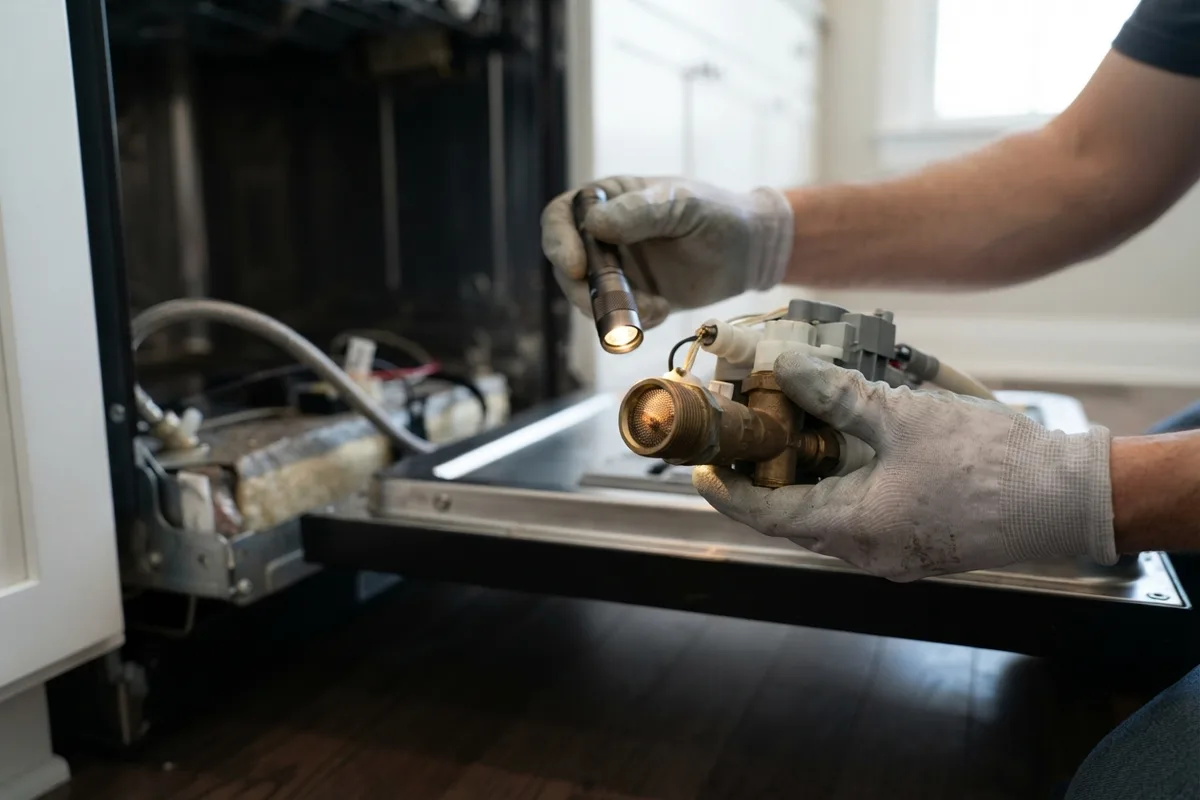 The water inlet valve is located behind the lower front access panel. Disconnect power and turn off the water supply valve under the sink before inspecting this component. Disconnect the water supply line from the valve inlet and use a flashlight to examine the tiny mesh filter screen located inside the valve mouth.
If sediment or hard water minerals clog the screen, clean it carefully with a soft brush and vinegar. Never puncture the mesh, as debris passing into the valve mechanism can prevent it from closing, causing severe flooding. If the valve solenoid hums loudly or fails to open fully even after cleaning, the assembly requires replacement.
| Cause of Extended Cycle | Primary Symptom | Simple DIY Fix |
|---|---|---|
| Cold Supply Water | Water heater set below 120°F | Turn up water heater & run sink faucet before starting |
| Dirty Turbidity Sensor | Appliance runs extra rinses on light loads | Gently wipe clean the sensor lens in the lower sump |
| Restricted Inlet Valve | Slow fill times, low water level in tub | Clean inlet screen filter or replace worn valve |
| Heating Element Failure | Cycle freezes at heating stage | Test element continuity with a multimeter |
| Heavy Cycle Options Selected | Unnecessary high-heat or sanitizing modes | Switch to Eco or Standard wash cycle options |
4. Test the Heating Element for Resistance
A functional heating element maintains water temperature during wash cycles and heats air during dry cycles. If the heating element breaks or burns out, the internal control module keeps the machine running in an attempt to reach target wash temperatures that never materialize.
You can test the element using a digital multimeter set to the lowest ohms (Ω) setting:
- Ensure the breaker is turned off and power is completely disconnected.
- Remove the lower toe kick panel at the floor level.
- Locate the two metal terminal posts of the heating element protruding through the bottom of the tub.
- Slip off the wire lead connectors using needle-nose pliers (pull on the connectors, not the wires).
- Touch one multimeter probe to each terminal post.
A healthy element generally reads between 15 and 30 ohms of resistance. If your multimeter reads infinite resistance (open circuit) or zero resistance, the element is burned out and must be replaced. A faulty element can also lead to other operational glitches, such as a dishwasher stopping mid-cycle.
5. Review Cycle Settings and Reset the Control Board
Sometimes, an excessively long cycle is simply the result of advanced wash options being selected. Features like Heavy Duty, Sanitize, Extra Dry, and Heated Rinse automatically extend cycle times by 45 to 90 minutes to sanitize dishes or evaporate residual moisture.
Check your control panel to verify that options like High-Temp Wash or Extended Heat Dry are turned off if you need a quicker wash turnaround. Switching to a Normal or Eco cycle should reduce the run time down to standard operating levels (usually 1.5 to 2.5 hours).
If settings are normal but the unit remains stuck on long cycles, perform a hard reset on the control panel:
- Press and hold the Start/Cancel button for 3 to 5 seconds to clear the current program.
- Flip the circuit breaker off for 10 full minutes to drain residual power from the circuit board.
- Restore power and run a short test cycle.
When to Call a Pro
While cleaning sensors, adjusting water heater settings, and testing heating elements are manageable DIY tasks, complex electrical issues or main control board failures require specialized diagnostic tools. If you have tested the heater element, water inlet valve, and turbidity sensor and the long cycles persist, the main logic board may have a stuck relay.
When electrical testing feels beyond your comfort level, or if you suspect a faulty control panel, contacting a qualified technician is the safest route. Broad typical US repair costs for control board replacements or harness repairs range from $150 to $350, though pricing varies by area and machine model. If you need assistance with complex internal components, True Appliance Repair can match you with a local appliance pro to get your kitchen running efficiently again.
FAQ
How long should a normal dishwasher cycle take?
Most modern energy-efficient dishwashers take between 1.5 and 2.5 hours to complete a standard cycle. Selection of special modes like Sanitize, Heavy Duty, or Extended Dry can push run times past 3 hours under normal operating conditions.
Why does my dishwasher timer get stuck on 1 minute remaining?
A timer sticking on 1 minute usually means the dishwasher is waiting for water to reach a specific temperature before executing the final drain and dry phases. This is commonly caused by a weak heating element, a faulty thermistor (temperature sensor), or cold incoming water.
Does running a long dishwasher cycle use more electricity?
Yes, cycles that run longer due to heating element delays consume significantly more power as the element stays energized for prolonged periods. Resolving thermal delays helps lower your overall energy consumption.