
Between weeknight dinners and busy holiday hosting, you open your dishwasher door dozens of times a week—and a loud squeak or metallic groan every single time gets old fast. The good news is that a squeaking dishwasher door rarely points to a major breakdown. Most noise comes from dry metal hinges, tight cabinet trim, worn spring links, or a dry rubber seal, all of which you can inspect safely at home.
Before reaching behind panels or adjusting any hardware, turn off power to the dishwasher at your circuit breaker (or unplug the cord under the sink). If you need to slide the machine forward to inspect side springs, shut off the hot water supply valve under the sink first so you do not strain or kink the supply line.
1. Check for Cabinet Trim and Floor Rubbing
Dishwashers vibrate during every wash cycle, and even a quarter-inch shift can cause the outer door edge to scrape against neighboring wood cabinets or flooring trim. That steady rub often sounds like a sharp squeak or low creak as the door swings past 45 degrees.
- Open and close the door slowly while shining a flashlight along the left, right, and bottom seams.
- Close the door and slide a single sheet of printer paper along both vertical gaps to feel for tight pinch points.
- Check the lower kickplate and surrounding flooring for scuff marks where the bottom edge of the door passes.
- If the door rubs one side, loosen the mounting screws beneath the countertop, nudge the dishwasher back to center, and adjust the front leveling feet with a wrench until the gap stays even on both sides.
2. Lubricate the Door Hinges Safely
Dry metal-on-metal contact inside the lower door hinges is the most frequent culprit behind a high-pitched hinge squeak. Skip cooking oil or heavy penetrating sprays, which attract kitchen dust and quickly turn gummy. Instead, use food-grade silicone grease, white lithium grease, or a dry PTFE lubricant.
- Confirm the circuit breaker is off, then remove the screws holding the lower toe-kick access panel beneath the door.
- Set the panel aside and shine a flashlight toward the left and right lower corners to locate the metal hinge pivot pins.
- Wipe away any dark metal dust around the joints with a dry rag or paper towel.
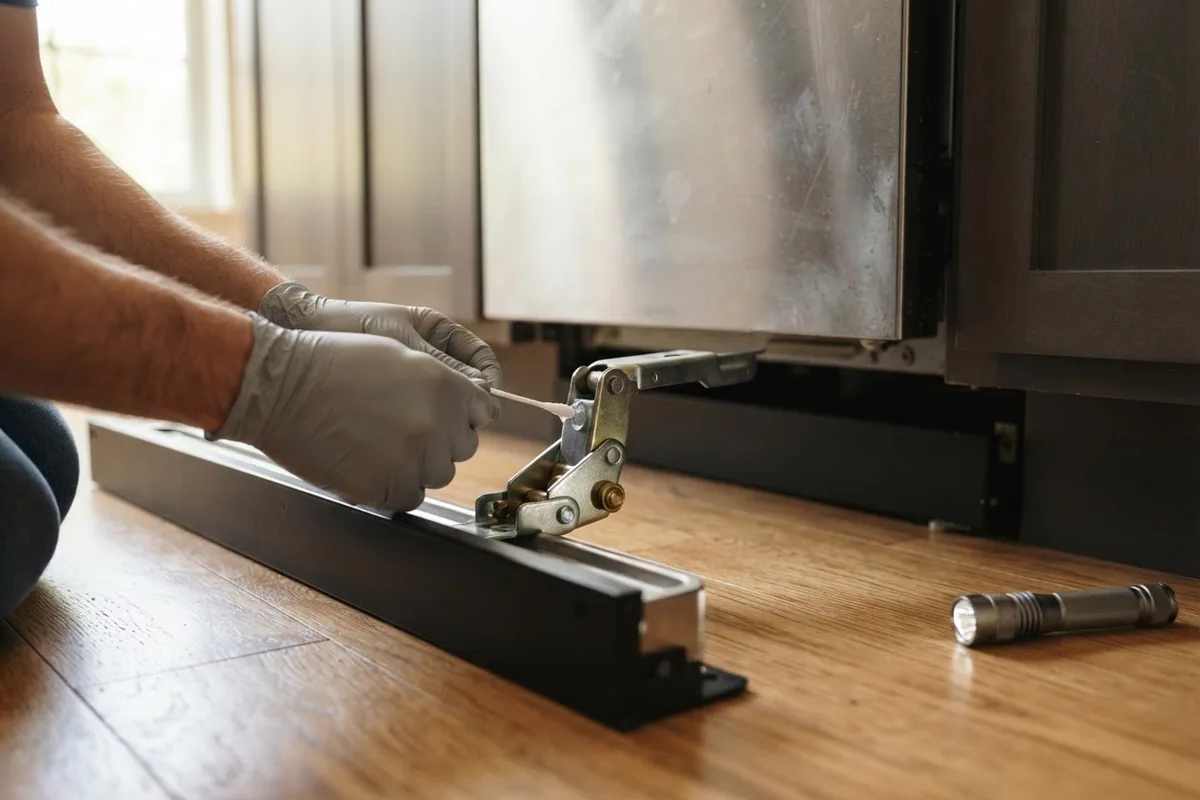
- Dab a pea-sized amount of silicone or white lithium grease directly onto each pivot pin using a cotton swab.
- Open and close the door eight to ten times to work the lubricant into the joint, wipe off any excess, and reinstall the toe-kick panel.
3. Tighten Loose Door and Mounting Screws
When the screws holding your dishwasher's inner door liner or frame brackets work loose, the thin steel panels flex against each other under the door's weight. That flexing produces a crisp metallic creak right as you pull the handle or lower the door flat.
- Open the door fully and inspect the ring of Torx or Phillips screws framing the stainless or plastic inner door panel.
- Test each screw gently with a hand screwdriver and snug up any that turn easily—avoid using a power drill, which can strip thin metal threads.
- Check the top or side mounting brackets anchoring the dishwasher tub to your countertop or cabinet frame.
- Tighten any loose bracket screws so the frame stays rigid when you open the door, then swing the door slowly to listen for improvement.
4. Inspect the Door Springs and Tension Cables
Most built-in dishwashers use two heavy balance springs and braided tension links running along the left and right exterior walls of the tub. These parts counterbalance the door so it opens smoothly instead of slamming down. When a spring stretches, rusts, or rubs dry against its metal hook, you will hear a strained groan or twang halfway through opening.
- Shut off both the circuit breaker and the under-sink hot water valve, then remove the top mounting screws.
- Slide the dishwasher forward six to eight inches—just far enough to inspect the side channels without pulling hoses tight.
- Keep the door closed so the springs stay at lower tension, and wear work gloves to guard your fingers against sharp sheet metal and pinch points.
- Check both springs and tension cords for dry metal contact hooks, rust, or fraying.
- Dab white lithium grease onto metal hook points, or replace stretched springs and frayed cords in matched pairs.
5. Check Worn Hinge Bushings and Friction Pads
Many modern dishwashers rely on small nylon bushings, cable pulleys, or plastic friction pads inside the hinge assembly to cushion movement. Over five to eight years of daily openings, those plastic sleeves can crack, flatten, or crumble away, leaving bare steel grinding against steel.
- With the breaker off and the lower toe-kick panel removed, look on the floor beneath both front corners for tiny shavings or broken pieces of white or black plastic.
- Open the door halfway and gently lift the outer corners up and down to test for unusual side-to-side play in either hinge arm.
- Compare the left and right hinge assemblies with a flashlight to see if one side is missing a bushing or riding crookedly on its pulley wheel.
- Order the exact model-specific hinge bushing or cable repair kit—most replacement kits run roughly $15 to $45 depending on the brand and model.
6. Condition a Dry or Sticking Door Gasket
Not every dishwasher squeak comes from metal hardware. During dry fall and winter months—when home heating strips moisture from kitchen air—the rubber perimeter gasket can stiffen and grab against the tub rim, causing a rubbery squeal right as the door breaks free or closes. Checking rubber seals is an easy step to include in your winter appliance maintenance checklist.
- Run your fingers around the entire rubber door seal to feel for brittle spots, kinks, or sections pulling out of the channel.
- Wipe the seal and mating tub rim with a warm, damp microfiber cloth to remove dry residue, then dry both surfaces thoroughly.
- Apply a paper-thin coat of food-grade silicone grease along the contact edge with a clean cloth so the rubber glides quietly.
- If the gasket looks cracked or flattened, replacing it also prevents moisture problems like those in our guide to fixing a dishwasher steaming up cabinets.
Quick Reference: Match the Squeak to the Fix
| Sound & Timing | Most Likely Cause | Best DIY Fix | Typical DIY Part Cost* |
|---|---|---|---|
| High-pitched squeak through full swing | Dry lower hinge pivot pins | Wipe pivot dust and apply silicone or white lithium grease | $5–$12 (lubricant) |
| Metallic groan or twang past halfway | Dry or worn side balance springs / cables | Grease hook contact points or replace springs as a pair | $15–$40 |
| Scraping sound at one specific spot | Door rubbing cabinet trim or flooring | Re-center unit and adjust front leveling feet | $0 |
| Crisp creak when grabbing handle | Loose inner-door or mounting screws | Snug Torx or Phillips screws by hand | $0 |
| Rubbery squeal right at open or close | Dry or slightly unseated door gasket | Reseat seal and apply thin food-grade silicone | $0–$35 (if replacing seal) |
Part prices vary by area, brand, and dishwasher model.
When to Call a Pro
Basic lubricating, screw tightening, and cabinet alignment take under 30 minutes with common household tools. Stop and bring in a technician, however, if a hinge arm is visibly bent, the dishwasher door drops suddenly under its own weight, or you spot damaged wiring near the lower kickplate. Never attempt electrical panel repairs or handle frayed wiring harnesses yourself—water lines and kitchen electrical circuits leave zero room for guesswork.
Across the US, a typical service visit to replace bent dishwasher hinges, tension cables, or hinge assemblies runs roughly $120 to $260 including parts and labor, though pricing varies by area and model. If you have lubricated the pivots and confirmed clear cabinet spacing and the squeak still returns, True Appliance Repair can match you with a local pro for dishwasher repair to inspect the hinge frame and balance system safely.
FAQ
Can I spray standard WD-40 on a squeaking dishwasher door?
Standard multi-use WD-40 acts mainly as a solvent and water displacer rather than a lasting hinge lubricant, so it often silences a squeak for only a few days before attracting dust and drying out. Use a small dab of food-grade silicone grease, white lithium grease, or dry PTFE lubricant instead so the hinges stay quiet for months without turning sticky.
Why does my dishwasher door squeak more in the winter?
Cooler indoor air and dry furnace heat cause rubber door gaskets to lose suppleness and metal hinge clearances to tighten slightly. Conditioning the rubber seal with a thin film of food-grade silicone and lubricating the lower hinge pins usually resolves seasonal squeaks right away.
Is a squeaking dishwasher door a sign the springs are about to break?
Sometimes—especially if the noise sounds like a deep metallic groan, creak, or pop coming from the sides of the cabinet rather than the bottom hinge pins. If the door also feels noticeably heavier than normal or drops fast when you let go, stop using it until you inspect or replace the springs and tension cables.
How often should I lubricate dishwasher door hinges?
Most residential dishwasher hinges only need light lubrication once every one to two years, or whenever dry friction first becomes audible. Applying a tiny amount cleanly with a cotton swab prevents excess grease from dripping onto your kitchen floor or collecting lint behind the toe-kick panel.