
Stepping onto a wet kitchen floor right in front of your dishwasher is a frustrating surprise, especially with heavy holiday cooking right around the corner. Most bottom leaks come down to a worn door seal, an unlevel frame, or a loose under-tub connection rather than a ruined machine. Before you start pulling the kickplate off, always unplug the dishwasher or flip its circuit breaker off, and shut off the hot water supply valve under the sink to stay safe around water and electricity.
1. Inspect and Reseat the Lower Door Seal
When water drips steadily from the front corners of the door, the perimeter rubber gasket or the lower door sweep is usually the culprit. Over time, food residue, grease, or a shifting dish rack can flatten or tear the rubber, allowing water to splash past the barrier during the wash cycle.
- Open the dishwasher door all the way and run your fingers along the rubber gasket framing the tub and the vinyl flap along the bottom edge of the door.
- Wipe away any stuck-on grit or crusty buildup using a damp microfiber cloth and warm, mild dish soap.
- Check for splits, brittle spots, or sections where the gasket has popped out of its metal or plastic channel.
- If the seal is loose, press it firmly back into the groove starting from the top center and working down both sides without stretching the rubber.
- If you find a tear, order a model-specific replacement gasket (typically $25 to $60, though part prices vary by model) and press the new seal into place.
2. Level the Dishwasher Legs From Front to Back
A dishwasher relies on gravity to keep water pooled nicely over the sump in the center of the tub rather than pressing up against the front door. Because the bottom of the door does not have a watertight seal like a submarine hatch—it uses an air gap and a splash guard—an unlevel machine tilted slightly forward will spill water right over the front lip.
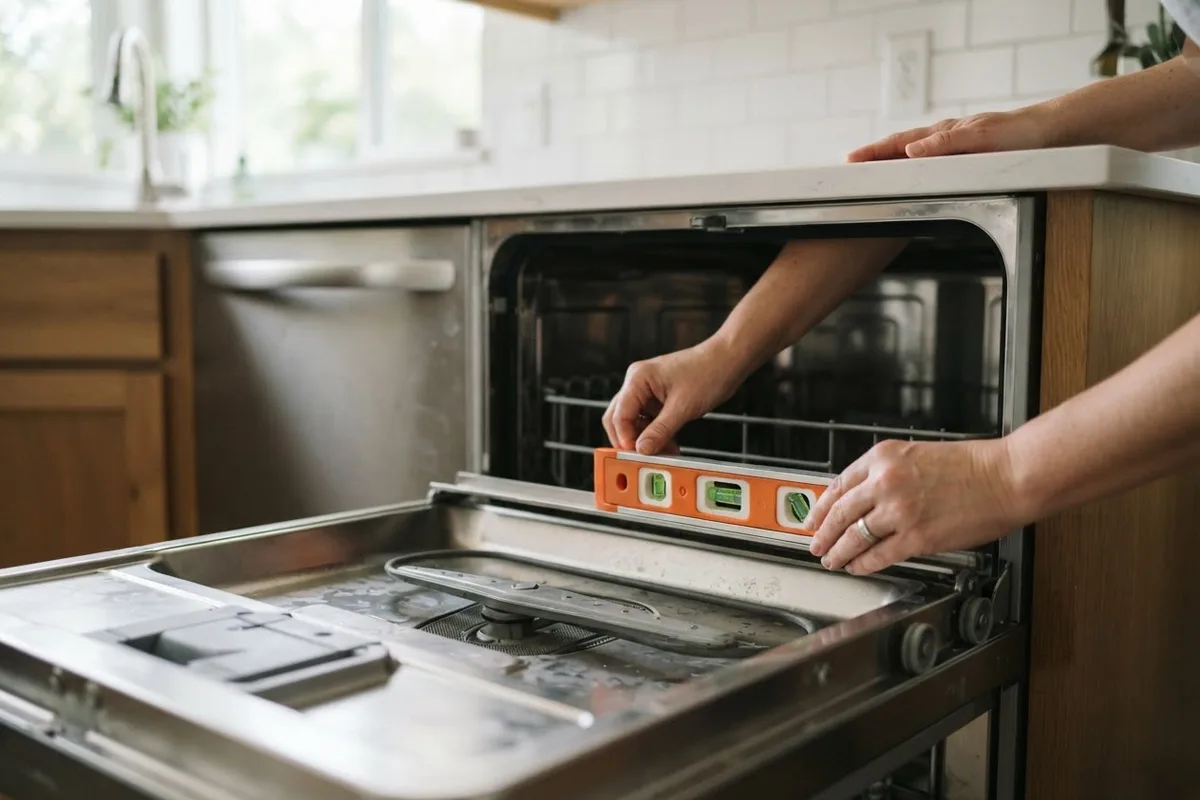
- Open the door, remove the lower dish rack, and place a carpenter's bubble level front-to-back on the bottom tub track, then side-to-side along the front frame.
- Unscrew the two metal or plastic fasteners holding the lower access kickplate at the base of the machine and set the panel aside.
- Locate the threaded leveling legs at the front corners.
- Use anadjustable wrench or pliers to turn the front legs clockwise to raise the front of the dishwasher, or counterclockwise to lower it, until the bubble is dead center.
- Check that the top of the door clears the underside of the countertop without rubbing, then reattach the kickplate.
3. Free a Stuck Float Switch Assembly
The float is the small plastic dome or cylinder sitting on the front floor of the dishwasher tub. As water enters, the float rises and clicks a small microswitch underneath the tub to shut off the water inlet valve at the exact right height. If a fallen utensil or grease buildup pins the float down, the tub overfills and pours out the bottom.
- Pull out the lower dish rack and find the plastic float dome near the front corner of the tub floor.
- Lift the dome gently with your fingers; it should move up and down effortlessly and make an audible clicking sound as it drops.
- Clear away any stray silverware, plastic container lids, or food scraps trapped around the base of the float.
- If the stem feels sticky, lift the float assembly straight up (some models have a small retaining nut underneath the tub) and wipe the shaft and tube clean with warm water.
- Set the float back into its housing and verify it clicks cleanly before running a test cycle.
4. Tighten or Replace the Water Inlet Valve
If you notice a slow, steady drip coming from beneath the front corner of the dishwasher even when the machine is turned off, the water inlet valve is likely leaking. This valve sits behind the lower kickplate where the household hot water supply line connects to the dishwasher.
- Double-check that the breaker is off and the hot water shutoff valve under the kitchen sink is turned completely clockwise.
- Remove the bottom kickplate and shine a flashlight into the front left or right corner where the braided metal water line attaches.
- Feel around the brass elbow fitting and the plastic valve body with a dry paper towel to pinpoint the moisture.
- If the leak is right at the threaded brass fitting, tighten the compression nut a quarter-turn with an adjustable wrench—do not overtighten, or you can crack the housing.
- If the plastic body of the valve itself is seeping water or cracked, disconnect the water line (keep a shallow pan and towel handy for residual water) and install a new inlet valve.
5. Check the Lower Spray Arm for Cracks
It sounds surprising, but a split seam on the plastic lower spray arm is one of the most common reasons a dishwasher leaks from the bottom door edge. When the pressurized plastic arm splits along its side weld, instead of shooting water upward at your plates, it fires a horizontal jet of water directly under the door lip with every rotation.
- Slide out the bottom rack and unclip or unscrew the central cap holding the lower spray arm to the base mount.
- Lift the spray arm out and inspect the side seams where the top and bottom halves of the plastic or metal arm are fused together.
- Squeeze the arm gently along its length to see if a hairline split opens up.
- Check that the central plastic bushing underneath the arm isn't worn down, which can cause the arm to wobble and spray at a crooked angle.
- If you spot a split seam or warped plastic, snap in a replacement spray arm (usually $20 to $50 depending on the brand). While you have the rack out, if you've also noticed damp dishes at the end of a cycle, check out our guide on why your dishwasher is not drying dishes.
6. Inspect Under-Tub Hose Clamps and Pump Seals
When water pools directly under the center of the machine rather than dripping down the front of the door, the leak is coming from the circulation pump, drain pump, or the rubber hoses connecting them. Vibrations over years of washing can loosen spring clamps or cause rubber boots to crack.
- With the power and water off and the lower kickplate removed, lay a dry towel down and look under the center of the tub with a bright flashlight.
- Look for white crusty mineral trails or active water droplets hanging from the black rubber hoses connected to the main pump housing.
- Use pliers to pinch and reposition any loose spring clamps, or use a screwdriver to snug up worm-drive clamps around the rubber hose ends.
- Inspect the rubber sump gasket where the motor assembly meets the bottom of the dishwasher tub.
- If the rubber boot is split or water is dripping directly out of the motor shaft seal, the pump seal assembly will need to be replaced.
Dishwasher Bottom Leak Quick-Reference Guide
Use this table to match where you see the puddle with the most likely cause and typical cost.
| Where the Water Appears | Most Likely Cause | DIY Difficulty | Typical Part Cost (Varies by Model) |
|---|---|---|---|
| Front corners of the door | Worn door gasket or lower door sweep | Easy | $25 – $65 |
| Entire front edge during wash | Unlevel unit or split lower spray arm | Easy | $0 – $50 |
| Overflowing over the front lip | Stuck float switch or bad inlet valve | Easy to Moderate | $0 – $55 |
| Front corner even when off | Loose or cracked water inlet valve | Moderate | $30 – $75 |
| Center underneath the tub | Loose hose clamp or worn pump seal | Moderate to Hard | $15 – $120 |
When to Call a Pro
Cleaning a float switch, leveling the front legs, and swapping out a cracked spray arm or door gasket are straightforward projects most homeowners can finish in under an hour. However, if the leak is coming from the main circulation pump seal, a cracked sump housing, or requires pulling the entire dishwasher out from under the countertop to access pinched wiring and rear plumbing lines, it is safest to hand the job off. Professional dishwasher leak repairs typically range from $150 to $350 depending on the part and your local area. If your unit is over nine years old and facing a major pump assembly rebuild, our guide on whether to repair or replace a dishwasher can help you weigh the numbers.
When you want the leak fixed without wrestling a heavy machine out of your cabinetry, True Appliance Repair can connect you with an experienced local technician for professional dishwasher repair.
FAQ
Why is my dishwasher leaking from the bottom only when it is turned off?
If clean water pools under the dishwasher while it sits idle, the water inlet valve is failing to close all the way, or the brass water supply fitting is loose. Shut off the hot water valve under your kitchen sink right away; if the leaking stops, replacing or tightening the inlet valve behind the lower kickplate will solve the problem.
Can putting regular dish soap in the dishwasher cause a bottom leak?
Yes, even a few drops of liquid hand dish soap will whip into a massive mountain of thick suds that forces its way past the lower door baffle and onto your floor. If this happens, cancel the cycle, scoop out the foam, pour two tablespoons of vegetable oil or cooking oil into the bottom of the tub to break the surface tension of the bubbles, and run a short drain-and-rinse cycle.
How do I tell if the leak is from the door seal or underneath the tub?
Dry the floor completely, tape a strip of dry paper towels along the floor right under the front door edge, and slide a second sheet of cardboard or paper towel flat underneath the kickplate toward the center of the machine. Run the dishwasher for five minutes and check both spots: wet paper under the door edge points to the gasket, spray arm, or leveling, while moisture in the center points to the inlet valve, hoses, or pump.
Is it safe to run a dishwasher with a small bottom leak?
No, you should stop using the dishwasher until the leak is fixed. Even a minor drip can quietly rot out the subfloor beneath your cabinetry, encourage hidden mold growth, or drip onto the electrical junction box and motor windings underneath the tub.