
Stepping onto a wet kitchen floor right after starting a wash cycle is a frustrating surprise, especially with holiday hosting and heavy winter cooking right around the corner. Fortunately, a dishwasher leaking from the door rarely requires a major overhaul. In most cases, you can stop the drips yourself in under thirty minutes by checking the door seals, leveling the frame, and clearing simple alignment issues.
Before doing any hands-on inspection or repair, always unplug the dishwasher from its outlet beneath the sink or switch off its dedicated circuit breaker at the electrical panel, and turn off the water supply valve.
1. Clean and Reseat the Door Gasket
The perimeter of your dishwasher tub is lined with a flexible rubber or vinyl gasket that presses against the door to create a watertight barrier. Over time, cooking grease, hard water minerals, and food splatters build up along this seal, preventing the door from pressing flat.
- Open the dishwasher door completely and run your fingers along the entire rubber perimeter gasket, checking for stuck food, brittle spots, or tears.
- Mix warm water with a few drops of mild dish soap and wipe down the gasket, paying special attention to the folds and corners.
- Wipe the inner metal or plastic lip of the door where the gasket makes contact.
- If a section of the gasket has popped out of its mounting channel, press it firmly back into the groove with your thumbs.
- If the rubber is torn, flattened, or permanently warped, purchase a replacement gasket for your specific model. Pull the old seal out, work the new one into the track starting at the top center, and close the door for several hours to help the rubber conform.
2. Replace a Worn Lower Door Sweep
While the main perimeter gasket seals the top and sides of the tub, the bottom edge of the door relies on a separate rubber flap called a lower door seal or door sweep. This strip blocks splashing water from sloshing over the front lip of the basin. Because the lower edge sits in warm water and food oils during every cycle, it breaks down faster than the upper seal.
- Open the door and look at the very bottom inner edge, right where the door hinges backward.
- Shine a flashlight underneath the lower edge to see if the rubber sweep is cracked, split, or hanging loose.
- On many models, this lower seal simply slides onto a metal lip or clips into place without needing to remove the entire outer door panel.
- Pull the damaged lower sweep free and wipe away any gunk trapped along the bottom edge of the door.
- Press or slide the new lower door sweep into place, making sure both ends tuck neatly into the corner baffles at the left and right sides of the tub.
3. Adjust the Front Leveling Legs
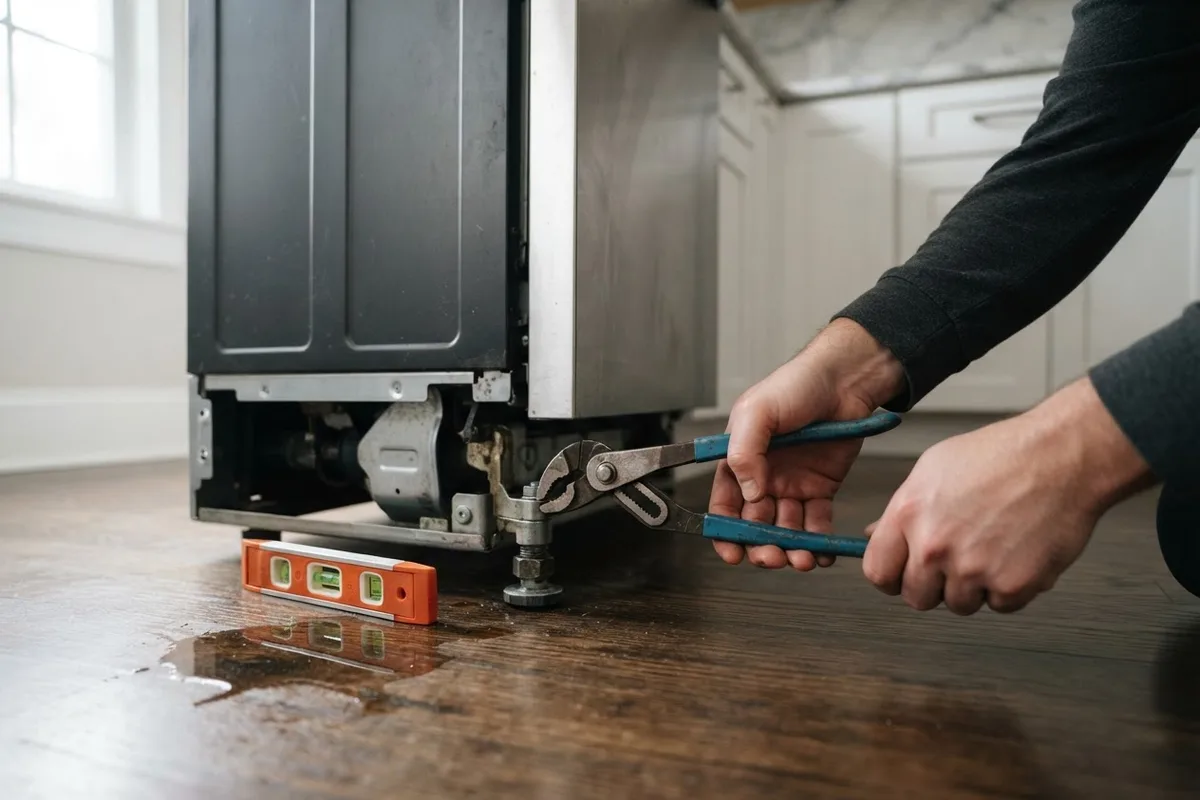
A dishwasher does not hold water like a bathtub; the water level actually sits slightly below the bottom lip of the door opening. If your appliance tilts even slightly forward, water pools right against the lower door sweep and forces its way out onto the floor. Proper leveling tips the unit barely backward so water stays safely inside the basin.
- Place a carpenter's level vertically against the front of the closed dishwasher door, then open the door and lay the level flat along the top edge of the tub opening.
- Unscrew the two metal or plastic fasteners holding the lower access toe kick panel at the base of the dishwasher and set the panel aside.
- Locate the threaded adjustable legs at the front left and right corners.
- Use a wrench or channel-lock pliers to turn both front legs counterclockwise to raise the front of the dishwasher.
- Adjust the legs until the bubble on your level shows the appliance is completely level side-to-side and pitched backward just slightly (about a quarter of an inch) toward the wall.
- Reattach the lower kick plate and test a quick rinse cycle.
4. Tighten or Align the Door Latch
Even a brand-new rubber gasket will leak if the door latch does not pull the door tightly against the tub frame. Over years of daily tugging, the metal strike plate at the top of the dishwasher can bend upward or slide slightly backward, leaving a tiny gap along the top corners where steam and water condense and drip down the front.
- Close the dishwasher door slowly and listen for a crisp, solid click. Gently tug on the handle without pressing the release button to see if the door wiggles in and out.
- Open the door and inspect the metal U-shaped strike plate mounted to the top center of the tub frame.
- Check if the mounting screws holding the strike plate have vibrated loose. Tighten them firmly with a Phillips or Torx screwdriver.
- If the door still feels loose when latched, loosen the strike screws slightly, slide the strike plate a fraction of an inch inward toward the back of the tub, and retighten the screws.
- If the latch assembly inside the door is cracked or fails to catch the strike, the latch mechanism itself will need to be swapped out.
5. Fix a Split or Tilted Spray Arm
Water inside a dishwasher is meant to shoot upward at the dishes, not sideways at the door seams. If the lower spray arm develops a split along its plastic seam or wobbles on a worn central bushing, it sends a high-pressure jet of water horizontally against the bottom of the door, overwhelming the lower door sweep.
- Slide out the bottom dish rack to expose the lower spray arm at the base of the tub.
- Unscrew the central locking nut or twist the locking tab counterclockwise to lift the spray arm off its hub.
- Inspect the outer plastic edges where the top and bottom halves of the spray arm are fused together. If you see a hairline split or gap, replace the spray arm.
- Check the central mounting post for a missing or chewed-up plastic washer that causes the arm to tilt downward on one side.
- If the arm is intact but not rotating smoothly, check our guide on why your dishwasher spray arm is not spinning to clear any hidden internal blockages that divert water pressure toward the door.
6. Replace Bent Door Hinges and Cables
If someone trips over an open dishwasher door or sets a heavy stockpot on it while loading, the metal hinge arms at the bottom corners can bend slightly downward. A sprung hinge prevents the bottom of the door from sealing squarely against the tub frame, causing persistent leaks at both lower corners.
- Open the dishwasher door all the way down. A healthy door should stop cleanly at a flat, 90-degree horizontal angle.
- If the door slopes downward toward the floor or feels wobbly when you press on the outer corners, the hinge arms are bent.
- With the power and water off, pull the dishwasher partway out from under the counter to view the side springs and tension cables.
- Unhook the tension springs and disconnect the braided cables from the hinge arms.
- Unbolt the bent metal hinge brackets from the lower corners of the door and install new replacement hinges.
- Reconnect the springs and cables, slide the unit back into the cabinet, and secure the mounting brackets before turning power and water back on.
Quick Troubleshooting Guide: Door Leak Sources
| Where Water Appears | Most Likely Cause | Typical Part Cost (US) | DIY Difficulty |
|---|---|---|---|
| Trickling down the middle of the door | Split lower spray arm pushing water at the seam | $25 – $60 (varies by model) | Easy |
| Dripping from both bottom corners | Worn lower door sweep or unit tilted forward | $15 – $45 (varies by model) | Easy |
| Seeping from the top or side edges | Dirty, torn, or unseated perimeter door gasket | $30 – $75 (varies by model) | Easy to Moderate |
| Steam and drips near the top handle | Loose door strike plate or worn latch assembly | $25 – $65 (varies by model) | Moderate |
| Heavy leaking at corners + sagging door | Bent lower door hinges from heavy downward weight | $40 – $90 (varies by model) | Moderate to Hard |
When to Call a Pro
While cleaning seals, adjusting legs, and popping in a new spray arm are straightforward weekend tasks, some leaks go deeper than the door frame. If you replace the gaskets and level the tub but water continues pooling on the floor, the leak may actually be originating from a cracked circulation pump housing, a faulty water inlet valve, or a warped outer tub frame. You should also stop and bring in a technician if water has leaked into the internal door wiring harness and is causing the control panel to flicker or trip the breaker.
Before spending money on major mechanical repairs for an older machine, review our 7 signs your dishwasher is dying to make sure a repair makes financial sense. When you are ready for professional help, True Appliance Repair can connect you with a local pro for dependable dishwasher repair to get your kitchen dry and running smoothly again.
FAQ
Why is my dishwasher leaking soapy foam from the bottom of the door?
Suds pushing past the lower door seal almost always mean regular liquid hand dish soap was accidentally used in place of automatic dishwasher detergent, or Rinse Aid was spilled in the tub. Hand soap creates massive amounts of foam that easily push past normal water barriers. Scoop out the suds, pour two tablespoons of vegetable oil or a cup of cold water with a splash of white vinegar into the bottom of the tub to break the surface tension, and run a short drain cycle.
Can a clogged dishwasher filter cause the door to leak?
A clogged filter rarely causes a door leak directly, because dishwashers have a float switch designed to shut off the water inlet valve before the basin overflows. However, if food debris from an uncleaned filter gets sucked into the lower spray arm and clogs the outer jets, the trapped water pressure can force the plastic spray arm seam to split open and spray directly at the door seal.
How much does it cost to fix a dishwasher leaking from the door?
If you tackle the fix yourself, replacement door gaskets, lower sweeps, or spray arms typically cost between $15 and $75 depending on the brand and model. If you hire an appliance repair technician to diagnose the leak and install a new latch, hinge set, or door seal, total parts and labor generally run between $130 and $275, though exact pricing varies by area and model.
How do I get a new dishwasher door gasket to stop leaking right after installation?
New rubber gaskets arrive folded tightly in a box, which can leave stiff creases that prevent a flush seal on the first try. Before installing the new gasket, soak it in a sink full of warm water for ten minutes or warm it gently with a hairdryer on low heat to make the rubber supple. Once pressed evenly into the channel, close and latch the dishwasher door overnight so the rubber molds to the exact shape of your door frame.