
Few kitchen headaches match opening a dishwasher after a two-hour cycle only to find cold, unwashed plates or a puddle creeping across your floorboards. Before you shop for a brand-new unit, knowing the exact warning signs of mechanical failure can save you hundreds of dollars. Use these seven diagnostic checks to tell whether your machine needs a minor part or if it is truly reaching the end of the road.
1. Water Pools Under the Tub or Door
Finding water on your kitchen floor is one of the most urgent signs your dishwasher is dying, though the cause ranges from a cheap rubber seal to a cracked tub. Before inspecting anything underneath the unit, turn off the circuit breaker and shut off the water supply valve under the sink.
- Open the door and inspect the rubber perimeter gasket for brittle spots, tears, or flattened sections.
- Pull out the bottom rack and check the plastic or stainless steel inner tub for hairline cracks or rust-through spots.
- Unscrew the lower kickplate to look under the basin with a flashlight for active drips around the pump housing or water inlet valve.
- Check our guide on why your dishwasher is leaking from the bottom to pinpoint individual hose and seal failures.
If the rubber door gasket or inlet valve is weeping, a simple part swap fixes the problem. However, if the main wash tub itself is cracked or corroded through, the machine cannot be safely sealed and needs replacement.
2. Dishes Stay Cold During the Wash Cycle
A dishwasher relies on water heated to roughly 120°F to 140°F to sanitize tableware and melt away grease. If you open the door right after a cycle and the interior feels completely cold and damp, the heating system is failing. Always disconnect power at the breaker panel before touching interior heating components.
- Run your kitchen sink hot water tap for 60 seconds before starting a cycle to ensure hot water enters the line immediately.
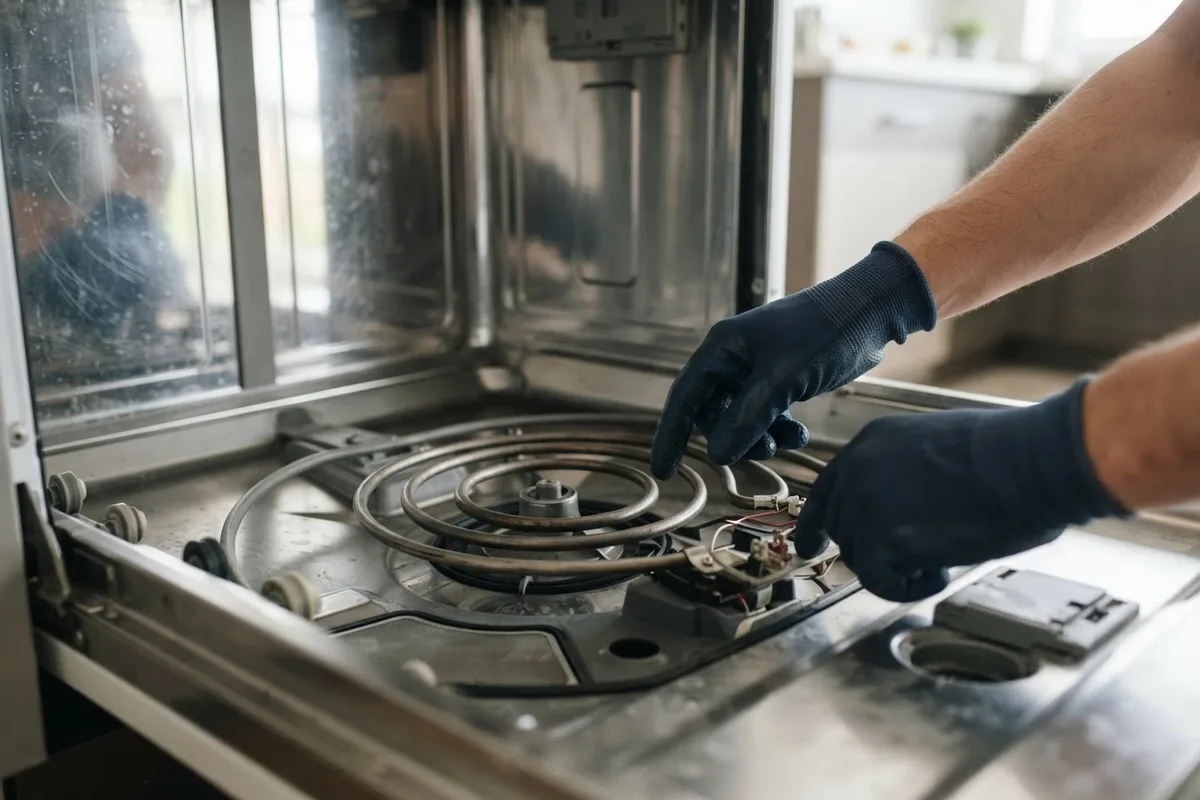
- Inspect the exposed circular heating element at the bottom of the tub for blistering, white calcium buildup, or visible breaks in the metal coil.
- If the element looks intact, the high-limit thermostat or the main electronic control board relay may have burned out.
Replacing a burned-out heating element or thermostat typically costs between $100 and $250 (varies by area and model), making it a sensible fix on a mid-aged machine. If the control board itself has failed alongside the heater, weigh the cost against the age of the unit.
3. The Wash Pump Grinds, Howls, or Hums
Dishwashers make gentle spraying sounds, but loud mechanical grinding, high-pitched howling, or a strained hum that never turns into a wash spray points directly to a failing circulation pump. Shut off the breaker before inspecting the sump area at the base of the tub.
- Remove the lower dish rack and twist out the bottom spray arm and cylinder housing to check for stray fruit pits, twist ties, or broken glass near the impeller.
- Spin the accessible impeller blades gently by hand (wearing thick work gloves) to see if they turn smoothly or feel seized.
- Listen during the first two minutes of a cycle: if the unit fills with water and then only hums loudly without spraying, the circulation motor bearings have likely locked up.
Replacing a complete circulation pump and motor assembly generally runs $200 to $400 including labor (varies by area and model). On a machine older than eight years, a seized main motor is often the tipping point toward replacement.
4. The Door Latch Fails or Hangs Crooked
A dishwasher will not start—or will abruptly stop mid-cycle—if the door switch cannot verify a tight mechanical lock. Over thousands of openings, door hinges bend, tension cables snap, and latch assemblies wear out. Unplug the unit or flip the breaker off before inspecting the latch mechanism inside the top of the door.
- Close the door slowly and watch whether you have to lift up on the handle to make the strike catch the latch.
- Listen for a crisp mechanical click when the door shuts; a mushy feel indicates a broken spring or cracked plastic catch inside the latch assembly.
- Open the door fully down to a 90-degree angle: if it drops like a rock or slopes downward past level, the side hinge arms or tension springs are worn or bent.
A new latch assembly is an affordable repair, usually costing $75 to $180 (varies by area and model). Severely bent hinge frames that warp the door alignment against the tub, however, often cause persistent steam and water leaks that are rarely worth rebuilding on an older appliance.
5. The Control Panel Blinks or Stops Responding
When buttons refuse to register presses, lights flash erratic error patterns, or the cycle runs for four hours without advancing, the electronic brain of the appliance is struggling. Moisture creeping behind the top console is the most frequent culprit.
- Turn off the circuit breaker for five full minutes, then restore power to clear temporary electronic glitches.
- Test the control lock button (often labeled "Control Lock" or "Hold 3 Sec") to ensure the keypad isn't simply locked against accidental touches.
- Inspect the top edge of the door touchpad for peeling plastic overlays, cracked buttons, or condensation trapped behind the LED display.
If a hard reset does not restore normal operation, either the user interface touchpad or the main control board is failing. Because control boards typically cost $250 to $500 installed (varies by area and model), this is a major factor when consulting our appliance lifespan guide to repair or replace.
6. Rust Flakes Off Racks and Inner Walls
Small spots of rust on the tips of dish rack tines start out as a cosmetic nuisance, but advanced corrosion inside the cabinet signals deeper structural decline.
- Pull out both racks and check where the vinyl coating has peeled away, exposing bare steel wire that drops rust flakes into the wash water.
- Inspect the inner door liner, screw heads, and the metal support brackets along the tub walls for bubbling paint or orange corrosion.
- Check the bottom sump perimeter where stainless steel or plastic meets the rubber seals for pitting or flaking metal.
Loose rust particles get sucked into the circulation pump and shred internal rubber seals. While you can slide vinyl repair caps over a few rusty rack tines or buy a replacement rack ($100 to $200, varies by model), rust eating through the interior walls or frame means the dishwasher has reached the end of its structural life.
7. It Won't Fill or Stops Mid-Cycle
If you press start and hear nothing but an empty click, or the dishwasher halts halfway through with unwashed dishes inside, the water delivery or cycle-sensing components are failing. Before checking the water line, turn off both the power breaker and the under-sink water shutoff valve.
- Check the float dome in the front corner of the tub floor—lift it up and down a few times to verify it moves freely and isn't stuck in the "full" position.
- Inspect the hot water supply hose under the sink for sharp kinks that block water flow.
- Read our dedicated troubleshooting steps on why your dishwasher is not filling with water to test the inlet screen and float switch safely.
When an aging dishwasher suffers simultaneous failures—such as a weak inlet valve paired with a worn thermal fuse that trips mid-cycle—the cumulative repair costs quickly pass the price of a modern replacement.
Dishwasher Repair vs. Replace Quick Guide
| Warning Sign | Likely Failed Part | Typical US Repair Range* | Verdict (Under 7 Yrs Old) | Verdict (8+ Yrs Old) |
|---|---|---|---|---|
| Water pooling at front | Door gasket or float switch | $80 – $180 | Repair | Repair |
| Water leaking under tub | Cracked wash tub | $400+ (major tear-down) | Replace | Replace |
| Cold interior after cycle | Heating element or thermostat | $100 – $250 | Repair | Repair if otherwise sound |
| Loud grinding or howling | Circulation pump & motor | $200 – $400 | Repair | Usually Replace |
| Dead or blinking keypad | Main electronic control board | $250 – $500 | Weigh 50% cost rule | Replace |
| Rust on tub walls | Corroded cabinet/liner | Not patchable | Replace | Replace |
Note: Typical US price ranges include parts and labor; actual costs vary by area, brand, and model.
When to Call a Pro
While checking a float switch, wiping down a door seal, or resetting a breaker are safe weekend tasks, diagnosing 120-volt wiring harnesses, replacing under-tub circulation motors, or fixing hardwired electrical connections should be left to an experienced technician. Never bypass thermal fuses or attempt electrical panel work yourself.
A smart rule of thumb is the 50% rule: if your dishwasher is under seven years old and the repair costs less than half the price of a comparable new machine, fixing it usually makes financial sense. If you aren't sure whether a noisy pump or unresponsive keypad is worth fixing, True Appliance Repair can match you with a local appliance pro to inspect your unit and give you an honest repair estimate.
FAQ
How long does a typical dishwasher last?
Most modern residential dishwashers last between 8 and 12 years with regular daily use. Units that have their water inlet screens checked annually and run with proper hot water temperatures often reach the top end of that range.
Why does my dishwasher smell like hot electrical wires?
A sharp, metallic, or plastic burning smell usually means a wire connection at the junction box, the heating element terminal, or the main motor is overheating. Turn off the dishwasher at the home circuit breaker immediately and do not run it again until a technician inspects the wiring.
Is it worth fixing an 8-year-old dishwasher?
It depends on the part that failed. If an 8-year-old dishwasher only needs a $120 water inlet valve, a door latch, or a rubber gasket, fixing it can easily buy you another two to four years of service. If it needs a $350 control board or motor assembly, putting that money toward a new dishwasher is usually the smarter move.
Can a dying dishwasher cause hidden water damage?
Yes, slow leaks from a worn pump seal or cracked sump housing often drip quietly onto the subfloor behind the kickplate where you cannot see them. Checking under the front access panel with a flashlight twice a year helps you catch moisture before it warps hardwood floors or kitchen cabinets.