
A quiet appliance is easy to take for granted until your kitchen fills with harsh grinding, rhythmic thumping, or high-pitched buzzing. Hearing unusual sounds during a cycle usually indicates a physical obstruction, a worn mechanical component, or a misloaded rack. Addressing these noises early prevents minor component friction from turning into major motor failure or costly kitchen flooding.
Before performing any hands-on inspection or removing panels, always turn off the appliance circuit breaker or unplug the unit from the wall outlet. For steps involving plumbing components, turn off the water supply valve beneath the sink. If you notice leaks alongside noise, review our guide on why your dishwasher is leaking for additional troubleshooting steps.
Clear Obstructed Spray Arms
When a dishwasher makes a repetitive thumping or slapping sound that speeds up or slows down with the wash cycle, the spray arm is likely hitting dishware. The rotating arms at the bottom, middle, and top of the tub depend on clear clearance to spin freely. Tall baking sheets, long utensil handles poking through the silverware basket, or oversized dinner plates stacked near the outer edge can catch on the arms as water pressure turns them.
To diagnose this issue, manually spin each spray arm by hand before starting a cycle to ensure 360-degree rotation without contact. If the arm spins freely while empty, adjust your loading pattern by keeping tall items along the sides or angled inward.
- Shut off power to the unit for safety.
- Open the door and pull out both wash racks.
- Rotate the lower, middle, and upper spray arms manually with your hand.
- Re-position any plates, cutting boards, or long spatulas that contact the spray arms during rotation.
- Inspect the spray arm nozzles for trapped seeds, toothpick bits, or hard water scale, which can distort water jets and cause the arm to wobble noisily against the center post.
- Flush clogged nozzles under warm tap water using a wooden toothpick to restore proper balance.
Secure Rattling Racks and Loose Items
A high-pitched metallic vibration or fast rattling sound during the wash cycle typically stems from loose items moving under high water pressure. Small plastic lids, lightweight cups, or loose cutlery can turn into noisemakers when pushed around by spray streams. Additionally, worn rack rollers or missing rubber bumpers cause the metal racks to vibrate directly against the stainless steel or plastic tub wall.
Fixing dish rattling requires simple loading adjustments and inspecting hardware attachment points. Ensure lightweight containers are securely anchored under the tine dividers or weighed down with heavier items.
- Disconnect power to the appliance.
- Inspect the rack alignment along the side tracks, ensuring all plastic wheel assemblies are clipped tightly onto the rack frame.
- Replace any cracked or missing plastic rack rollers, which cost around $10 to $25 per set depending on model and area.
- Check the rubber grommets on the support tracks; missing stoppers allow the rack frame to slam against the back wall during spray cycles.
- Re-organize small dishware, placing light plastic items on the top rack under secure tine holders.
Clear Debris from the Drain Pump Impeller
A loud grinding, buzzing, or hum that occurs specifically during the final minutes of a cycle—or right after the water drains—points to a clogged drain pump. Dishwashers utilize a drain pump motor to push dirty water through the drain hose toward the disposal or sink drain. Small debris like broken glass shards, cherry pits, popcorn kernels, or twist ties frequently bypass primary filters and lodge inside the pump impeller blades.
Running a dishwasher with a jammed pump impeller strains the small drain motor, leading to total drain failure or burnt-out motor windings. If water remains in the tub along with the noise, consult our guide on why your dishwasher is not filling or draining properly for complete water-path steps.
- Turn off power at the circuit breaker and turn off the water supply under the sink.
- Remove the bottom rack, lower spray arm, and fine mesh filter screen at the bottom of the tub.
- Sponge out any standing water remaining in the sump basin.
- Locate the small plastic drain pump cover inside the sump basin, usually held by a single Torx screw or snap tab.
- Remove the cover to expose the pump impeller blades.
- Use a pair of needle-nose pliers or gloved fingers to carefully extract glass shards, bones, or debris lodged around the plastic blades.
- Spin the impeller manually to verify it turns smoothly without grinding.
Inspect and Replace the Water Inlet Valve
If your dishwasher creates a loud buzzing, squealing, or vibrating noise exclusively while filling with water during the first few minutes of a cycle, the water inlet valve is failing. The water inlet valve is an electric solenoid component located behind the lower kickplate access panel that opens to allow fresh domestic water into the tub.
Over time, hard water mineral deposits collect on the internal rubber diaphragm and plastic valve seat. As the solenoid struggles to open against mineral restriction, it vibrates violently against the metal frame, generating a loud drone or squeal. A degrading valve can eventually stick open, causing household flooding, or fail to open entirely.
- Disconnect the power cord and shut off the hot water supply line beneath the sink.
- Remove the lower front access panel (kickplate) using a screwdriver.
- Locate the inlet valve where your copper or braided steel water line attaches to the machine frame.
- Check for crusty white mineral buildup or rust around the brass fittings and electrical terminals.
- Disconnect the wire harness and water lines from the valve, catching residual water in a shallow dish.
- Replace a noisy or restricted water valve; replacement parts generally cost $25 to $65, though total repair costs vary by model and region.
Check the Chopper Blade and Sump Assembly
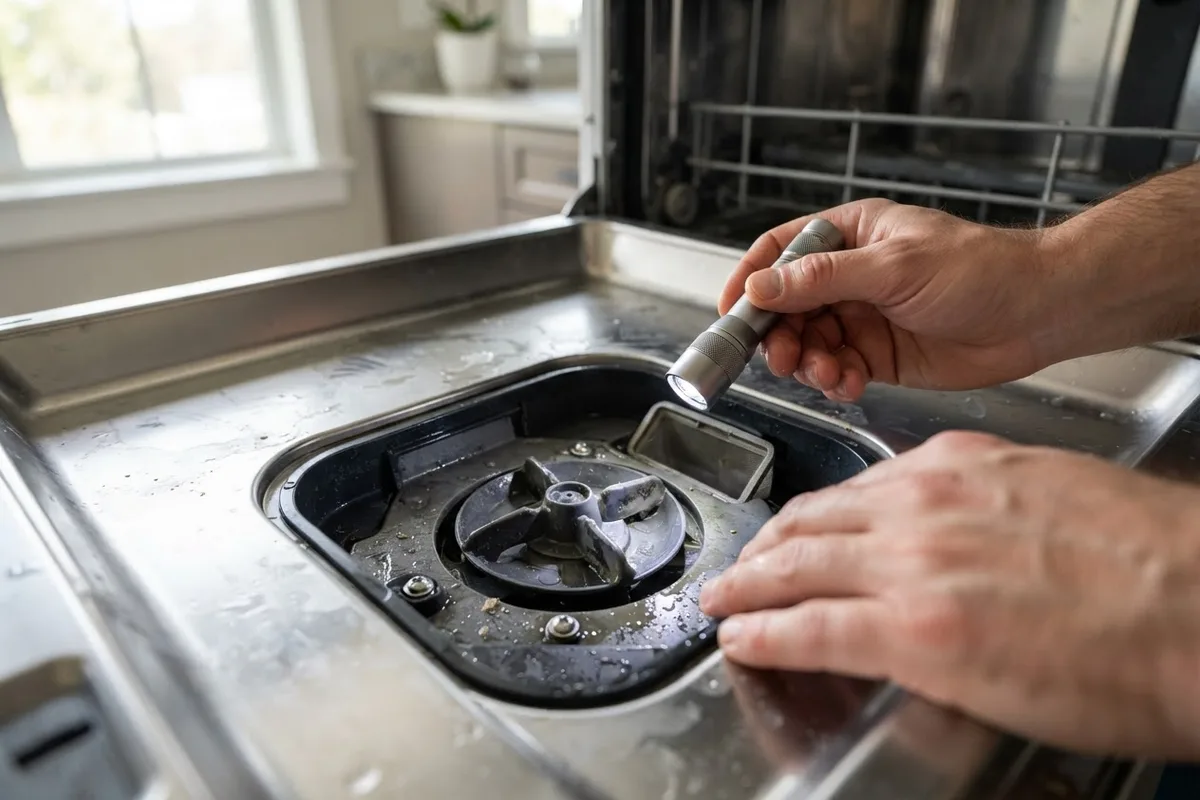
Many modern dishwashers contain a internal hard food disposer blade—a small stainless steel chopper mounted near the main circulation pump. This blade pulverized soft food particles so they clear the drain lines easily. If a small chicken bone, fruit pit, or piece of hard plastic drops into the sump, the high-speed chopper blade will strike it continuously during wash modes, producing a continuous harsh grinding sound.
Cleaning out the chopper housing restores quiet circulation and prevents the blade from jamming the primary wash pump motor.
- Shut off electrical power to the appliance.
- Disassemble the tub bottom components: remove the lower rack, spray arm, filter housing, and central wash tower base.
- Unscrew the cover housing protecting the chopper blade assembly at the rear of the sump basin.
- Use a bright flashlight to inspect the stainless steel blade and surrounding protector screen.
- Carefully pluck out foreign objects using needle-nose pliers, taking care not to bend the fine mesh screen.
- Reassemble the sump components, ensuring all rubber gaskets seat flat to prevent pressure loss during wash cycles.
Dishwasher Noise Diagnostic Guide
| Noise Type | Likely Cause | Typical Timing | DIY Fix Difficulty |
|---|---|---|---|
| Thumping / Slapping | Spray arm striking tall dishes | Throughout wash cycle | Easy (Reload dishes) |
| Fast Rattling | Light items moving or worn rack rollers | High-pressure wash wash | Easy (Adjust placement) |
| Loud Grinding | Debris in drain pump or chopper blade | Drain cycle or active wash | Intermediate (Clear pump impeller) |
| High-Pitched Buzzing | Failing water inlet valve solenoid | Water fill periods | Intermediate (Replace inlet valve) |
| Harsh Continuous Drone | Worn circulation pump bearings | Entire wash cycle | Advanced (Replace pump motor) |
When to Call a Pro
While clearing trapped glass from a pump impeller or reorganizing dish racks are manageable DIY tasks, certain mechanical failures require specialized tools and expert service. If the noise persists after clearing all debris, or if you hear a deep, mechanical drone coming directly from the main circulation pump motor beneath the unit, the internal motor bearings have likely failed.
Replacing a main motor or handling intricate electrical wiring near water lines carries risks. Never attempt to service internal wiring or sealed electrical modules without proper safety gear and knowledge. When DIY troubleshooting does not resolve the issue, True Appliance Repair can quickly match you with an experienced local technician to get your kitchen running quietly again.
If you are evaluating whether to repair an older appliance or invest in a modern replacement, our breakdown of appliance lifespans and repair decisions provides clear cost guidance for homeowners.
FAQ
Why does my dishwasher make a loud noise only when draining?
A loud noise during the drain phase almost always points to foreign debris trapped inside the drain pump housing or impeller. Small items like fruit seeds, glass, or twist ties fall into the sump basin and get pulled into the pump blades when suction begins. Clearing the pump housing usually fixes the sound immediately.
Is a noisy dishwasher dangerous to run?
While a knocking spray arm is harmless, grinding or loud buzzing noises should not be ignored. A jammed pump impeller can overheat the pump motor, while a buzzing water valve indicates electric solenoid strain that could eventually cause an uncontained water leak.
How much does it cost to fix a noisy dishwasher pump?
If the noise is caused by trapped debris, clearing it yourself costs nothing. If the drain pump or main wash pump motor requires full replacement, parts typically cost between $60 and $180, while overall professional repair costs usually range from $150 to $350 depending on local labor rates, appliance brand, and accessibility.
Can hard water cause dishwasher noise?
Yes. Hard water mineral deposits collect inside the water inlet valve, spray arm nozzles, and pump impellers over time. Scale buildup inside the water valve restricts flow and creates a high-pitched buzzing or squealing noise during fill cycles. Regular maintenance with hard water descalers helps prevent valve noise.