
An overfilling dishwasher can quickly transform a routine kitchen cleanup into an alarming water emergency on your floor. When water surges past the normal level in the tub, the issue usually stems from a stuck sensor, a clogged drain component, or a failing inlet valve. Before you panic, follow this practical guide to identify the root cause and restore proper water levels safely.
Safety First: Always unplug your dishwasher or switch off its dedicated circuit breaker at your main electrical panel before attempting any hands-on inspection. Additionally, shut off the water supply valve beneath your kitchen sink to prevent accidental flooding while you work.
Unstick the Dishwasher Float Assembly
The float assembly acts as your appliance's primary defense against overfilling. Located in the front corner of the bottom tub, this plastic dome rises as water fills the machine. When water reaches the correct operating level, the float triggers a microswitch underneath to cut power to the water inlet valve. Food particles, hardened detergent scum, or mineral buildup can cause the float stem to drag or lock in a low position, signaling to the appliance that it constantly needs more water.
To inspect and unstick the assembly, ensure power is turned off completely. Open the door and pull out the bottom dish rack to access the tub floor. Reach down and gently lift the plastic float dome up and down several times. You should feel smooth movement and hear a faint clicking sound from the switch below. If the float feels sticky or heavy, unscrew or unclip the plastic cover according to your user manual. Clean away grease, seeds, and soap deposits around the guide tube using warm water, dish soap, and a soft nylon brush. Once clean, retest the float motion to ensure it drops freely under its own weight before running a test wash.
Inspect and Test the Overfill Switch
Directly beneath the float assembly sits the electrical overfill switch. When the float rises to its maximum threshold, it depresses the mechanical lever on this switch, breaking the circuit to the water inlet valve. Over time, moisture exposure can corrode switch contacts, or mechanical spring fatigue can cause the switch to fail in the closed position, keeping the water valve energized regardless of water level.
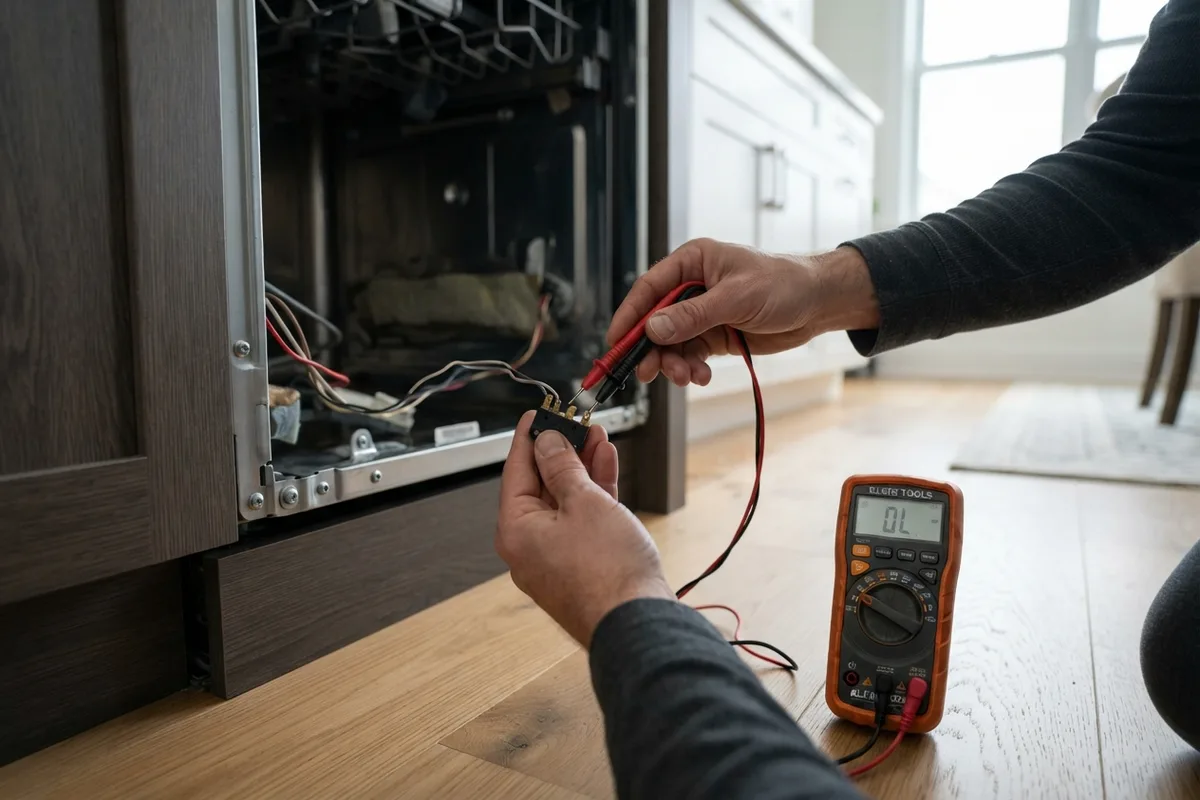
To examine this component, disconnect electrical power at the circuit breaker and remove the lower front toe kick panel beneath the dishwasher door. Locate the electrical switch directly underneath the float assembly stem. Visually inspect the wire leads for scorching, corrosion, or loose terminal connectors. Disconnect the wire harness from the switch and set a digital multimeter to the lowest ohms setting or continuity mode. Place the multimeter probes on the switch terminals and manually press the switch lever. The meter should alternate between continuity (near zero ohms) and open circuit (infinite resistance) when pressed and released. If the switch remains open or closed regardless of lever movement, replace the overfill switch.
Clear Debris from the Sump Drain Basin
Sometimes an apparent overfill condition is actually caused by trapped wastewater from a previous cycle combined with a new fill cycle. If your dishwasher fails to evacuate water completely before initiating a fresh wash phase, adding incoming water pushes the tub capacity past its limit. The primary culprit behind poor drainage is a clogged sump screen or drain pump filter basket located in the bottom center of the tub.
To clear the drainage basin, remove the lower rack and twist the cylindrical mesh filter counterclockwise to lift it out. Pull out the coarse filter screen and stainless steel filter plate beneath it. Scrape away trapped food residue, grease clumps, and broken glass or plastic labels. Use a small sponge to soak up standing water from the sump pit underneath. Inspect the drain pump impeller inside the pit for stuck popcorn kernels, twist ties, or debris that might prevent rotation. Reassemble the filter housing securely. If you suspect broader drainage or disposal issues across your sink setup, review our guide on how to clean a garbage disposal to ensure your shared drain line stays clear.
Test the Water Inlet Valve Functionality
The water inlet valve is an electro-mechanical component that opens when energized by the control board to let hot water fill the tub. If hard water deposits build up inside the valve mechanism or if the internal solenoid coil fails mechanically, the valve gate can stick in a partially open position. When this happens, water continues flowing into the machine even after power to the valve is terminated—and in some cases, even when the appliance is turned off completely.
To test the inlet valve, keep the electrical power disconnected and shut off the hot water line beneath the sink. Remove the access panel at the bottom front of the dishwasher. Look for the brass water line connection leading into the plastic valve body. Disconnect the electrical wire harness connected to the valve solenoid. Using a multimeter set to measure resistance (ohms), place test probes across the solenoid terminals. A healthy solenoid typically reads between 500 and 1500 ohms, depending on model specifications. An infinite reading or a zero reading indicates a damaged solenoid coil. Additionally, if water trickles into the tub while the dishwasher is unplugged from the wall, the internal seal is mechanically damaged and requires a complete inlet valve replacement. Following routine essential appliance maintenance checks helps catch valve wear early.
Verify Water Pressure and Supply Lines
Household water pressure plays an overlooked role in how your dishwasher fills. Water inlet valves rely on standard residential water pressure—typically between 20 and 120 pounds per square inch (PSI)—to seat the internal diaphragm properly when closing. If incoming water pressure drops too low, the internal spring mechanism inside the valve may fail to seal tightly, causing slow, continuous overfilling over an extended cycle.
Check your kitchen faucet and other fixtures to ensure steady water pressure throughout the home. Inspect the flexible stainless steel or copper supply line underneath the sink for kinks, sharp bends, or partial clogs at the shut-off valve port. Turn the shut-off valve completely clockwise to close it, disconnect the line into a bucket, and briefly open the valve to verify robust, clear water flow. If water trickles slowly or contains heavy sediment, clean out the inlet valve screen strainer where the supply line connects to the appliance. Restoring adequate flow allows the internal diaphragm to snap shut as designed when the fill phase ends.
Quick Troubleshooting Reference Guide
| Problem Cause | Primary Symptom | Quick DIY Solution |
|---|---|---|
| Stuck Float Dome | Water fills above heating element during cycle | Clean food debris around float guide rod |
| Faulty Overfill Switch | Water valve stays energized constantly | Test switch continuity; replace if unresponsive |
| Clogged Sump Screen | Deep standing water remains before fill phase | Remove and rinse filter basket and pit |
| Defective Inlet Valve | Water trickles in while unit is off | Replace water inlet valve assembly |
| Low Water Pressure | Slow fill that fails to shut off cleanly | Clear supply line kink or clean inlet mesh |
When to Call a Pro
If you have tested the float assembly, overfill switch, and inlet valve but your dishwasher still floods, internal control board failure or electrical wiring issues may be at play. Working with high-voltage control components or underlying plumbing connections requires specialized equipment and technical training. Stop immediately and call a technician if you notice burning plastic smells, exposed wire damage, or uncontained flooding that threatens cabinet structure.
When DIY troubleshooting reaches its limit, True Appliance Repair can match you with a local appliance pro to diagnose complex electrical or water control problems safely. You can also explore specialized local dishwasher repair service options to get your kitchen running smoothly again. Dealing with persistent leaks promptly prevents expensive subfloor repair and mold growth. Standard professional repair fees generally range between $150 and $300, depending on your region and necessary replacement parts.
FAQ
Why does my dishwasher fill with water when it is turned off?
When water enters the tub while the appliance is powered down, the water inlet valve has typically failed mechanically in an open position. Household water pressure pushes past the worn internal seal directly into the tub. Shutting off the dedicated water valve beneath your sink stops the flow until the inlet valve is replaced.
Can a clogged garbage disposal cause a dishwasher to overfill?
Yes, a blocked garbage disposal or air gap can prevent wastewater from pumping out during the drain phase. While this does not directly cause the machine to draw excess fresh water, lingering dirty water combined with a fresh fill cycle can easily cause the tub to overflow. Cleaning out your disposal and drain hose ensures wastewater exits properly.
How high should water get in a dishwasher?
In a standard dishwashing cycle, water should pool just below or right around the heating element at the bottom of the tub. If water rises above the lower door gasket or spills out onto your kitchen floor, the appliance is overfilling and requires immediate attention to prevent water damage.
How do I know if my overfill switch is bad?
A functioning float switch makes an audible clicking sound when you lift and drop the float stem inside the tub. You can also disconnect power to the appliance and use a multimeter to check the switch terminals for electrical continuity. If the switch shows no continuity change when triggered, it must be replaced.