
A tripped circuit breaker mid-cycle can halt your kitchen routine without warning. While an occasional power spike happens, a dishwasher that repeatedly trips your breaker indicates an electrical short or component overload inside the unit. By systematically checking the most common failure points, you can identify what is causing the shutoff and determine whether it is a simple fix or time for professional repair.
Before attempting any inspection or repair, turn off the circuit breaker to the appliance and unplug the dishwasher from the wall outlet. Shut off the water supply line underneath the kitchen sink as well.
Inspect the Heating Element for Visual Damage
A cracked, blistered, or burnt heating element is one of the most frequent reasons a dishwasher trips the breaker during the heated wash or dry cycle. As the heating element expands under intense heat, internal resistance wires can ground against the outer metal casing, causing an immediate electrical short.
- Disconnect all electrical power and shut off the water supply under the sink.
- Open the dishwasher door and remove the lower dish rack to access the tub floor.
- Visually examine the circular heating element at the bottom of the tub for dark spots, cracks, or visible blistering.
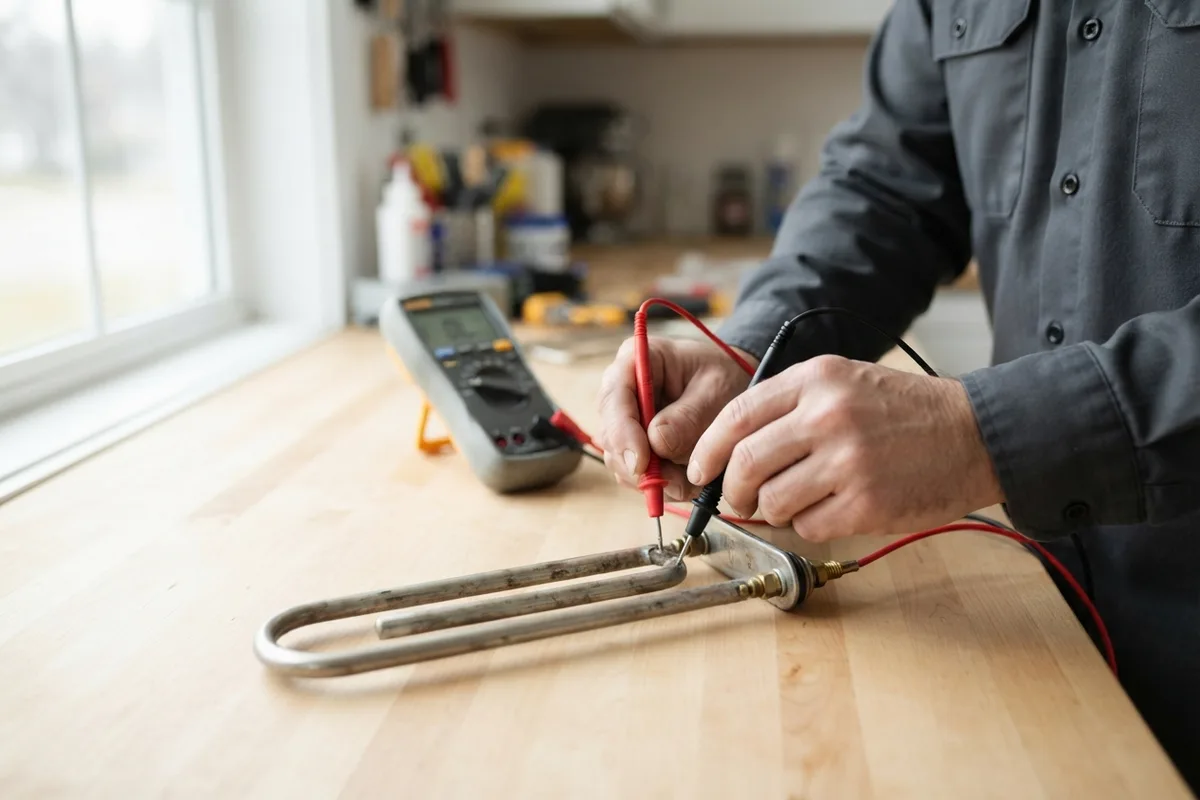
- Unscrew the lower kickplate panel beneath the door and use a multimeter set to ohms to test the heating element terminals for continuity.
- If the element shows zero resistance or a short to ground, replacing the element usually resolves the problem.
If you suspect your heating element is intact but your unit fails to warm water properly, check out our guide on why your dishwasher is not heating for additional troubleshooting tips.
Check the Door Latch Assembly and Switches
The door latch contains small microswitches that inform the dishwasher control module when the door is securely closed. Over time, moisture, food debris, or mechanical wear can corrode these switches or cause internal wiring to short against the metal door frame whenever the latch engages.
- Verify power to the unit is completely disconnected at the breaker box.
- Remove the inner door panel screws using a Torx screwdriver to expose the latch mechanism at the top of the door.
- Inspect the wire harness connections attached to the door microswitches for discoloration, scorch marks, or loose spades.
- Disconnect the wire leads from each microswitch and test them individually with a multimeter for proper continuity when pressed.
- Replace any melted or defective switch assemblies before reassembling the inner door panel.
Examine the Wash Motor and Drain Pump Wiring
The main circulation pump motor and drain pump draw significant electrical current while running. If moisture leaks onto motor windings or if an internal bearing seizes, the motor will draw excessive amperage and trip your home circuit breaker almost instantly.
- Ensure power is shut off and remove the bottom access kickplate.
- Look for water droplets, white mineral crust, or dark soot under the motor housing that indicates an active leak.
- Check the wiring harness connecting to both the main pump and the drain pump for frayed insulation or pinched wires.
- Manually rotate the motor impeller with your fingers or a screwdriver to check if the shaft spins freely without binding.
- If a pump motor is seized or soaked in water, the motor assembly or pump seal will need to be replaced.
Regular maintenance and timely repairs help keep your appliances running safely. Reviewing DIY appliance maintenance steps to prevent repairs can help you catch small leaks before they damage electrical components.
Inspect the Power Cord and Junction Box Connections
Dishwashers are hardwired or plugged into a junction box behind the lower kickplate. Loose wire nuts, corroded copper leads, or improper grounding connections inside this box can create high-resistance arcing that trips the breaker as soon as current flows.
- Turn off power at the main electrical panel before touching any junction box covers.
- Remove the metal junction box cover located behind the bottom kickplate on the right or left front corner.
- Inspect the wire nuts connecting the house supply wires to the dishwasher power leads.
- Look for melted wire nuts, burnt insulation, or loose ground connections attached to the metal chassis.
- Re-strip damaged copper ends, replace burnt wire connectors tightly, and reattach the ground screw securely.
Verify the Float Switch and Overfill Protection
The overfill float switch prevents your dishwasher from filling with excess water. If water accumulates in the lower base pan due to a small leak or tub overflow, the float switch activates to trip the inlet valve or drain pump, which can cause a short if electrical components become submerged.
- Ensure the dishwasher remains powered off at the breaker.
- Locate the float dome in the front corner of the lower tub and lift it up to verify it moves freely up and down.
- Remove the kickplate to inspect the microswitch directly underneath the float assembly in the base tray.
- Check for accumulated water in the bottom drip tray that may be submerging electrical connectors.
- Clean out any debris under the float stem, dry the base pan thoroughly, and test the switch for normal operation.
Dishwasher Breaker Tripping Diagnostic Guide
| Component | Common Symptom | Typical Timing in Cycle | Recommended DIY Action |
|---|---|---|---|
| Heating Element | Burnt plastic odor, visible cracks on element | Wash or drying cycle | Check element with multimeter, replace if grounded |
| Door Switch | Breaker trips immediately upon closing door | Before cycle starts | Inspect latch wiring, replace faulty microswitch |
| Wash Motor | Loud buzzing noise before breaker trips | 2–5 minutes after fill | Check motor shaft for binding, inspect for water leaks |
| Junction Box Wire Nuts | Sizzle sound, scorch marks under kickplate | Instantly when powered | Tighten wire nuts, replace damaged wire leads |
| Float Switch Base | Water pooled under dishwasher frame | During fill cycle | Sponge up water leak, verify float switch movement |
When to Call a Pro
Electrical troubleshooting on major kitchen appliances requires strict adherence to safety protocols. If you suspect an issue inside your main circuit breaker panel, notice scorched wall outlets, or feel uncomfortable testing live wires with a multimeter, stop immediately and contact a qualified technician. Attempting high-voltage electrical repairs without proper training carries risk of electrical shock or house fire.
Most basic dishwasher electrical fixes, such as replacing a heating element or door latch microswitch, range from $120 to $300 for parts and labor, though cost varies by area and appliance model. Major motor replacements or harness repairs may run $250 to $450. When complex wiring issues or internal shorts persist, True Appliance Repair can match you with a local appliance pro to diagnose and resolve the issue quickly and safely. You can also visit our contact page to connect with a technician in your neighborhood.
FAQ
Why does my dishwasher trip the breaker only during the dry cycle?
The heating element draws its maximum electrical wattage during the drying phase to evaporate moisture from dishes. If the heating element has an internal fault or hairline crack, thermal expansion causes the internal wire to touch the outer grounding sheath, immediately tripping the circuit breaker.
Can a clogged dishwasher cause the circuit breaker to trip?
Yes, indirectly. If a severe drain blockage causes water to back up and overflow into the bottom frame pan, standing water can submerge the drain pump motor terminals or float switch wiring. This moisture creates a direct short circuit to ground, tripping your breaker.
Is it safe to reset a dishwasher circuit breaker repeatedly?
No. Flipping a tripped circuit breaker back on without identifying the underlying cause can damage internal electronic control boards or create severe electrical fire hazards. If the breaker trips a second time, keep power off until you inspect the appliance.
Should my dishwasher be on its own dedicated circuit breaker?
Yes, standard residential building codes typically require dishwashers to operate on a dedicated 15-amp or 20-amp circuit. Sharing a circuit with high-draw appliances like garbage disposals, microwave ovens, or countertop toaster ovens can cause nuisance overload tripping during operation.