
Pulling a load of damp, ice-cold laundry out of a dryer that just ran for an hour is a major household headache. When a dryer tumbles normally but produces zero warmth, the culprit is usually a power supply hiccup, restricted airflow, or a single failed safety sensor rather than a dead motor. Walk through these six practical checks to pinpoint why your dryer is not heating and see what you can safely solve yourself.
Safety First: Always unplug your dryer from the wall outlet (and shut off the gas supply valve if you have a gas model) before removing access panels or touching internal components. Never attempt live electrical panel repairs or internal gas line work yourself.
1. Reset a Half-Tripped 240V Circuit Breaker
Electric dryers in the United States run on a 240-volt double-pole circuit breaker made of two connected switches. Unlike gas dryers that use a standard 120-volt outlet, an electric dryer can lose half of its power supply if only one side of that double breaker trips. When this happens, the drum motor and control board still get 120 volts to spin and light up, but the heating element gets nothing.
- Walk out to your home's main electrical panel and locate the double breaker labeled for the dryer.
- Look closely at the switch handle; even if it looks mostly aligned, one side may have tripped internally.
- Flip the entire double breaker firmly to the full OFF position until it clicks.
- Flip it back to the ON position, then run a timed high-heat cycle for five minutes to see if the drum warms up.
- If the breaker trips again immediately, stop resetting it and call an electrician or appliance technician.
2. Clear a Clogged Dryer Vent and Lint Trap
Restricted airflow is the number one reason dryers stop producing heat—especially in autumn and winter when heavy blankets, flannels, and hoodies shed extra lint. If hot, moist air cannot escape through the exhaust duct, heat backs up inside the cabinet and trips safety cutoff switches.
- Unplug the dryer and pull the lint screen out of its slot.
- Scrub the mesh screen under warm running water with a drop of dish soap and a soft brush to strip away invisible fabric softener film, then let it dry completely.
- Pull the dryer a foot away from the wall and loosen the metal clamps holding the 4-inch exhaust hose to the back of the machine.
- Vacuum out compacted lint from both the dryer's rear exhaust port and the wall duct using a crevice tool or a flexible rotary vent brush.
- Step outside to your exterior vent hood and clear away any matted lint, bird nests, or wet leaves holding the damper flap shut.
- Reconnect the vent pipe using rigid or semi-rigid metal ducting, making sure not to crush or kink the hose when pushing the dryer back.
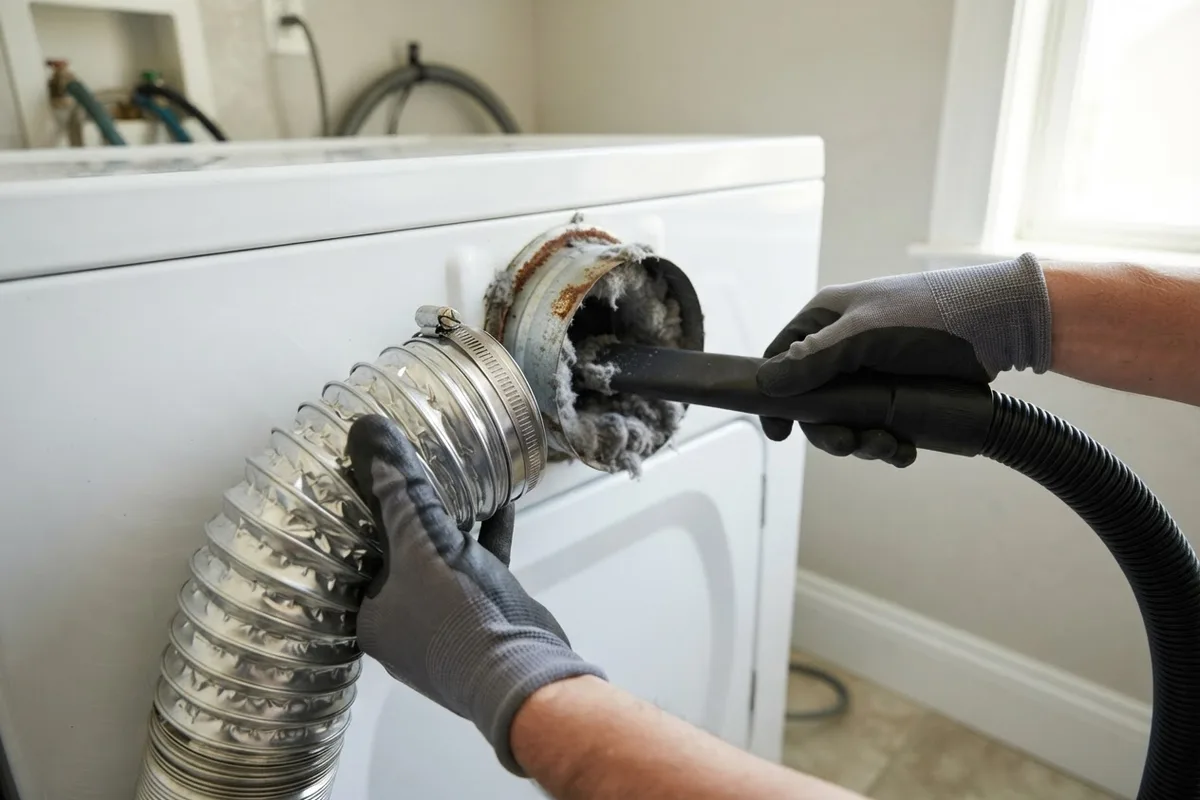
3. Check the Cycle Settings and Eco Modes
Modern dryers pack dozens of buttons and digital modifiers onto the console, making it surprisingly easy to brush a setting that disables the heater. Before pulling out a screwdriver, verify that your control panel is actually calling for heat.
- Check the temperature selector to make sure the machine is not set to Air Fluff, No Heat, or Tumble Only.
- Look for an active Eco Mode or Energy Saver light; many sensor cycles start with a long unheated tumbling phase to save electricity before turning on the element.
- Wipe down the two metal moisture sensor bars located just inside the door below the lint screen using a cotton ball dipped in rubbing alcohol. Dryer sheet residue coats these bars and tricks the computer into thinking wet clothes are already bone dry.
- Switch the dial from Sensor Dry to a manual Timed Dry on High Heat for 15 minutes. If the dryer heats up on Timed Dry, your heating system works fine and the moisture sensor simply needed cleaning.
4. Test and Replace a Blown Thermal Fuse
The thermal fuse is a small, one-time safety device mounted on the blower housing or exhaust duct inside the dryer. If a clogged vent causes the dryer to overheat, the thermal fuse blows and permanently cuts power to the heating system (or the entire motor on some models) to prevent a laundry room fire.
- Unplug the dryer completely and shut off the gas valve if applicable.
- Access the blower housing—typically by removing the back panel on standard top-vented dryers or the lower front toe-kick panel on front-serviceable models.
- Locate the thermal fuse, which looks like a small white or metal strip about an inch long with two wire terminals attached.
- Slip one wire off its terminal and set a digital multimeter to the continuity (ohm/resistance) setting.
- Touch the two multimeter probes to the two fuse terminals. A beep or a reading near zero ohms means the fuse is good; an "OL" (open loop) reading or silence means the fuse is blown.
- If the fuse is blown, replace it with an exact manufacturer match and thoroughly clean your entire home vent line before running the dryer again, or the new fuse will blow right away.
5. Inspect the Heating Element on Electric Dryers
Inside an electric dryer, air blows across coiled nickel-chromium wire housed inside a metal chamber—very similar to the coils inside a toaster. Years of heating up and cooling down cause these coils to become brittle and eventually snap or sag against the metal housing.
- With the electric dryer unplugged, remove the access panel that leads to the heater assembly.
- Inspect the metal housing for scorch marks or broken, sagging wire coils inside the ceramic insulators.
- Pull one wire off the heating element terminals and test across the two main terminals with your multimeter set to ohms.
- A healthy heating element usually reads between 10 and 50 ohms depending on the model. If the meter shows "OL" (infinite resistance), the coil has broken internally.
- Touch one probe to a terminal and the other probe to the bare metal housing; if you get a continuity beep, the element has grounded out against the case and must be replaced.
While you have the cabinet open to inspect the heater, check the drum rollers and idler pulley if you have also noticed a high-pitched noise—our guide on why your dryer is making a squeaking noise walks through checking those moving parts at the same time.
6. Check the Gas Supply and Igniter on Gas Dryers
If you own a gas dryer and the drum spins cold, the issue lies in the gas supply or the ignition assembly rather than a 240-volt breaker. Gas dryers rely on a glowing igniter, a flame sensor, and electromagnetic gas valve coils to light the burner tube.
- Check the manual gas shutoff valve behind the dryer first; the handle should sit parallel (in line) with the gas pipe. If someone bumped it perpendicular to the pipe while cleaning, no gas can enter the dryer.
- Confirm that other gas appliances in your home, such as your water heater or stove, are working normally.
- Locate the small plastic viewing port on the lower front panel (if your model has one) and start a high-heat cycle.
- Watch through the port for a bright orange glow from the igniter, followed by a click and a blue gas flame.
- If you hear two clicks and the orange glow goes out without a flame appearing, the gas valve solenoid coils have likely worn out. If you see no orange glow at all, the igniter or thermal fuse has failed. Because gas components require careful handling, leave internal burner and valve repairs to an experienced technician.
Need to clean up the other half of your laundry pair while troubleshooting? Check out our step-by-step guide on how to clean a front-load washing machine to keep wash day moving smoothly.
Quick Reference: Why Your Dryer Is Not Heating
| Symptom / Clue | Most Likely Cause | Typical US Repair Cost (Varies by Area/Model) |
|---|---|---|
| Electric dryer spins, zero heat, vent is clean | Half-tripped 240V breaker | $0 (DIY breaker reset) |
| Dryer gets hot on top, clothes stay damp | Clogged dryer vent or lint screen | $0 DIY – $180 pro vent cleaning |
| Heats on Timed Dry, stays cold on Sensor Dry | Dirty moisture sensor bars | $0 (Clean with rubbing alcohol) |
| Stopped heating right after a heavy lint load | Blown thermal fuse | $15–$40 part / $120–$220 pro repair |
| Electric dryer runs cold, fuse tests good | Broken heating element coil | $40–$120 part / $180–$350 pro repair |
| Gas dryer glows orange, clicks, no flame | Worn gas valve solenoid coils | $25–$60 part / $160–$300 pro repair |
When to Call a Pro
Resetting a breaker, scrubbing the moisture sensor bars, and clearing lint from your exhaust duct are safe, zero-cost fixes any homeowner can tackle in under an hour. However, you should put down the tools and call a technician if you smell gas, find scorched or melted wiring inside the cabinet, have a circuit breaker that trips repeatedly, or need to disassemble the drum and gas burner assembly.
If your troubleshooting points to a failed heating element, a bad control board, or a gas ignition issue, True Appliance Repair can connect you with an independent local pro for washer and dryer repair. You can also reach out through our contact page to get matched with a technician in your area.
FAQ
Why is my dryer spinning and running but not heating up?
When a dryer tumbles normally without heat, the drive motor is getting standard 120-volt electricity, but the heating circuit is interrupted. On electric dryers, this is most often caused by a half-tripped 240-volt breaker, a blown thermal fuse, or a burned-out heating element. On gas dryers, it usually points to a blown thermal fuse, a bad igniter, or worn gas valve coils.
Can a clogged dryer vent really stop a dryer from heating?
Yes, a clogged vent is the primary cause of blown thermal fuses. When lint blocks the exhaust duct, superheated air becomes trapped inside the dryer cabinet. Once internal temperatures climb past a safe limit, the thermal fuse permanently breaks the electrical circuit to the heater to prevent a house fire.
How much does it cost to fix a dryer that won't heat?
Professional repair costs typically range from $120 to $350 across the US, though exact pricing varies by your local area and dryer model. Replacing a thermal fuse or gas valve coils sits toward the lower end of that range, while replacing a specialty heating element or electronic control board costs more.
Where is the reset button on a dryer that is not heating?
Most residential clothes dryers do not have an internal push-button reset switch for the heater. Instead, you can reset the machine's power and electronics by unplugging the dryer (or flipping the double circuit breaker completely off and back on) for five minutes. If an overheating safety fuse has blown inside the cabinet, the part must be physically replaced rather than reset.