
A clothes dryer that gets dangerously hot to the touch isn't just inefficient—it's a serious fire safety hazard and a quick way to ruin your favorite clothes. When excessive heat builds up inside the drum, internal thermal safety switches trigger, often shutting the appliance down mid-cycle or leaving your laundry room sweltering.
Most dryer overheating issues stem from airflow blockages or failing electrical components. Troubleshooting these common problems early restores proper ventilation and protects your home. Follow these 5 practical DIY steps to safely diagnose and fix an overheating dryer.
Clear the Vent Hose and Wall Duct Immediately
Restricted airflow is the single most common cause of an overheating clothes dryer. When hot, moist air cannot escape through the exhaust ductwork, thermal energy builds up inside the drum, forcing internal temperatures far above normal operating levels.
- Safety first: Unplug the dryer from the electrical outlet, or turn off the gas supply valve if you operate a gas model.
- Carefully pull the dryer away from the wall to access the flexible duct connector.
- Detach the vent hose from both the dryer cabinet and the wall pipe outlet.
- Inspect the interior using a flashlight to locate dense lint accumulations or physical kinks.
- Use a flexible dryer vent cleaning brush attached to a rotary drill or manual rod to scrub away lint along the entire length of the wall ducting.
- Replace soft plastic or foil accordion hoses with rigid or semi-rigid aluminum metal ducting, which resists crushing and minimizes lint trapping.
Reattach the duct securely with metal clamps, push the dryer back into position without crushing the hose, and restore power to test airflow.
Deep Clean the Lint Screen and Housing
Even if you empty the lint screen after every single load, microscopic film from fabric softeners, dryer sheets, and fine clothing fibers gradually coats the mesh trap and collects inside the lower housing chute.
- Disconnect power to the appliance before performing any internal cleaning.
- Remove the lint screen and scrub both sides under warm water using dish soap and a soft nylon brush to strip away invisible waxy buildup.
- Allow the screen to air dry completely before reinserting it.
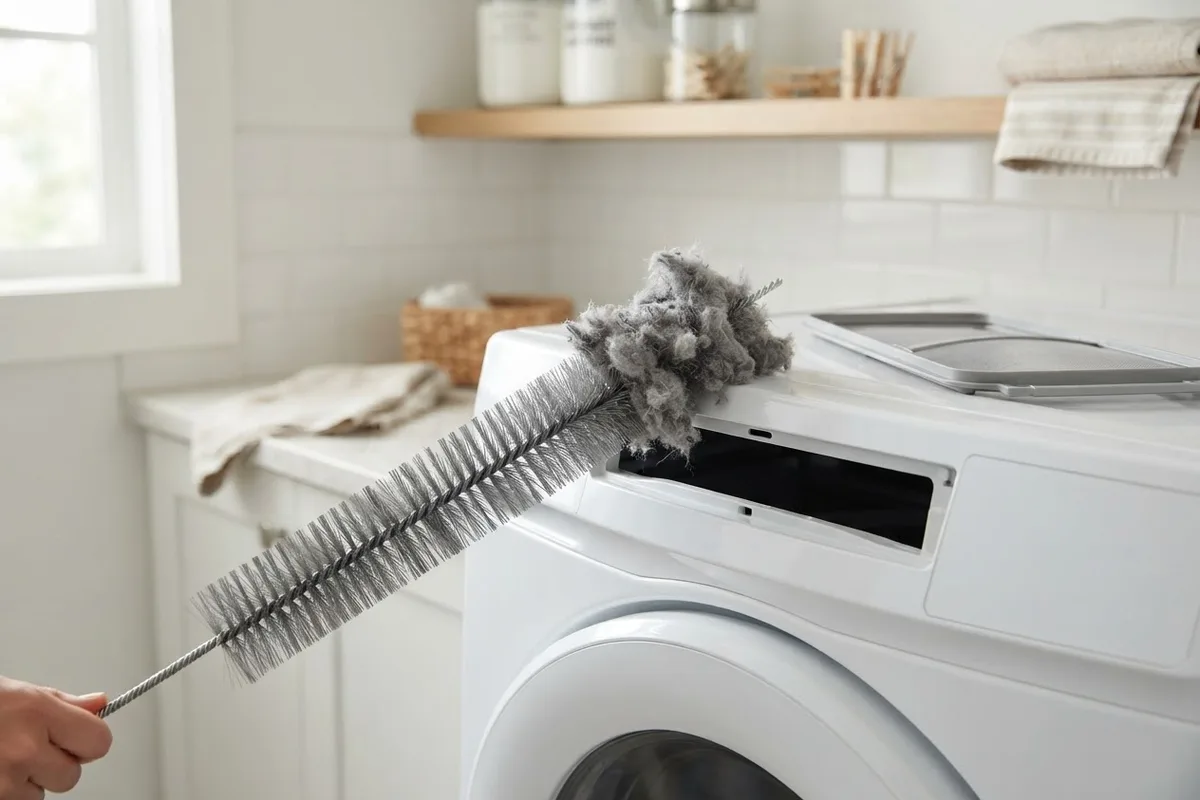
- While the screen is out, insert a narrow, flexible lint trap brush deep into the chute housing below the filter slot.
- Gently rotate the brush to dislodge compacted lint clusters from the internal housing walls.
- Attach a skinny nozzle extension to your vacuum cleaner and vacuum out the loosened debris inside the slot.
Keeping this entry point clear prevents immediate resistance at the start of the exhaust path. For more routine appliance upkeep, review our essential guide on home appliance maintenance habits that prevent repairs.
Check for a Faulty Heating Element or Thermostat
In electric dryers, a damaged heating element or malfunctioning thermostat can cause the heat source to remain energized continuously, leading to severe overheating.
- Ensure the power cord is disconnected from the wall receptacle.
- Remove the rear panel or lower front access panel depending on your dryer's specific cabinet design.
- Visually inspect the heating element assembly for broken, distorted, or sagging coils that may be physically touching the metal housing wall. A grounded coil stays turned on even when control switches open.
- Set a digital multimeter to the lowest ohms setting and test for continuity between each heater terminal and the outer metal casing. If the meter shows continuity to the frame, the element is shorted and must be replaced.
- Locate the cycling thermostat and high-limit safety thermostat mounted near the heater housing or blower duct.
- Test the thermostats for continuity at room temperature; a faulty switch that fails to open at set temperatures will allow heat to rise unchecked.
Replacing a defective heating element or thermostat is a straightforward component swap that typically resolves runaway heating conditions.
Inspect the Blower Wheel for Clogs or Resistance
The blower wheel is the motorized fan that actively pulls hot air out of the cylinder and forces it through the exhaust vent. If this wheel gets jammed by foreign objects or breaks off its drive shaft, air movement drops to zero while the heating element continues to glow.
- Disconnect electrical power and remove the cabinet access panel to reach the blower housing.
- Inspect the plastic or metal fan blades for wedged items like stray socks, coins, or hardened lint masses.
- Carefully spin the fan by hand to ensure it rotates smoothly without scraping against the housing.
- Check the central hub where the blower wheel attaches to the motor shaft. If the plastic hub threads are stripped or cracked, the motor shaft will spin uselessly inside the wheel without pushing air.
- Clear any obstructions or replace a cracked blower wheel assembly to re-establish strong ventilation.
Avoid Overloading and Clean the Exterior Exhaust Hood
Systemic overheating can also occur when routine usage habits prevent internal air circulation or when the final exit point outside your home is blocked.
- Avoid packing garments tightly inside the cylinder. Overloading creates a dense, damp mass that blocks air passages, trapping intense heat at the rear of the drum.
- Keep load sizes to a maximum of two-thirds full so clothes can tumble freely and distribute heat evenly.
- Go outside while the dryer is running and inspect the exterior wall or roof vent exhaust hood.
- Verify that the exterior flap or damper swings wide open under air pressure. If the flap stays closed, clear away lint crust, bird nests, or encroaching vegetation.
- Clean the exterior hood louvers and ensure no spring-loaded damper hinges are stuck shut.
If you smell scorching odors during operation alongside high surface temperatures, consult our troubleshooting guide on why your dryer smells like burning for further safety guidance.
Dryer Overheating Symptoms & DIY Fix Quick Guide
| Symptom | Primary Cause | DIY Action | Typical Parts Needed |
|---|---|---|---|
| Dryer exterior scorchingly hot | Blocked vent hose or wall duct | Brush vent duct clean; replace crushed flexible hoses | Dryer vent brush kit, rigid duct |
| Dryer shuts off mid-cycle after 10–15 mins | Tripped high-limit thermal switch | Clean lint trap housing cavity and clear exhaust path | Vacuum attachment, lint brush |
| Dryer continues heating even when cycle ends | Shorted heating element grounded to frame | Unplug, test element continuity to cabinet, replace if shorted | Heating element assembly |
| Weak airflow at exterior vent flap | Broken or jammed blower wheel | Remove obstruction from housing or replace stripped fan wheel | Blower wheel replacement |
| Clothes burning hot but still damp | Overloaded drum or stuck outdoor vent flap | Reduce load size and clear external hood damper flaps | None |
When to Call a Pro
While cleaning ductwork and swapping accessible lint screens are manageable weekend tasks, complex electrical faults and gas-line diagnostics demand professional intervention. If your gas dryer is overheating due to a failing gas valve burner assembly, or if internal electrical wiring shows signs of melting, stop immediately and leave the cabinet closed.
Working with gas lines or high-voltage electrical circuits carries serious safety risks. Professional repair costs for complex thermal or electrical component replacements typically range from $150 to $300, depending on your geographic area and machine model. If basic airflow troubleshooting does not solve the problem, True Appliance Repair can match you with a local appliance pro to safely diagnose and fix your machine.
FAQ
Why is my dryer running extremely hot but leaving clothes wet?
This situation almost always indicates severe airflow restriction rather than a heating failure. When moist exhaust air cannot escape through a clogged vent line or lint screen, moisture gets trapped inside the drum. The temperature rises rapidly because thermal energy cannot vent, but clothes remain damp because evaporation cannot escape.
Can an overheating dryer cause a house fire?
Yes. Compacted lint accumulation inside the dryer cabinet and exhaust ductwork is highly flammable. When internal temperatures spike due to restricted airflow or a grounded heating element, stray lint can ignite quickly. Cleaning your vent system regularly is an essential fire prevention habit for every homeowner.
How do I know if my dryer thermal fuse has blown?
When a dryer overheats severely, the thermal fuse blows as a emergency safety precaution to cut off power or heat. In electric dryers, a blown thermal fuse usually prevents the appliance from turning on or tumbling altogether. In gas dryers, a blown fuse often allows the drum to tumble but stops the gas burner from igniting.
What is the safest type of vent hose to prevent dryer overheating?
Rigid or semi-rigid metal aluminum ducting is the safest choice for dryer ventilation. Avoid thin plastic or corrugated foil accordion hoses, as they sag easily, trap lint in their ridges, and crush easily behind the machine, severely restricting airflow.