
Starting a load of laundry only to find the machine silent ten minutes later—with soaking wet clothes still inside—is a common laundry room headache. When a clothes dryer stops before the cycle finishes, it is almost always reacting to a dirty sensor, trapped heat, or an overworked motor thermal cutoff. Before paying for a service call, you can solve most of these issues yourself in under an hour with basic household supplies.
Safety First: Before cleaning internal parts, inspecting vents, or opening any access panel, always unplug your electric dryer from the wall outlet or switch off its circuit breaker. If you have a gas dryer, unplug the power cord and turn the gas shut-off valve to the closed position. Never attempt gas line work or high-voltage electrical panel testing yourself.
1. Scrub the Moisture Sensor Bars
Modern machines use two thin metal strips inside the drum to detect whether laundry is still damp. If you use dryer sheets or liquid fabric softener, an invisible waxy film coats these bars over time. Because the waxy buildup blocks electrical conductivity, the control board thinks the load is completely dry and shuts the cycle down after just a few minutes.
- Unplug the machine and open the loading door.
- Locate the two narrow metal sensor strips, usually mounted on the lower front bulkhead just below the lint screen housing or along the back wall.
- Dampen a microfiber cloth or a soft nylon scrub pad with rubbing alcohol (isopropyl alcohol) or white vinegar.
- Rub the metal strips firmly for 30 seconds to dissolve residue. Avoid steel wool, which scratches the metal.
- Wipe the bars dry with a clean towel and test a load on the auto-dry setting.
2. Clear a Clogged Exhaust Vent Line
The most dangerous reason for a dryer shutting off early is restricted airflow. When lint clogs the exhaust duct, hot air cannot escape the cabinet. Internal temperatures climb rapidly until the high-limit safety thermostat trips, cutting power to protect your home from a fire. Cutting down on drying time is also one of the best appliance energy saving tips you can practice.
- Pull the dryer away from the wall carefully (watch the gas line if applicable).
- Loosen the metal clamp and disconnect the flexible 4-inch transition hose from the back of the machine.
- Vacuum out any compacted lint inside the dryer's exhaust port and the flexible hose.
- Run a rotary dryer vent brush through the rigid wall duct all the way to the exterior hood.
- Go outside, check the exterior vent flap, and clear away matted lint, bird nests, or stuck louvers.
- Reconnect the rigid or semi-rigid metal duct, ensuring there are no kinks or crushed bends.
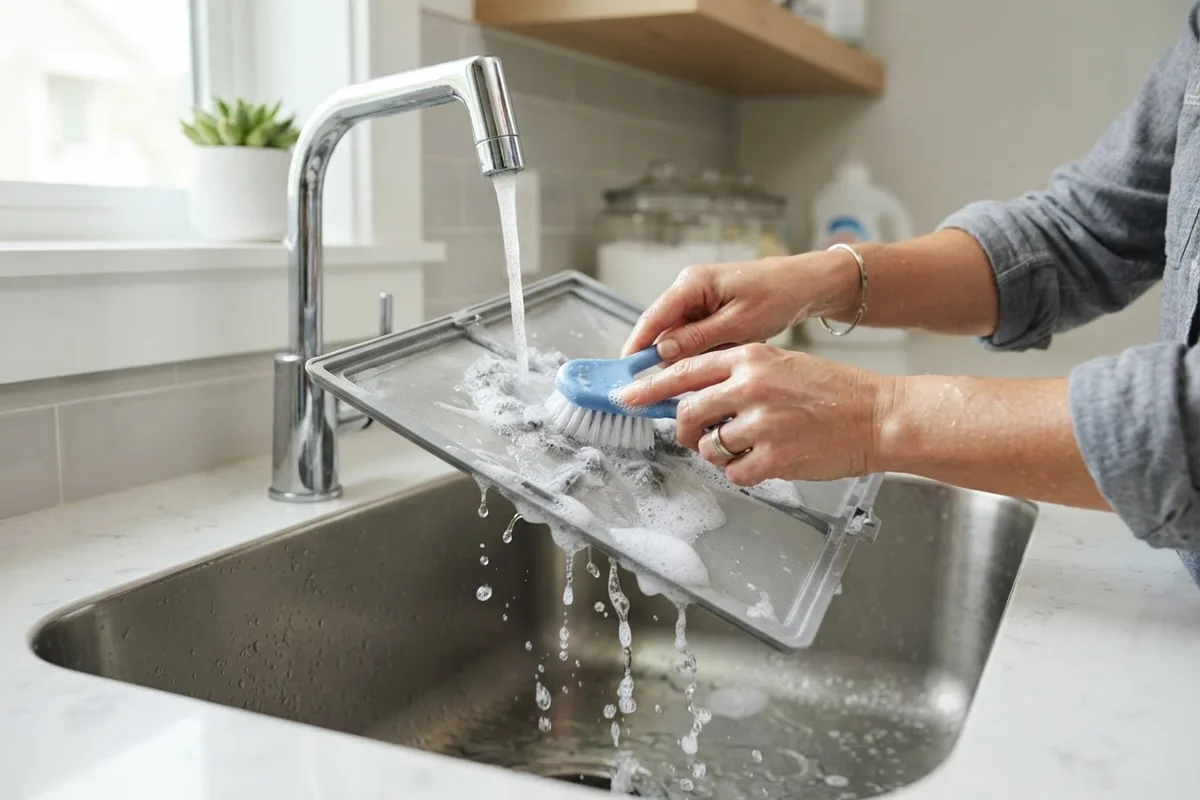
3. Wash the Lint Screen With Dish Soap
Scraping fuzz off the mesh filter before every load is essential, but it does not remove microscopic chemical buildup. Residue from detergent pods and dryer sheets creates a clear waterproof barrier across the nylon mesh. Even when the screen looks clean, air cannot pass through it, causing the blower housing to overheat and shut the machine down mid-cycle.
- Pull the lint filter out of its slot and roll off any loose fibers.
- Take the screen to the kitchen sink and pour cold water directly over the mesh. If water pools on top instead of rushing straight through, the mesh is clogged.
- Squirt a few drops of grease-cutting liquid dish soap onto both sides of the filter.
- Scrub the mesh gently in circular motions using a soft toothbrush and warm water.
- Rinse thoroughly until water runs freely through every square inch of the screen.
- Let the filter air-dry completely before sliding it back into the dryer.
4. Test the Timed Dry Setting
To figure out whether you are dealing with an electronic sensor glitch or a mechanical overheating issue, run a diagnostic test using the Timed Dry setting. Timed Dry bypasses the moisture sensor circuit entirely and relies strictly on the timer and thermal safety switches.
- Place a few damp bath towels inside the drum.
- Select Timed Dry for 40 minutes on medium heat and press Start.
- If the dryer runs the entire 40 minutes: Your heating circuit, motor, and airflow are working fine. The culprit is definitely the moisture sensor bars, a loose sensor wire harness, or the electronic control board.
- If the dryer still shuts off after 5 to 15 minutes: The machine is overheating or losing power mechanically. Focus your attention on the exhaust vent, door switch, or drive motor.
5. Inspect the Door Switch and Strike
If the door pops slightly loose or the switch plunger wears down, the heavy tumbling vibration of wet jeans and towels will break the electrical circuit mid-cycle. The moment the dryer thinks the door has been opened, it stops the drum and heating element immediately.
- Open the dryer door and find the small plastic lever or plunger button along the outer frame.
- Press the switch inward with your finger. You should hear a crisp, distinct click.
- If the button feels spongy, sticks inside the frame, or wiggles loosely, the switch mechanism is worn out.
- Inspect the metal or plastic door strike (the catch on the door itself that pushes into the frame). If it is bent or cracked, it will not hold the switch closed when wet laundry slams against the inside of the door.
- Check the rubber door seal for bunched-up fabric or socks caught in the hinge area that push the door outward.
6. Let an Overheated Drive Motor Cool Down
When your dryer stops after 10 minutes, hums briefly if you try to restart it, and then refuses to turn back on until it sits untouched for 30 to 60 minutes, the drive motor's internal overload protector is tripping. Lint packed tightly around the motor housing acts like a winter blanket, trapping heat until the motor shuts itself down to prevent burning out.
- Unplug the dryer and let it cool for at least an hour.
- Remove the lower front access panel or rear service panel (depending on your model) using a nut driver.
- Use a crevice attachment on a shop vacuum to suck up thick carpets of lint sitting on the cabinet floor and wrapped around the motor casing.
- Spin the blower wheel by hand (with power still unplugged) to make sure a stray sock or coin is not jamming the fan and forcing the motor to overwork.
- Reattach the panel, restore power, and run a small load to see if improved ventilation keeps the motor cool.
Quick-Reference Troubleshooting Guide
Use this table to match your machine's exact behavior to the right fix and typical repair cost range (prices vary by region and model):
| Symptom | Most Likely Cause | DIY Fix or Typical Pro Cost |
|---|---|---|
| Stops after 3–5 minutes on Auto Dry, works on Timed Dry | Waxy residue on moisture sensor bars | Clean bars with rubbing alcohol (Free DIY) |
| Stops after 10–15 minutes, cabinet feels very hot on top | Clogged exhaust vent or blocked lint screen | Vacuum vent duct & wash screen ($0–$150) |
| Stops when heavy clothes hit the door; restarts immediately | Worn door switch or bent door strike | Adjust strike or replace switch ($25–$140) |
| Stops mid-cycle, won't restart for 30–60 minutes, smells hot | Failing drive motor or lint-packed motor housing | Vacuum cabinet or replace motor ($200–$380) |
| Shutting off randomly with blinking error codes | Faulty thermistor or main control board | Replace thermistor or board ($150–$350) |
If you are weighing a major motor replacement against the age of the unit, check our appliance repair cost guide to decide whether repairing or replacing makes the most financial sense.
When to Call a Pro
Cleaning sensors, washing filters, and brushing out ductwork solve the majority of short-cycling problems. However, you should put down the tools and call a professional technician if you encounter any of the following:
- Drive motor replacement: Swapping a seized or overheating drive motor requires removing the drum, belt, and blower wheel, which often strips tightly threaded blower shafts.
- Thermistor or cycling thermostat testing: Diagnosing internal temperature sensors requires a multimeter and disassembly of the bulkhead near high-voltage heating elements.
- Gas valve coils or igniter troubles: Anything involving the gas burner assembly carries a risk of carbon monoxide or gas leaks and requires specialized testing equipment.
If your dryer keeps shutting down after you have cleared the airflow path and scrubbed the sensors, True Appliance Repair can connect you with an independent local technician for fast washer and dryer repair.
FAQ
Why does my dryer run for 5 minutes and then shut off?
When a dryer stops consistently after three to five minutes, the electronic moisture sensor is almost always failing to detect dampness in the drum. Scrubbing the metal sensor bars inside the drum with rubbing alcohol removes fabric softener buildup so the machine senses wet laundry again. If the problem also happens on the Timed Dry setting, a clogged exhaust vent is tripping the high-limit safety thermostat.
Why will my dryer only start again after it cools down?
Dryers have a thermal overload switch built directly into the drive motor. When the motor gets too hot—either from heavy lint buildup smothering the motor casing or failing motor bearings—the switch opens and cuts power completely. Once the metal cools down after 30 to 45 minutes, the switch resets with a quiet click and allows the dryer to start again.
Can overloading the dryer cause it to stop mid-cycle?
Yes, cramming a king-sized comforter or an oversized load of wet towels into the drum blocks air from moving past the heater housing. The trapped heat triggers the safety thermostat and stops the cycle early. Heavy loads also put extreme strain on the drive motor and push forcefully against the inside of the door, which can trip a loose door switch.
Is it safe to keep restarting a dryer that shuts off early?
No, repeatedly pressing the start button on a dryer that keeps stopping is a fire hazard. The machine is shutting off because a thermal safety switch detected dangerously high internal heat or a failing motor. Always unplug the machine and inspect the lint trap and exhaust ductwork before running another cycle.