
Seeing bright flashes, popping sparks, or miniature fireworks inside your kitchen range right before dinner is alarming. In most cases, an electric oven sparking points to a blistered heating element, heavy grease buildup, or a stray piece of aluminum foil touching a live component. Before you panic—or worse, reach inside a live appliance—work through these six safe, power-off checks to pinpoint the exact culprit and protect your home.
Safety First: If your oven is actively sparking or smoking right now, keep the oven door closed to starve any potential flame of oxygen. Turn the oven dial or touchpad off immediately, and switch off the double-pole 240-volt range breaker at your home's main electrical panel. Never touch an oven element, wire, or rack until the breaker is off and the cavity is completely cool.
1. Shut Off the 240V Breaker First
An electric range runs on a dedicated 240-volt circuit—double the voltage of a standard wall outlet. Simply pressing "Cancel" or turning the control knob to "Off" does not completely remove electricity from the internal relays or heating element terminals. If a relay is stuck closed on the control board, one leg of the 240-volt power supply can remain live even when the display appears dark.
- Leave the oven door shut if you still see active arcing or smoke inside the cavity.
- Walk to your main electrical panel and locate the wide double-pole breaker labeled "Range," "Stove," or "Oven."
- Flip the breaker completely to the Off position.
- Wait 45 to 60 minutes for the interior metal racks, cavity walls, and Calrod heating elements to cool down to room temperature.
- Verify the power is dead by checking that the oven clock, interior light, and burner indicator lights will not turn on.
2. Inspect the Bake and Broil Elements
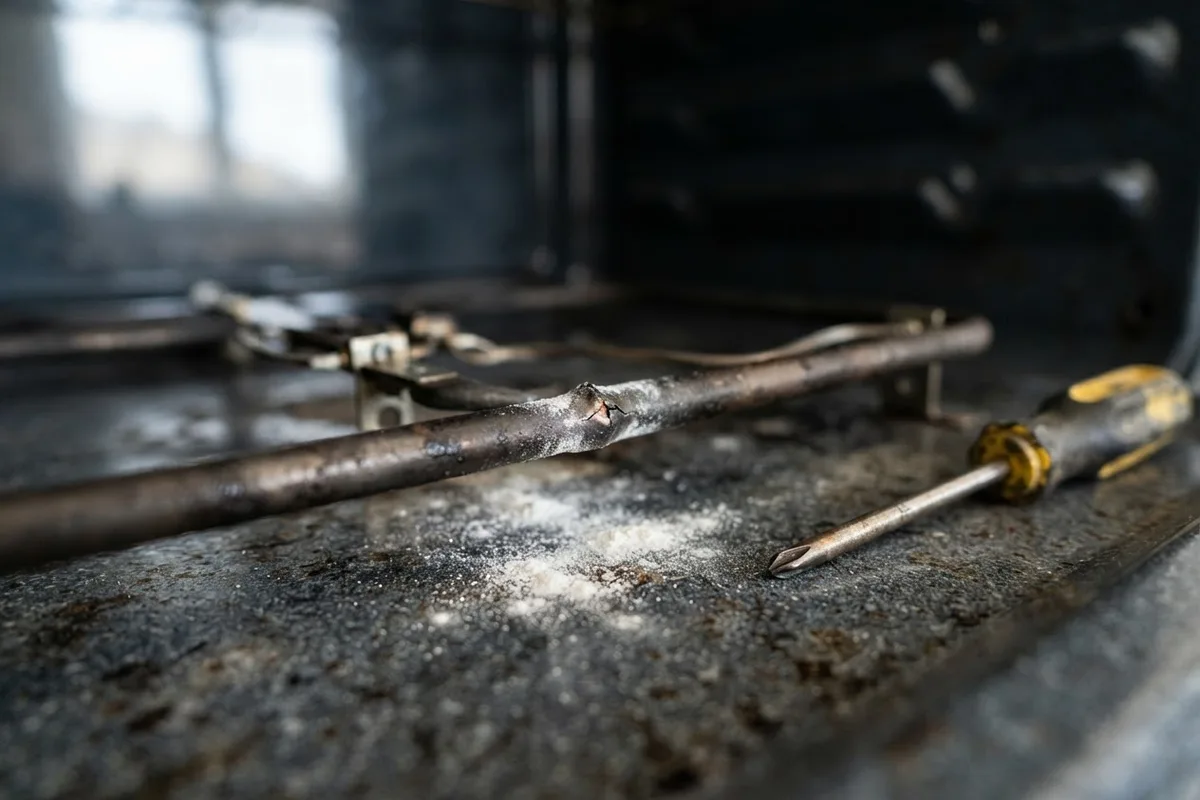
The number one reason for an electric oven sparking is a worn-out lower bake element or upper broil element. Oven elements are made from a thin resistance wire packed inside a magnesium oxide insulator and sealed inside a dark metal outer sheath. Over years of heating and cooling—especially right before holiday baking season—the outer metal jacket can develop pinhole cracks, blisters, or soft spots. Once oxygen reaches the inner filament, it arcs brightly against the outer metal tube.
- Remove the oven racks once the cavity is cool and the breaker is off.
- Shine a bright flashlight along the entire loop of the lower bake element (unless you have a hidden bake element under the oven floor) and the upper broil element.
- Look for telltale damage: white or gray powdery deposits, raised blisters, split seams, or small burned holes in the dark metal tubing.
- Gently feel the cold element with your fingers for rough bubbles or brittle spots.
- Replace the element if damaged. A replacement bake element typically costs $25 to $80 for the part (varies by area/model) and attaches to the back wall with two Phillips or hex-head screws.
3. Remove Aluminum Foil and Metal Liners
Many homeowners line the bottom of their oven or wrap oven racks in aluminum foil to catch holiday pie drips and casserole spills. Unfortunately, foil inside an electric oven is a major sparking and fire hazard. Foil can crinkle, lift in convection currents, and brush directly against the exposed bake element or its rear mounting terminals. Even on models with a hidden bake element, foil placed directly on the cavity floor traps intense heat and can melt into the porcelain enamel.
- Peel away all aluminum foil from the bottom floor of the oven and from the wire racks.
- Remove aftermarket metallic oven liners or oversized baking sheets that touch the side walls or element brackets.
- Inspect the bake element support feet to make sure no tiny shreds of torn foil are wedged around the metal standoffs.
- Use a rimmed baking sheet on the rack below your dish to catch future drips safely instead of lining the oven floor.
4. Clean Baked-On Carbon and Grease
When cheese, pie filling, or roasting grease drips directly onto a hot heating element or piles up near the element's rear pass-through holes, it carbonizes. Carbon is electrically conductive. Over time, a thick crust of burnt food on an element acts like an insulator that overheats that specific spot, causing fiery sparks, pops, and acrid smoke. If your gas model makes loud noises instead of electrical sparks, check our guide on why a gas oven makes a popping noise.
- Scrape loose carbon off the cold element gently using a plastic putty knife or a dry nylon brush—never use steel wool, which leaves behind conductive metal fibers.
- Wipe the element sheath with a damp microfiber cloth dipped in warm water and a drop of mild dish soap.
- Clean the porcelain cavity walls and floor using our step-by-step guide on how to deep clean an oven without self-clean.
- Rinse thoroughly with a damp cloth and let the interior dry completely before restoring power.
5. Check the Oven Light Socket and Bulb
Sometimes a bright blue flash accompanied by a loud "pop" at the back corner of the oven isn't the heating element at all—it is the halogen or incandescent appliance bulb blowing out, or grease shorting out the ceramic light socket. Standard household light bulbs cannot survive oven heat; their solder base melts and shorts inside the socket.
- Unlatch or unscrew the glass bulb cover in the upper rear corner of the cool, power-off oven.
- Put on a dry leather work glove and unscrew the bulb (or pull straight out if it is a two-pin halogen capsule).
- Inspect the bulb and socket for black scorch marks, a separated metal base, or a cracked glass envelope.
- Replace only with a high-heat 40-watt appliance bulb rated for 500°F oven use, ensuring the socket terminals are clean and dry before reinstalling the glass globe.
6. Look for Loose Rear Terminal Wires
Where the heating elements pass through the back wall of the oven, they connect to heavy-gauge high-temperature wires via slip-on spade terminals. Years of thermal expansion and contraction can loosen those metal connectors. A loose spade terminal creates high electrical resistance, intense localized heat, and dangerous electrical arcing behind the rear access panel.
- Confirm the 240V breaker is off and pull the range away from the wall carefully so you do not scratch your flooring.
- Unplug the heavy 240V range cord from the wall receptacle for total peace of mind.
- Inspect the rear sheet-metal access panel and the terminal block cover where the main power cord enters the range.
- Look for brown or black scorch marks on the exterior metal or a strong fishy, burnt-plastic odor.
- Stop if you see melted wire insulation or charred terminal blocks—high-voltage harness repairs require specialized high-heat crimps and tools.
Quick-Reference Guide: Electric Oven Sparking Causes
| Where You See Sparks | Likely Cause | Typical Part or Repair Cost* | DIY Safe? |
|---|---|---|---|
| Along the bottom or top heating tube | Blistered or split bake/broil element | $25–$80 (part) / $150–$300 (pro) | Yes (with breaker off) |
| On the oven floor or rack edges | Aluminum foil touching element or wall | $0 (remove foil) | Yes |
| Spot on the element with heavy smoke | Carbonized food or grease buildup | $0–$10 (cleaning supplies) | Yes |
| Upper back corner with a single pop | Blown appliance bulb or shorted socket | $8–$45 | Yes |
| Behind the back wall or under control panel | Burnt wire harness, terminal block, or relay board | $180–$450 (pro repair) | No — Call a Pro |
Note: Prices are broad US averages and vary by area, brand, and model.
When to Call a Pro
Removing foil, cleaning carbon buildup, and swapping a visibly blistered bake element with the breaker off are manageable afternoon projects for a careful homeowner. However, you should stop immediately and call a professional if you see sparks coming from behind the control panel, smell melting plastic behind the range, notice a blackened 240-volt wall outlet, or find that the oven trips your main circuit breaker the moment you flip it back on.
Working on 240-volt terminal blocks, melted wiring harnesses, or electronic control boards carries a serious risk of electrical shock and house fires. If your inspection points to internal wiring or a hidden element you cannot safely reach, True Appliance Repair can connect you with a local oven and stove repair pro who can test the circuit and replace damaged components safely. You can also reach out through our contact page to get matched with an independent technician in your neighborhood.
FAQ
Can I still use my stovetop if my electric oven sparked?
No. Even though the surface burners and the oven bake element are controlled by different switches, they share the same 240-volt power cord and terminal block at the back of the range. Keep the entire appliance turned off at the circuit breaker until you have identified and fixed the cause of the spark.
Why did my oven spark and now it won't heat up at all?
When an electric bake element burns through completely, it arcs brightly for a few seconds—much like a giant incandescent lightbulb filament snapping—and then breaks the electrical circuit. Once the inner wire separates, electricity can no longer flow through the element, leaving the oven cold. Replacing the burnt element usually restores normal heating.
Is it safe to put out an oven spark or small grease fire with water?
Never throw water into an electric oven. Water conducts electricity and will splatter burning grease across the hot cavity. Instead, keep the oven door closed, turn off the oven controls, and flip the range breaker off at your electrical panel; if small flames persist after the power is off, smother them with baking soda or a Class ABC household fire extinguisher.
Why does my oven spark during the self-clean cycle?
The self-clean cycle locks the door and heats the cavity to nearly 900°F to incinerate food soil. That extreme heat puts massive stress on aging heating elements and can ignite thick puddles of grease or leftover bits of aluminum foil that weren't wiped out before starting the cycle.