
Keeping a spare fridge in the garage is a lifesaver for holiday hosting and bulk shopping, until you open the door to find melted ice cream or lukewarm drinks. Standard kitchen refrigerators often get confused when outdoor temperatures swing too cold in the winter or too hot in the summer. Before you haul everything inside, walk through these six practical checks to get your garage unit cooling reliably again.
Safety First: Before inspecting internal components, cleaning coils, or installing kits, always unplug the refrigerator from the wall outlet. Never attempt to open sealed refrigerant lines or modify household electrical wiring yourself.
1. Check the Garage Ambient Temperature
Most standard refrigerators are designed to operate in climate-controlled rooms between 55°F and 110°F. In a single-thermostat top-freezer refrigerator, the temperature sensor sits inside the fresh food compartment. When your garage drops below 50°F in late fall or winter, the air inside the fridge stays cold on its own. Because the thermostat thinks the unit is cold enough, it never signals the compressor to kick on—which means the freezer compartment slowly warms up above 32°F and thaws your frozen food.
- Place a simple wall thermometer in your garage away from direct drafts.
- Place a separate appliance thermometer inside both the fridge and freezer sections.
- Check the readings first thing in the morning when the garage is coldest.
- If your fridge is cold while your frozen food is thawing, look at our guide on why a refrigerator is cold but the freezer is warm for deeper component checks.
2. Install a Garage Heater Kit
If winter cold is tricking your top-freezer refrigerator into shutting down, a manufacturer-approved garage heater kit is often the simplest solution. This small warming element installs right next to the thermostat control housing inside the fresh food compartment. It gently warms the air immediately around the sensor just enough to trigger normal cooling cycles when the garage gets chilly, keeping your freezer frozen solid down to around 35°F or 38°F ambient temperature.
- Locate your refrigerator's model number sticker inside the main cabin.
- Check if the manufacturer makes a compatible garage kit (typically $25 to $60 for the part, varying by brand and model).
- Unplug the refrigerator from the wall outlet.
- Remove the thermostat control box cover using a nut driver or Phillips screwdriver.
- Mount the adhesive heater strip or bracket according to the kit instructions and plug its harness into the existing wiring.
- Reassemble the cover and restore power.
3. Clean Heavy Garage Dust Off the Coils
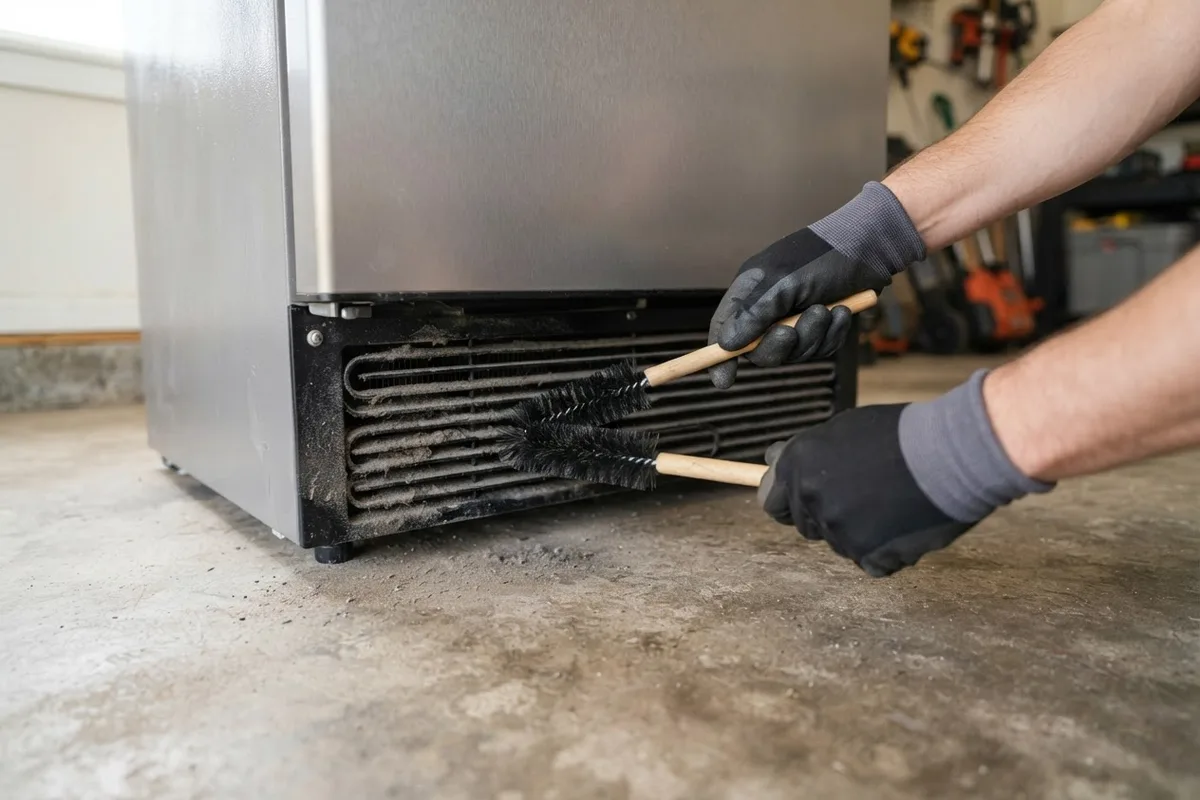
Garages are far dustier than kitchens. Sawdust, lawn clippings, pollen, and pet hair get pulled directly underneath the refrigerator and coat the condenser coils. When a thick blanket of grime insulates those coils, the fridge cannot release heat efficiently. In the summer, this causes the compressor to run nonstop without ever reaching safe cooling temperatures.
- Unplug the refrigerator and pull it a few feet away from the garage wall.
- Snap off the front base grille or unscrew the lower cardboard access panel in the back.
- Use a long, flexible condenser coil brush to gently loosen packed dust and cobwebs from between the metal fins.
- Vacuum up all the loosened debris with a shop vacuum hose attachment.
- Wipe down the condenser fan blades with a damp cloth while you have the back panel off.
- Reattach the covers, plug the unit back in, and push it back into place.
4. Give the Fridge Proper Airflow Clearance
It is tempting to wedge a secondary refrigerator tightly between storage shelves, workbenches, and stacks of plastic totes. However, refrigerators cool the inside cabin by pumping heat out into the surrounding room. If boxes are stacked on top of the cabinet or pressed tight against the sides, that heat gets trapped against the outer walls, forcing the cooling system to work overtime.
- Clear all storage bins, coolers, and cardboard boxes off the top of the refrigerator.
- Pull the refrigerator forward so there is at least 2 inches of open space between the back wall and the unit.
- Leave at least 1 inch of breathing room along both sides and above the top hinges.
- If your garage gets stiflingly hot in July and August, crack a garage window or run a small floor fan to circulate stagnant air away from the fridge corner.
5. Adjust the Thermostat and Load It Smartly
An empty garage refrigerator struggles to hold a steady temperature every time the door opens, while an overpacked one blocks cold air from circulating between shelves. Adjusting how you load the shelves and dialing in the controls for the season can stabilize temperatures without costing a dime.
- Keep the fridge and freezer at least half full; use jugs of water in the fridge and bags of ice in the freezer to act as thermal mass that holds the cold.
- Leave a 2-inch gap around the interior air vents at the back of the freezer and top of the fridge so cold air can flow freely.
- In cold winter weather, turn the dial slightly colder so the compressor runs a bit more often to protect the freezer.
- If your unit has a digital control board that seems unresponsive during temperature swings, check our troubleshooting steps for a refrigerator display not working.
6. Seal Leaky Door Gaskets Against Humidity
Unconditioned garages experience heavy humidity swings during spring rains and summer heatwaves. Over time, temperature extremes dry out the rubber door gaskets, causing them to crack or warp. When moist garage air sneaks past a loose seal, it coats the evaporator coils in heavy frost, choking off airflow and warming up the entire cabin.
- Inspect the entire perimeter of both the fridge and freezer rubber gaskets for tears, mildew, or brittle spots.
- Wash the gaskets with warm water and mild dish soap, then dry them thoroughly.
- Close the door on a dollar bill and tug it out; if it slides out with zero resistance, the seal is too loose.
- Rub a thin coat of petroleum jelly along the hinge-side edge of the gasket to help it seat smoothly without sticking or folding.
Standard vs. Garage-Ready Refrigerators: Quick Guide
| Ambient Garage Temp | What Happens to a Standard Fridge | Best DIY Action |
|---|---|---|
| Below 35°F | Compressor stops running; freezer thaws completely; oil thickens. | Unplug unit for winter or move to a heated space. |
| 38°F – 54°F | Fridge stays cold naturally, but freezer warms up and spoils food. | Install a manufacturer garage heater kit; add thermal mass. |
| 55°F – 90°F | Normal operation with steady fridge and freezer temperatures. | Keep coils clean and maintain 2 inches of wall clearance. |
| Above 95°F | Compressor runs nonstop; interior warms above 40°F; high electric use. | Clean condenser coils, clear clutter around cabinet, add garage ventilation. |
When to Call a Pro
If the garage temperature is sitting comfortably between 60°F and 85°F, the coils are clean, and your fridge still refuses to cool, the problem is likely mechanical rather than environmental. A failed evaporator fan motor, a stuck start relay, a faulty defrost thermostat, or a sealed-system refrigerant issue requires proper diagnostic tools. Typical professional refrigerator repairs range from $150 to $450, though exact costs vary by area, model, and the specific part needed.
Never attempt to handle refrigerant lines or complex high-voltage testing on your own. If your spare fridge needs hands-on attention, True Appliance Repair can connect you with an independent local technician through our refrigerator repair service page.
FAQ
At what temperature does a garage refrigerator stop working?
Most standard refrigerators begin to struggle when the room drops below 55°F or climbs above 100°F. Below 50°F, single-thermostat models rarely run often enough to keep the freezer below 32°F, and below 35°F, the compressor oil can thicken and risk damaging the motor if it tries to start.
What makes a "garage-ready" refrigerator different from a standard one?
True garage-ready refrigerators are built with heavier cabinet insulation, dual temperature sensors, and smart control boards or internal heaters designed to operate in ambient temperatures ranging from 38°F up to 110°F. Many upright garage freezers can even operate down to 0°F without losing their freeze.
Why is my garage freezer thawing while the fridge section is still cold?
In most top-freezer refrigerators, the single thermostat is located in the bottom fridge compartment. When a cold garage keeps the lower compartment near 38°F naturally, the fridge never turns on to blow sub-zero air into the upper freezer, causing frozen items to thaw while the lower fridge feels cold.
Should I unplug my garage refrigerator in the winter?
If your garage regularly drops below 35°F and you do not have a garage-ready model, unplugging it for the winter is the safest way to prevent compressor damage and food spoilage. Empty all food, wipe the interior dry with baking soda and water, and prop both doors slightly open so mold cannot grow.