
Nothing ruins kitchen cleanup faster than flipping the wall switch and hearing a harsh, jarring clank from inside the sink drain. When your garbage disposal starts making a loud metallic noise, continuing to run it can chew up silverware, snap internal components, or burn out the motor completely. By cutting the power and running through these six straightforward checks, you can safely silence the racket and protect your plumbing.
1. Cut Power and Retrieve Loose Metal Objects
The most common culprit behind a sudden metallic clatter is a stray teaspoon, bottle cap, coins, or a metal twist-tie that slipped past the rubber baffle. Never reach into a disposal with your bare hands, even when the wall switch is turned off.
- Unplug the garbage disposal power cord underneath the sink, or flip the dedicated circuit breaker in your home electrical panel to the OFF position.
- Pull out the removable rubber splash guard (if your model has one) and shine a bright flashlight straight down into the grinding chamber.
- Locate any foreign metal items resting on the flywheel.
- Use long-nosed needle pliers or kitchen tongs to firmly grip and pull the object out.
- Inspect the item to ensure no small metal fragments broke off inside the chamber before restoring power.
2. Vacuum Out Hidden Screws and Foil Bits
Sometimes the metallic scraping sound is higher-pitched and intermittent rather than a heavy clank. Tiny metal fragments—like broken stapler pins from produce bags, small screws, pop-top tabs, or wadded-up aluminum foil—can hide right along the outer shredder ring where pliers cannot easily grip them.
- Verify the unit is completely unplugged beneath the sink.
- Shine your flashlight around the perimeter of the grinding plate, paying close attention to the narrow gap between the spinning turntable and the stationary outer wall.
- Use a wet/dry shop vacuum equipped with a narrow crevice nozzle to suction around the entire grinding chamber.
- If a sliver of metal is wedged into a shredder tooth, use a long wooden chopstick or a flathead screwdriver to gently flick it loose into the center of the plate, then vacuum it out.
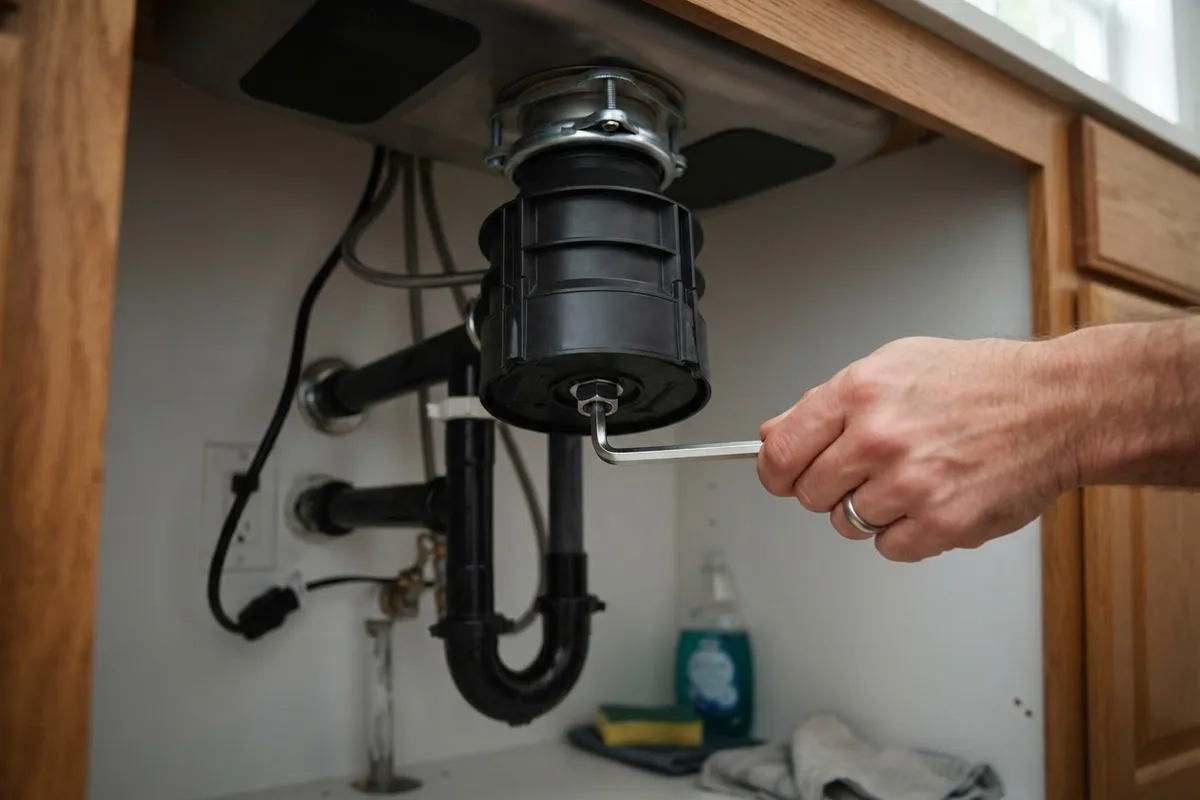
3. Free a Jammed Flywheel With an Allen Wrench
If a piece of bone or a bent metal clip gets pinched directly beneath an impeller blade, the turntable can bind against the outer shredder ring, producing a harsh metal-on-metal screech followed by a dead hum. You can free the bind from the outside without dismantling the unit.
- Confirm the disposal is unplugged and the wall switch is off.
- Locate the small hexagonal hole right in the dead center of the bottom casing underneath the sink.
- Insert a 1/4-inch hex wrench (often called an Allen wrench or disposal key) into the socket.
- Crank the wrench firmly back and forth clockwise and counterclockwise several times until you feel the internal flywheel break free and rotate smoothly in a full circle.
- Reach in from the top with long tongs to remove the dislodged debris, plug the cord back in, and press the red reset button on the bottom of the unit if it popped out.
4. Check for Loose or Broken Impeller Blades
Contrary to popular belief, garbage disposals do not have sharp spinning knives; they use two blunt metal lugs—called impellers—mounted on swiveling rivets that sling food outward against a stationary shredder ring. Over time, corrosion or impact with hard objects can wear down the mounting rivet, leaving an impeller floppy or partially detached so it slaps loudly against the housing.
- Disconnect the power cord under the sink and shine your light inside the drain.
- Use the wooden handle of a long spoon to gently push each of the two impeller lugs on the turntable.
- Note how they move: they should swivel smoothly back and forth on their pins with slight resistance, but they should not wobble up and down or lift off the plate.
- Check the metal surface around the rivet for cracks or missing chunks.
- If an impeller pin is sheared or the turntable is cracked, stop using the unit—internal grinding plates usually require complete unit replacement rather than a patch repair.
5. Tighten the Sink Mounting Assembly
Not every metallic rattle comes from inside the grinding chamber. If you hear a tinny, vibrating metallic clatter right as the motor spins up or winds down, the stainless steel mounting ring that suspends the disposal from the bottom of the kitchen sink may have worked itself loose.
- Unplug the disposal and clear out items stored under the sink cabinet so you have room to work.
- Inspect the three mounting screws pressing against the backup flange just below the sink drain opening.
- Check the lower mounting ring (the collar with three small metal ears) to make sure it is locked firmly onto the upper mounting ramp.
- Use a screwdriver inserted into one of the mounting ears to snug the lower locking ring clockwise.
- Tighten the three vertical mounting screws evenly with a screwdriver so the assembly sits completely level and cannot chatter against the stainless steel sink basin.
6. Inspect for Worn Motor Bearings
If you have cleared the grinding chamber entirely, checked the impellers, and tightened the mounting collar, yet the disposal still makes a loud, continuous metallic whining or grinding roar when running with water, the internal motor bearings are likely failing. Water seeping past a worn internal seal washes away bearing grease and rusts the steel rollers inside the lower housing.
- With the power disconnected, reach down with a wooden spoon and spin the turntable by hand.
- Feel and listen closely: a healthy motor shaft turns smoothly and quietly once past the magnetic resistance of the motor.
- If turning the plate by hand feels gritty, catches repeatedly, or produces an audible dry metal scraping sound deep inside the bottom housing, the lower bearings are compromised.
- Because replacing internal motor seals and bearings typically costs more in parts and labor than a brand-new disposal, replacing the entire unit is almost always the smartest move. Check our appliance repair cost guide to compare typical service fees against replacement prices.
Quick Reference: Metallic Disposal Sounds and Causes
| Sound Type | When It Happens | Most Likely Cause | DIY Difficulty |
|---|---|---|---|
| Loud, sharp clanking | Continuously while switched on | Loose spoon, coin, or bottle cap bouncing inside | Easy (5 mins) |
| High-pitched metallic ticking | Intermittently during grinding | Foil, twist-tie, or tiny screw stuck in shredder ring | Easy (10 mins) |
| Harsh scrape then a hum | Immediately on startup | Metal fragment wedged under the flywheel | Easy (10 mins) |
| Heavy rhythmic knocking | Whenever the plate spins | Broken or loose impeller lug slapping the wall | Moderate (Inspection) |
| Tinny rattling vibration | On startup and shutdown | Loose stainless steel sink mounting collar | Easy (10 mins) |
| Loud metallic roar or squeal | Continuously, even when empty | Worn-out internal motor bearings due to seal leak | Pro / Replace |
When to Call a Pro
Retrieving dropped silverware, turning a hex wrench, and snugging up mounting screws are safe, quick jobs any homeowner can tackle in ten minutes with the power unplugged. However, you should stop and call a professional if the disposal is hardwired directly into your home wiring without a visible plug and you are uncomfortable locating the breaker, if water is actively leaking out of the bottom motor housing onto electrical connections, or if the entire unit needs to be swapped out and plumbed into a tight under-sink drain setup.
Typical garbage disposal repairs or replacements across the US generally range from $120 to $350 depending on whether a new unit is needed, though exact pricing varies by area and model. If your kitchen cleanup is stalled by a damaged unit or a stubborn plumbing connection—or if your cleanup routine is also hampered by a dishwasher spray arm not spinning—True Appliance Repair can match you with a local pro through our general appliance repair service page.
FAQ
Is it safe to run my garbage disposal if it only makes a small metallic ticking sound?
No, you should turn it off immediately and inspect the chamber. Even a small metal screw, staple, or piece of foil can get wedged between the spinning flywheel and the outer shredder ring, scoring the metal housing or jamming the motor until it overheats.
Can I sharpen my garbage disposal blades with ice cubes or aluminum foil?
Garbage disposals actually have blunt impellers rather than sharp blades, so they never need sharpening. Never put aluminum foil into a disposal, as it shreds into tiny metallic bits that lodge in the drainpipe; grinding a few cups of ice cubes with cold water is great for knocking stuck food debris off the shredder ring, however.
What happens if small metal shavings wash down the garbage disposal drain?
Heavy metal fragments often settle in the U-shaped P-trap directly underneath your sink rather than washing all the way into the main sewer line. If you know a metal item was chewed up inside the chamber, place a bucket under the sink P-trap, unscrew the slip nuts, and rinse out the curved pipe so metal shavings do not snag food waste and cause a clog.
How long does a typical kitchen garbage disposal last?
Most standard household garbage disposals last between 8 and 12 years with regular use. If your unit is approaching a decade old and develops loud metallic bearing noise or a cracked grinding plate, replacing the unit is far more cost-effective than attempting an internal rebuild.