
Few kitchen frustrations beat flipping the wall switch, hearing your disposal spin and roar like normal, and looking down to see vegetable peels and food scraps still swirling intact at the bottom of the sink. When a garbage disposal is not grinding food even though the motor runs, the problem almost always comes down to stuck swivel impellers, a gunked-up shredder ring, or a worn turntable rather than a dead motor. Walk through these six safe DIY checks to restore your disposal's bite in under an hour.
1. Shut Off Power and Clear the Grinding Chamber
Before you inspect anything inside the drain opening, disconnect power completely. Flipping the wall switch off is not enough—someone can bump it while your hands are near the drain, or a faulty switch can leak current.
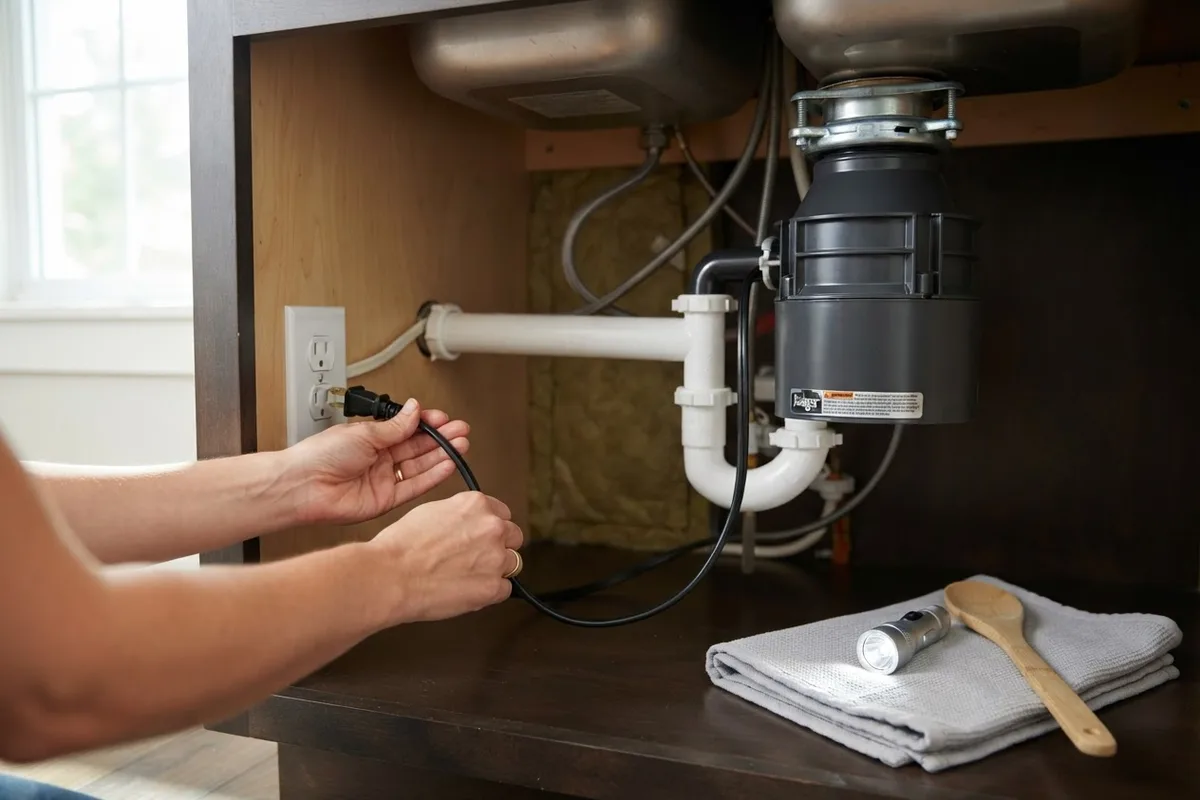
- Unplug the garbage disposal power cord from the outlet underneath the sink, or flip the dedicated circuit breaker off at your home's electrical panel.
- Flip the wall switch on briefly to confirm the unit is completely dead, then turn the switch back off.
- Shine a flashlight through the black rubber sink baffle into the grinding chamber.
- Use long kitchen tongs or needle-nose pliers—never your bare hands—to pull out all unground food scraps, fruit pits, bones, or fibrous peels sitting on the turntable.
- Wipe away standing grease and sludge with awad of paper towels held in your tongs so you can clearly see the metal lugs and outer wall.
2. Free Up Stuck Swivel Impellers (Lugs)
Contrary to popular belief, garbage disposals do not have sharp spinning knives like a blender. Instead, two blunt metal blocks called impellers—or swivel lugs—are riveted to the spinning turntable. Centrifugal force flings these lugs outward to mash food against a stationary serrated ring on the chamber wall. If grease, starch, or corrosion freezes both lugs inward toward the center, the plate spins smoothly while food just rides around like a carousel.
- Double-check that the disposal is unplugged under the sink.
- Reach in with a long wooden spoon handle or a 1/2-inch wooden dowel and press against each of the two raised metal lugs on the turntable.
- Each lug should pivot freely back and forth on its mounting rivet. If one or both feel frozen in place, spray a generous amount of food-grade penetrating oil or white vinegar directly onto the pivot pin.
- Let it soak for 10 minutes, then tap the side of the lug firmly with the wooden handle until it swings smoothly through its full arc.
- Flush with hot water and test whether both lugs still move without binding.
3. Scrub a Clogged Outer Shredder Ring
Even when the swivel lugs fling food outward properly, the food cannot break down if the stationary shredder ring lining the inside wall of the chamber is packed solid with hardened grease, potato starch, or eggshell paste. When the tiny cutting slots fill up, scraps simply slide along a smooth wall of grime and your garbage disposal starts spitting water and debris back into the basin.
- With the power still unplugged, inspect the vertical metal ring around the perimeter of the grinding plate using a flashlight.
- Pour half a cup of coarse kosher salt or baking soda along the outer edge of the chamber, followed by a cup of white vinegar. Let the mixture fizz for 15 minutes to soften baked-on buildup.
- Use a stiff-bristled long-handled bottle brush or an old toothbrush taped to a dowel to scrub the vertical teeth of the shredder ring until bare metal shows.
- Plug the unit back in, turn on a strong stream of cold water, and grind two cups of ice cubes mixed with a handful of rock salt for 30 seconds to scour the slots clean.
4. Check for a Loose or Stripped Flywheel
Sometimes you hear the motor whirring underneath the sink, yet the turntable inside the drain isn't actually spinning—or it slips the moment heavy food hits it. This happens when the center mounting nut holding the flywheel to the motor shaft works loose, or the center hole strips out from repeated heavy jams.
- Unplug the disposal from the outlet under the sink.
- Insert a 1/4-inch Allen wrench (the hex wrench that came with the disposal) into the center socket on the very bottom exterior of the unit.
- Hold the wrench stationary with one hand while using a wooden spoon handle from above to try turning the internal grinding plate with your other hand.
- If the upper plate turns independently while the bottom hex wrench stays still, the flywheel has sheared off the motor shaft or its center nut has backed off.
- Tightening a loose center nut requires detaching the unit from the sink flange and opening the casing, which is often a sign to weigh repair versus replacement.
5. Correct Your Water Flow and Feeding Habits
A healthy disposal relies on cold running water to carry pulverized particles through the narrow slots of the shredder ring and down the waste pipe. Grinding dry food—or running hot water that melts fats into a slick coating over the lugs—causes food to clump in the center of the chamber instead of washing away.
- Always turn on a medium-to-strong stream of cold tap water before flipping the disposal switch. Cold water keeps animal fats and cooking oils solid so the impellers can chop them into tiny pellets.
- Turn the disposal on before dropping food into the sink, never after packing the chamber full.
- Feed scraps gradually in small handfuls rather than shoving a full plate of leftovers down at once.
- Keep fibrous and starchy culprits out of the drain entirely: celery strings, corn husks, onion skins, banana peels, coffee grounds, pasta, and rice tangle around swivel lugs and blind the shredder teeth.
- Let the cold water and motor run for 15 seconds after the grinding sound stops to flush the P-trap clean.
6. Inspect Worn Impeller Blades and Turntable Holes
Standard builder-grade disposals with galvanized steel components wear down after 8 to 12 years of daily use. Acidic foods, bleach cleaners, and rust slowly eat away the square shoulders of the swivel lugs and widen the holes in the turntable until food slips through unground or never reaches the shredder ring.
- Unplug the power cord and shine a bright light directly down onto the turntable.
- Examine the two swivel lugs: they should have tall, squared-off vertical edges. If they are rounded down into low nubs or chewed away by rust, they can no longer push food against the outer ring.
- Look at the flat turntable plate itself for rusted-through holes or cracks.
- Check our appliance lifespan guide on when to repair or replace if you spot heavy corrosion; replacing a rusted internal flywheel assembly typically costs more in labor than installing a brand-new stainless-steel disposal.
Quick Troubleshooting Guide: Symptom vs. Fix
| What You Notice | Most Likely Cause | Best DIY Action |
|---|---|---|
| Motor spins loudly, food stays whole in center | Both swivel lugs rusted or glued inward by grease | Unplug, soak lug pivots with vinegar/oil, tap free with wooden spoon |
| Food breaks into mushy paste but won't wash down | Shredder ring teeth clogged with starch or grease | Scrub outer ring with stiff brush; grind ice cubes and coarse salt |
| Motor hums or whirs softly, turntable doesn't spin | Stripped flywheel shaft or jammed turntable | Test with bottom hex wrench; replace unit if shaft spins freely |
| Unit grinds slowly and backs water into sink | Insufficient cold water or partial P-trap clog | Run strong cold stream; avoid fibrous peels, pasta, and grease |
| Lugs move freely, ring is clean, still won't chop | Impeller edges worn flat or rusted away from age | Plan for a unit replacement (typical after 8–12 years) |
When to Call a Pro
Stuck swivel lugs and dirty shredder rings are easy Saturday-morning fixes that cost nothing more than a cup of ice, vinegar, and 20 minutes of elbow grease. However, you should stop and call a professional if the flywheel has sheared off the motor shaft, the lower housing is leaking water onto your cabinet floor, the unit trips your circuit breaker repeatedly, or your under-sink wiring and plumbing connections need modification.
In the US, a professional garbage disposal repair or swap typically ranges from $150 to $400 including labor, though total costs vary by area, horsepower, and model. If you would rather skip crawling under the sink cabinet, True Appliance Repair can match you with a local pro for fast kitchen appliance repair.
FAQ
Do garbage disposal blades need to be sharpened?
Garbage disposals do not actually have sharp blades—they use blunt, swiveling metal lugs that fling food against a stationary grater ring. Because they rely on centrifugal force rather than cutting edges, they never need sharpening. Grinding ice cubes and rock salt doesn't sharpen the metal; instead, it knocks stubborn grease and starch off the lugs and shredder teeth so they can grip food again.
Why is my garbage disposal spinning but not draining?
If the disposal grinds food into fine particles yet murky water pools in the sink, the clog is located past the grinding chamber inside the discharge elbow or the sink's P-trap. Starchy foods like potato peels, rice, or pasta often pass through the shredder ring and swell into a solid plug inside the bend of the PVC drain pipe underneath the sink.
Can I use chemical drain cleaner in a garbage disposal that won't grind?
Never pour harsh chemical drain openers into a garbage disposal. Caustic lye and acid cleaners sit inside the grinding chamber, eat away the rubber splash guard and watertight motor seals, corrode the metal swivel rivets, and create a splash hazard for anyone who later opens the trap underneath the sink. Stick to mechanical clearing, vinegar, baking soda, and ice.
How long should a garbage disposal last before the grinders wear out?
Most household garbage disposals last between 8 and 12 years under normal use. Lower-horsepower units with galvanized steel grinding components tend to rust and lose their grinding edge closer to the 8-year mark, while 3/4-HP or 1-HP models built with stainless-steel lugs and shredder rings can often run past 12 years.