
Seeing wisps of gray smoke rising from your kitchen sink drain—or catching a sharp whiff of burning rubber and hot metal from inside the cabinet below—is enough to make any homeowner panic. In most cases, a smoking garbage disposal is the result of a jammed flywheel, an overheated motor that failed to trip its thermal overload protector in time, or loose electrical wiring inside the unit's junction box. By shutting off power immediately and working through five safe, methodical checks, you can figure out whether your unit just needs a simple jam cleared or if it is time to retire the motor.
Safety First: Before touching the disposal, reaching into the sink cabinet, or inspecting any components, flip the circuit breaker that powers the garbage disposal to the OFF position at your home's main electrical panel, or unplug the unit from the under-sink wall outlet if your hand can reach the plug without touching the hot metal casing. Never put your hand down the drain mouth, even when the power is disconnected. If you see active flames, heavy black smoke, or melting plastic on the wall outlet, keep the breaker off, leave the cabinet closed, and call your local fire department or a professional electrician immediately.
1. Cut Power and Let the Motor Cool completely
When a garbage disposal jams on a bone, fruit pit, or fibrous peel, the electric motor continues to draw high amperage even though the rotor cannot spin. That electrical energy converts directly into intense heat inside the copper motor windings, scorching the varnish insulation and producing a sharp, acrid smoke.
- Turn off the wall switch and the breaker: Flip the wall switch to OFF, then go to your electrical panel and shut off the dedicated disposal circuit breaker. If the unit plugs into an under-sink receptacle and there is no active sparking, unplug the cord.
- Open the sink cabinet doors: Prop both cabinet doors wide open and turn on a kitchen exhaust fan or open a nearby window to ventilate the burnt odor.
- Check the casing temperature carefully: Hold the back of your hand a few inches away from the bottom cylinder of the disposal without touching it. If you feel radiant heat, the internal windings are overheated.
- Wait at least 45 to 60 minutes: Never press the red reset button or attempt to turn the flywheel while the housing is hot. Trying to restart an overheated motor can permanently melt the winding insulation.
2. Inspect the Under-Sink Cord and Wire Nut Connections
Sometimes the smoke isn't coming from the grinding chamber or the motor windings at all—it is coming from a loose electrical connection right where the power cord enters the bottom plate of the disposal. Decades of sink vibrations can gradually loosen wire nuts, creating a high-resistance electrical arc that melts plastic wire insulation and emits a fishy or burnt-plastic smell.
- Confirm zero power: With the breaker still off (or the unit unplugged), verify the disposal does not respond when you flip the wall switch.
- Examine the wall outlet and plug: Look closely at the three-prong plug and the receptacle inside the cabinet. If you see black scorch marks, melted prongs, or bubbled plastic on the outlet face, stop immediately—the outlet and cord must be replaced before the disposal is ever used again.
- Open the bottom electrical cover plate: On the very bottom of the disposal, unscrew the single small screw holding the metal access plate in place and set the plate aside.
- Inspect the leads and wire nuts: Gently pull out the black, white, and green ground wires. Look for charred wire nuts, brittle or blackened insulation, or a loose strain-relief clamp where the cable enters the housing. If the wires inside the disposal body itself are burned through, the unit will need professional repair or replacement.
3. Free a Locked Flywheel With an Allen Wrench
The number one reason a homeowner asks "why is my garbage disposal smoking" is a stalled rotor caused by a physical jam. If the internal overload switch gets sticky with grease or age, it may fail to pop out for several seconds while the motor stalls, cooking the internal components and sending thin gray smoke up through the rubber sink baffle.
- Locate the hex hole on the bottom center: Look underneath the center of the disposal casing to find a quarter-inch hexagonal socket connected directly to the motor shaft.
- Insert an L-shaped disposal wrench: Fit a 1/4-inch Allen wrench (often included with the disposal) into the bottom center socket.
- Work the wrench back and forth: Apply firm, steady pressure clockwise and counterclockwise. If the shaft is locked tight, give short, controlled tugs in both directions until you feel the internal flywheel break free.
- Spin a full 360 degrees: Once the obstruction loosens, rotate the wrench several full turns in both directions to make sure the impellers and turntable spin smoothly without binding or scraping. If your unit still makes a racket once cleared, follow our guide on why is my garbage disposal making noise to pinpoint worn bearings or loose impellers.
4. Clear Debris From the Grinding Chamber and Baffle
Even after you free the flywheel from below, the culprit that caused the jam is still sitting inside the grinding chamber waiting to lock up the blades again the moment you restore power. Removing the foreign object prevents a repeat stall and lets you inspect the rubber splash guard for heat or friction damage.
- Shine a flashlight down the drain: Pull back the rubber splash guard flaps and look into the grinding chamber from above.
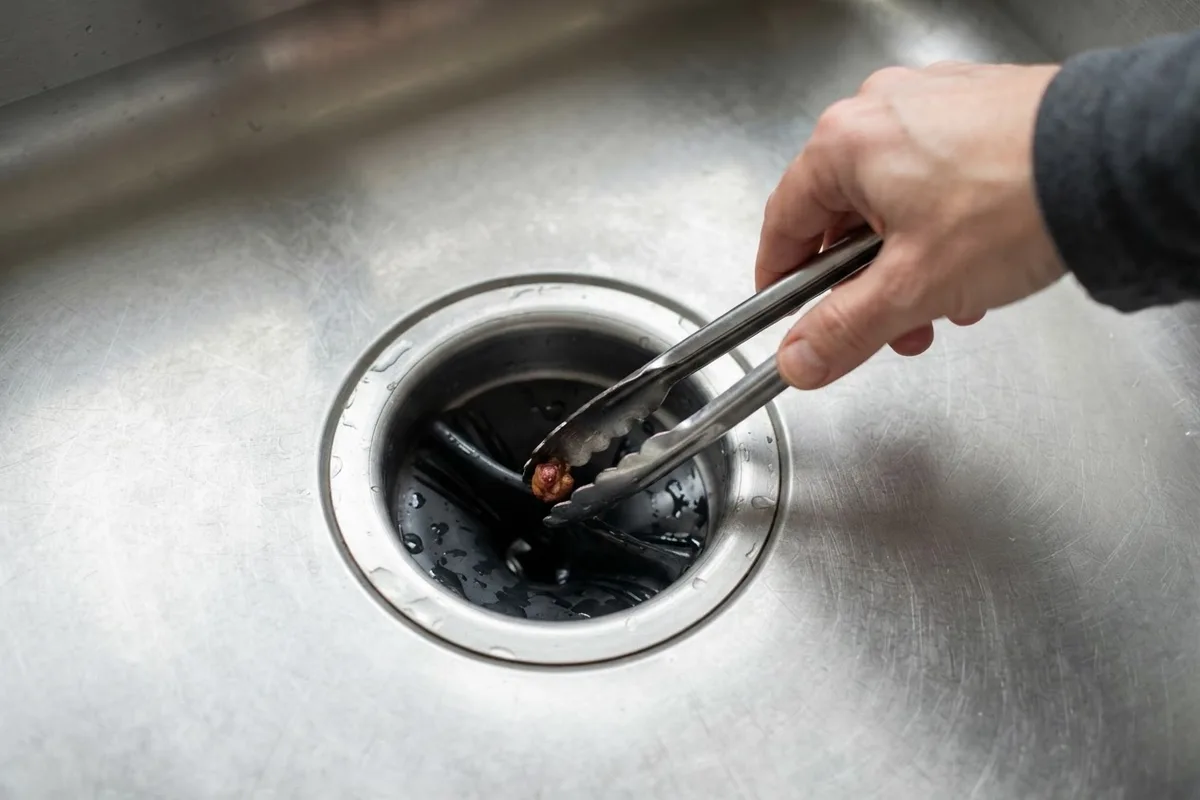
- Extract debris with needle-nose pliers or tongs: Use long-handled kitchen tongs or needle-nose pliers to pull out bone fragments, silverware, fruit pits, fibrous celery strings, or wads of starchy pasta. Never use your fingers.
- Check under the impeller blades: Swivel the two small metal impeller blades on the turntable using the tip of your pliers to make sure a small screw, glass shard, or popcorn kernel isn't wedged underneath them.
- Wipe down the rubber baffle: Once the chamber is empty, wipe the underside of the rubber splash guard with a damp cloth and mild dish soap. Keeping this area clean not only prevents residue buildup on the shaft seal, it also solves the common problem of why does my garbage disposal smell between uses.
5. Test the Thermal Overload Reset and Run Cold Water
Once the unit is cool to the touch, the wiring checks out, and the flywheel spins freely by hand, you can perform a controlled test run to see if the motor survived the overheating event or if the internal windings have shorted out.
- Press the red reset button: Reach underneath the cooled disposal and press the small square red reset button firmly until it clicks and stays flush. If it didn't pop out originally, press it anyway to make sure the internal bimetallic strip is seated.
- Restore electrical power: Plug the unit back in or flip the circuit breaker back to the ON position.
- Turn on a strong stream of cold water: Always run cold tap water for 10 seconds before starting the motor. Cold water cools the upper shaft seal and solidifies any residual grease so it flushes smoothly down the drainpipe.
- Flip the switch for a 5-second test: Stand back from the sink and turn the disposal switch ON for five seconds. If it hums smoothly, spins at full speed, and produces no odor or smoke, let the water run for another 15 seconds before shutting it off. If it buzzes loudly without spinning, trips the breaker immediately, or emits a single puff of smoke, shut the switch off right away—the motor windings are permanently damaged.
Quick-Reference Guide: Smoke & Odor Clues
| What You See or Smell | Likely Cause | Safe Next Step |
|---|---|---|
| Thin gray vapor from drain + hot metal smell | Jammed flywheel stalling the motor | Cool for 60 minutes, free with hex wrench, remove debris |
| Sharp, fishy, or melted plastic odor under sink | Loose wire nut or arcing power cord connection | Shut off breaker, inspect bottom junction plate and wall outlet |
| Scorched rubber smell during long grinding runs | Worn upper shaft seal or running without cold water | Run a strong stream of cold water; replace unit if seal leaks |
| Immediate puff of smoke + tripped breaker on startup | Dead short in the internal copper motor windings | Unplug permanently and replace the garbage disposal |
| White steam rising from the sink baffle | Running hot tap water or pouring boiling pasta water | Normal vapor, not smoke—switch to cold tap water when grinding |
When to Call a Pro
While freeing a jammed flywheel and pressing a reset button are straightforward homeowner tasks, electrical faults and burned-out motor windings cross the line into professional territory. Once the varnish coating on internal copper windings melts from overheating, those wires fuse together, creating a permanent short circuit that cannot be repaired. Similarly, if the smoke originated from a charred wall outlet, melted hardwired BX cable, or a breaker that refuses to reset, do not attempt to rewire the circuit yourself.
Typical garbage disposal repair or replacement costs in the US generally range from $150 to $400 depending on the horsepower of the unit, local labor rates, and whether under-sink plumbing or electrical wiring needs updating (varies by area and model). When your disposal continues to smoke, trips the breaker, or leaks from the bottom motor housing, True Appliance Repair can match you with a local pro for fast, dependable appliance repair or direct you to our contact page to get help scheduling a visit.
FAQ
Can a smoking garbage disposal catch fire?
Yes, although an open flame inside the wet grinding chamber is rare, an overheated motor or an arcing wire connection underneath the sink can ignite nearby paper towels, plastic grocery bags, or chemical cleaners stored in the cabinet. Always shut off the circuit breaker immediately if you see smoke, and keep flammable clutter away from the bottom of the disposal housing.
Why did my garbage disposal smoke instead of tripping the reset button?
The built-in red reset button relies on a heat-sensitive bimetallic strip that bends and cuts power when the motor draws too much current. Over time, kitchen grease, moisture, or mechanical wear can cause that internal switch to stick or react too slowly, allowing the stalled motor windings to overheat and smoke before the breaker finally trips.
Is it safe to use my garbage disposal again after it smoked?
It is only safe to use again if the smoke was minor heat vapor from a brief jam, the wiring inside the bottom access plate is completely intact, and the unit runs smoothly and quietly after cooling down and being cleared with an Allen wrench. If the unit smells strongly of burned electronics every time you flip the switch, or if it hums sluggishly, the internal insulation is compromised and the disposal should be replaced.
How do I prevent my garbage disposal from overheating in the future?
Always turn on a steady stream of cold water before flipping the disposal switch, and feed food scraps in gradually rather than packing the chamber full before turning it on. Avoid putting fibrous vegetables like celery and corn husks, starchy pasta or rice, coffee grounds, and hard animal bones down the drain, as these overload the turntable and stall the motor.