
When a sour smell lingers around your kitchen sink even after you wipe the basin clean, the culprit is almost always hiding in plain sight. Food grease, coffee grounds, and soap scum splash upward every time the blades spin, coating the hidden underside of the rubber drain flaps in thick black sludge. Following a few safe, hands-on steps will help you strip away that grime, stop drain odors at the source, and decide when the rubber baffle needs a quick replacement.
Safety First: Before reaching near or into the drain opening, always turn the wall switch off and unplug the garbage disposal under the sink (or flip its dedicated circuit breaker off at your main electrical panel). Never put your fingers inside the grinding chamber while the unit is connected to power.
1. Pull Out a Removable Baffle for Deep Soaking
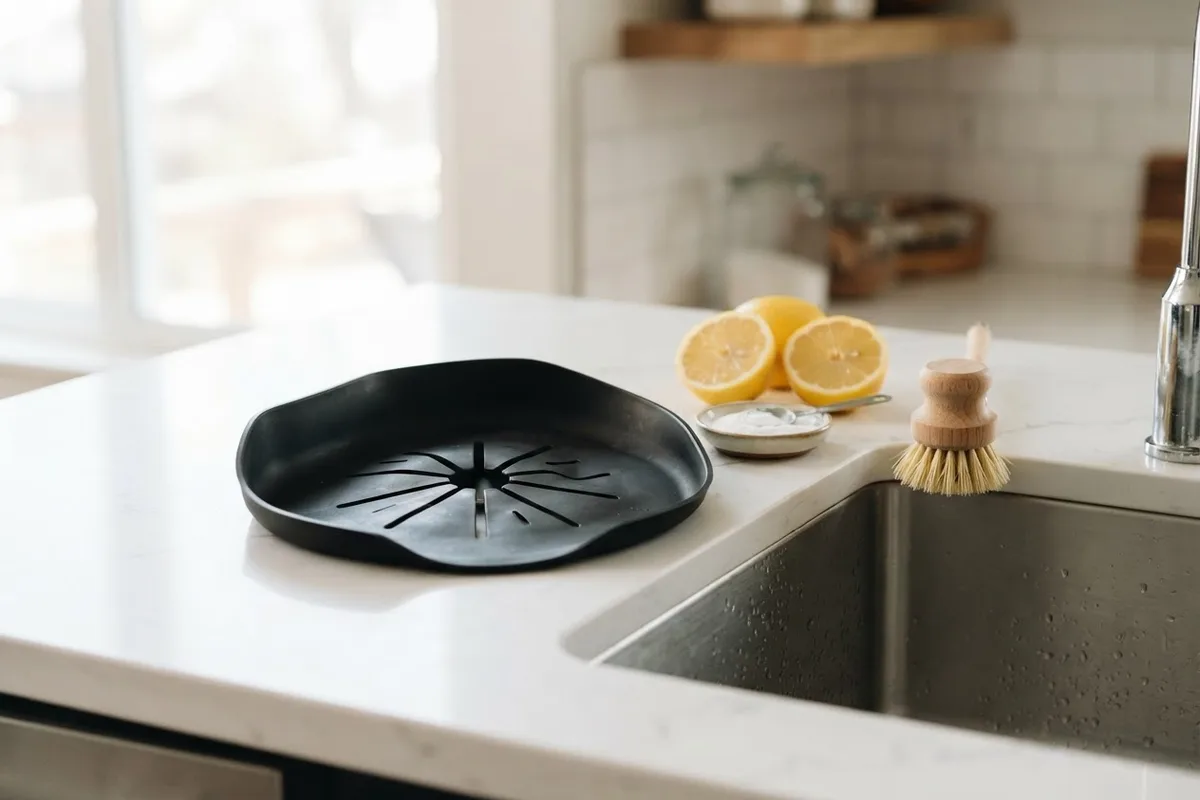
Many modern sinks use a drop-in style splash guard that sits right on top of the metal sink flange rather than locking under the disposal collar. If your unit has this removable style, taking it out is the fastest way to get every crease clean.
- Unplug the disposal underneath the sink and confirm the wall switch will not turn the motor on.
- Grip the center of the rubber flaps and pull straight up; the baffle should pop right out of the drain opening.
- Fill a small bowl or the opposite sink basin with warm water, a tablespoon of degreasing dish soap, and half a cup of white vinegar.
- Let the rubber guard soak for 15 minutes to loosen hardened grease and biofilm.
- Scrub both sides with an old toothbrush, rinse thoroughly under hot running water, and press it firmly back into the drain ring until it sits flush.
2. Scrub the Underside of a Fixed Splash Guard
Older or contractor-grade models often use a fixed baffle that is clamped between the sink drain flange and the body of the disposal. Because you cannot pull it out without unbolting the entire machine, you need to clean it in place from underneath the flaps.
- Disconnect power to the disposal underneath the cabinet.
- Fold one rubber flap upward with your non-dominant hand to expose the slimy underside.
- Dip a stiff nylon dish brush or an old toothbrush into a paste made of three parts baking soda and one part warm water.
- Scrub the underside of each individual rubber triangle, paying extra attention to the outer rim where the rubber meets the metal throat.
- Wipe the loosened black residue away with paper towels so it does not just wash back down onto the blades, then rinse with hot tap water.
3. Flush Biofilm With Baking Soda and Vinegar
Once the heavy grease is scrubbed off the rubber, lingering bacteria in the upper grinding chamber can quickly re-contaminate the splash guard. A foaming flush sanitizes the throat of the disposal and deodorizes the rubber without harsh bleach that can dry out or crack the flaps.
- Keep the unit unplugged and pour half a cup of baking soda directly through the rubber flaps so it coats the top of the chamber and the bottom of the guard.
- Slowly pour one cup of white distilled vinegar over the baking soda; the mixture will foam up through the slits of the baffle.
- Let the foam sit for 10 to 15 minutes so the mild acid can break down mineral scale and odor-causing mildew.
- Boil a kettle of water, plug the disposal back in, turn on a strong stream of hot tap water, and switch the unit on while slowly pouring the hot water down the drain to flush everything clear.
If you notice a metallic clatter during this flush or the blades seem to catch, check our guide on why your garbage disposal is making noise to safely clear hidden debris before it damages the impeller plate.
4. Degrease the Rubber With Citrus Peel and Ice
Sticky cooking oils and bacon fat are the main reason food particles cling to the underside of the splash guard in the first place. Grinding a combination of ice cubes and citrus rinds creates a natural, cold scouring action that strips grease off both the metal impeller blades and the bottom of the rubber flaps.
- Drop two cups of standard ice cubes into the disposal chamber, followed by a handful of cut lemon, lime, or orange peels (cut into one-inch strips so they do not jam the motor).
- Turn on a strong stream of cold tap water—always use cold water when grinding food or grease so fats stay solid and flush through the drainpipes rather than coating the rubber.
- Flip the disposal switch on for 20 to 30 seconds until the ice is completely crushed.
- Notice how the slushy ice sprays upward against the bottom of the baffle, knocking loose any remaining grime while the natural citrus oils cut through sticky residue.
- Let the cold water run for an extra 15 seconds after turning the switch off.
5. Replace a Stiff, Torn, or Warped Splash Guard
Rubber baffles do not last forever. Exposure to hot dishwasher drain water, harsh sink cleaners, and years of food acids eventually causes the rubber to curl, crack, or permanently hold onto foul odors. If the flaps no longer close flat at the center, water and food bits will shoot back up into your face while the disposal runs.
- Unplug the disposal and inspect the rubber flaps; if they are stiff, torn, or missing chunks, measure the inside diameter of your sink drain opening.
- For a removable baffle, simply pull the old ring out and press a matching replacement collar straight in from above the sink.
- For a fixed collar-mount guard, place a bucket or folded towel under the unit inside the cabinet to support its weight.
- Insert a screwdriver into the mounting ring lugs and turn counterclockwise to drop the disposal body off its sink flange, swap the worn rubber gasket on top of the unit, and lock the mounting ring back into place.
- If the disposal overheats or smells hot after reassembly, stop immediately and review why your garbage disposal is smoking before running it again.
Splash Guard Care & Replacement Quick Reference
| Symptom | Likely Cause | Best DIY Solution | Typical US Part Cost (Varies by Area/Model) |
|---|---|---|---|
| Sour odor right at the sink drain | Biofilm and decaying food on flap undersides | Scrub with baking soda paste and toothbrush | $0 – $5 (household supplies) |
| Greasy black buildup on rubber | Cooking oils and pouring hot water during grinding | Soak in dish soap/vinegar; run ice and citrus | $0 – $5 (household supplies) |
| Water splashes up while running | Warped, stiff, or torn rubber flaps | Replace the rubber splash guard | $8 – $20 for replacement baffle |
| Water leaks under sink at top collar | Cracked fixed gasket or loose mounting ring | Unmount unit and install new gasket/flange | $15 – $35 for mounting kit |
When to Call a Pro
Scrubbing a dirty baffle or popping in a top-mount replacement guard is an easy weekend task for any homeowner. However, you should stop and call an experienced technician if you have a heavy fixed-mount disposal that is rusted onto the sink flange, if water is leaking through the mounting assembly onto the electrical housing below, or if the motor hums and trips the breaker when you turn it back on. Never attempt to force corroded plumbing joints or work on wet wiring under the sink. If your kitchen cleanup uncovers a leaking seal, a jammed flywheel, or a dead motor, True Appliance Repair can connect you with a local pro for dependable general appliance repair to get your kitchen sink working safely again.
FAQ
How often should I clean my garbage disposal splash guard?
You should scrub the underside of your garbage disposal splash guard every one to two weeks as part of your regular kitchen sink cleaning routine. Because the bottom of the rubber flaps gets coated in food splatter every time you run the unit or drain the sink, weekly brushing prevents soft grease from hardening into stubborn, smelly black mildew.
Can I put my removable garbage disposal splash guard in the dishwasher?
Yes, if your disposal has a pull-out rubber baffle, you can place it on the top rack of your dishwasher and run it through a normal wash cycle. Still, it is smart to give the underside crevices a quick brush with dish soap at the sink first, as dried-on food paste in the tight folds can sometimes survive a dishwasher spray.
Why does black slime keep coming back on my sink baffle?
Black slime is a combination of harmless household mold, bacteria, and oxidized food grease that thrives in damp, dark environments. To keep it from coming back so quickly, always run cold water for 15 seconds after turning the disposal off, avoid pouring cooking oil down the drain, and pull the rubber flaps up briefly after washing dishes so fresh air can dry the throat.
What does it cost to have a pro replace a fixed disposal gasket or unit?
If a fixed splash guard is leaking or the mounting flange is corroded, having a technician unbolt the unit and install a new mounting assembly typically costs between $95 and $185 in the US, though pricing varies by area and model. If the disposal itself is over 8 to 10 years old, many homeowners choose to put that labor cost toward installing a new disposal with an easy-clean removable baffle.