
A properly functioning gas cooktop should produce a steady, silent flame that burns a crisp, bright blue. If your burners start glowing yellow or orange, it is a clear signal that something is interfering with proper fuel combustion. A yellow gas stove flame generates lower heat, leaves soot on your cookware, and can produce elevated levels of carbon monoxide.
Fixing a yellow gas stove flame is often a straightforward weekend project. In most cases, the issue is caused by restricted airflow, clogged burner ports, or environmental factors in your kitchen. By following a few troubleshooting steps, you can safely restore your stove to peak efficiency.
Safety First: Before cleaning or servicing your cooktop, turn off all burner knobs, allow the appliance to cool completely, and unplug it from the wall outlet. For any hands-on work with gas supply lines or internal gas valves, shut off the gas shutoff valve behind the range or at your main meter. If you ever smell strong raw gas, leave your home immediately and contact your gas utility provider.
Clean Clogged Burner Ports and Caps
Boil-overs, grease splatters, and burnt food particles frequently accumulate around gas stove burner heads. Over time, these residues block the small ports where gas flows out to mix with surrounding air. When fuel cannot flow freely, the air-to-gas ratio becomes unbalanced, resulting in a lazy, yellow-tipped flame.
- Lift off the iron cooktop grates and pull the removable burner caps straight up off their bases.
- Inspect the small channels and burner ports surrounding each metal burner ring under a bright light.
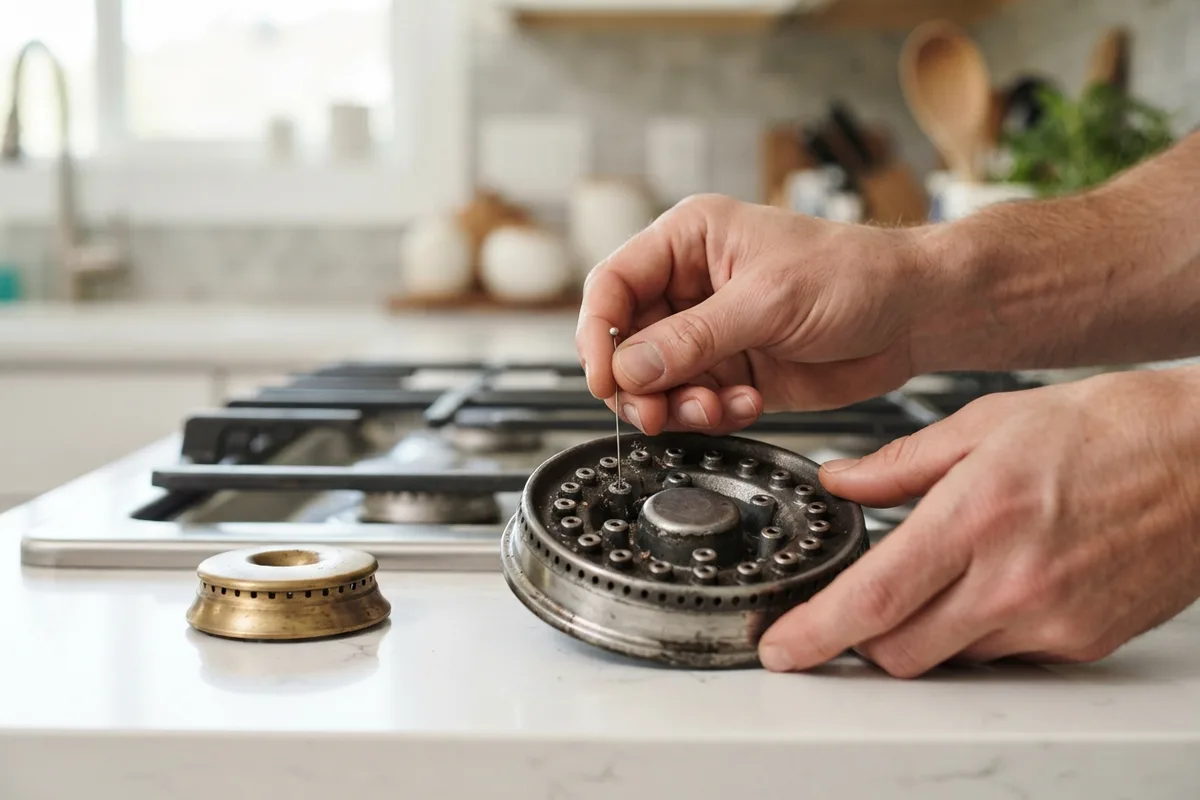
- Take a straight pin, paperclip, or sewing needle and carefully clear out burnt debris from each individual port hole. Avoid using wooden toothpicks, as they can break off inside the narrow openings.
- Wash the burner caps and heads in hot, soapy water using a soft nylon scrubbing pad.
- Rinse thoroughly with hot water and dry completely before reassembling.
Clear Debris from the Gas Air Shutter
Gas burners rely on an air shutter located near the gas valve tube to draw in oxygen before ignition. This shutter mixes ambient air with natural gas or liquid propane to create clean combustion. If dust, lint, or spilled oil coats the air shutter opening, the burner becomes starved for oxygen and burns yellow.
- Ensure the range is cool, unplugged, and the gas valve is turned off.
- Depending on your stove design, locate the air shutters underneath the cooktop or behind the burner control panel (refer to your owner manual for exact locations).
- Use a vacuum cleaner equipped with a soft brush attachment to remove dust webs and pet hair around the shutter intake vents.
- If your model features an adjustable air shutter sleeve, loosen the small retaining screw and rotate the shutter slightly open by approximately 1/16th of an inch to increase airflow.
- Tighten the retaining screw, restore power and gas, and ignite the burner to check if the flame turns blue.
Dry Out Wet Burners After Cleaning
A surprisingly common reason for a sudden yellow or orange burner flame is moisture trapped inside the burner base following deep cleaning. Water lingering in the tiny air channels disrupts gas flow and creates temporary yellow flares until the moisture evaporates completely.
- Remove the burner cap and lift the metal burner head off the stovetop.
- Shake out any pooled water hidden in the underside channels.
- Use a hairdryer on a cool or low-heat setting to blow dry the burner ports and igniter assembly, or let the parts air-dry upside down on a dry towel for two hours.
- Reinstall the burner components, making sure the cap sits completely flush on the base without tipping.
- Turn on the burner to medium heat for 60 seconds; lingering surface moisture will burn off and the flame should shift back to blue.
Remove Cool-Mist Humidifiers from the Area
If your gas stove flame suddenly turned bright orange or yellow without any physical change to the appliance, check your home for an active cool-mist humidifier. Ultrasonic humidifiers atomize tap water into micro-droplets containing dissolved minerals like sodium and calcium. When these airborne mineral particles enter the gas flame, they burn with a yellow-orange glow—much like a chemistry flame test.
- Turn off any ultrasonic or cool-mist humidifiers running in nearby bedrooms, dining areas, or living rooms.
- Turn on your kitchen range hood exhaust fan or open a window to ventilate ambient air.
- Wait 15 to 20 minutes for mineral dust in the room to dissipate.
- Relight your gas cooktop; if the humidifier was the source, the burner flame will naturally return to a solid blue color.
- To prevent recurrence, switch to distilled water in your humidifier or use an evaporative model during cold weather months when keeping up with autumn appliance care steps.
Inspect and Replace Damaged Burner Components
Years of high-heat cooking, spills, and heavy cookware can cause metal burner rings to warp, pit, or corrode. When the burner cap no longer seals flatly against the base, raw gas escapes unequally along the edge, creating yellow flare-ups and uneven cooking temperature.
- Disconnect power and shut off the gas valve.
- Remove the burner caps and examine the mating surfaces on both the cap and the base.
- Look for severe corrosion, chipped porcelain coating, or bent alignment tabs.
- If the metal base is visibly warped or pitted, replace it with an original equipment manufacturer (OEM) replacement part matched to your range model number.
- Reassemble the new burner head, restore gas, and verify that gas flows evenly through all ports with a uniform blue flame.
Flame Color Comparison: Blue vs. Yellow Gas Burner
Understanding the differences between a normal blue flame and an improper yellow flame can help you gauge stove safety and performance:
| Flame Characteristic | Healthy Blue Flame | Problematic Yellow Flame |
|---|---|---|
| Appearance | Crisp blue inner cone, lighter blue outer flame | Yellow, orange, or reddish tips |
| Air-to-Fuel Ratio | Balanced oxygen mix (~10:1 air to gas) | Oxygen starved or excess gas fuel |
| Cooking Efficiency | Maximum heat transfer, fast boil time | Reduced heat, uneven cooking |
| Soot Formation | None; burns completely clean | Leaves black carbon soot on pan bottoms |
| Safety Risk | Low baseline emissions | Higher risk of carbon monoxide accumulation |
If your stove is also suffering from slow heating issues, check out our guide on why your oven is slow to preheat to fix related heating problems across your appliance.
When to Call a Pro
While cleaning ports and moving humidifiers are quick DIY tasks, certain gas range issues require professional intervention. You should stop and call an expert if:
- Adjusting the air shutter fails to remove yellow tips from the flame.
- You suspect a faulty gas pressure regulator or improper gas pressure coming from your supply line.
- You smell raw gas near the range or hear a persistent whistling sound when burners are off.
- You recently converted your stove between natural gas and liquid propane (LP) and need gas orifices calibrated.
Typical range diagnostic and repair service visits generally range between $120 and $260, though total cost varies by area and appliance model. When complex gas components need attention, True Appliance Repair can match you with a local appliance pro to inspect your cooktop safely.
FAQ
Is a yellow gas stove flame dangerous?
A persistent yellow gas stove flame indicates incomplete combustion, which produces carbon soot and elevated levels of carbon monoxide (CO) gas. While temporary orange discoloration caused by room humidifiers is harmless, yellow flames caused by clogged burners or incorrect gas pressure should be fixed promptly to keep your indoor air safe.
Why does my gas stove turn orange when the humidifier is running?
Ultrasonic cool-mist humidifiers disperse tap water minerals like sodium into the surrounding air. When these microscopic sodium particles pass into the gas burner, they burn with a bright orange or yellow flame. Turning off the humidifier or switching to distilled water resolves the issue.
Can gas pressure cause a yellow burner flame?
Yes. If gas pressure delivered to the cooktop burner is too high or too low, the balance of gas and oxygen breaks down, leading to incomplete combustion and yellow flames. Gas pressure regulator issues should always be tested and adjusted by a qualified technician.
What color should my gas stove flame be?
A properly functioning natural gas or propane burner produces a quiet flame with a vivid blue inner cone and a slightly lighter blue outer flame. A fleeting flicker of yellow upon ignition is normal, but the running flame should remain crisp and blue.