
Is your oven door stuck closed and refusing to budge after a self-cleaning cycle or an unexpected power flicker? A locked oven door is a frustrating problem that can ruin meal plans and leave cookware trapped inside. Fortunately, most locked range doors are caused by built-in safety features or temporary control board glitches that you can resolve yourself.
Before attempting any hands-on inspection or repair, safety must come first. If you need to access internal wiring or components behind the range, always unplug the appliance or switch off the dedicated circuit breaker in your electrical panel. For gas ranges, ensure the gas supply valve is closed before moving the unit away from the wall.
1. Allow the Oven to Cool Completely
During a high-temperature self-cleaning cycle, internal oven temperatures can exceed 800 degrees Fahrenheit. As a protective safety feature, the motorized door lock automatically engages when temperatures rise above roughly 500 degrees Fahrenheit and remains locked until the cavity cools down to a safe level.
If your oven door is locked immediately following a self-clean cycle, patience is often the best solution. The cooling process can take anywhere from one to two hours depending on your oven model and kitchen room temperature. Avoid forcing the door handle or using pry tools, as this can bend the locking mechanical hook or shatter the door glass.
- Turn off the oven and allow it to sit undisturbed for at least 90 minutes.
- Check if the internal temperature light or locked indicator turns off on the control panel.
- Gently test the door handle without applying excessive force once the oven is completely cool to the touch.
2. Perform a Hard Power Reset
Power surges, micro-outages, or electrical glitches can confuse the oven's electronic control board, leaving the door latch mechanism locked even after the oven cavity has cooled. A hard power reset clears the control board memory and resets the latch motor position.
Executing a power reset allows the microprocessor to recalibrate its sensor inputs and return the door latch to its default open position once power is restored.
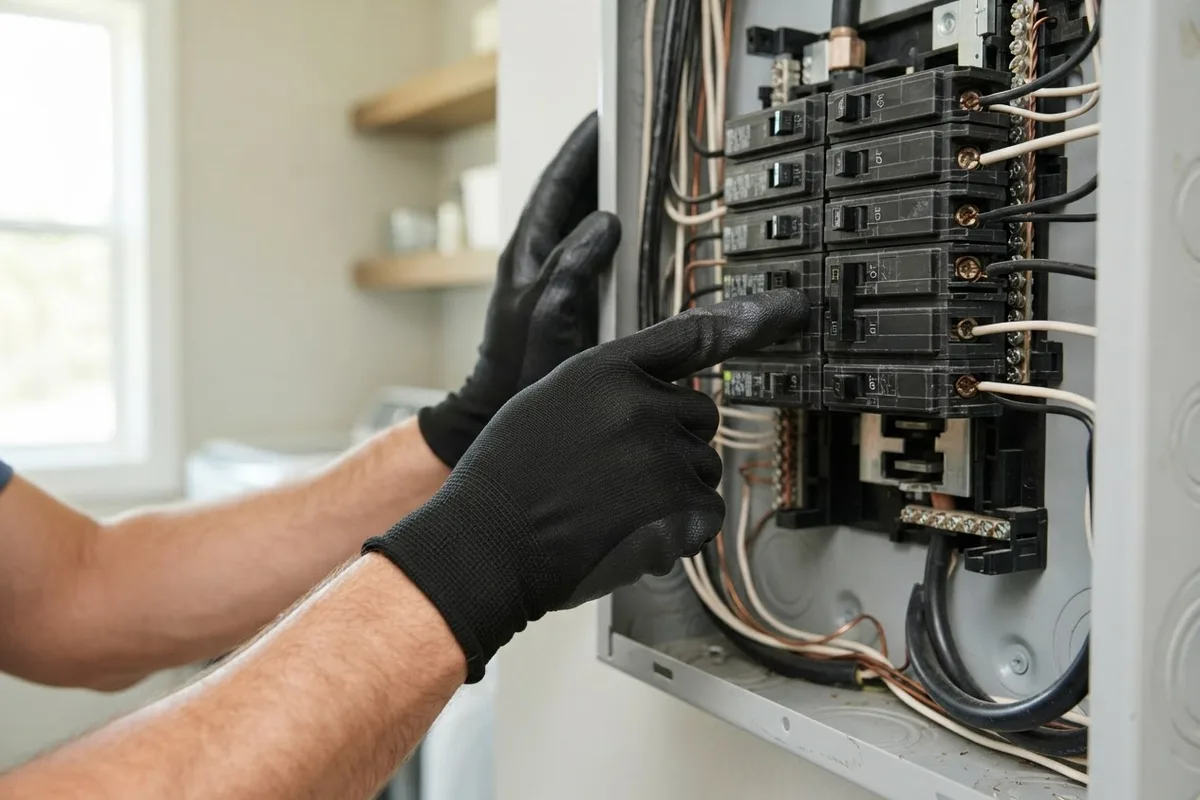
- Locate your home's main electrical breaker box.
- Flip the double-pole circuit breaker for your range or oven to the "OFF" position.
- Wait a full 5 to 10 minutes to allow all electrical capacitors in the oven control board to drain completely.
- Flip the circuit breaker back to the "ON" position.
- Listen for the motorized latch cycling or clicking, wait two minutes, then check if the door unlocks.
If you are troubleshooting temperature accuracy issues after unlocking your door, you can also read our guide on how to calibrate oven temperature to keep your baking accurate.
3. Cancel and Clear the Self-Clean Cycle
Sometimes an oven gets stuck in an incomplete self-clean sequence, especially if the cycle was interrupted early by pressing buttons or a brief power drop. The control panel may still register that a cleaning cycle is active, keeping the safety lock turned on.
Clearing the current programming forces the control board to evaluate its actual state and release the door lock.
- Press the "Clear", "Off", or "Cancel" pad on the oven control panel twice.
- Wait 30 seconds to see if the locked icon disappears from the display panel.
- If the display remains unresponsive, initiate a short 5-minute timed bake cycle.
- Let the bake cycle run for one minute, then press "Cancel".
- Allow the oven to cool for 15 minutes; the control board will often run a shutdown diagnostic that releases the latch.
4. Manually Reset the Motorized Door Latch
On modern electric and gas ranges, the door lock is driven by a small motorized lock assembly behind the upper main panel or rear housing. If the internal gears or micro-switches misalign, the motor might get stuck midway between the locked and unlocked positions.
You can encourage the lock motor to complete its cycle through a manual control panel command sequence.
- Press and hold the "Self-Clean" button on your display panel for 3 to 5 seconds.
- Listen closely near the top of the oven for a mechanical whirring sound.
- Immediately press the "Cancel" or "Clear" button.
- Observe if the lock rod retracts from the door slot.
- If the rod moves slightly but fails to open, gently press inward on the oven door while pressing "Cancel" to take pressure off the latch mechanism.
If your range continues to experience electrical heating or burner issues while working on the door, check out our DIY guide on electric stove burner not working.
5. Check the Thermal Fuse and Door Latch Switch
If simple resets fail, the oven thermal fuse or door latch switch assembly may have failed. The thermal fuse is a safety switch that cuts power when the oven overheats during self-cleaning, preventing damage to the home's wiring but sometimes trapping the lock motor in place.
Inspecting electrical components requires basic safety precautions and diagnostic testing gear like a digital multimeter.
- Cut power completely by switching off the breaker at the panel or unplugging the power cord.
- Pull the range out from the wall safely to access the rear panel (or top panel on slide-in units).
- Remove the back panel screws using a quarter-inch nut driver or Phillips screwdriver.
- Locate the thermal fuse near the upper rear housing and test it for continuity using a multimeter set to ohms.
- If the thermal fuse displays no continuity (an open circuit), it has blown and must be replaced before the oven will operate normal door unlock routines.
Quick Troubleshooting Guide for Locked Oven Doors
| Cause | Common Symptom | Recommended DIY Action |
|---|---|---|
| Active Self-Clean Cycle | Oven cavity is hot; lock light illuminated | Wait 90-120 minutes for oven to cool down fully |
| Control Board Glitch | Display frozen or error code showing | Perform 10-minute circuit breaker power reset |
| Latching Motor Jammed | Motor hums but door rod doesn't move | Apply light pressure to door while pressing Cancel |
| Blown Thermal Fuse | Complete loss of oven display or heat | Replace thermal fuse after testing continuity |
| Broken Latch Hook | Handle loose or key jammed in latch slot | Inspect and replace mechanical latch mechanism |
When to Call a Pro
While simple resets and cooling periods clear up most locked oven door problems, hardware failures like a shorted control board, stripped motor gears, or damaged wiring require expert evaluation. Working behind panels or pulling heavy ranges can pose physical hazards if proper safety procedures aren't followed.
If you have tested the breaker, waited for the unit to cool, and still cannot open the door, avoid prying the door open with tools. For complicated repairs involving gas lines, internal wiring harnesses, or component replacements, True Appliance Repair can match you with a local appliance pro to diagnose and repair your oven safely. Professional repair costs typically range from $150 to $350 depending on your area, oven model, and required replacement parts.
FAQ
Can I manually force open a locked oven door?
No, you should never attempt to force open a locked oven door using physical force or tools like screwdrivers or pry bars. Forcing the door can shatter the tempered glass panel, bend the mechanical latch rod, or damage the porcelain enamel frame, leading to significantly higher repair costs.
Why did my oven door lock after a power outage?
When household power drops unexpectedly, the oven control board abruptly shuts down. Upon power restoration, the board's internal microprocessor runs a boot cycle and may default the motorized latch to the locked position for safety until a manual reset or cancellation command is performed.
How long does an oven take to unlock after self-cleaning?
Most ovens take between 1 and 2 hours to cool down sufficiently after a self-cleaning cycle ends. The door lock switch will remain engaged until the cavity temperature drops below approximately 500 degrees Fahrenheit.
How much does it cost to fix a locked oven door latch?
Fixing a locked oven door usually ranges from $150 to $300, depending on whether the issue is a simple door latch assembly replacement or a failed electronic control board. Costs vary by geographic area, oven brand, and parts required. If you need assistance with broader kitchen repairs, True Appliance Repair can help you find experienced service specialists nearby.