
When your oven starts billowing smoke during preheating or baking, it can set off fire alarms and ruin your dinner plans. Fortunately, an oven smoking problem is usually caused by simple issues like burnt food spills or chemical residue rather than an urgent emergency. This guide walks you through five common reasons your oven is smoking, how to fix each issue safely, and when it is time to call a qualified specialist.
1. Clean Baked-On Grease and Food Spillover
Safety note: Always turn off the oven, unplug it, or shut off the circuit breaker and gas supply valve before touching interior components or applying liquid cleaners. Wait for the appliance to cool completely.
Food drippings, cheese from pizza, and bacon grease falling to the floor of your oven cabinet are the primary culprits behind unexpected smoke. When these carbonized remnants reheat during high-temperature baking or broiling, they smolder and produce heavy dark smoke.
- Allow the unit to cool to room temperature.
- Unplug the appliance or flip the dedicated circuit breaker in your electrical panel.
- Remove all oven racks and wash them in a sink using warm water and dish soap.
- Scrape off heavy food deposits on the cavity floor using a plastic putty knife to avoid scratching the porcelain finish.
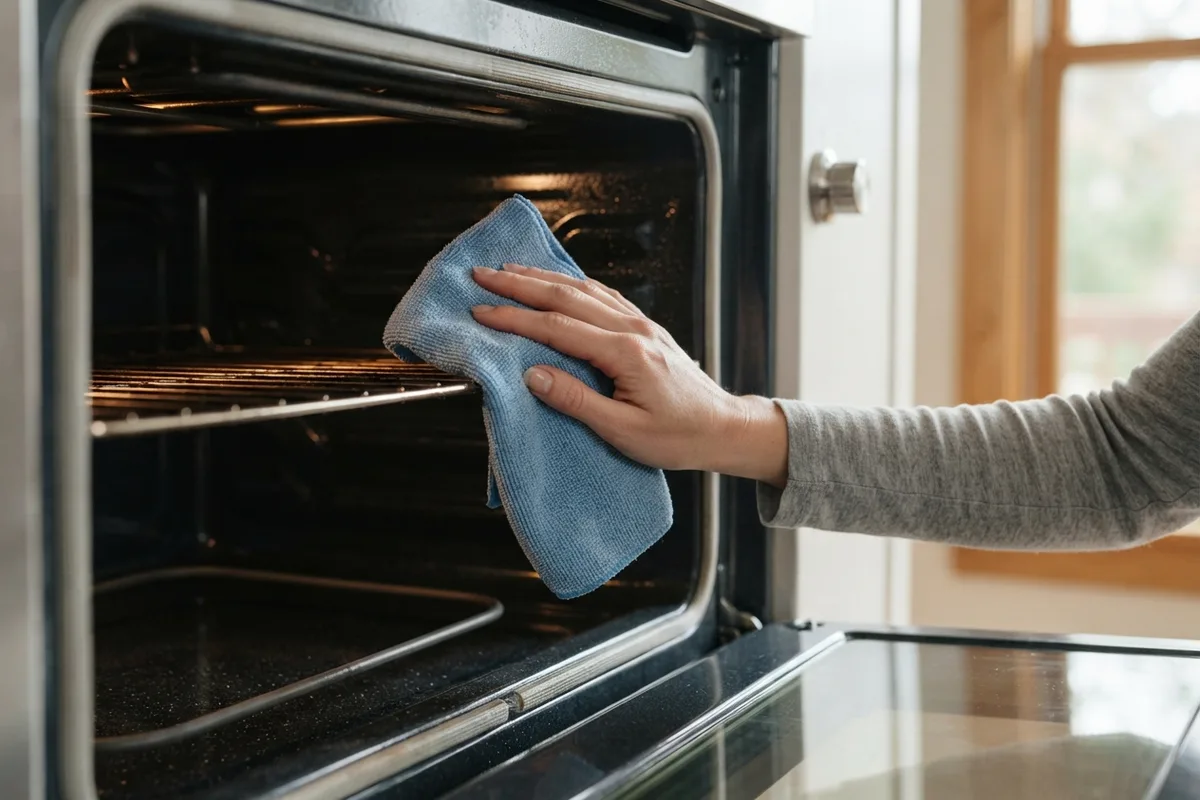
- Apply a paste of baking soda and water to stubborn spots, let it sit overnight, and wipe it away with a damp microfiber cloth and a mild vinegar spritz.
- Check your appliance manual before running a high-heat self-clean cycle, as extreme heat can stress internal thermal fuses. Regular maintenance prevents heavy buildup and keeps your kitchen air clean.
2. Burn Off Factory Coating on a New Oven
If your appliance was recently installed, seeing smoke during the first few uses is surprisingly normal. Manufacturers apply oil coatings, bonding materials, and protective lubricants to steel parts and heating elements during fabrication to prevent rust during shipping and storage. When you heat the appliance for the first time, these factory oils vaporize, generating a light grey haze along with a distinct chemical odor.
- Open nearby kitchen windows and switch your range hood exhaust fan to high speed to vent fumes outdoors.
- Keep children and household pets away from the immediate area during the initial burn-in process.
- Set the oven temperature to 400 degrees Fahrenheit or 450 degrees Fahrenheit while empty.
- Allow the empty unit to run for 30 to 60 minutes until the visible smoke and odor dissipate entirely.
- Turn off the heating controls and allow the cavity to cool naturally.
Once this initial factory residue burns off, your oven should operate without producing smoke. If smoking continues after two or three cycles, examine the interior for lingering packing tape or plastic wrapping that may have been missed during installation.
3. Wipe Away Leftover Oven Cleaner Residue
Chemical oven sprays effectively melt away stubborn burnt grease, but they leave behind alkaline chemical films if not rinsed thoroughly. When you preheat the oven later, these chemical deposits scorch at standard cooking temperatures, releasing acrid white smoke and chemical fumes.
- Ensure the unit is completely cool, then unplug the power cord or shut off the circuit breaker for safety.
- Mix a solution of equal parts warm water and white distilled vinegar in a spray bottle.
- Lightly spray all interior surfaces that were previously cleaned with commercial spray.
- Neutralize the alkaline cleaner by wiping all surfaces thoroughly with clean, damp microfiber towels.
- Repeat the wiping process with a fresh bucket of clear water to ensure no vinegar or cleanser remains.
- Dry all interior walls with a clean lint-free cloth before restoring electrical power.
Taking time to rinse thoroughly prevents unpleasant fumes and protects delicate interior thermal sensors. For more tips on keeping your kitchen running efficiently, check out our guide on 8 appliance maintenance tasks that save money.
4. Inspect Heating Elements for Shorts and Hotspots
In electric ovens, damaged heating elements (the bake element at the bottom or the broil element at the top) can emit smoke, bright sparks, or localized blistering. Over time, internal electrical wiring inside the element rod degrades, causing severe hotspots that burn off the outer sheath or ignite nearby food splatters.
- Shut off the circuit breaker supplying power to the oven and verify power is off before inspecting components.
- Visually inspect the surface of both the upper broil element and lower bake element.
- Look for visible cracks, blistering, discoloration, pinhole burns, or physical warping along the metal sheath.
- If you notice localized burning or corrosion, the heating element requires replacement.
- Unbolt the mounting brackets and carefully pull the element forward to disconnect the wire leads.
- Install a matching replacement element designed for your specific model, ensuring the terminal wire clips fit tightly.
If replacing heating components feels intimidating, or if you suspect electrical wiring defects, stop and consult a local professional technician.
5. Check Gas Igniter Alignment and Burner Air Flow
In gas ranges, an inaccurate air-to-gas mixture or a failing igniter can cause incomplete combustion. When gas does not burn cleanly, it produces soot, carbon buildup, and dark smoke accompanied by a strong fuel smell or yellow burner flames instead of crisp blue flames.
- Shut off the main gas supply valve behind the unit and disconnect the electrical power cord.
- Remove the lower oven floor panel to access the gas burner tube and igniter assembly.
- Inspect the burner tube ports for blockages caused by spilled food or insect debris, cleaning them gently with a soft wire brush.
- Check that the air shutter on the gas valve assembly is properly aligned to deliver adequate oxygen for clean combustion.
- Examine the igniter for cracks, heavy soot coating, or signs of wear.
- Reassemble the floor panel, restore gas and power, and test the burner.
If gas flames remain yellow or produce soot after cleaning, shut off the gas valve immediately. Gas fuel system adjustments require specialized pressure testing equipment and should be handled by a qualified technician. If you notice cooking inconsistency alongside smoking, read our guide on why your oven bakes unevenly.
Oven Smoking Causes and DIY Fixes Quick Reference
| Cause | Smoke Type | Primary Solution | Difficulty Level |
|---|---|---|---|
| Food Spillover | Heavy dark smoke | Clean with baking soda & vinegar paste | Easy DIY |
| New Oven Coating | Light grey haze | 30-60 min burn-in cycle at 450°F | Easy DIY |
| Cleaner Residue | Acrid white fumes | Rinse interior with water & vinegar solution | Easy DIY |
| Damaged Element | Dark smoke & sparks | Shut off power & replace heating element | Moderate DIY |
| Gas Air Flow Issue | Sooty smoke & gas smell | Clean burner ports or request pro service | Pro Recommended |
When to Call a Pro
While clearing away burnt crumbs or burning off factory oil are straightforward DIY chores, certain smoking oven scenarios demand professional technical intervention. If you encounter sustained electrical sparks, exposed wiring burns, persistent gas odors, or smoked-out control boards, stop immediately. Shut off the gas valve and circuit breaker to protect your home.
Replacement parts for specialized heating components or electronic control boards typically cost between $150 and $350, depending on the model and regional labor rates. Attempting complex gas line or high-voltage repairs without proper diagnostic tools can lead to safety hazards.
When you need fast, trustworthy help, True Appliance Repair can match you with a local appliance pro to diagnose and repair your cooking range safely. You can also explore our main appliance repair services to keep every major unit in your home running smoothly.
FAQ
Is it safe to leave an oven smoking while baking?
No. You should turn off the oven immediately when you notice smoke. Continued smoking can ignite grease fires, contaminate your food with harsh chemical or carbon fumes, and damage internal sensors.
Why does my oven smoke only when using the broiler?
The broil element operates at maximum temperature, intense enough to instantly scorch grease splatters on the roof of the oven cavity. Additionally, meat fats rendered during broiling can splash directly onto the hot upper element if pan drip trays are not used.
How long does a brand new oven smoke on its first use?
A new oven typically smokes for 30 to 60 minutes during its initial burn-in cycle at high heat. If smoke continues past two or three cooking sessions, inspect the cavity for unremoved packing materials or contact your appliance installer.
Can a faulty oven thermostat cause smoking?
Yes. If the internal thermostat or temperature sensor fails, the oven may heat continuously without cycling off, reaching extreme temperatures that scorch normal cooking oils and cause heavy smoke.