
Turning on your range to preheat for dinner only to see thick wisps of smoke curling out of the vent—even when the racks are completely bare—is alarming. In most kitchens, an oven smoking when empty comes down to hidden grease splatters, leftover cleaning residue, or a failing heating element. Follow these six safe, practical checks to find the source of the smoke and clear the air before your next meal.
Safety First: Before inspecting or cleaning inside your appliance, turn the oven off and let it cool completely. Unplug the range or flip its dedicated circuit breaker at your electrical panel (and shut off the gas supply valve if you have a gas model). Never pour water onto a smoking grease fire; keep the oven door closed to starve the flames of oxygen and turn the heat off immediately.
1. Scrub Hidden Grease off the Bottom Element
When roast drippings or casserole bubbles spill over, they rarely stay exclusively on the flat floor of the oven. Instead, grease splatters onto the lower bake element or coats the walls right beside it. The next time you preheat, those invisible oil films burn off and create a surprising amount of gray, acrid smoke.
- Wait until the oven is completely cool and disconnected from power.
- Pull out all oven racks to give yourself a clear view of the cavity.
- Mix a thick paste of three parts baking soda to one part warm water.
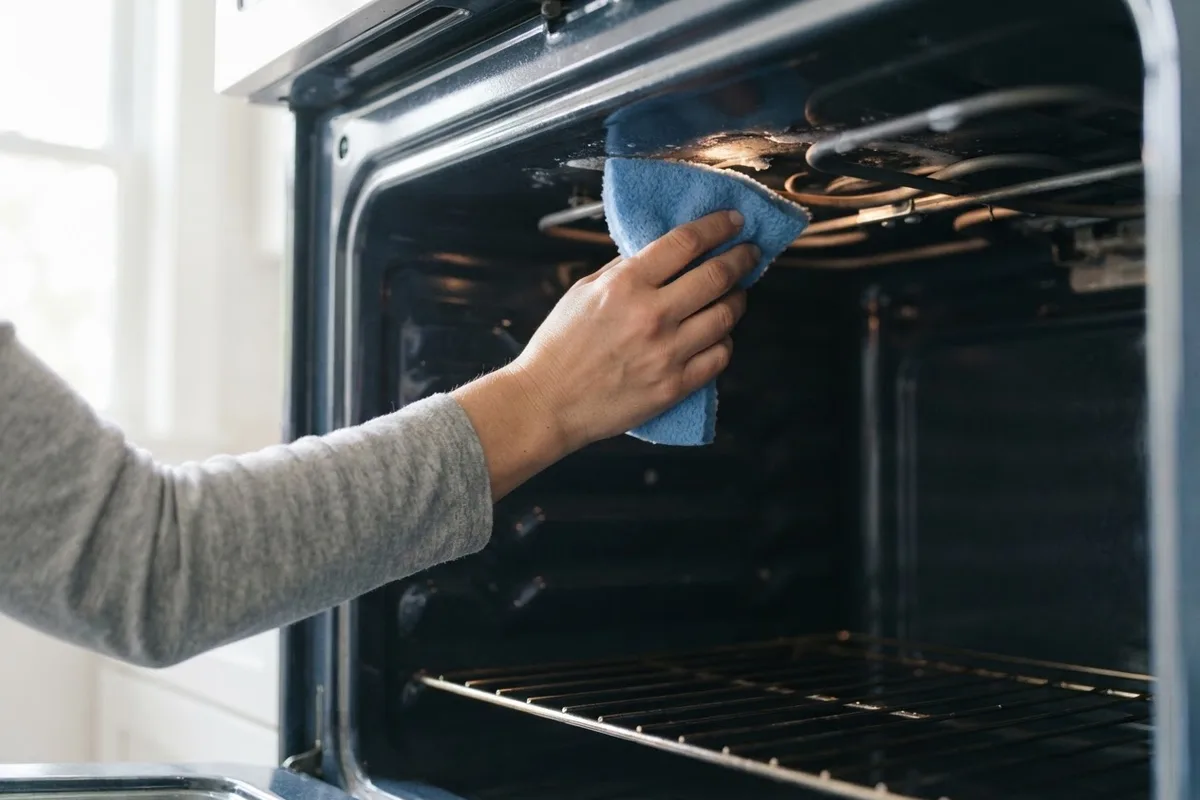
- Gently wipe the cooled metal tubing of an electric bake element with a damp microfiber cloth—never submerge the terminals where the element enters the back wall.
- Spread the baking soda paste across the porcelain floor beneath the element, let it sit for 20 minutes, and scrub with a non-scratch nylon pad.
- Wipe away all gritty residue with a clean, damp sponge and dry with a towel.
2. Check the Upper Broiler and Oven Ceiling
Homeowners naturally look down when troubleshooting smoke, which means the ceiling of the oven goes untouched for months. Every time you roast meats or broil vegetables, airborne grease droplets float upward and cling to the roof and the upper broiler coils. Because hot air rises, this overhead buildup bakes into a dark, sticky glaze that smokes heavily during standard preheating.
- Shine a bright flashlight upward at the broiler element and the surrounding metal ceiling.
- Look for dark brown droplets, carbonized food bits, or a tacky film around the upper heat shield.
- Spray a 50/50 mixture of white vinegar and warm water onto a microfiber cloth (avoid spraying liquid directly into the broiler igniter or electrical sockets).
- Wipe down the cooled broiler tubing and scrub the ceiling around it using a damp sponge dipped in baking soda.
- Rinse the cloth in clean water and wipe the ceiling a second time so no loosened grease drips down onto your racks.
3. Remove Aluminum Foil and Bottom Liners
Lining the bottom of an oven with aluminum foil or an aftermarket protective mat seems like a smart shortcut to catch messy spills. However, modern gas and electric ranges rely on bottom vents and hidden heat channels to circulate air. Foil traps intense heat against the porcelain floor, melts onto the enamel, blocks airflow, and causes trapped food crumbs underneath to smolder and smoke.
- Open the cool oven door and remove any aluminum foil sheets, disposable drip pans, or silicone liners sitting on the oven floor.
- Check the air vents along the bottom edges (common in gas ovens and hidden-bake electric models) to make sure no foil fragments fell inside.
- Inspect the racks as well; wrapping racks in foil restricts heat movement and can cause your oven to bake unevenly.
- If you need drip protection for a bubbly pie or casserole, place a standard rimmed baking sheet on the rack directly beneath the dish rather than covering the oven floor.
4. Wipe Away Leftover Oven Cleaner Residue
If your empty oven starts smoking right after you gave it a deep scrub, the culprit is usually chemical residue rather than food. Commercial spray cleaners and heavy baking soda pastes leave behind a thin, chalky film if not rinsed thoroughly. When the cavity reaches 350°F, those leftover cleansers vaporize into a sharp, white smoke with a strong chemical odor.
- Open your kitchen windows and turn on the range hood exhaust fan to ventilate the room.
- Fill a bowl with warm water and add two tablespoons of white vinegar—the mild acid neutralizes alkaline cleaning agents and dissolves white baking soda streaks.
- Dip a clean sponge into the vinegar water and wipe down the walls, floor, ceiling, and inside of the glass door.
- Pay special attention to corners, rack support grooves, and the edges around the door gasket where spray foam tends to hide.
- Dry all surfaces with a lint-free dish towel and run the empty oven at 300°F for 15 minutes to confirm the smoke is gone.
5. Clear Debris From the Hidden Bake Tray
Many modern electric and gas ovens feature a "hidden bake" design, where the lower heating element sits beneath the removable metal floor rather than inside the main cavity. While this makes wiping spills easier, liquids and small crumbs can still seep through the side seams or rear vents into the lower burner box, where they char directly against the heating assembly.
- Consult your owner's manual to see if your oven's bottom panel is designed to lift out without tools.
- After confirming the power and gas are shut off, remove the thumb screws or slide the rear tabs that hold the bottom tray in place.
- Lift the metal floor panel up and out of the cavity.
- Use a vacuum hose attachment to remove charred crumbs, ash, or fallen debris sitting in the lower compartment.
- Wipe any sticky spill trails off the bottom side of the tray with warm, soapy water, dry it completely, and secure it back in place.
6. Inspect Heating Elements for Blisters or Burns
Not all smoke comes from food or grease. If the smoke smells metallic or electrical—or is accompanied by a bright orange flash—your electric bake or broil element may be failing. Over years of heating and cooling, the outer metal sheath can develop pinhole cracks or blisters, allowing the internal resistance wire to burn out.
- With the breaker turned off, run your eyes—and then carefully your fingertips—along the entire length of the cooled bake and broil elements.
- Look for raised blisters, small holes, white powdery burn marks, or sections where the metal tube looks warped or split.
- Check the rear mounting bracket where the element plugs into the back wall; loose or charred terminal wires can also produce electrical smoke.
- Check the fiberglass rope gasket around the oven opening as well—if a frayed seal touches the hot cavity edge, it can singe and cause your oven door to leak heat.
- If you spot a blistered element or scorched wiring, leave the breaker off until the damaged component is replaced.
Quick-Reference Guide: Identifying Oven Smoke
| Smoke Color & Smell | Most Likely Cause | Recommended Action |
|---|---|---|
| Gray/blue smoke, smells like burnt oil | Grease buildup on the bottom element, ceiling, or broiler | Scrub cool surfaces with baking soda paste and vinegar water |
| Thin white smoke, sharp chemical smell | Leftover oven cleaner or baking soda film after cleaning | Wipe the entire cavity twice with a warm water and vinegar cloth |
| Dark smoke from the floor vents | Crumbs or foil trapped in the lower burner/hidden bake tray | Remove the bottom floor panel and vacuum out charred debris |
| Acrid, metallic, or plastic-like odor | Blistered heating element, burnt wire insulation, or failing fan motor | Shut off the circuit breaker immediately and arrange a repair |
When to Call a Pro
Wiping away burnt grease and rinsing cleaner residue are straightforward weekend tasks, but electrical smoke and internal gas burner issues require professional diagnostic tools. Stop and leave the circuit breaker or gas valve off if you smell melting plastic behind the control panel, see sparks from a heating element, or notice thick smoke billowing from the rear exhaust vent when the interior cavity is spotless.
Replacing a faulty bake element typically costs between $150 and $300 for parts and labor, while repairing burnt wiring harnesses or a malfunctioning convection fan motor generally ranges from $200 to $450 (prices vary by area and model). If your range needs hands-on electrical or gas troubleshooting, True Appliance Repair can match you with an independent local technician for professional oven and stove repair.
FAQ
Is it normal for a brand-new oven to smoke when empty?
Yes, a brand-new oven will often produce light white smoke and an oily odor the first one or two times you turn it on. Manufacturers coat the interior metal panels and heating elements with protective machine oils during assembly. Before cooking your first meal, wipe the interior with warm soapy water, open a kitchen window, and run the empty oven at 400°F for 30 to 45 minutes to burn off the factory coating.
Why is my oven smoking during the self-clean cycle?
The self-clean cycle locks the door and heats the cavity to nearly 900°F to incinerate food soils into fine ash. If there are heavy pools of grease, chunks of cheese, or forgotten oven racks inside, that extreme heat will turn them into thick clouds of smoke. Always scrape up large spills and remove the racks before starting a self-clean cycle—or skip the high-heat cycle altogether and clean with baking soda and vinegar.
Can I still cook in my oven if it smokes a little while preheating?
If the smoke is minor and comes from a small, identifiable drip of olive oil or butter that you can wipe away once cool, the oven is safe to use after cleaning. However, you should never cook in an oven that produces heavy grease smoke (which can ignite into an oven fire), chemical fumes from leftover sprays, or electrical smoke from a damaged heating element.
Why does smoke come out of one stovetop burner when the oven is on?
On most electric coil and radiant glass ranges, the oven vent is located directly beneath one of the rear stovetop burners (usually the back right or back left). Smoke coming through that burner isn't coming from the cooktop itself—it is simply the exhaust path for smoke generated inside the oven cavity below.