
Nothing slows down meal prep or holiday cooking quite like a crisper or freezer bin that refuses to budge when you pull the handle. Forcing a jammed bin often leads to cracked plastic, broken glide rails, or spilled produce across the kitchen floor. Use these six straightforward DIY fixes to safely free a stuck refrigerator drawer and get your tracks gliding smoothly again.
1. Clear Overstuffed Food and Shifted Packaging
Before assuming a mechanical part has failed, check whether tall or bulky items inside the bin have shifted upward and caught on the shelf frame above. Boxed frozen foods, bagged produce, and glass jars frequently tip backward when a drawer closes, acting like a wedge the next time you pull it forward.
- Open the refrigerator or freezer doors as wide as your kitchen layout allows so the door bins do not block the drawer path.
- Shine a flashlight into the gap above the stuck drawer to spot any trapped boxes, bag clips, or tall bottles.
- Slide a flat wooden or silicone spatula through the gap to gently press the obstructing item down without scratching the plastic.
- Once the bin opens a few inches, remove heavy items from the front until you can lift the drawer out normally.
- Reorganize the bin by placing flat, stable items near the top and keeping total contents below the upper rim.
2. Melt Ice Buildup Behind the Drawer
When warm room air sneaks into the fridge or the defrost drain backs up, moisture collects along the back wall and freezes the rear rollers directly to the tracks. Pulling hard on a frozen bin can snap the brittle cold plastic.
- Unplug the refrigerator from the wall outlet and shut off the ice maker water supply valve before working near internal vents and wiring.
- Empty any food you can reach from the stuck drawer and surrounding shelves into a cooler.
- Soak two thick dish towels in hot tap water, wring them out so they do not drip excessively, and press them along the outer side rails and beneath the stuck bin.
- Alternatively, aim a hairdryer on its lowest heat setting toward the frozen track from at least 8 inches away, keeping the air moving constantly so you do not warp the plastic liner.
- Gently wiggle the drawer side to side every few minutes until the ice releases, then sponge up all melted water and dry the tracks completely before restoring power.
If you notice frost returning every few days, inspect the rubber door seal; our guide on fixing a torn refrigerator door gasket walks through stopping warm air leaks at the source.
3. Clean Sticky Spills From the Glide Tracks
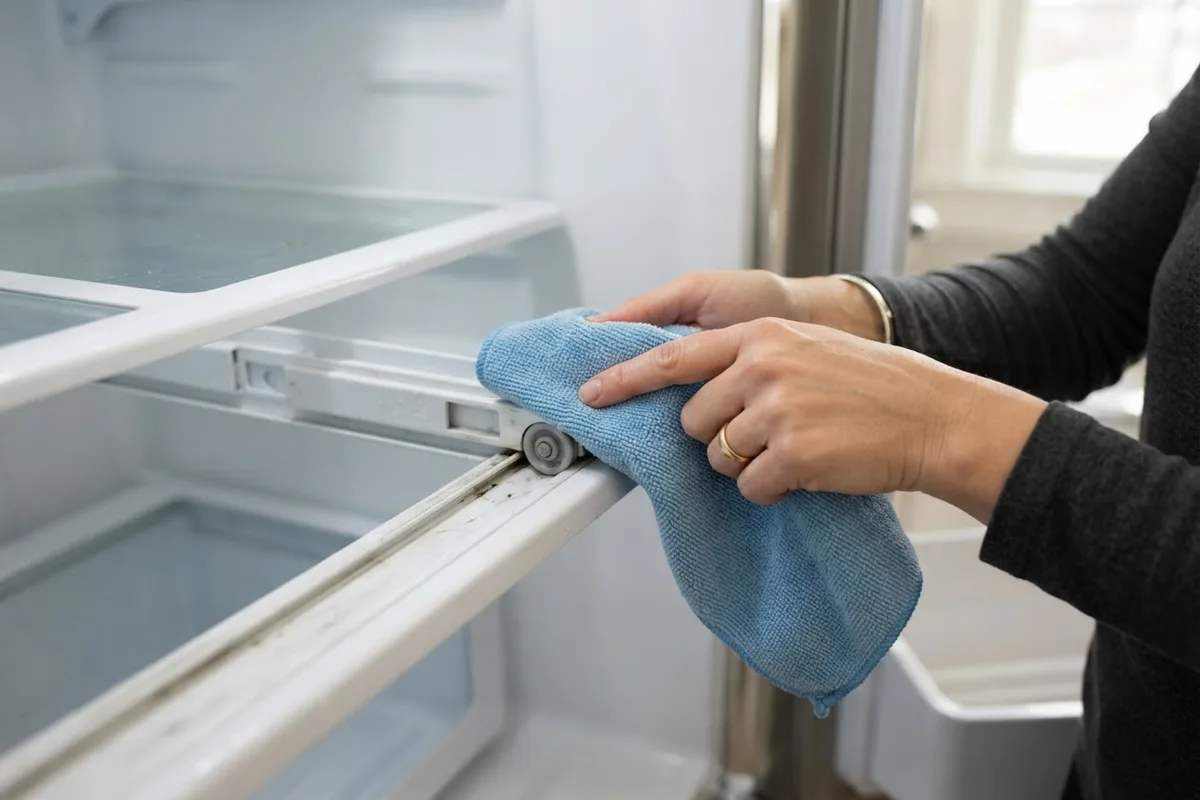
Produce moisture, meat juice, or a single drop of syrup can seep into the side channels and harden into a cold glue in a 37-degree refrigerator. Over time, this residue traps crumbs and locks the small plastic wheels in place.
- Once the drawer is free, lift the front edge slightly and pull it straight out to remove it from the refrigerator.
- Mix two cups of warm water with one tablespoon of mild dish soap and two tablespoons of white vinegar in a bowl.
- Dip a microfiber cloth into the solution and scrub both the wall-mounted tracks and the runners attached to the drawer sides.
- Use an old toothbrush dipped in warm water to dislodge dried spills from inside the recessed roller channels and axle pins.
- Wipe every surface clean with a damp cloth, then buff the rails bone-dry with a fresh towel so lingering water does not freeze into a thin sheet of ice.
4. Realign Rollers and Bent Center Rails
Drawers frequently jump their tracks when pulled out at an angle or slammed shut while overloaded with heavy beverage cans or root vegetables. When one side sits on top of the rail and the other sits inside the groove, the bin binds crookedly.
- Remove the drawer completely and inspect the small plastic rollers at the rear corners of both the bin and the cabinet walls.
- Spin each wheel by hand to make sure it turns freely; if hair or packaging string is wrapped around the axle, snip it away with small scissors.
- Check the center telescopic support rail under wide pantry or deli drawers to see if the metal or plastic slides have separated.
- Pull both side slides all the way forward until they lock in the open position, matching their alignment.
- Hold the empty drawer level with both hands, set the rear wheels into the track cutouts first, and lower the front edge until it clicks flat onto the glides.
If you are working in a dimly lit compartment while aligning the rear tracks, check our steps for fixing a refrigerator light that is not working so you can clearly see the rear slots.
5. Lubricate Dry Plastic Slides With Food-Safe Grease
Years of cold air and repeated washing strip away the factory lubricant on plastic-on-plastic or metal-on-plastic drawer slides. Without lubrication, friction causes the drawer to chatter, stick halfway, or require a two-handed tug.
- Never spray standard household oils, petroleum jelly, or cooking oil onto refrigerator tracks—petroleum degrades plastic, and cooking oils turn rancid and gummy in cold temperatures.
- Purchase a small tube of NSF H1 food-grade silicone grease or pure food-safe paraffin wax from a hardware store.
- Ensure the drawer runners and cabinet tracks are completely clean, dry, and near room temperature.
- Apply a pea-sized dab of food-grade silicone grease onto a cotton swab and coat the inside of the track channels and roller axles with a very thin film.
- If your fridge uses simple molded plastic grooves without wheels, rub a block of food-safe paraffin wax or beeswax along the top and bottom contact edges of the drawer lip.
- Slide the empty bin in and out five times to distribute the lubricant evenly, then wipe away any excess grease.
6. Inspect and Replace Cracked Glides or Shelf Frames
Cold plastic becomes rigid over time, and a single hairline crack in the support frame can flex downward under the weight of food, pinching the drawer shut.
- Examine the underside of the glass shelf frame holding the crisper bins for splits, missing support tabs, or bowed plastic rails.
- Check the molded lip along both upper edges of the drawer box; if a section has snapped off, the bin will drop into the lower track and jam.
- Locate your refrigerator's model number sticker inside the upper fresh-food wall and order an exact replacement rail bracket, roller wheel, or bin.
- Unplug the refrigerator before using a screwdriver or nut driver near interior light sockets or thermistor covers.
- Unscrew the broken side rail bracket from the interior wall liner, secure the new bracket snugly without overtightening the screws into the foam insulation, and slide the bin back into place.
Quick Reference: Stuck Refrigerator Drawer Troubleshooting
| Symptom | Most Likely Cause | Best DIY Solution |
|---|---|---|
| Drawer opens 2 inches then hits a hard stop | Tall food item shifted upward inside bin | Reach in with a flat spatula to press item down |
| Bin will not budge at all; frost visible on back wall | Ice buildup from air leak or clogged defrost drain | Melt ice with warm damp towels; dry tracks fully |
| Drawer feels gummy and drags heavily | Dried food spill in the glide channels | Scrub rails and wheels with warm soapy vinegar water |
| Bin sits crooked and wedges diagonally | One rear roller jumped off the track | Lift front edge, remove bin, and seat both rear wheels evenly |
| Clean, aligned drawer squeaks and binds | Dry plastic-on-plastic friction | Apply a thin layer of food-grade silicone grease or paraffin wax |
| Drawer drops down when pulled halfway out | Cracked track bracket or broken bin lip | Replace the damaged rail or drawer assembly |
When to Call a Pro
Most stuck refrigerator drawers come down to simple ice, spills, or misaligned tracks that take less than 30 minutes to resolve on your own. However, you should stop DIY troubleshooting and bring in a technician if thick sheets of ice keep forming behind the drawers every week, if the rear plastic cabinet liner is bulging outward, or if water is pooling beneath the unit. Recurring back-wall frost often points to a failed defrost heater, a bad defrost thermostat, or a sealed-system issue that requires specialized diagnostic tools. Typical professional repairs for defrost system components or heavy-duty telescopic rail assemblies range from $150 to $350, though exact pricing varies by area and model. If your fridge needs deeper mechanical attention, True Appliance Repair can connect you with a local specialist for professional refrigerator repair.
FAQ
Can I use WD-40 or cooking spray on stuck refrigerator drawer tracks?
No. Standard aerosol lubricants leave behind petroleum solvents and strong odors that can contaminate uncovered food and weaken polycarbonate drawer plastic over time. Cooking sprays like olive or canola oil oxidize and turn into a sticky, rancid varnish when chilled, which will make the drawer stick even worse within a few weeks. Stick strictly to NSF H1 food-grade silicone grease or plain paraffin wax.
How do I remove a refrigerator drawer that is completely jammed at an angle?
First, unload every item you can reach through the gap to take weight off the twisted frame. Next, gently lift the lower side of the drawer upward while pushing the entire bin slightly backward toward the rear of the fridge; this usually pops the derailed wheel back into alignment so you can lift the front edge and slide it out safely.
Why do my refrigerator drawers keep freezing shut at the back?
When drawers repeatedly freeze to the back wall, moisture is either entering through a gap in the door gasket or failing to drain during the automatic defrost cycle. Check that food packages are not blocking the rear air vents, inspect the rubber door seals for gaps, and clear out the small defrost drain hole located beneath the evaporator cover.
How can I clean glass refrigerator shelves right after freeing a stuck drawer?
Never place cold glass shelves or cold plastic crisper bins directly into hot soapy water, as the sudden temperature change can shatter tempered glass and crack brittle plastic. Let the shelves and drawers sit on a kitchen towel for 20 to 30 minutes to reach room temperature before washing them with lukewarm water and mild dish soap.