
Opening the fridge to find slushy milk, cracked eggs, and solid blocks of lettuce across every shelf is both frustrating and expensive. While a single cold spot in a lower drawer is common, a refrigerator freezing everything in the fresh food compartment usually points to a misreading temperature sensor, a stuck air damper, or restricted airflow. Work through these six practical DIY fixes to bring your refrigerator temperatures back into the safe, frost-free zone.
Safety First: Always unplug your refrigerator from the wall outlet (or flip its circuit breaker off) and turn off the water supply valve before removing interior trim panels, handling wiring connectors, or inspecting mechanical dampers. Never attempt to open or service sealed refrigerant lines yourself.
1. Verify the Thermostat With a Separate Thermometer
Built-in temperature dials ranging from 1 to 9 are easy to misread, and even digital displays only show the target setting rather than the actual air temperature inside the cabinet. Before taking any panels apart, confirm what temperature your refrigerator is actually holding and make sure a quick-cool feature was not accidentally switched on.
- Check your control panel and turn off features like "Turbo Cool," "Max Cool," or "Power Chill," which force freezing air into the cabinet for hours.
- Set a digital refrigerator to 38°F (just above the standard 37°F default) or turn a numbered dial down to the middle setting (usually 3 or 4 out of 7).
- Place an inexpensive standalone appliance thermometer inside a glass of water on the center shelf.
- Wait 8 to 12 hours before reading the thermometer so the water reflects the true average temperature.
- Adjust the control up one degree or one dial notch at a time, waiting a full day between adjustments until the glass of water holds steady between 37°F and 40°F.
2. Move Food Away From the Cold Air Vents
In almost all modern refrigerators, freezing air is produced in the freezer and blown into the refrigerator compartment through upper diffuser vents. If you pack groceries right up against these vents, two problems happen: items sitting next to the louver freeze solid, and the trapped cold pocket prevents air from circulating properly past the cabinet thermostat.
- Locate the cold air supply vents along the upper rear wall or top ceiling of the fresh food compartment.
- Locate the air return vents, typically positioned along the side walls or near the lower crisper drawers.
- Clear at least two to three inches of open breathing space around every supply and return vent.
- Store delicate, high-moisture foods like leafy greens, eggs, soft cheeses, and berries on the middle shelves or door bins rather than the top back shelf.
- Keep the refrigerator about two-thirds full; an under-packed fridge has no thermal mass to absorb bursts of icy air from the freezer.
3. Inspect and Free a Stuck Air Damper Control
The air damper is a small motorized trapdoor sitting inside the passageway between your freezer and refrigerator compartments. When the fridge needs cooling, the damper opens to let freezer air in; once the fridge reaches 37°F, the damper closes. If a piece of ice jams the door open or the small damper motor fails in the open position, sub-zero freezer air pours continuously into the refrigerator.
- Unplug the refrigerator and locate the damper housing, typically found at the top-back corner or upper center ceiling of the fresh food section.
- Unscrew and gently pop off the plastic vent cover, taking care not to yank any attached wire harnesses.
- Look inside the duct at the flat plastic baffle door.
- If frost or ice is wedging the flap open, melt it gently using a hair dryer on the low setting held several inches away—never use a heat gun, which can warp plastic liners.
- Gently rock the flap by hand to see if the linkage is broken or loose; if the plastic gear is stripped or the door refuses to close when power is restored, replace the damper assembly.
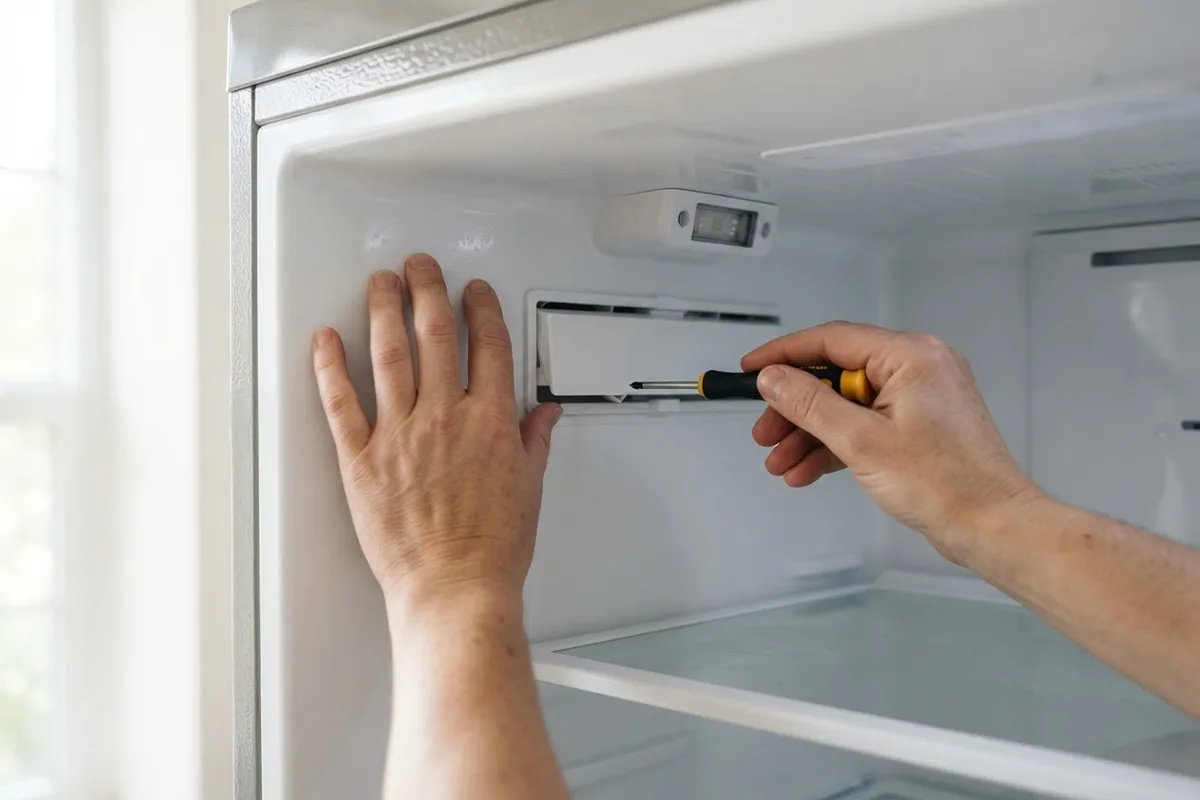
4. Clean or Reposition the Temperature Sensor (Thermistor)
The thermistor is a tiny capsule-shaped sensor wired to the main control board that monitors internal air temperature. If the thermistor gets coated in food residue, knocked loose from its mounting clip, or covered by a frost pocket, it sends the wrong electrical resistance reading to the board. The control board then believes the fridge is warm and keeps pumping freezing air inside.
- Unplug the refrigerator and find the small slatted plastic sensor cover on the interior wall of the fridge compartment.
- Unclip the cover to expose the small white or black bulb-shaped thermistor.
- Wipe away any sticky spills, dust, or ice around the sensor bulb with a warm, damp cloth and dry it completely.
- Make sure the thermistor is snapped securely into its clip and not touching the cold metal or plastic liner directly.
- If you have a digital multimeter, disconnect the thermistor harness and submerge the sensor tip in a cup of ice water (32°F) to test its resistance against your model's tech sheet; replace the sensor if its reading is off.
5. Vacuum Dusty Condenser Coils
It sounds counterintuitive that dirty condenser coils on the outside of the fridge could cause food to freeze on the inside. However, when coils are blanketed in dust and pet hair, the refrigerator struggles to release heat and runs extremely long cooling cycles. On single-evaporator models, an overworked compressor trying to satisfy the freezer can inadvertently push way too much freezing air into the fresh food section.
- Unplug the refrigerator and pull it out slightly from the wall.
- Remove the lower front kickplate grille or the rear bottom access panel.
- Brush away matted dust and pet hair from the black or silver coil tubing using a soft, flexible appliance coil brush.
- Vacuum up all loosened lint with a hose attachment.
- Reattach the grille and restore power.
Check out our full guide on how to clean refrigerator coils in 6 easy DIY steps for photos and safety tips, and pair it with our appliance energy saving tips to keep your kitchen running efficiently.
6. Check Door Seals for Warm Air Leaks
A leaky freezer or refrigerator door gasket lets warm, humid kitchen air sneak into the cabinet. If warm air leaks around the freezer door or right next to the refrigerator thermostat sensor, the cooling system kicks into overdrive to compensate. The result is an icy blast from the vents that freezes items on the shelves while the area near the door stays damp.
- Wipe down the rubber door gaskets on both doors using warm soapy water to remove sticky residue.
- Inspect the corners and bottom edge of the gaskets for tears, gaps, or brittle sections.
- Close the door on a dollar bill and tug it out; you should feel firm, even tension all the way around.
- If the bill slips out loosely, warm the rubber gently with a hair dryer on low and press the gasket flat so the internal magnet seats against the steel frame.
Quick Troubleshooting Reference Table
Match where your food is freezing to the most likely cause and typical US part or repair cost ranges (actual prices vary by model and region).
| Symptom Pattern | Most Likely Cause | DIY Difficulty | Typical Part / Repair Cost |
|---|---|---|---|
| Only items at the top back shelf freeze | Food blocking the upper cold air diffuser vent | Easy | $0 (rearrange shelves) |
| Entire fridge freezes, freezer is normal | Air damper stuck open or faulty thermistor | Easy to Moderate | $30 – $140 (part only) |
| Fridge freezes and compressor runs non-stop | Dirty condenser coils or leaky door gasket | Easy | $0 – $150 |
| Fridge freezes even after damper/sensor swap | Failed main electronic control board or thermostat | Moderate to Pro | $200 – $450 (installed) |
When to Call a Pro
If you have adjusted the temperature, cleared the vents, verified that the damper flap isn't iced open, and tested the door seals, yet your refrigerator continues freezing everything on every shelf, the culprit is likely a failed main control board or a mechanical temperature control thermostat. Testing high-voltage relays on a control board or fishing replacement capillary tubes through insulated cabinet walls is best left to an experienced technician.
Stop throwing away ruined groceries and let a specialist take a look. True Appliance Repair can connect you with a local pro for refrigerator repair to pinpoint the faulty sensor, damper, or board quickly.
FAQ
Why is my refrigerator freezing food on the highest number setting?
On most analog dial refrigerators, higher numbers (such as 7, 8, or 9) represent the coldest cooling power, not the temperature in degrees Fahrenheit. Turning the dial up to the highest number tells the compressor to run at maximum cooling, which will quickly freeze milk and produce.
Can an empty refrigerator cause food to freeze?
Yes. Beverages and food containers absorb cold air and help stabilize the cabinet temperature. When a refrigerator is nearly empty, cold air from the freezer vents swirls directly around the few items inside and freezes them before the thermostat cycles off. Keeping a few pitchers of water on the shelves helps buffer temperature swings.
How long does it take for refrigerator temperature changes to take effect?
After you adjust the thermostat or clear blocked air vents, it takes a full 12 to 24 hours for the internal air and the thermal mass of your groceries to stabilize at the new temperature. Avoid changing the dial multiple times in the same afternoon.
Why is only the top shelf of my refrigerator freezing things?
The main cold air diffuser vent that feeds sub-zero air from the freezer is almost always mounted at the top rear wall of the refrigerator compartment. Tall cartons or containers pushed directly against that upper louver get blasted with 0°F air every time the cooling cycle runs.