
Nothing disrupts a kitchen routine quite like reaching into the ice bin on a warm day only to find it completely empty. A malfunctioning ice maker is one of the most common refrigerator issues homeowners face, but it does not always require an expensive service visit. Many frequent culprits—ranging from accidental shutoff switches to frozen water fill tubes—can be diagnosed and resolved in under an hour using basic household tools.
Before performing any hands-on maintenance, safety must come first. Always unplug the refrigerator from the electrical outlet and shut off the home's water supply valve leading to the appliance before inspecting internal components or electrical wiring.
Check the Control Arm and Power Switch Position
The simplest reason an ice maker stops producing ice is an accidental shutoff. Most modern ice units use either a mechanical feeler arm or an electronic toggle switch to monitor ice production levels.
- Open your freezer and locate the ice maker assembly.
- Look for the wire shutoff arm along the side of the unit. If the arm is raised in the upright position, the machine reads the bin as full and stops making ice. Push the arm downward into the active position.
- For ice makers with an ON/OFF toggle switch, ensure the switch is flipped to the ON position (usually indicated by an 'I' symbol).
- Check the optical beam sensor on newer models. Clean any frost or debris off the infrared lenses located on the side walls of the ice compartment.
If the wire arm or switch was bumped while rearranging frozen food packages, correcting its position should restore ice production within 12 to 24 hours.
Inspect and Unclog the Water Inlet Line
If the ice maker motor cycles but produces no ice, the water supply line feeding the refrigerator may be restricted or turned off entirely.
- Pull the refrigerator away from the wall to access the flexible water tubing connected to the back.
- Inspect the plastic or braided stainless steel supply line for sharp kinks, bends, or pinches behind the cabinet.
- Locate the shutoff valve under your kitchen sink or beneath the floor and ensure it is fully open in the counterclockwise direction.
- Check the saddle valve or shutoff valve for sediment buildup that could restrict water pressure. Ice makers require between 20 and 120 PSI of water pressure to operate correctly.
Incorporating line checks into your routine seasonal appliance maintenance checklist helps prevent unexpected line clogs and preserves water pressure.
Defrost the Frozen Ice Maker Fill Tube
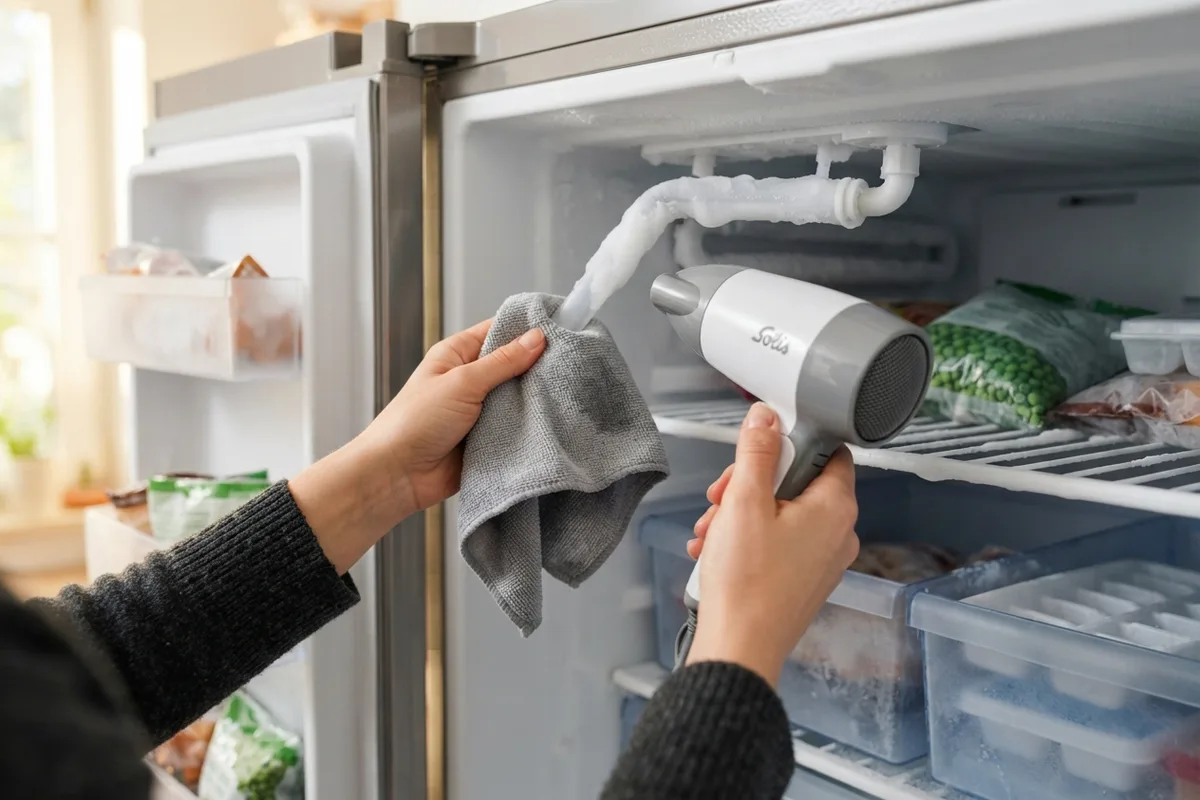
A small water fill tube extends from the back of the freezer wall into the ice mold tray. If water pressure drops slightly or freezer temperatures fluctuate, water can freeze inside this spout, blocking fresh water from entering the mold.
- Unplug the refrigerator from the wall outlet for safety.
- Locate the small chute or spout that dispenses water into the ice tray.
- Look for visible ice blockages inside or around the end of the tube.
- Use a hairdryer on a low heat setting to direct warm air toward the fill tube until all trapped ice melts into a towel held underneath.
- Alternatively, soak a soft cloth in warm water and press it against the frozen spout until clear.
If your freezer frequently develops severe frost around components, explore our guide on why your refrigerator is frosting up to address underlying air leaks or gasket seal failures.
Replace a Clogged or Old Water Filter
Most modern refrigerators feature built-in water filtration systems designed to remove sediment and chlorine. Over time, accumulated minerals restrict water flow to both the water dispenser and the ice maker.
- Locate your refrigerator filter housing, usually inside the fresh food compartment or at the bottom toe-kick grille.
- Check the installation date. Filters should generally be replaced every six months, or sooner if household water usage is high.
- Twist the old filter counterclockwise or press the release button to remove it.
- Install a new compatible water filter, making sure it twists firmly into place to open the internal bypass valve.
- Flush two gallons of water through the door dispenser to purge air pockets from the new filter system.
If the water flow rate improves at the door dispenser after replacing the filter, your ice maker should resume filling within a few hours.
Clear Ice Jams in the Mold Assembly
Sometimes an ice maker successfully freezes water, but the ejected cubes become jammed in the mold assembly or caught on the stripper blades.
- Unplug the unit to prevent the motor from cycling while your hands are inside the module.
- Inspect the metal or plastic ejector arm teeth that push ice out of the crescent mold.
- Look for misshapen or partially melted ice cubes stuck between the ejection fingers.
- Pour warm (not boiling) water directly over the mold tray to melt the obstruction gently.
- Avoid using sharp tools, knives, or metal picks to chip away ice, as these will scratch the non-stick coating on the mold tray and cause permanent sticking.
Reset the Internal Ice Maker Module
Electronic ice makers occasionally experience software or cycle stalls that require a manual control board reset.
- Remove the front plastic cover plate from the ice maker module to expose the internal gears and circuit board.
- Look for a tiny reset button or a small pinhole labeled 'RESET' on the bottom or side of the module.
- Press and hold the reset button for 3 to 5 seconds until you hear the motor hum or see the ejection arm start to rotate.
- On models without a physical button, locate the 'T' and 'H' test holes on the module faceplate. Unplug the unit, insert an insulated jumper wire briefly between T and H, plug the unit back in, and remove the wire to initiate a test cycle.
- Reinstall the plastic cover and allow the machine to complete a full cycle automatically.
Quick Troubleshooting Reference Guide
| Issue Observed | Common Root Cause | Quick DIY Action |
|---|---|---|
| No motor noise, no ice | Power switch OFF or control arm UP | Lower control arm, toggle power switch to ON |
| Small, hollow, or misshapen ice | Low water pressure or clogged filter | Replace water filter, check home shutoff valve |
| Loud humming noise, no ice | Frozen water fill tube | Thaw fill tube gently with hairdryer or warm cloth |
| Ice mold full, won't eject | Failed mold heater or jammed ejector | Clear jams with warm water; reset module |
| Bad taste or odor in ice | Old water filter or stale ice | Purge old ice, clean bin, replace water filter |
When to Call a Pro
While simple physical blocks and filter issues are easily handled at home, certain technical failures require professional diagnostic tools. If you have verified adequate water pressure, cleared all line freezes, and reset the module without success, the issue may involve a faulty water inlet solenoid valve, an open circuit in the mold heating element, or a failed optic board.
Replacing water inlet valves or diagnosing underlying electrical faults requires multimeter testing and working with live electrical connections. Furthermore, if your freezer is failing to reach proper operating temperatures (below 10°F / -12°C), the issue may involve sealed-system refrigerant leaks or compressor failure. Always stop and call a technician for complex electrical panel work or sealed refrigerant system maintenance.
Typical component repairs for ice maker assemblies generally range between $120 and $350, depending on your geographic area and refrigerator brand. If basic troubleshooting does not fix the issue, True Appliance Repair can match you with a local appliance pro to diagnose the issue quickly.
FAQ
How long does it take for an ice maker to start making ice after a reset?
After completing a manual reset or clearing a clog, it typically takes 2 to 4 hours for the freezer to drop back down to proper operating temperature and initiate its first ice production cycle. Full bin restoration usually takes 24 hours.
Why is my ice maker making small or hollow ice cubes?
Small or hollow ice cubes are a classic sign of restricted water flow. This is most commonly caused by an aged, clogged water filter, a partially closed water supply valve, low home water pressure, or partial ice buildup inside the fill tube spout.
Can I pour water directly into the ice maker tray to test it?
Yes, pouring a small cup of water directly into the empty mold tray can help isolate the issue. If the machine freezes the water and ejects the cubes hours later, your issue lies within the water supply system (line, filter, or inlet valve) rather than the motor module itself.
What temperature should my freezer be set to for proper ice production?
An ice maker operates most efficiently when the freezer compartment is kept between 0°F and 5°F (-18°C to -15°C). If your freezer temperature rises above 10°F (-12°C), the thermostat inside the ice maker will not allow the water valve to cycle.