
Reaching for the milk on the top shelf only to find it lukewarm—while lettuce in the bottom crisper is practically frozen—is one of the most frustrating kitchen mysteries. Because cold air enters and circulates through specific channels in modern refrigerators, an uneven temperature almost always points to an airflow bottleneck rather than a dead compressor. Follow these six practical troubleshooting steps to restore steady, even cooling from top to bottom.
Safety First: Before inspecting internal fans, removing vent covers, or cleaning electrical components, always unplug your refrigerator from the wall outlet or flip the dedicated circuit breaker off. If your fridge has an ice maker or water dispenser, turn off the shutoff valve on the water supply line before pulling the unit away from the wall.
1. Clear Blocked Air Vents on the Top Shelf
With holiday grocery hauls and large meal-prep containers filling the fridge, the simplest culprit is often right in front of you. Cold air is pushed from the freezer into the fresh food compartment through small louvered vents usually located along the upper back wall or ceiling of the fridge. If tall milk jugs, casserole dishes, or foil-wrapped pans sit flush against these vents, cold air cannot circulate across the top shelf and instead drops straight to the bottom.
- Open the refrigerator door and locate the air intake and supply vents along the upper rear wall and side panels.
- Move tall bottles, beverage cartons, and bulky leftovers at least two to three inches away from every vent opening.
- Leave a one-inch gap between items on the top shelf and the rear wall so air can loop freely from the ceiling down to the return vents near the bottom drawers.
- Place an inexpensive appliance thermometer in a glass of water on the top shelf and check it after four hours to see if the temperature drops into the safe 35°F to 38°F range.
2. Unstick a Frozen or Faulty Air Damper
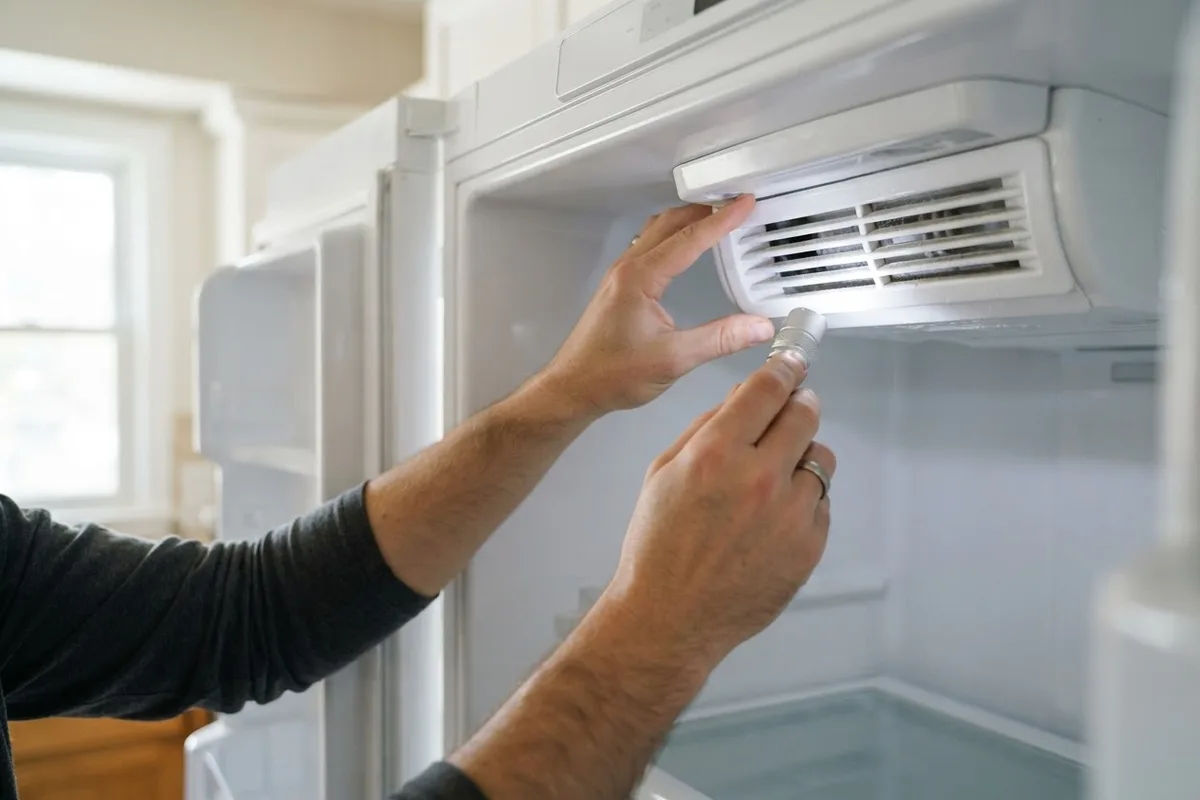
In most top-freezer, bottom-freezer, and side-by-side models, a small motorized door called an air damper (or baffle) sits inside the upper vent housing. It opens and closes automatically to regulate how much icy air flows from the freezer into the top of the refrigerator. If frost builds up around the damper flap or its tiny motor fails in the closed position, the top shelf starves for cold air.
- Unplug the refrigerator and remove food from the top shelf to gain clear access to the upper control or vent housing.
- Shine a flashlight through the vent slots to see if ice, frost, or food debris is jamming the plastic flap inside.
- If you see frost, leave the fridge unplugged with the door open for an hour, or use a hair dryer on the low setting held at least eight inches away to gently melt the ice—never use sharp tools or high heat that can warp the plastic liner.
- Once thawed, plug the unit back in and adjust the fridge temperature dial to its coldest setting while listening for a soft whirring sound as the damper door opens.
- If the flap does not move at all or makes a repetitive clicking sound, the damper control assembly is worn out and will need to be replaced.
3. Test the Evaporator Fan in the Freezer
Your refrigerator relies on the evaporator fan—tucked behind the back panel of the freezer compartment—to push cold air up through the ductwork and out across the top fridge shelf. If this fan slows down, gets iced over, or stops spinning altogether, heavy cold air naturally sinks to the lowest part of the cabinet, leaving the upper shelves noticeably warm.
- With the refrigerator plugged in, open the freezer door and listen closely for the steady hum of the circulation fan.
- Many refrigerators pause the fan whenever a door is open; press and hold the door light switch (or place a small magnet over the magnetic reed switch on French door models) for 10 seconds.
- Place your hand in front of the upper air vent inside the refrigerator while holding the switch—you should feel a steady, cool breeze within a few seconds.
- If the breeze is weak or silent, unplug the refrigerator, empty the freezer, and remove the rear access panel to check if frost is trapping the fan blades.
- Spin the fan blade by hand; if it feels stiff, wobbles, or does not spin freely after defrosting, the evaporator fan motor needs replacement.
If frost buildup in the upper ice compartment is also blocking airflow on a French door model, follow our guide on how to clean a refrigerator ice maker to clear out jammed ice chutes and frost pockets safely.
4. Clean the Upper Door Gasket and Check Alignment
Warm kitchen air rises, which means the very top edge of your refrigerator door seal does the hardest work keeping heat out. Over time, spilled syrup, kitchen grease, or a slightly sagging door hinge can create a tiny gap along the top corner of the gasket. Warm room air seeps straight onto the top shelf, raising temperatures there first while the rest of the fridge stays cool.
- Inspect the rubber gasket along the entire top edge and upper corners of the refrigerator door for cracks, warping, or sticky residue.
- Wash the rubber folds thoroughly with a soft cloth dipped in warm water and a few drops of mild dish soap, then wipe completely dry.
- Perform the dollar-bill test: close the door on a crisp dollar bill along the top edge and upper hinge side, then pull it out.
- If the bill slides out with zero resistance, apply a thin coat of food-grade petroleum jelly along the inner hinge edge of the gasket to help the rubber grip the cabinet.
- Check whether the top of the door sits level with the cabinet; if it sags on the handle side, tighten the upper hinge screws with a socket wrench or adjust the front leveling legs.
5. Vacuum Dusty Condenser Coils Underneath
When condenser coils are coated in pet hair and kitchen dust, the refrigerator struggles to release heat into the room. During shorter cooling cycles, the system may only generate enough cold air to chill the bottom half of the cabinet before shutting off, leaving the top shelf hovering above 42°F. Keeping water and ice pathways clean is equally important for steady cooling—you can also learn how to clean a refrigerator water dispenser while you have your cleaning tools out.
- Unplug the refrigerator from the wall outlet and unsnap the plastic toe-kick grille at the bottom front, or pull the unit carefully away from the wall if your coils are mounted on the back.
- Use a long, flexible condenser coil brush to gently sweep dust and pet hair out from between the metal loops.
- Vacuum up all loosened debris with a crevice attachment, taking care not to bend the thin metal fins.
- Check the condenser fan located right next to the coils under the fridge to make sure no dust bunnies or plastic wrappers are tangling the blades.
- Snap the grille back into place, leave at least two inches of breathing room behind the fridge, and plug it back in.
6. Check the Upper Temperature Sensor (Thermistor)
Modern digital refrigerators use small electronic sensors called thermistors to read the air temperature in different zones. Often, a primary thermistor is clipped to the upper wall near the top shelf. If this sensor drifts out of calibration and falsely tells the main control board that the top shelf is already 36°F when it is actually 46°F, the fridge will stop sending cold air up top.
- Unplug the refrigerator and locate the small plastic bulge or clipped capsule on the upper wall of the fresh food section.
- Check that no frozen items or cold gel packs were pressed directly against the sensor housing, which can trick the sensor into shutting off cooling early.
- Remove the sensor cover carefully with a screwdriver and inspect the wire harness plug for moisture, corrosion, or loose pins.
- If you are comfortable using a digital multimeter, place the sensor tip in a cup of crushed ice and water (32°F) and measure its resistance in ohms against the chart in your model's tech sheet.
- If the resistance reading is way off specification or shows an open circuit, swap in a replacement OEM thermistor for your exact model number.
Quick-Reference Troubleshooting Guide: Warm Refrigerator Top Shelf
| Symptom You Notice | Most Likely Cause | Typical DIY or Part Cost* | Difficulty |
|---|---|---|---|
| Top shelf warm, bottom drawers freezing food | Blocked upper vents or stuck air damper | $0 – $110 for a damper assembly | Easy to Moderate |
| No breeze from upper vents when door switch is held | Iced-over or failed evaporator fan motor | $40 – $130 for a fan motor | Moderate |
| Condensation or water droplets on top shelf ceiling | Gap in upper door gasket or sagging door hinge | $0 – $120 for a replacement gasket | Easy |
| Fridge runs constantly, top shelf stays above 42°F | Dirty condenser coils or faulty upper thermistor | $15 – $70 for brush or thermistor | Easy to Moderate |
| Both freezer and top shelf are warming up together | Sealed-system refrigerant issue or compressor fault | $300 – $800+ (Pro repair required) | Pro Only |
Note: Prices reflect broad typical US ranges for parts or professional service and vary by area, brand, and model.
When to Call a Pro
Most airflow blockages, dirty gaskets, and stuck dampers take less than an hour to resolve with basic household tools. However, you should stop DIY work and call a professional technician if you notice any of the following:
- Both the freezer and the entire refrigerator compartment are warming up even though the fans are spinning.
- You see an uneven patch of frost on just one small section of the rear evaporator coils (a classic sign of a sealed-system refrigerant leak or weak compressor).
- The main electronic control board shows burn marks, or the breaker trips repeatedly.
Sealed-system repairs, refrigerant recharging, and high-voltage board diagnostics require specialized gauges and recovery equipment. If your troubleshooting points to a deeper cooling issue, True Appliance Repair can connect you with a local pro for dependable refrigerator repair. You can also reach out through our contact page to get matched with an independent technician in your neighborhood.
FAQ
Why is the top shelf of my fridge warmer than the bottom?
Cold air is denser than warm air, so it naturally sinks toward the bottom crisper drawers while warm air rises to the ceiling every time you open the door. If the upper air supply vents are blocked by tall containers, or if the evaporator fan and damper aren't pushing enough chilled air across the top, heat pockets quickly form on the upper shelf.
What temperature should the top shelf of a refrigerator be?
Every shelf in your refrigerator—including the top shelf—should stay between 35°F and 38°F (1.7°C to 3.3°C). Anything above 40°F enters the food safety danger zone, where milk, deli meats, and leftovers spoil rapidly and bacteria can multiply.
How long does it take for the top shelf to cool down after fixing airflow?
Once you clear blocked vents, defrost a stuck damper, or clean the condenser coils, you should feel cool air returning from the upper vents within 15 to 30 minutes. However, it typically takes 4 to 12 hours for the liquid temperatures inside milk jugs and containers on the top shelf to stabilize back down to 37°F.
Can overpacking a refrigerator make the top shelf warm?
Yes, overpacking is the single most common reason a refrigerator cools unevenly. While a reasonably full fridge holds its temperature well, cramming containers against the back wall and top ceiling vents cuts off the circulation loop that keeps the upper shelves cold.