
Walking into the kitchen to find a warm fridge and a dark interior light is every homeowner's nightmare, especially when you are stocking up on groceries for the fall and holiday cooking season. When your refrigerator keeps tripping the circuit breaker, it means the electrical circuit is drawing more current than it can safely handle or detecting a brief electrical fault. Before your food spoils, walk through these five safe, practical checks to identify whether the problem is the outlet, a dirty component, or an internal part.
Safety First: Before inspecting cords, rear panels, or components, always unplug the refrigerator from the wall outlet and make sure the circuit breaker is switched to the OFF position. Never open your home's main electrical panel cover, work near standing water, or attempt to cut into sealed refrigerant lines.
1. Check for an Overloaded Kitchen Circuit
Modern refrigerators need a dedicated 15-amp or 20-amp circuit because the compressor draws a brief surge of power every time it kicks on. If your fridge shares a circuit with a microwave, coffee maker, toaster oven, or air fryer, running those small appliances at the same time will easily push the circuit past its limit and trip the breaker.
- Go to your breaker box, find the tripped switch (usually sitting midway between ON and OFF), flip it firmly to OFF, and then flip it back to ON.
- Walk through the kitchen and see what other outlets or lights turn on and off with that same breaker.
- Unplug any high-wattage countertop appliances sharing that circuit and move them to a different wall circuit across the room.
- Never plug a refrigerator into an extension cord or surge strip, as these can overheat and cause voltage drops that make the compressor draw excess amps.
2. Test for a Sensitive GFCI Outlet Trip
Many newer kitchens and garages have Ground Fault Circuit Interrupter (GFCI) outlets installed to protect against electrical shock near water sources. However, electric motors inside refrigerators naturally create tiny, harmless electrical fluctuations when starting up or switching out of the defrost cycle, which can cause an older or overly sensitive GFCI outlet to nuisance-trip.
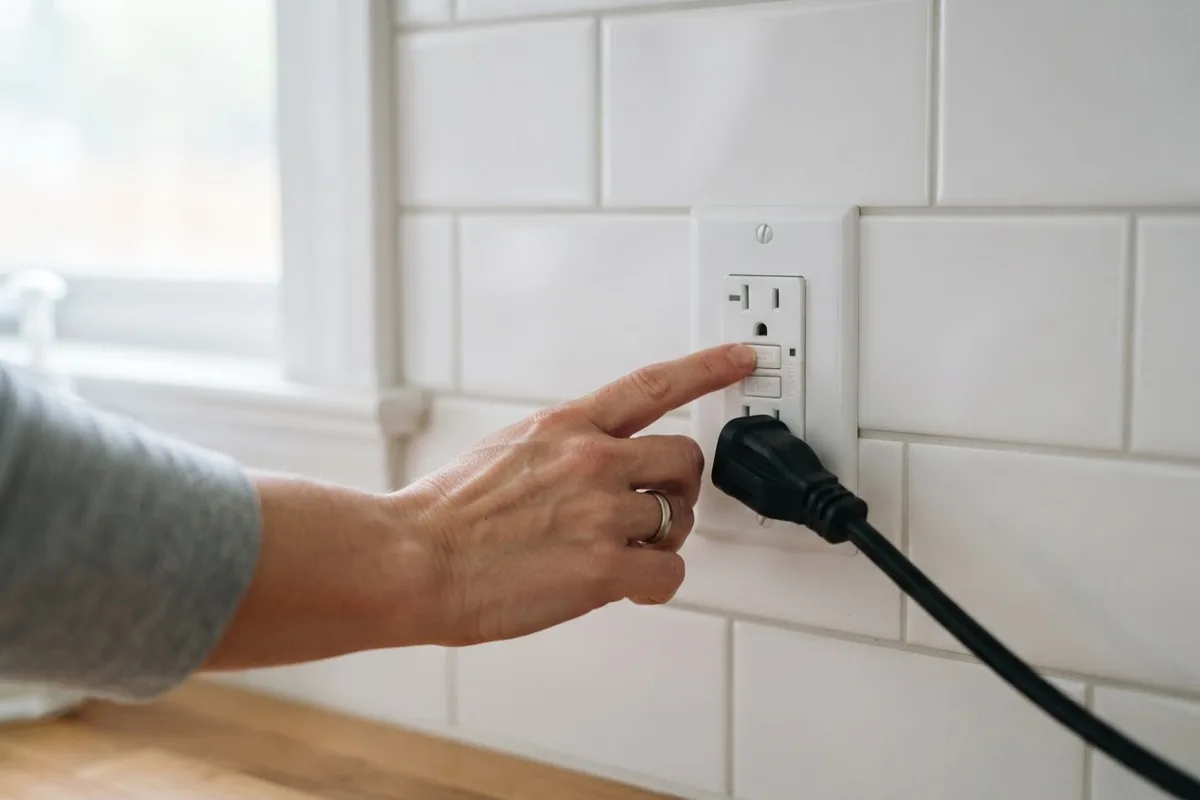
- Inspect the outlet behind the fridge (or the upstream GFCI outlet on the same wall) to see if it has "TEST" and "RESET" buttons.
- Press the "RESET" button firmly until it clicks and stays in.
- Check the refrigerator power cord and plug prongs for any dark burn marks, melted plastic, or bent prongs while you have the unit pulled out.
- If the GFCI outlet feels loose, warm to the touch, or refuses to stay reset with nothing plugged in, stop using it and have an electrician replace the worn receptacle.
3. Clean Overheated Condenser Coils and Fan
When the condenser coils underneath or behind your fridge are blanketed in pet hair, dust, and kitchen grease, the refrigerant cannot release heat efficiently. This forces the compressor to run hotter and longer, drawing higher amperage until the breaker finally trips to prevent overheating. While you are cleaning and organizing the kitchen, it is also smart to check for a stuck refrigerator drawer or a torn refrigerator door gasket that might be letting warm room air sneak inside.
- Unplug the refrigerator from the wall outlet and pull it gently away from the wall.
- Snap off the lower front toe-kick grille or unscrew the thin cardboard access panel at the bottom rear of the cabinet.
- Use a long-bristled coil brush and a vacuum hose attachment to gently clear away all lint and dust bunnies from the black coils.
- Spin the condenser fan blade right next to the coils by hand to ensure it turns freely without hitting stray debris or wires, then plug the fridge back in.
4. Inspect the Start Relay and Capacitor
If the breaker trips within five to ten seconds of plugging the refrigerator in—often accompanied by a loud click or brief buzz from the bottom back of the unit—the compressor start relay is a prime suspect. When this small plastic device fails or develops burnt internal contacts, the compressor motor stalls on startup and pulls a massive spike of electricity known as "locked rotor amps."
- Unplug the refrigerator and remove the lower rear access panel.
- Locate the small plastic box clipped to the side of the black dome-shaped compressor, and release the retaining bail wire or clip.
- Pull the start relay straight off the three metal compressor pins and disconnect the wire harness.
- Shake the relay lightly and sniff it; if it smells like burnt electronics or rattles like a pill bottle (broken internal disc), replace it with an exact OEM part for your model.
- Inspect the pins on the compressor itself—if the metal pins are scorched or burnt, stop immediately and call a technician.
5. Diagnose a Shorted Defrost Heater Assembly
Does your refrigerator run fine for six to twelve hours and then suddenly trip the breaker? That timing points directly to the automatic defrost system. Two or three times a day, a timer or control board switches off the cooling fan and sends power to a heating element inside the freezer wall to melt frost off the evaporator coils. If the heater wire coating cracks or touches the metal coil fins, it creates a direct electrical short to ground the moment the defrost cycle begins.
- Unplug the refrigerator and empty the contents of the freezer compartment into a cooler.
- Remove the freezer shelves, ice bin, and the screws holding the rear interior freezer panel in place.
- Carefully lift away the rear panel to expose the aluminum evaporator coils and the glass or calrod defrost heating element mounted along the bottom.
- Look closely at the heater rod and its wire leads for blistered casing, shattered glass, charred marks, or loose wires rubbing against sharp metal fins.
- If you have a digital multimeter, disconnect the heater leads and test for continuity between each terminal and the bare metal casing—any reading other than infinite resistance means the element is shorted to ground and must be replaced.
Quick Troubleshooting Guide: When Does the Breaker Trip?
| When the Breaker Trips | Most Likely Cause | Typical DIY vs. Pro Path | Typical Repair Cost Range* |
|---|---|---|---|
| Only when toaster or microwave runs | Overloaded shared circuit | DIY: Move small appliances to another circuit | $0 (or $150–$400 for a new circuit) |
| Randomly during damp weather | Sensitive or worn GFCI outlet | Pro: Have an electrician inspect the outlet | $100–$250 |
| After running non-stop on warm days | Dirty condenser coils or bad fan | DIY: Vacuum coils and clear fan blade | $0–$180 |
| Within 10 seconds of plugging in | Bad start relay or shorted compressor | DIY relay swap; Pro for compressor | $120–$300 (relay) / $600–$1,200+ (compressor) |
| Every 8 to 12 hours like clockwork | Shorted defrost heater or wiring | Advanced DIY or Pro appliance technician | $180–$350 |
Note: Prices are broad US estimates for parts and labor and vary by local area, appliance brand, and model.
When to Call a Pro
While moving countertop appliances, vacuuming condenser coils, and checking a plug are safe tasks for any homeowner, electrical shorts and compressor failures require professional diagnostic equipment. If your circuit breaker feels hot to the touch, smells like burning plastic, or sparks when you flip it, leave it in the OFF position and contact an electrician right away. Similarly, if the compressor windings are shorted to ground—meaning the fridge trips the breaker even with a brand-new start relay installed—replacing a compressor involves hazardous refrigerants and specialized brazing tools that are strictly not DIY.
If you want to get your kitchen running smoothly before your groceries thaw, True Appliance Repair can connect you with an independent local specialist for refrigerator repair. You can also reach out through our appliance repair service page to arrange a convenient diagnostic visit in your area.
FAQ
Can I run my refrigerator on a heavy-duty extension cord temporarily?
If the dedicated outlet behind your fridge is dead, you can briefly use a short, heavy-duty 12-gauge appliance extension cord plugged into a separate circuit for a few hours while waiting for a repair to keep food cold. Never use a standard household lamp cord or leave an extension cord running behind the fridge permanently, as the constant current draw can melt the cord jacket and create a fire hazard.
Why did my refrigerator suddenly start tripping the GFCI outlet after years of working fine?
GFCI outlets contain internal sensing electronics that wear down over time, especially if they have tripped several times in the past. In addition, as a refrigerator's compressor motor, fan motors, and defrost heater age, they can develop tiny amounts of normal electrical leakage through their insulation that is harmless to humans but just high enough to trip a sensitive 5-milliamp GFCI sensor.
How long will food stay safe in my refrigerator while the breaker is off?
According to food safety guidelines, a full refrigerator will keep food safely below 40°F for about 4 hours as long as you keep the doors closed. A full freezer compartment will hold its temperature for roughly 48 hours (or 24 hours if half-full) if left unopened. If the troubleshooting takes longer than a few hours, transfer milk, meat, and dairy into an insulated cooler packed with ice.
How do I tell if the compressor itself is shorted vs. just the start relay?
Once the refrigerator is unplugged and the start relay is removed from the side of the compressor, a technician uses a multimeter set to ohms to test between each of the three brass compressor pins and the bare copper ground tube. If there is electrical continuity between any pin and the metal shell of the compressor, the internal motor windings have shorted to the casing and the compressor must be replaced.