
Turning on a burner to start dinner only to see wisps of gray smoke rising from the cooktop is alarming. In most cases, a smoking stove burner is caused by hidden food residue or trapped grease rather than an electrical fire, and you can resolve it in under an hour with basic household cleaners. Before touching any burner components, turn all knobs to the off position, unplug the range or switch off its circuit breaker, and make sure the surface is completely cool.
1. Burn Off or Scrub Spilled Grease on the Element
The most common culprit behind a smoking electric coil or gas grate is cooking oil, butter, or sugary sauce that dripped during your last meal. Even a thin, nearly invisible film of oil will smoke heavily the next time the element heats up.
- Wait until the burner is completely cool and disconnect power to the stove.
- For electric coil stoves, gently lift the burner slightly and pull it straight out from its receptacle socket.
- Wipe the coil down with a damp microfiber cloth dipped in warm water and a few drops of degreasing dish soap. Keep the two metal prongs dry so moisture does not enter the electrical connection.
- For stubborn baked-on crust, mix baking soda and water into a thick paste, coat the soiled spot on the coil or gas grate, wait 15 minutes, and scrub gently with a non-abrasive nylon pad.
- Rinse with a clean damp cloth, dry thoroughly for at least 30 minutes, and snap the coil back into place.
2. Clean Hidden Drip Pans and Underneath the Cooktop
If the burner itself looks spotless, smoke is likely rising from underneath it. Boil-overs from pasta water, soup, or bacon grease easily slip past electric drip pans or beneath sealed gas burner caps, pooling in the recessed burner box below.
- Remove the cool burner coils, grates, and metal drip bowls.
- Soak metal drip bowls in hot soapy water mixed with a quarter-cup of white vinegar for 20 minutes, then scrub away blackened grease rings. If the bowls are severely rusted or pitted, replacing them costs around $15 to $30 for a full set (varies by model).
- On older coil or gas ranges, lift the hinged main cooktop lid just like a car hood to expose the recessed sub-top.
- Scrape up hardened food spills with a plastic putty knife and wipe the metal pan clean with a degreaser.
- Dry all surfaces completely before lowering the cooktop lid and reassembling the burners.
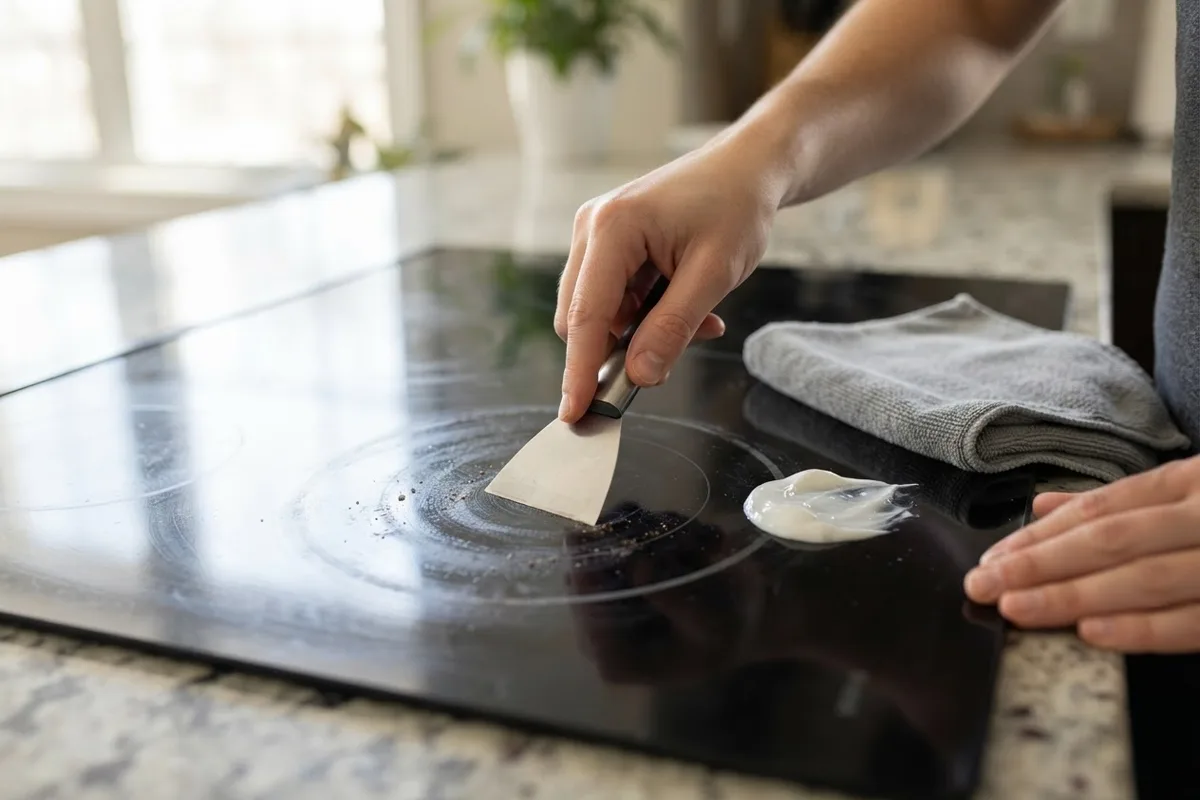
3. Remove Melted Plastic or Cleaner Residue on Glass Tops
Radiant glass-ceramic cooktops trap thin layers of daily kitchen spray, microfiber lint, or microscopic plastic smears from bread bags. When the radiant element underneath reaches several hundred degrees, those residues char and release acrid smoke.
- Make sure the glass surface is cool and the hot-surface indicator light is off.
- Spray the smoking burner zone generously with distilled white vinegar and wipe it down with a clean paper towel to strip away chemical cleaner buildup.
- Apply a quarter-sized dab of dedicated ceramic cooktop cream to the burner circle and buff in firm circles using a non-scratch cleaning pad.
- Hold a single-edge razor blade scraper at a 30-degree angle and gently shave off any burnt food specs or thin plastic film without gouging the glass.
- Buff the glass completely dry with a fresh cloth so no cleaner residue remains to smoke on the next heat cycle.
4. Inspect the Electric Burner Socket for Scorched Prongs
When smoke smells sharply like melting plastic, ozone, or hot wiring rather than burnt food, the problem is usually a loose connection inside the terminal block receptacle. Over years of removing coils for cleaning, the metal clip contacts inside the socket wear out, creating electrical resistance and heat.
- Turn off the stove circuit breaker at your home electrical panel before inspecting any wiring components.
- Pull the suspect coil burner out of its socket and inspect the two metal prongs at the end.
- Look for black pitting, melted metal, or flaky gray buildup on the prongs, and shine a flashlight into the ceramic or plastic socket to check for charred edges or brittle plastic.
- If either the burner prongs or the socket interior show burn marks, stop using that burner immediately.
- Replacing a worn burner receptacle kit or coil element typically runs $20 to $65 in parts (varies by model), or you can schedule professional oven and stove repair if the internal harness wiring is damaged.
5. Clear Clogged Gas Burner Ports and Food Debris
On a gas stove, smoke accompanied by lazy, yellow-tipped flames or a foul odor indicates incomplete combustion or grease trapped inside the burner head. If you ever smell raw gas rather than burnt grease, check our guide on why a gas oven smells like gas and shut off the gas supply valve right away.
- Turn off the stove and lift off the cast-iron grate, ceramic burner cap, and aluminum burner head.
- Wash the cap and burner head in warm, soapy water using an old toothbrush to scrub out grease packed into the flame slots.
- Use a straightened metal paperclip or a sewing needle to poke through every tiny flame port around the perimeter of the burner head—never use a wooden toothpick, which can snap off inside the port.
- Wipe the area around the delicate ceramic igniter electrode with a dry cloth, taking care not to bend or crack it.
- Let the parts air-dry completely before placing the head and cap flat on the base; a crooked cap will cause uneven flames and scorching.
Quick-Reference Guide: Stove Burner Smoke Causes
| Smoke Color & Odor | Burner Type | Most Likely Cause | Typical DIY or Repair Cost |
|---|---|---|---|
| White/gray smoke, smells like oil or toast | Electric coil, gas, or glass | Food spill on element or drip pan | $0 – $25 for cleaner or new drip pans |
| Thin hazy smoke, chemical smell | Smooth glass cooktop | Leftover spray cleaner or thin plastic film | $0 – $12 for cooktop scraper and cream |
| Sharp acrid smoke, smells like burnt plastic | Electric coil range | Loose or arcing burner receptacle socket | $25 – $180 (varies by area/model) |
| Dark sooty smoke with yellow flames | Gas range or cooktop | Clogged burner ports or misaligned cap | $0 for cleaning; $80 – $200 if valve needs pro service |
| Smoke from rear control panel | Electric or gas range | Shorted infinite switch or control board | $150 – $350 for professional replacement |
When to Call a Pro
While burnt food and dirty drip pans are easy Saturday-morning cleanups, electrical and gas supply problems require trained hands. Stop using your stove and disconnect power at the breaker box if you notice any of these warning signs:
- Smoke is pouring out of the rear control panel, knobs, or digital display rather than the burner surface.
- You hear buzzing, popping, or see sparks coming from underneath a glass cooktop or inside a coil socket.
- A burner glows bright red and refuses to turn down or shut off (which points to a fused infinite control switch).
- If your entire range is overheating on the exterior, see our troubleshooting steps for why an oven door gets hot to the touch.
When the problem goes beyond surface cleaning into internal wiring, switches, or gas valves, True Appliance Repair can match you with a local appliance pro. You can easily book local appliance repair service to have a technician safely test your switches and replace damaged wiring.
FAQ
Is it normal for a brand-new stove burner to smoke?
Yes, a brand-new electric coil, glass cooktop, or replacement burner element will often smoke slightly during its first 10 to 15 minutes of high heat. Manufacturers coat new heating elements with a thin protective oil to prevent rust during shipping. Turn on your kitchen exhaust fan, open a window, and run the new burner on medium-high for 15 minutes to burn off the factory coating.
Why is my electric stove burner smoking when it is turned off?
If a burner smokes while the knob is switched off, one of two things is happening: either residual heat is still cooking a fresh spill on the element, or the internal infinite switch has shorted closed and is still sending voltage to the burner. Flip the range circuit breaker off immediately at your main panel and have a technician inspect the switch.
Can I still cook on a stove burner that is smoking?
If you are certain the smoke is just a tiny drop of olive oil or water burning off the surface, it will usually clear up within two or three minutes. However, if the smoke is thick, smells like melting plastic or electrical insulation, or comes from underneath the cooktop or behind the knobs, turn the burner off immediately and do not cook on it until the cause is fixed.
How much does it cost to fix a smoking stove burner?
If the smoke is caused by a burned-out electric coil and scorched terminal block receptacle, replacement parts typically cost $25 to $65 if you install them yourself, or $130 to $250 with professional labor (varies by area and stove model). Replacing a faulty infinite burner switch behind the knob generally ranges from $150 to $300 including parts and labor.