
Hearing your washing machine hit the spin cycle only to watch murky, soapy water bubble up into your laundry sink, kitchen basin, or bathtub is every homeowner's headache. When a high-efficiency pump pushes out 15 to 20 gallons of water per minute, even a partial restriction in your household plumbing forces that water to take the path of least resistance—straight up the nearest open drain. Before you spend hundreds on a plumber or appliance technician, work through these six practical DIY fixes to clear the blockage and keep wash day where it belongs.
Safety First: Before inspecting hoses, moving your machine, or working around standing water, unplug your washing machine from the wall outlet and turn off both the hot and cold water supply valves behind the unit.
1. Clear the Utility Sink Trap and Strainer
If your washing machine discharges directly into a utility tub—or shares a branch line immediately underneath a laundry sink—the bottleneck is often right beneath the basin. Lint, hair, and hardened detergent sludge collect inside the curved P-trap, slowing drainage until the sink overflows during a fast spin cycle.
- Bail out as much standing water from the sink as possible and place a two-gallon bucket directly under the curved PVC or metal P-trap pipe below the basin.
- Unscrew the two slip nuts holding the curved trap section by hand or with channel-lock pliers wrapped in a cloth to avoid scratching the fittings.
- Dump the water and trapped sludge into the bucket, then use a stiff bottle brush and hot soapy water to scrub out compacted lint and soap scum.
- Shine a flashlight up into the sink tailpiece and into the wall pipe stub to spot any visible lint wads near the opening.
- Reassemble the P-trap, hand-tighten the slip nuts plus a quarter-turn with pliers, and run hot tap water for two minutes to confirm a leak-free seal.
2. Snake the Washer Standpipe Drain
Most modern laundry setups use a vertical two-inch pipe called a standpipe behind the washer. Over months of washing heavy towels, fleece, and pet bedding, wet lint binds with liquid fabric softener to coat the inside walls of the standpipe and its concealed P-trap.
- Pull the washing machine six to ten inches away from the wall after confirming the power cord is unplugged.
- Carefully lift the corrugated washer drain hose out of the vertical standpipe and secure it upright to the back of the machine with a zip tie or bungee cord so residual water does not spill onto the floor.
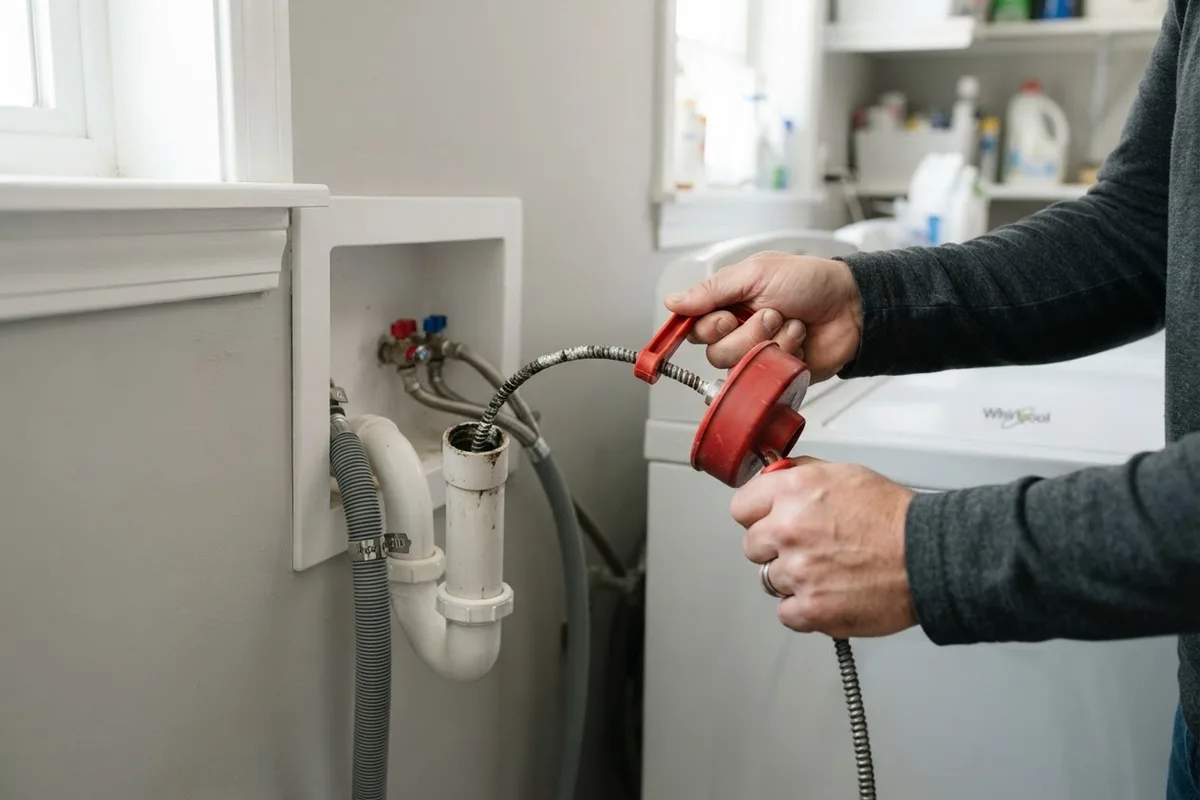
- Feed the tip of a manual 15-to-25-foot hand auger (drain snake) down into the open standpipe until you feel resistance at the curved trap or further down the branch line.
- Tighten the thumbscrew on the auger drum and rotate the handle clockwise while pushing gently forward to hook or break up the lint plug.
- Pull the cable back out cleanly into a bucket, wipe it down with an old rag, and repeat until the cable slides freely past the trouble spot.
- Flush the standpipe with two gallons of very hot water using a funnel to wash remaining debris down the main line.
3. Install a Lint Trap on a Direct Sink Hose
If your washer drains straight over the rim of a utility sink rather than into a wall standpipe, every single strand of lint shed by your laundry goes directly down the sink drain. Installing a simple mesh lint catcher stops the problem at the source and takes less than five minutes.
- Inspect the open end of the rubber or corrugated plastic discharge hose hooked over the side of your laundry tub.
- Wipe the exterior of the hose nozzle clean with a damp cloth.
- Slide a stainless-steel mesh washing machine lint trap sock over the end of the hose so the mouth of the hose sits two inches inside the mesh bag.
- Secure the mesh trap tightly above the hose ridge using a nylon zip tie or a stainless-steel worm-gear hose clamp so high water pressure cannot blow it off during a drain cycle.
- Replace the mesh sock every three to four weeks—or immediately when it fills halfway with lint—to maintain unrestricted water flow.
4. Dissolve Soap Scum Buildup in the Branch Line
Liquid laundry detergents and traditional fabric softeners contain animal fats and silicone oils that solidify in cool drainpipes. When your washer backs up into a nearby bathroom sink, shower, or kitchen sink, the shared two-inch horizontal branch pipe is often narrowed by greasy soap scale rather than a solid object. Avoid harsh chemical drain openers, which can overheat PVC pipes or damage septic systems.
- Wait until all standing water has slowly receded from the affected sink and standpipe.
- Pour one-half cup of baking soda followed by one cup of plain white distilled vinegar down both the affected sink drain and the washer standpipe.
- Let the mixture fizz and sit for 30 minutes to loosen the alkaline detergent biofilm coating the pipe walls.
- Heat a large stockpot of water until it is steaming hot—just below a rolling boil (around 170°F to 180°F is safe for PVC plumbing)—and slowly pour half down the sink and half down the standpipe.
- Going forward, apply an enzymatic drain cleaner monthly to digest organic residue before it hardens into a blockage.
5. Check the Drain Hose Insertion Depth and Air Gap
Sometimes the plumbing is mostly clear, or water backs up around the standpipe collar and into an adjacent utility sink because of an air-lock issue. If the washer drain hose is shoved too far down into the standpipe—or sealed airtight with duct tape—water cannot displace the air in the pipe fast enough, causing violent burping and backups.
- Measure how far the curved drain hose extends down into the vertical standpipe behind your washer.
- Adjust the hose so it sits no more than 4.5 to 6 inches inside the standpipe; pushing it deeper can reach the P-trap water line, causing siphoning and slow drainage.
- Remove any tape, rags, or airtight rubber bungs sealing the gap between the outer hose wall and the inner standpipe rim—your drain needs a slight air gap to breathe properly.
- Snap the plastic U-shaped hose guide (included with most washers) onto the hose and secure it to the standpipe or wall bracket with a zip tie so the hose stays at the exact 5-inch depth.
6. Clear a Blocked Plumbing Vent Stack
Every drain trap in your house relies on a vertical vent pipe—usually exiting through the roof—to equalize air pressure when large volumes of water rush down the line. In autumn and winter, falling leaves, bird nests, or frost can cap that vent, creating a vacuum that slows the washer drain and forces suds up into nearby fixtures.
- Listen closely to your sinks and toilets when the washer drains; loud gurgling or bubbling sounds from a bathroom across the hall point to a vent restriction or a deeper main-line clog.
- Inspect any under-sink Air Admittance Valve (AAV)—a small plastic dome vent often found under utility or island sinks—by unscrewing it to verify the internal rubber diaphragm isn't stuck shut with grime.
- If replacing a $15 to $25 unscrewable under-sink AAV solves the gurgling and backup, thread the new valve on with PTFE plumber's tape.
- Never climb onto a steep, wet, or icy roof to clear an overhead vent stack yourself; leave high roof access and main sewer augering to a properly equipped drainage technician.
Quick Troubleshooting Guide: Where Is the Backup Happening?
| Where Water Backs Up | Most Likely Culprit | Best First DIY Step |
|---|---|---|
| Utility sink right next to washer | Lint-packed sink P-trap or clogged strainer | Remove and scrub the sink P-trap; add a mesh hose lint sock |
| Washer standpipe & adjacent sink | Partial lint/soap clog 3–10 feet down the branch line | Snake the standpipe with a 25-foot hand auger |
| Kitchen sink on the same wall | Solidified grease + laundry soap scum in shared drain | Flush with hot water, baking soda, vinegar, and enzyme cleaner |
| Bathtub or toilet (lowest floor) | Main sewer line obstruction or tree root intrusion | Stop running water immediately and call a drain specialist |
When to Call a Pro
If you have snaked the standpipe 15 to 25 feet, cleaned the sink trap, and verified the hose height, yet water still backs up into low-lying bathtubs, floor drains, or toilets, the blockage sits deep in your home's main sewer line—or your older 1.5-inch galvanized pipes cannot handle the fast discharge rate of a modern washer. Likewise, if your washing machine itself is making unusual noises during the drain cycle—similar to when a dryer makes a popping noise or a dishwasher makes a grinding noise—the internal drain pump may have a damaged impeller or a coin lodged in the pump housing.
Professional drain cleaning typically costs between $150 and $350 depending on line access and region, while washer drain pump service generally ranges from $160 to $300 (varies by area and model). If your machine struggles to pump water out properly or leaves puddles behind, True Appliance Repair can connect you with an experienced local specialist for washer and dryer repair or you can reach out directly via our contact page.
FAQ
Why is my washing machine backing up into my kitchen sink?
In many older and ranch-style homes, the laundry standpipe and the kitchen sink share the same two-inch horizontal branch drain before connecting to the main four-inch waste stack. When kitchen cooking grease meets fibrous laundry lint at the junction, they form a stubborn plug that forces high-speed washer discharge water up into the kitchen basin.
Can I use liquid chemical drain cleaner in my washer standpipe?
It is best to avoid caustic chemical drain openers in laundry standpipes. If the chemical fails to clear the blockage completely, corrosive liquid can sit in the pipe or splash back when you use a drain snake, and harsh chemicals can degrade older metal pipes or rubber washer pump seals if poured into the machine.
Why did my new washing machine start backing up when my old one didn't?
Older top-load washers pumped water out at roughly 6 to 8 gallons per minute, which 1.5-inch plumbing pipes found in pre-1980s homes could easily handle. Modern high-efficiency front-load and top-load washers discharge water at 15 to 20 gallons per minute, requiring a clean 2-inch standpipe to prevent backups.
How often should I clean my laundry drain line?
If your washer discharges into a utility sink, replace the mesh lint trap on the hose every month. For wall standpipes, pouring a pot of very hot water and an enzymatic drain treatment down the standpipe every two to three months keeps soap scum and lint from hardening on the pipe walls.