
Opening your washing machine to find a heavy, dripping wet pile of clothes is frustrating. When the spin cycle fails, your clothes cannot properly drain or shed excess water, leaving laundry day stranded. While a non-spinning washer seems like a catastrophic failure, many common causes are surprisingly easy to identify and resolve yourself.
Safety Notice: Always unplug your washing machine from the electrical outlet and shut off the water supply lines before performing any hands-on inspection or repair.
Rebalance the Off-Center Laundry Load
An unbalanced load is the single most common reason modern washing machines refuse to spin. Modern front-load and top-load washers feature built-in balance sensors that detect excessive vibration. When heavy items—like bath towels, denim, or comforters—clump on one side of the wash drum, the machine automatically curtails the spin cycle to prevent structural damage.
To fix an unbalanced load, open the washer lid or door and redistribute the clothing evenly around the agitator or drum perimeter. If you are washing a single bulky item, add two or three heavy towels to balance the weight. Close the door and run a standalone "Drain & Spin" cycle. Avoid overloading the tub beyond three-quarters full, as overcrowded clothes cannot distribute weight properly during high-speed rotation.
Check and Clear the Drainage System
Washing machines operate on a safety sequence: the tub must drain completely before the control board allows high-speed spinning. If water remains trapped in the drum due to a clogged drain pump, kinked outlet hose, or blocked coin trap, the spin cycle will not initiate.
Inspect the drain hose at the back of the appliance to ensure it is not twisted, crushed, or pinched against the wall. Next, check the drain pump filter, usually located behind a small access panel near the bottom front of front-load washers. Place a towel and shallow pan on the floor, open the filter, and clean out lint, coins, buttons, or debris. If your appliance is still struggling with excess standing water, consult our guide on what to do when your washer not draining properly to clear hidden clogs in the plumbing line.
Inspect and Test the Lid Switch Assembly
Top-loading washers use a lid switch safety mechanism to confirm that the door is closed before enabling the motor to spin the tub. If the lid switch is cracked, misaligned, or electronically faulty, the washer may fill and agitate normally, but it will halt completely when it reaches the spin phase.
To test the lid switch, open the lid and depress the switch lever manually with your finger or a pen. Listen closely for a distinct clicking sound. If you hear no click, or if the drum fails to engage when closed, inspect the plastic strike on the lid to ensure it makes contact with the switch. You can test continuity across the switch terminals using a digital multimeter. Replace the switch assembly if it shows no electrical continuity when pressed down.
Examine the Drive Belt for Wear or Slippage
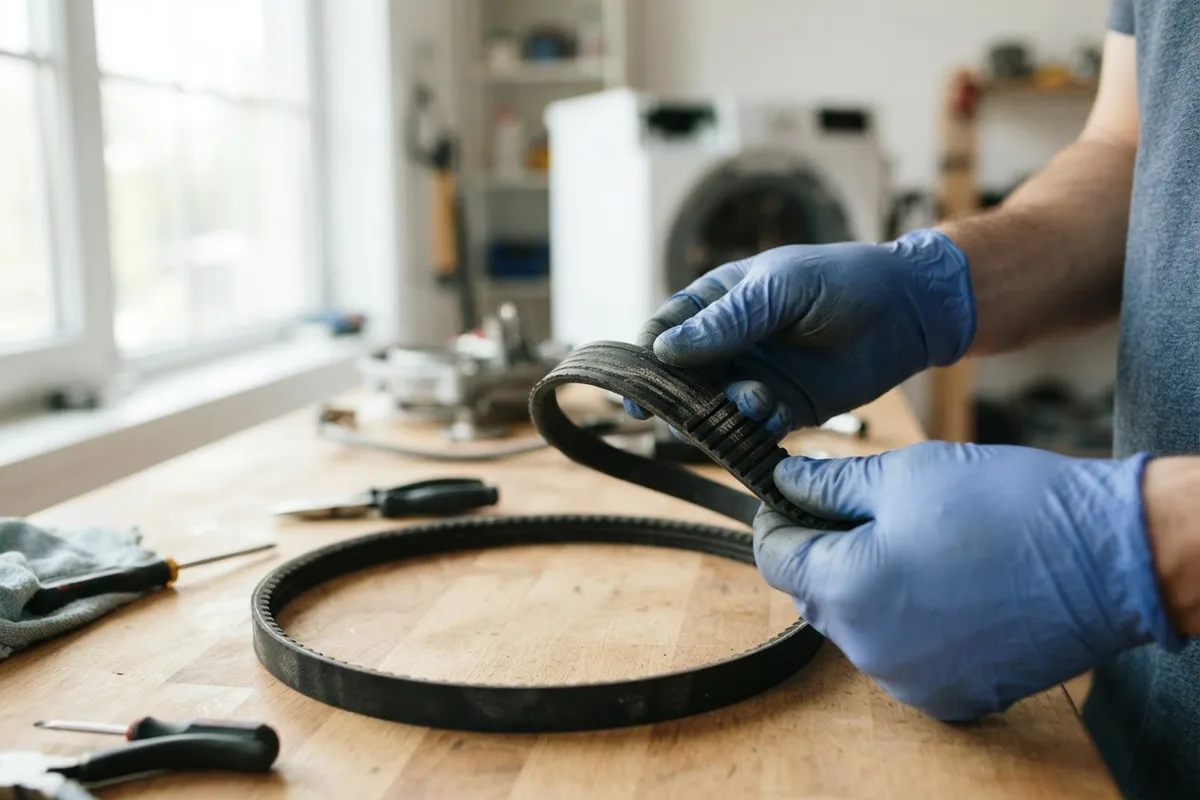
In belt-driven washing machines, a heavy rubber belt connects the drive motor to the tub pulley. Over years of regular laundering, this belt can stretch, slip out of alignment, or snap entirely. If the drive motor runs and hums during the spin cycle but the drum remains perfectly still, a worn drive belt is a prime suspect.
Unplug the machine and remove the rear access panel or main cabinet housing to inspect the belt. Look for obvious signs of wear, such as fraying, cracks, burnt spots, or slackness. A healthy belt should fit tightly around the motor pulley and drive wheel with minimal give. If the belt feels loose or shows physical damage, order a manufacturer-compatible replacement belt and loop it securely into position.
Reset the Washer Power and Control Board
Modern washers rely on electronic control boards that can occasionally suffer digital glitches due to power surges, abrupt interruptions, or sensor misreadings. A system freeze can cause the appliance to skip the spin program altogether or stop mid-cycle.
Performing a hard system reset often restores normal control board communication:
- Unplug the washing machine power cord from the wall socket.
- Leave the appliance completely disconnected for 5 to 10 minutes to allow electrical capacitors to discharge fully.
- Plug the machine back into the outlet.
- Open and close the washer lid 6 times within 12 seconds to signal a manual control reset on many popular top-load models.
- Start a test cycle with an empty tub to verify if the spin sequence executes correctly.
Inspect the Motor Coupling or Shift Actuator
Direct-drive washing machines do not use a belt; instead, they rely on a rubber and plastic motor coupling to transfer power from the motor to the transmission. On newer HE top-loaders, a shift actuator shifts the transmission mechanism between agitation mode and spin mode.
If the motor coupling wears out or splits, the motor will hum without spinning the basket. Similarly, a broken shift actuator prevents the machine from changing gears into high-speed rotation. Inspect these components under the tub assembly for broken plastic splines, loose wiring harnesses, or oil leaks. If physical drive components are damaged, replacing the shift actuator or coupling will re-engage the spin cycle.
Washer Spin Cycle Troubleshooting Quick Reference
| Issue / Symptom | Primary Cause | Recommended DIY Solution |
|---|---|---|
| Washer thumps loudly and stops spinning | Unbalanced clothing distribution | Pause cycle, manually redistribute heavy items evenly |
| Standing water in tub, spin cycle skipped | Blocked pump filter or kinked hose | Clear pump filter and remove kinks from drain hose |
| Motor hums but tub doesn't rotate | Snapped or slipped drive belt | Inspect underside, adjust alignment or replace drive belt |
| Machine agitates but ignores spin mode | Faulty lid switch or door latch | Test switch for click sound; check electrical continuity |
| Washer stops mid-cycle with control light flashing | Control board logic glitch | Unplug for 10 minutes to execute a full system hard reset |
When to Call a Pro
While basic belt swaps, filter cleanings, and load balancing are straightforward DIY fixes, complex electrical or mechanical problems require professional technical diagnosis. If you suspect a burned-out drive motor, damaged transmission gear, or shorted main control board, attempting repairs without technical expertise can lead to further damage. Stop and contact a professional whenever dealing with exposed wiring or internal motor assemblies.
Typical repair costs for washing machine drive components generally range between $150 and $350, depending on your region and appliance model. When facing expensive component replacements on an aging unit, evaluate your overall investment against our expected appliance lifespan guide. If you need expert assistance evaluating your machine, True Appliance Repair can match you with a local appliance pro to diagnose and repair your washer quickly.
FAQ
Why is my washer spinning slowly and leaving clothes wet?
A slow spin cycle is typically caused by a stretched drive belt, a slipping motor coupling, or a partial drain clog. If the drain pump cannot evacuate water fast enough, heavy water drag prevents the drum from reaching maximum RPM speed.
How do I manually reset my washing machine?
To manually reset your washing machine, unplug it from the wall power outlet for at least 5 minutes. After plugging it back in, open and close the lid or door 6 times within 12 seconds on top-load models, or select a new manual cycle to clear stored error codes.
Can an unbalanced load permanently damage my washer?
Yes, consistently running severely unbalanced loads can damage the tub suspension springs, shock absorbers, drive shaft bearings, and outer tub housing. Always pause the cycle to redistribute heavy wet clothes whenever you notice violent shaking or banging sounds.
Is it worth repairing a washing machine that won't spin?
If the issue is caused by a worn lid switch, loose drive belt, or clogged drain filter, repairing it is very cost-effective. However, if the main motor, transmission, or control board has failed on a machine older than 8 to 10 years, replacement is often the more practical financial choice.