
A washing machine that beeps constantly can turn a simple laundry chore into an irritating mystery. Those persistent electronic chimes are your washer's built-in alert system telling you that a cycle has stalled, water cannot flow, or a safety sensor has tripped. Before you assume the worst about your machine's computer board, you can resolve the most common triggers in just a few minutes using standard household tools.
Always practice safety before troubleshooting home appliances. Unplug your washing machine from the wall outlet and turn off both hot and cold water supply valves before inspecting internal components, cleaning filters, or handling plumbing connections.
1. Rebalance an Uneven or Overloaded Laundry Drum
An unbalanced load is the single most frequent reason modern washers emit continuous warning chimes during the spin cycle. When heavy textiles like bath sheets, comforters, or thick denim bunch up on one side of the drum, the tub tilts off-axis. Safety sensors detect this violent wobble and pause the cycle with an audible alert to prevent severe structural damage to the suspension springs and outer tub.
- Press the pause button on your control panel and wait for the lid or door lock to release.
- Open the machine and manually redistribute heavy items evenly around the perimeter of the basket.
- Remove excess wet garments if the load exceeds the manufacturer's recommended capacity.
- Avoid washing a single heavy item by itself; add two or three matching towels to balance the rotational weight.
- Close the lid securely and resume the spin cycle to verify smooth rotation.
Running loads at proper drum capacities prevents premature suspension rod failure. If your laundry setup is older, pairing proper loading habits with general tips to extend appliance lifespan helps you avoid recurring mechanical strain.
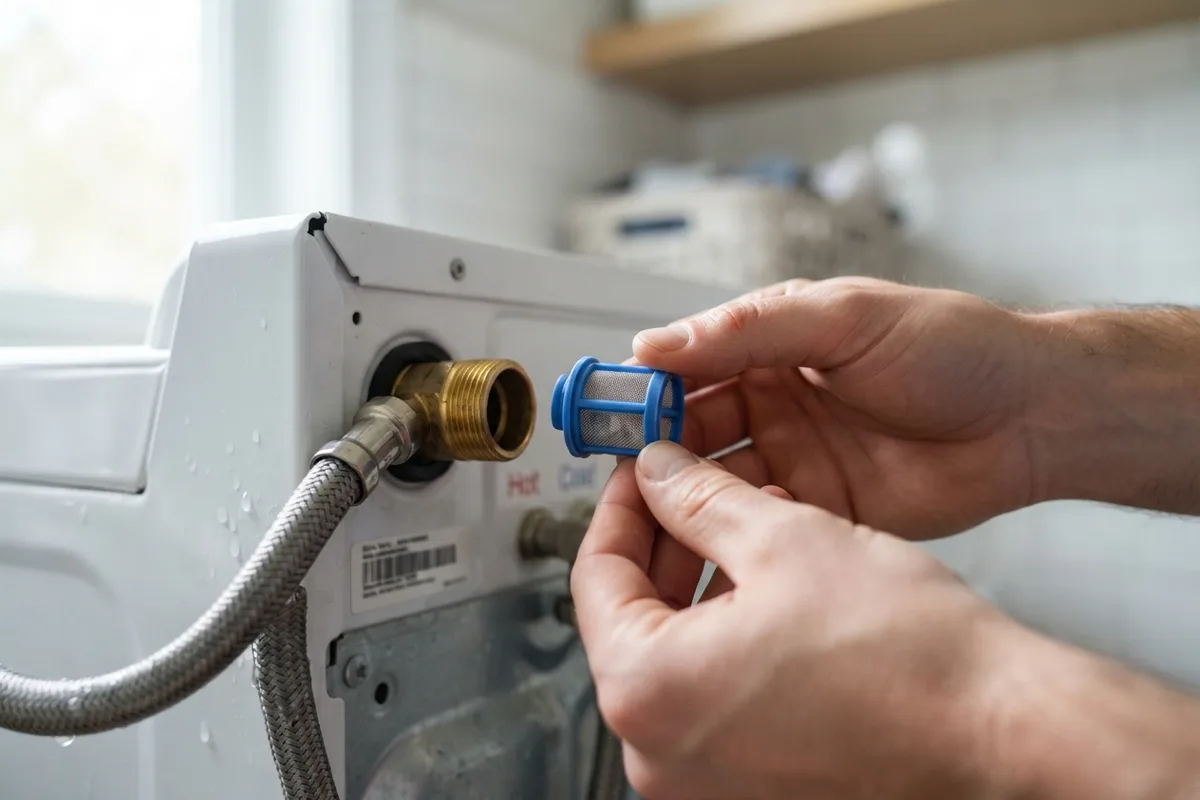
2. Clear Clogged Water Inlet Valve Mesh Screens
If your washing machine beeps several minutes after starting a cycle while the drum remains empty, it is likely timing out due to slow water intake. Modern washers monitor fill times closely. When sediment, mineral scale, or municipal rust particles clog the small mesh filter screens inside the water inlet valve, water trickles in too slowly and triggers an error alarm.
- Disconnect the washer power plug and shut off both the hot and cold water shutoff faucets completely.
- Place a small shallow bucket behind the unit and carefully unscrew the cold and hot fill hoses from the rear connections.
- Locate the small plastic mesh filter screens nested inside the brass or plastic inlet valve threads.
- Use needle-nose pliers to gently extract the mesh screens without tearing them.
- Rinse the screens under warm running tap water and scrub away mineral deposits using an old soft-bristle toothbrush and white vinegar.
- Seat the clean screens firmly back into the inlet ports, reconnect the hoses tightly by hand plus a quarter turn with pliers, turn the water supply back on, and inspect for leaks.
3. Inspect and Clean the Door or Lid Latch Switch
A washing machine will beep repeatedly if the control board cannot confirm that the door or lid is completely closed and locked. On top-load washers, a misaligned lid striker or broken magnetic switch prevents agitation. On front-load washers, accumulated soap residue, lint, and moisture can jam the door latch assembly, making the sensor think the door is standing open.
- Inspect the latch hook on the door or lid for cracks, bent plastic tabs, or loose mounting screws.
- Wipe down the lock housing opening on the washer chassis with a damp microfiber cloth to remove built-in detergent sludge.
- Close the door firmly and listen for a distinct mechanical "click" before pressing start.
- If the latch engages mechanically but the beeping continues, the internal switch contacts may have failed, requiring a replacement switch assembly.
If you find water accumulating around the door gasket or beneath the unit while inspecting the latch, check out our guide on why your washer is leaking water to prevent moisture damage to the electronic door latch.
4. Clear the Drain Pump Filter and Unkink the Drain Hose
When a washing machine cannot expel wastewater within a set time limit, the pressure switch remains engaged, the cycle halts, and the unit beeps an urgent drainage error. Standing dirty water left in the bottom of the drum points directly to a clogged coin trap filter or a pinched drain line behind the appliance.
- Locate the drain pump filter access door at the bottom front corner of your front-load machine (top-load models often utilize a self-cleaning pump or an internal rear filter).
- Place an absorbent towel and a low-profile baking dish on the floor beneath the access door.
- Twist the emergency drain tube cap to empty standing water slowly into your pan.
- Unscrew the pump filter counterclockwise and pull it straight out.
- Remove trapped debris such as coins, hairpins, stray buttons, and lint accumulations, then rinse the housing clean.
- Check behind the washer to ensure the corrugated drain hose is not kinked, crushed against the baseboard, or shoved too far down the wall standpipe.
| Washer Beep Pattern | Common Underlying Cause | Quick Action Step |
|---|---|---|
| 3 to 5 beeps during spin cycle | Unbalanced or oversized load | Pause cycle, redistribute heavy items evenly |
| Beeps 5-8 minutes after start | Slow water fill / blocked inlet | Clean mesh filter screens inside rear inlet valves |
| Constant beeping at cycle start | Door or lid latch not registering | Clean soap scum from latch; verify firm closure |
| Beeps with water left in tub | Clogged drain pump filter or kinked hose | Clear pump coin trap; unkink corrugated drain line |
| Rapid beeping after power surge | Glitched electronic control board | Execute a 10-minute hard electrical power reset |
5. Perform a Hard Power Reset on the Control Board
Modern washing machines utilize electronic microprocessors that can suffer software freezes after minor grid brownouts, voltage spikes, or rapid button pressing. When the control board gets confused by contradictory sensor signals, it locks the machine and sounds a continuous fault tone. A hard electrical reset clears the temporary memory cache and restores normal factory communication across all onboard sensors.
- Unplug the washer power cord directly from the wall receptacle.
- Leave the machine completely unpowered for a full 5 to 10 minutes to allow the onboard capacitors to discharge entirely.
- While the unit is unplugged, press and hold the "Power" and "Start/Pause" buttons simultaneously for 5 seconds to drain any residual standby current.
- Plug the power cord firmly back into a grounded electrical outlet.
- Open and close the washer door 6 consecutive times within 12 seconds on select models (this manually signals the main board to reset motor error registers).
- Select a simple "Rinse & Spin" cycle with an empty drum to confirm the alert has cleared.
If your laundry area experiences frequent voltage irregularities that cause your washer or dryer to glitch, review steps on how to protect home appliances from power surges to keep delicate circuit boards running smoothly.
When to Call a Pro
If you have cleared the drain filter, verified adequate water pressure, leveled the drum, and executed a hard power reset, yet your washer continues beeping, the issue likely stems from a failed component. Worn electronic pressure transducers, failed drive motor control boards, burnt motor stator windings, or faulty wire harnesses require specialized diagnostic tools.
When troubleshooting complex electrical diagnostics, testing internal voltage lines, or replacing main control boards, it is best to enlist an experienced repair technician. True Appliance Repair can match you with a local appliance pro to diagnose and repair stubborn washer electronics quickly and safely.
FAQ
Why does my washer beep 3 times and refuse to start?
Three consecutive beeps at the start of a wash cycle almost always indicate a door or lid lock error. The machine's safety switch cannot confirm that the lid is securely latched. Inspect the strike tab for physical damage, clean away built-up soap residue around the latch mechanism, and ensure the door clicks firmly into place.
Can low household water pressure cause my washer to beep?
Yes. Modern washing machines monitor fill times with internal timers. If your home's water pressure drops below 20 PSI, or if the shutoff valves behind the machine are only partially open, the washer will trigger an intake timeout alarm before the tub fills to the minimum required level.
How do I identify the exact error code when my washer is beeping?
If your washing machine has a digital display, the screen will flash an alphanumeric code (such as OE, 4E, E1, or dL) alongside the beeping sound. Consult your product manual to match the specific code with its sensor failure. On models without digital displays, the flashing combination of cycle status lights corresponds to specific fault codes listed on the technician sheet tucked inside the main cabinet.
How much does it cost to fix a washing machine control board?
Replacing a faulty washing machine main control board or electronic interface typically costs between $200 and $450 in the United States, including standard labor and component parts. Pricing varies by area, machine brand, and appliance model.