
Major household appliances represent one of the biggest investments in your home, yet everyday wear and tear often cuts their working life short. Simple oversights like clogged air vents, overloaded drums, and mineral accumulation force motors and heating elements to work twice as hard as designed. By adopting a few straightforward habits, you can protect your equipment, lower your monthly utility expenses, and add years of dependable service to every unit in your home.
Before performing any physical inspection, cleaning, or maintenance on your equipment, always prioritize safety. Unplug the unit from electrical power and shut off corresponding water or gas supply valves before touching internal components. If a repair involves gas line fittings, internal electrical panels, or sealed refrigeration tubing, always stop and call a professional technician.
1. Vacuum Condenser Coils and Air Intakes Every Six Months
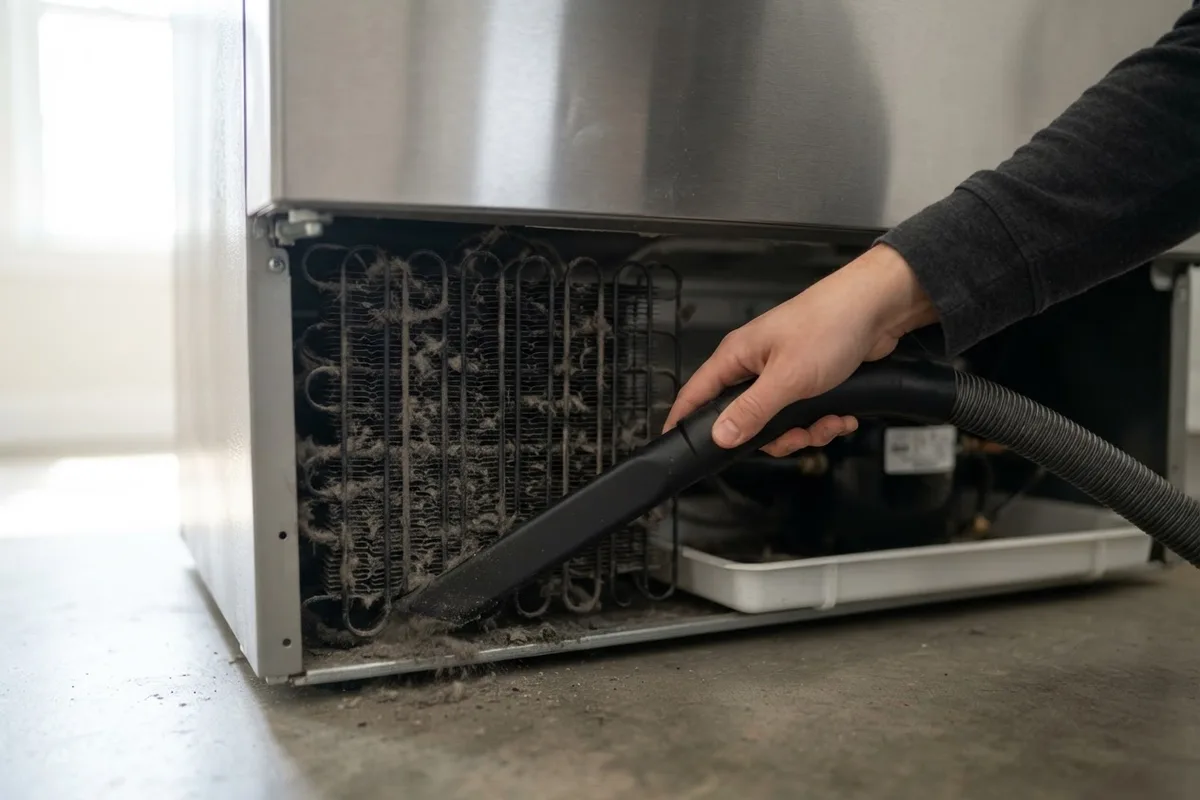
Refrigerators and freezers rely on clean condenser coils to release heat pulled from the cabinet interior. When dust, pet dander, and kitchen grease blanket these coils, the compressor must run longer cycles at higher internal pressures to maintain safe food temperatures. This extra strain is the leading cause of premature compressor burnout.
- Disconnect power to your refrigerator by pulling the plug or flipping the dedicated circuit breaker.
- Locate the coils, which are typically behind the front bottom toe kick grille or mounted across the lower back panel.
- Snap off the grille or slide the refrigerator forward gently to access the rear.
- Use a narrow vacuum crevice tool and a flexible coil brush to dislodge compacted debris between the metal fins.
- Vacuum the surrounding floor space to prevent immediate redeposition of dust, then reinstall the protective cover and restore power.
Performing this quick task twice a year keeps cabinet temperatures steady, prevents food spoilage, and reduces electrical draw by up to fifteen percent.
2. Clear Dryer Exhaust Ducts and Lint Traps Completely
Lint screen cleaning is essential after every load, but fine fibers continually bypass the primary screen and settle inside the internal blower housing and exterior exhaust ductwork. Restrictive lint buildup traps humid air, drives internal operating temperatures to dangerous levels, and causes heating elements, thermal fuses, and drive belts to fail ahead of time.
- Unplug the dryer and pull it away from the wall to reach the transition duct.
- Loosen the metal clamp securing the duct to the dryer exhaust outlet and pull the pipe free.
- Feed a rotary dryer vent cleaning brush through the rigid ductwork all the way to the outdoor exit hood while running a shop vacuum to catch dislodged lint.
- Inspect the outdoor damper flap to verify it swings open freely without being pinned by lint or exterior debris.
- Reattach the exhaust duct using a sturdy metal clamp rather than foil tape, ensuring there are no sharp bends or kinks restricting airflow.
Keeping your ventilation open prevents costly drying delays and stops issues like why is my dryer vent dripping water before moisture creates hidden mold or structural damage.
3. Descale Internal Water Lines and Heating Chambers
Hard water contains dissolved calcium and magnesium minerals that bake onto hot metal surfaces inside dishwashers, washing machines, and ice makers. Over time, thick scale narrows water inlet valves, coats heating elements, and jams delicate solenoid plungers, leading to slow fills and inconsistent temperatures.
- Check your local water hardness rating; homes with municipal or well water exceeding seven grains per gallon require quarterly descaling.
- Run an empty, high-temperature cycle through your dishwasher using two cups of distilled white vinegar placed in a bowl on the top rack to dissolve mineral haze.
- Pour two cups of white vinegar or a citric acid washing machine cleaner into your washer drum and run a hot sanitary cycle to strip limescale from the outer tub.
- Replace your refrigerator water filter cartridge every six months to keep sediment from clogging the internal water valve manifold.
Learning how to remove hard water from appliances preserves heating efficiency, prevents pump seizures, and keeps spray arms delivering full water pressure across every cycle.
4. Respect Weight and Capacity Limits on Washers and Dryers
Overloading laundry equipment is one of the fastest ways to destroy mechanical drive components. Cramming heavy blankets, dense towels, and excessive clothing into a drum puts immense strain on spider brackets, tub bearings, drive belts, and motor couplings. An unbalanced load also causes violent spin cycles that warp the suspension rods and internal tub structure.
| Appliance Issue | Overloading Symptom | Proper Operating Habit |
|---|---|---|
| Front-Load Washer | Grinding tub bearing noise, water leaks | Leave top hand-width of open space in drum |
| Top-Load Washer | Agitator binding, unspun soaking clothes | Distribute clothes loosely around perimeter |
| Clothes Dryer | Extended drying time, snapped belt | Fill drum no more than two-thirds full |
| Dishwasher | Blocked spray arms, chipped glassware | Keep tall platters clear of rotating arms |
Always load clothes loosely rather than packing them down. Allowing items room to tumble freely ensures balanced water extraction, shortens drying cycles, and avoids premature motor failure.
5. Keep Door Gaskets and Mechanical Seals Pristine
The flexible rubber gaskets on refrigerators, freezers, and front-load washing machines maintain airtight, watertight barriers. Spilled juices, detergent residues, and mildew dry out the rubber compound over time, causing it to crack, tear, or lose magnetic adhesion. When a seal fails, warm ambient air seeps in, creating heavy frost accumulation and forcing cooling systems into non-stop operation.
- Inspect seals along all four edges for cracking, hardening, or food grime.
- Mix warm water with a few drops of mild dish soap; avoid petroleum-based solvents or harsh bleach that degrade pliable vinyl.
- Wipe down the folds of the gasket with a soft microfiber cloth to remove sticky residues and mildew.
- Dry thoroughly, then apply a very light coat of food-grade silicone lubricant or pure petroleum jelly to keep the rubber supple and seal tightly.
Routine seal care prevents hidden air leaks, lowers monthly utility bills, and stops ice evaporator coils from freezing into solid blocks of ice.
6. Clean Hidden Debris Traps and Appliance Filters
Modern high-efficiency appliances feature accessible fine-mesh filters designed to catch food particles, hair, coins, and loose fibers before they enter sensitive drain pumps. When neglected, these filters clog completely, forcing drain pumps to run dry, overheat, and burn out their electrical windings.
- Locate your dishwasher filter at the floor of the tub underneath the lower spray arm, rotate it counterclockwise, and rinse it under hot running water with a soft nylon brush.
- Open the lower front access door on front-loading washing machines to drain and clear the coin trap filter.
- Regularly check your oven range hood grease filters and wash them in hot soapy water to maintain proper airflow.
Taking time to maintain these components aligns with checking hidden appliance filters you should clean, protecting expensive drain impellers and preventing unexpected standing water in your home.
When to Call a Pro
While routine cleaning, filter changes, and mindful operating habits are simple DIY tasks, complex mechanical and electrical failures require specialized diagnostic tools. If your appliance trips the circuit breaker repeatedly, produces burning odors, exhibits intense metal-on-metal grinding noises, or fails to heat despite clean vents and elements, avoid tearing into high-voltage wiring or sealed components yourself.
Professional diagnostic services pinpoint failing relays, weak drive motors, worn tub bearings, and control board faults safely. Independent appliance repair specialists have the right testing equipment to verify whether a part replacement makes economic sense. When you encounter complex issues that go beyond standard care routines, True Appliance Repair can match you with an experienced local appliance pro to diagnose and resolve the issue quickly. For immediate assistance with any major home unit, you can also reach out through our contact page.
FAQ
How many extra years can regular maintenance add to an appliance?
Consistent maintenance, such as coil cleaning, duct clearing, and descaling, can add three to seven years to the working lifespan of major appliances. Well-maintained refrigerators and laundry units frequently operate reliably for 12 to 15 years, whereas neglected units often experience major component failures within 6 to 8 years.
Can using too much detergent actually damage a washing machine?
Yes. Modern high-efficiency washers use very little water, so excess liquid or powder detergent creates thick soap scum and suds that coat the outer tub, corrode the aluminum spider support arm, and overwork the drain pump. Always measure detergent accurately and stick to two tablespoons maximum per regular load.
What is the most common reason home appliances fail early?
Restricted airflow and heat buildup are the primary causes of early appliance failure. Clogged refrigerator coils, blocked dryer exhaust ducts, and greasy range vents force electric motors and compressors to run hotter and longer than engineered, leading directly to burned-out electrical components.