
A washing machine door locked shut with wet clothes inside is one of the most frustrating laundry emergencies a homeowner can face. Modern front-load and top-load washers rely on safety interlocks that keep the door or lid sealed tight whenever water is present, the drum is spinning, or the internal heating cycle is active.
When a sensor fails or water cannot drain properly, your washer safety system will lock down to prevent flooding your laundry room. Fortunately, you can usually troubleshoot and release a stuck lock without damaging the machine or forcing the handle. Before jumping to expensive repairs, try these five straightforward DIY steps to unlock your washer safely.
Run a Quick Drain and Spin Cycle
The single most common reason a washing machine door locked mechanism stays engaged is trapped water inside the tub. Modern washers feature pressure sensors that signal the main control board whenever standing water remains above a safe threshold. Even if you cannot see water through the glass door, a few cups trapped underneath the basket can prevent the safety latch from releasing.
To clear residual water and signal the latch to open, try manually triggering a drain cycle:
- Turn off your washing machine using the main power button or control dial.
- Turn the selector dial to the Drain & Spin cycle (or Spin Only on select models).
- Press Start and allow the machine to run through the entire short cycle.
- Listen closely as the pump engages to pull remaining water out of the drum.
- Wait two to three minutes after the cycle finishes for the electric solenoid or thermal lock switch to cool down and click open.
If the washer completes the spin cycle and successfully pumps out the water, the door switch should release automatically. If the water fails to pump out, your washer may have a clogged pump filter or a blocked drain hose that requires physical cleaning.
Reset the Washer Power to Clear Control Board Errors
Sometimes a washing machine door locked state is caused by a temporary software glitch or electrical surge rather than a mechanical issue. Modern electronic control boards can occasionally freeze mid-cycle, leaving the door lock energized even though the wash routine has finished.
A hard power reset clears the internal memory of the control module and restores default safety signals:
- Press the Power or Cancel button to stop any running programs.
- Unplug the washing machine power cord directly from the electrical wall outlet. If the outlet is hard to reach, flip the corresponding circuit breaker off in your main breaker panel.
- Keep the appliance completely disconnected from power for at least 10 to 15 minutes. This extended pause allows the electrical capacitors on the main control board to drain completely.
- While the power is off, gentling press on the door handle area to ensure no physical tension is binding the latch catch.
- Plug the power cord back into the wall outlet or restore power at the breaker panel.
- Listen for a distinct double-click from the door lock assembly as the washer reboots and runs an internal self-test.
If a simple control glitch was holding the door shut, performing this hard reset will unlock the door mechanism immediately upon restoration of power.
Check and Clean the Front-Load Drain Pump Filter
When a front-load washer senses an obstruction in its drain path, it halts the wash cycle for safety and refuses to unlock the door. Debris like coins, hairpins, stray socks, or heavy lint accumulation can easily clog the drain pump filter, blocking water flow and locking the system up.
Cleaning the filter frees trapped water and usually unlocks the door. Always prioritize safety: unplug the washer from the wall outlet before starting any manual maintenance work.
- Locate the small access panel on the lower front corner of your washing machine.
- Lay a thick towel and a shallow baking sheet or tray directly beneath the access door to catch overflowing water.
- Open the access panel door. You will see a round filter cap and a small emergency drain hose.
- Unclip the emergency drain hose, pull off the plug cap, and direct the flow into your shallow tray to remove standing water from the drum.
- Once the flow stops, replace the plug on the emergency hose and secure it back in its clip.
- Twist the main drain pump filter knob counterclockwise to pull the filter mesh assembly out.
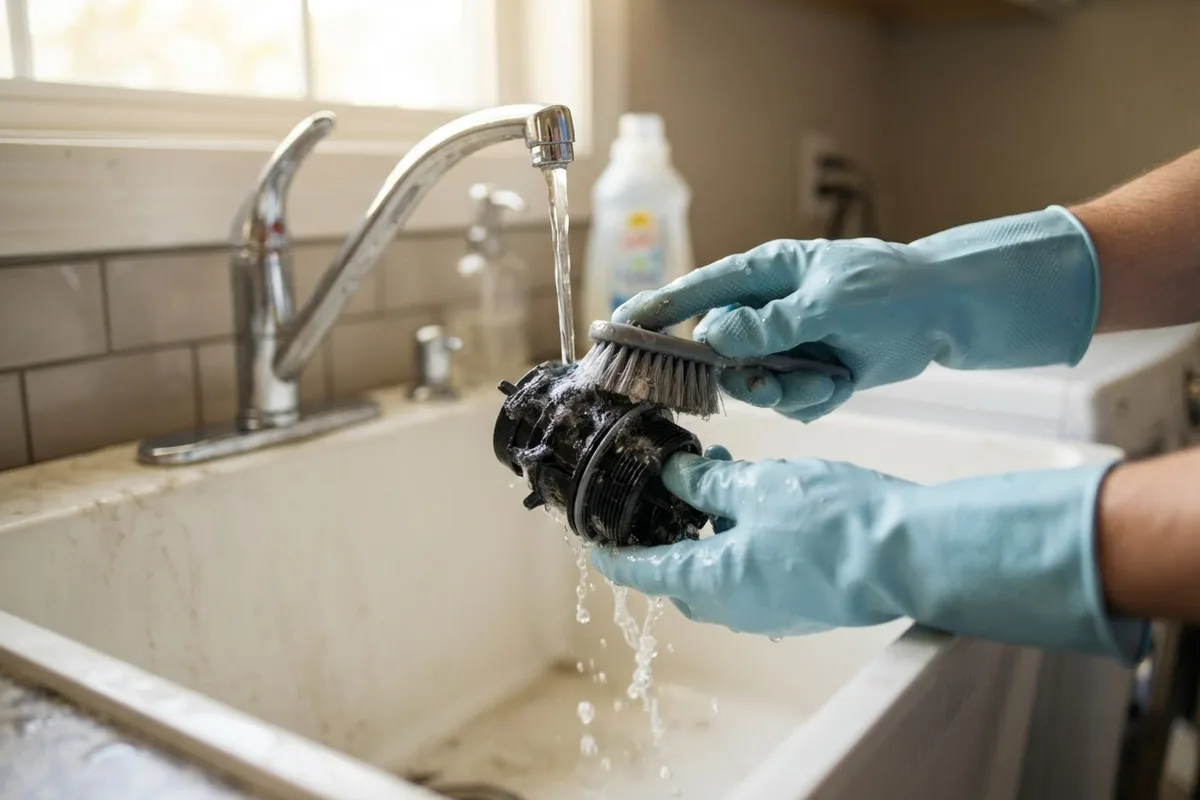
- Remove all trapped lint, coins, and debris under warm running water using a soft brush.
- Shine a flashlight into the empty pump cavity to check for trapped objects before reinserting the filter, tightening it securely, and closing the access panel door.
Regularly clearing this filter is an essential part of your routine DIY appliance maintenance routine to prevent drainage jams and bad odors.
Inspect the Thermal Door Lock Switch for Damage
Many modern washing machines use a thermal wax motor or PTC heater element inside the door lock assembly. When current flows to the latch, the thermal element expands, extending a small pin that holds the door shut during operation. Once the cycle finishes, power stops flowing, the element cools, and the pin retracts.
If the thermal element short-circuits, overheats, or warps, the pin can remain physically jammed in the locked position long after the cycle ends. Inspecting and troubleshooting the lock assembly requires access behind the rubber door gasket:
- Ensure the washing machine is completely unplugged from the power source.
- Open the door if partially unlocked, or peel back the outer edge of the flexible rubber door boot seal near the latch area.
- Locate the retaining wire clamp holding the rubber gasket to the outer metal frame. Use a flathead screwdriver to carefully lift the tension spring and remove the retaining wire.
- Peel the rubber boot back away from the front panel to reveal the door switch housing behind the sheet metal.
- Remove the mounting screws located on the outside front panel next to the door latch opening.
- Reach behind the panel to pull out the plastic door lock switch assembly.
- Inspect the plastic housing for signs of scorch marks, melted plastic, or broken mechanical levers.
If the housing shows visible thermal damage or scorch marks, the door switch assembly has failed internally and must be replaced to restore normal operation.
Use the Manual Door Lock Release Latch
When electrical resets fail and wet laundry remains trapped inside, many manufacturers provide a manual door lock release mechanism hidden inside the cabinet. This manual release allows you to mechanically disengage the lock hook without applying force to the outer handle, preventing plastic door handles from snapping off.
To locate and operate the manual release mechanism safely:
- Confirm the appliance is unplugged from the power outlet and that the internal drum water level sits below the bottom of the door opening to avoid indoor flooding.
- Open the lower front access flap (the same panel used to access the drain pump filter).
- Reach upward along the inside face of the front sheet metal panel toward the door latch assembly.
- Feel for a plastic ring, thin pull cord, or small plastic tab located directly beneath the door lock switch.
- Pull the tab or cord downward firmly until you hear a clear mechanical click.
- While keeping steady downward tension on the release cord, pull open the washing machine door with your free hand.
For top-load machines with a flashing lid lock light, you may need to gently remove the top main panel or access the lock underside after pulling power to manually disengage the latch arm.
Washing Machine Door Lock Troubleshooting at a Glance
Use this quick reference guide to identify why your washer door is stuck and how to address it:
| Symptom / Observed Behavior | Likely Root Cause | Recommended Action |
|---|---|---|
| Water visible through front glass | Clogged drain pump filter or drain hose | Drain manually via lower emergency hose and clean filter |
| Control display unresponsive / frozen | Electronic control board error | Unplug washer for 15 minutes to perform a hard reset |
| Loud click heard, but door won't open | Physical latch misalignment or broken handle | Apply gentle inward pressure on door while pulling latch handle |
| Door remains locked after cooling down | Failed thermal door lock switch assembly | Use internal manual release tab and replace door switch unit |
| Lid lock light flashing on top loader | Lid switch fault or motor speed error | Clear basket overload, verify drain, and reset power |
Addressing these mechanical and drainage issues quickly keeps your appliance running efficiently and prevents secondary problems like laundry detergent residue buildup or mildew. If you notice white powder on your clean garments after resolving a lock issue, check out our guide on why your washer leaves residue on clothes.
When to Call a Pro
While simple drain clogs and control board glitches are straightforward DIY fixes, structural or electrical failures require professional diagnostic tools. If your washing machine door remains stuck after attempting a power reset and manual release, or if you suspect a burnt main control board circuit, it is best to consult an experienced technician.
Working on internal high-voltage components, wiring harnesses, or sealed drive assemblies poses safety hazards. Stop immediately and seek expert help if you notice scorched wiring, continuous burning odors, or physical damage to the internal door frame. If you need help resolving a persistent washer failure, True Appliance Repair can match you with a local appliance pro to diagnose and repair your machine safely.
FAQ
Why won't my washing machine door unlock after the cycle finishes?
The door usually remains locked because the machine detects standing water inside the drum, the internal thermal lock switch has not cooled down yet, or the control module experienced a software glitch. Allowing two to three minutes for the switch to cool or performing a drain cycle typically resolves the problem.
How long does a washing machine door stay locked after unplugging?
Most thermal-style washer door locks disengage within one to five minutes after power is completely removed as the internal wax motor or bimetal strip cools down. If the door stays locked after 15 minutes, the latch may be physically jammed or mechanically damaged.
Can I force open a locked washing machine door?
You should never force a locked washing machine door open. Forcing the handle can snap the plastic latch, bend the strike plate, or damage the front sheet metal panel, resulting in costly structural repairs. Always use the manual release cord or perform a control board reset instead.
What causes a washer lid lock light to flash continuously?
A flashing lid lock light on a top-load washer indicates that the main control board cannot verify whether the lid is securely closed and locked. This is typically triggered by a faulty lid switch, an unbalanced load preventing spin speed verification, or object obstruction around the latch strike.