
A sudden mechanical grinding sound coming from your laundry room can stop you in your tracks. Whether your washing machine grinds during the agitation phase or screeches violently on high spin, running it repeatedly under heavy friction risks severe damage to internal components.
Before you run another load of laundry, unplug the appliance and shut off both hot and cold water valves. Use this step-by-step diagnostic guide to pinpoint the source of the noise and restore smooth, quiet operation to your machine.
1. Check for Trapped Objects Under the Agitator or Drum
Small metal objects like loose coins, bra underwires, screws, and paper clips frequently slip past the wash basket perimeter or slide underneath the agitator. Once trapped, these items grind aggressively against the stainless steel drum or inner plastic tub during agitation and spin cycles.
- Unplug the washer and ensure the wash basket is completely drained of water.
- Inspect the drum perforations with a bright flashlight, looking along the seam between the bottom plate and the inner tub wall.
- Remove top-load agitator components if you have an agitator model. Pop off the plastic cap, unscrew the center retainer bolt using a socket wrench, and pull the agitator straight up to inspect the base underneath.
- Check front-load rubber door gaskets by pulling back the folds to clear any hidden coins, hairpins, or debris scraping the front lip of the spinning drum.
Clearing out foreign debris right away prevents gouges in plastic outer tubs that could otherwise cause sudden water leaks.
2. Inspect and Replace Worn Agitator Directional Cams
On top-load washing machines, the top half of dual-action agitators relies on small plastic directional cams, commonly called "agitator dogs." These plastic teeth grip the inner gear teeth to force the upper agitator in one direction while the bottom swishes back and forth. When these plastic teeth wear smooth, they slip, producing a rhythmic, harsh grinding or clicking noise during the wash cycle.
- Test the agitator manually: With the machine off, try spinning the top section of the agitator by hand. It should turn smoothly in one direction and lock firmly in the other. If it spins freely both ways, the cams are stripped.
- Remove the center bolt inside the agitator barrel after prying out the top fabric softener dispenser cup.
- Lift out the cam assembly and check the four plastic dog teeth. If the edges are rounded, chipped, or ground to dust, replace the cam set.
- Install a new cam kit (usually priced between $10 and $25 for parts), reassemble the unit, and hand-tighten the central bolt.
3. Examine the Drive Pulley and Motor Splines
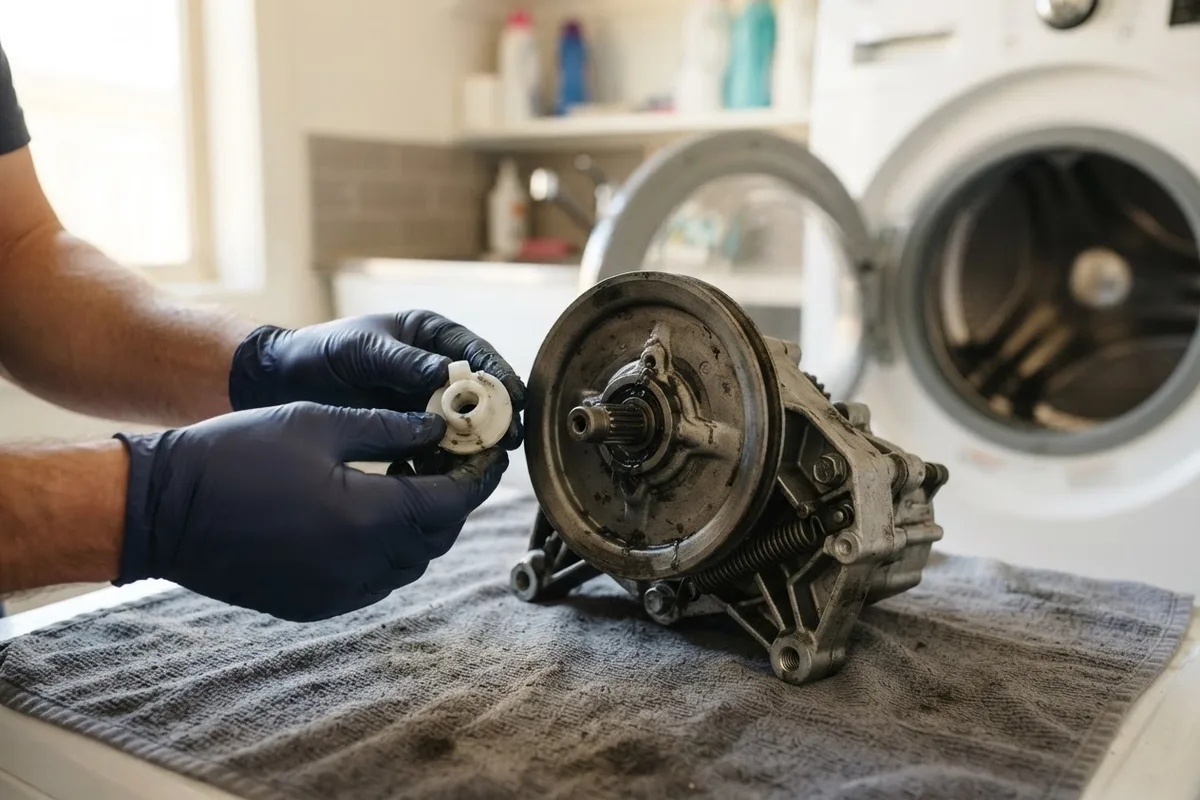 Many modern top-load and front-load washers use a belt-driven pulley system or a direct splined rotor. Over thousands of cycles, the central nut holding the large drive pulley to the transmission or tub shaft can loosen. This allows the metal pulley wheel to wobble, grinding against the transmission housing or tub shield whenever the motor runs.
- Disconnect power and water lines, then carefully tilt the washer back or remove the rear access panel depending on your washer build.
- Locate the large drive wheel (pulley) at the bottom center of the tub.
- Check for physical play: Grab the pulley edges and wiggle firmly. There should be zero wobble or tilt along the central shaft.
- Inspect the metal splines: If the center nut backed off, the steel drive shaft may have stripped the softer aluminum teeth inside the pulley bore.
- Tighten or replace: If the splines are clean, tighten the retaining nut securely. If the teeth are shaved down, replace the pulley assembly to eliminate the metal-on-metal noise.
If you find stripped splines or sudden motor binding while your machine is running, you may also experience the unit stalling out early. See our guide on why your washer is stopping mid-cycle for related motor and clutch troubleshooting.
4. Inspect the Drive Belt and Motor Coupler for Wear
Direct-drive machines without belts use a rubber-and-plastic motor coupler between the drive motor and transmission, while traditional belt-drive models use a heavy-duty ribbed belt. If the rubber deteriorates or the plastic drive pins snap, the motor shaft grinds against loose housing parts without turning the drum effectively.
- For direct-drive couplers: Inspect the rubber isolator ring between the two white plastic drive hubs under the motor. If the plastic prongs are sheared off or the rubber has shredded, install a heavy-duty replacement coupler.
- For belt-drive setups: Inspect the rubber belt for severe glazing, fraying, cracks, or embedded metal particles. A slipping, glazed belt often creates a high-pitched grinding squeal under load.
- Check belt tension: Ensure the idler pulley tension arm moves freely without binding. Lubricate the idler pivot bracket if it catches, or install a replacement belt if stretching has occurred.
While working around your laundry room, take time to check other routine maintenance items, such as inspecting why a washer detergent drawer fills with water, to keep your entire wash system operating cleanly.
5. Test the Tub Bearings and Drive Shaft Assembly
The most severe cause of a grinding or roaring noise—especially during the high-speed spin cycle—is failed tub bearings. Washers rely on heavy-duty ball bearings to support the weight of the inner drum spinning at high RPMs. When the internal tub seal fails, water seeps into the metal bearings, washing away grease and causing internal steel balls to rust, pit, and grind.
- Perform the manual spin test: With the machine empty and powered off, open the door and spin the inner metal drum by hand as fast as possible. A healthy drum spins almost silently; failed bearings produce a loud rumbling sound similar to a freight train or jet engine.
- Check for drum deflection: Place your hands on the top edge of the inner drum and lift upward. If the inner basket rocks up and down independently of the outer plastic tub by more than 1/8 inch, the bearing and shaft sleeve are worn out.
- Inspect the rear tub seam: Look at the back of the outer tub beneath the main drive pulley. Streaks of rusty brown water or black greasy splatter indicate the tub seal has breached and destroyed the bearing race.
Washer Grinding Noise Diagnosis Quick Reference
| Symptom / Noise Timing | Most Likely Cause | Typical DIY Fix | Typical DIY Part Cost |
|---|---|---|---|
| Scraping sound inside drum during entire wash | Trapped foreign object (coin, wire, screw) | Clear drum lip, gasket, or under agitator | $0 |
| Grinding/clicking only during top-load agitation | Stripped agitator directional cams (dogs) | Replace agitator cam dog kit | $10 – $25 |
| Loud rattle/grind under machine during spin | Loose or stripped transmission drive pulley | Tighten retaining bolt or replace pulley | $20 – $60 |
| Harsh buzzing grind with no drum movement | Broken direct-drive motor coupler | Replace rubber/plastic coupler set | $12 – $30 |
| Roaring, grinding rumble that worsens at high spin | Failed rear tub seal and tub ball bearings | Replace bearing kit or rear tub assembly | $60 – $220 |
When to Call a Pro for Washing Machine Repairs
While clearing trapped coins or replacing worn agitator dogs is a straightforward weekend task, deeper mechanical failures require specialized equipment. Replacing pressed tub bearings, rebuilding a sealed transmission gearcase, or replacing a split outer tub assembly requires stripping the appliance down to its bare frame.
Professional repairs for major drivetrain components typically range from $180 to $450 depending on your washer brand and local labor rates. If your washer has a damaged gearcase, major electrical faults, or severely seized bearings that cannot be pressed out by hand, professional diagnosis is the safest route. If you prefer to have an expert handle the heavy lifting, True Appliance Repair can match you with a local appliance pro to inspect and fix your laundry equipment.
Frequently Asked Questions
Can I continue running my washer if it makes a grinding noise?
No. Operating a washing machine while it produces mechanical grinding can turn a minor repair into catastrophic damage. A loose coin can puncture the plastic outer wash tub, while worn bearings can cause the inner drum to scrape the outer tub walls, ruining the entire machine.
Why does my washer only grind when spinning, not during wash?
Grinding exclusive to the spin cycle points directly to the drive pulley, motor coupler, or main tub bearings. These components handle maximum rotational stress and high RPMs during water extraction, making mechanical friction much more pronounced than during slow agitation.
How long do washing machine tub bearings typically last?
High-quality washing machine tub bearings generally last between 8 and 12 years. However, chronic overloading, running unbalanced laundry loads, or using excess detergent (which breaks down rubber water seals) can cause bearing failure in as few as 4 to 6 years.
Is it worth replacing the bearings on an older washing machine?
If your washing machine is under 6 to 8 years old and the rest of the machine is in good condition, replacing bearings is cost-effective. However, on machines older than 10 years, the labor-intensive nature of bearing replacement often makes purchasing a new unit a smarter long-term investment.