
A stuck refrigerator water filter can stop routine kitchen maintenance in its tracks. Whether you are replacing the cartridge before holiday hosting or swapping it after a routine indicator light turns red, wrestling with a frozen or jammed filter housing is frustrating. Forcing the plastic cartridge can snap internal retaining clips or crack the water head, leading to sudden leaks.
Most stuck filters stem from built-in water pressure locks, mineral crusting on the O-rings, or misalignment inside the receiver housing. Before attempting any physical fix, remember safety: always turn off the refrigerator's dedicated water supply valve behind or beneath the unit, and unplug the refrigerator from the wall outlet before inspecting mechanical housing parts. Here are five practical methods to free a jammed refrigerator water filter without cracking the housing.
Relieve Trapped Water Line Pressure
The most common reason a refrigerator water filter refuses to twist or eject is hydraulic pressure lock. The water line feeding your refrigerator remains under constant residential pressure, typically between 40 and 80 pounds per square inch. When that pressure sits directly against the internal bypass valves, the filter cartridge binds tightly against the housing latch.
- Locate the shutoff valve on the supply line behind the refrigerator or under the nearby kitchen sink, and turn it clockwise until fully closed.
- Place a large pitcher beneath the door water dispenser.
- Press and hold the water dispenser lever for 30 to 45 seconds. You will see water flow slow to a trickle and then stop completely as trapped pressure bleeds out of the system.
- Open the filter compartment door or release latch.
- Grasp the filter cartridge and attempt the standard removal motion (usually a quarter-turn counterclockwise, or a firm straight push inward to disengage the push-release spring).
Releasing the line pressure eliminates the hydraulic clamp effect in seconds, allowing the filter to slide out smoothly.
Reset the Push-Button Ejection Latch
Many French door and side-by-side models feature a push-button release mechanism located next to the filter opening or on the base grille. Over time, internal springs can stick, or the plastic release pawl fails to depress the cartridge shoulder far enough to trigger the kick-out action.
- Unplug the refrigerator to ensure electrical safety while working near interior components.
- Inspect the release button for food debris, dried syrup, or mineral grit that could prevent full travel.
- Push firmly inward on the filter cartridge body itself with one hand to compress the internal sealing spring.
- While maintaining continuous inward pressure on the filter, press the release button down fully with your other hand.
- Release your grip on the filter cartridge while keeping the button fully depressed, allowing the internal spring to kick the cartridge outward.
If the button still catches, wrap a soft cloth around the end of the cartridge and gently wiggle it up and down by no more than an eighth of an inch while pressing the button. Avoid aggressive side-to-side force, which can distort the plastic receiver.
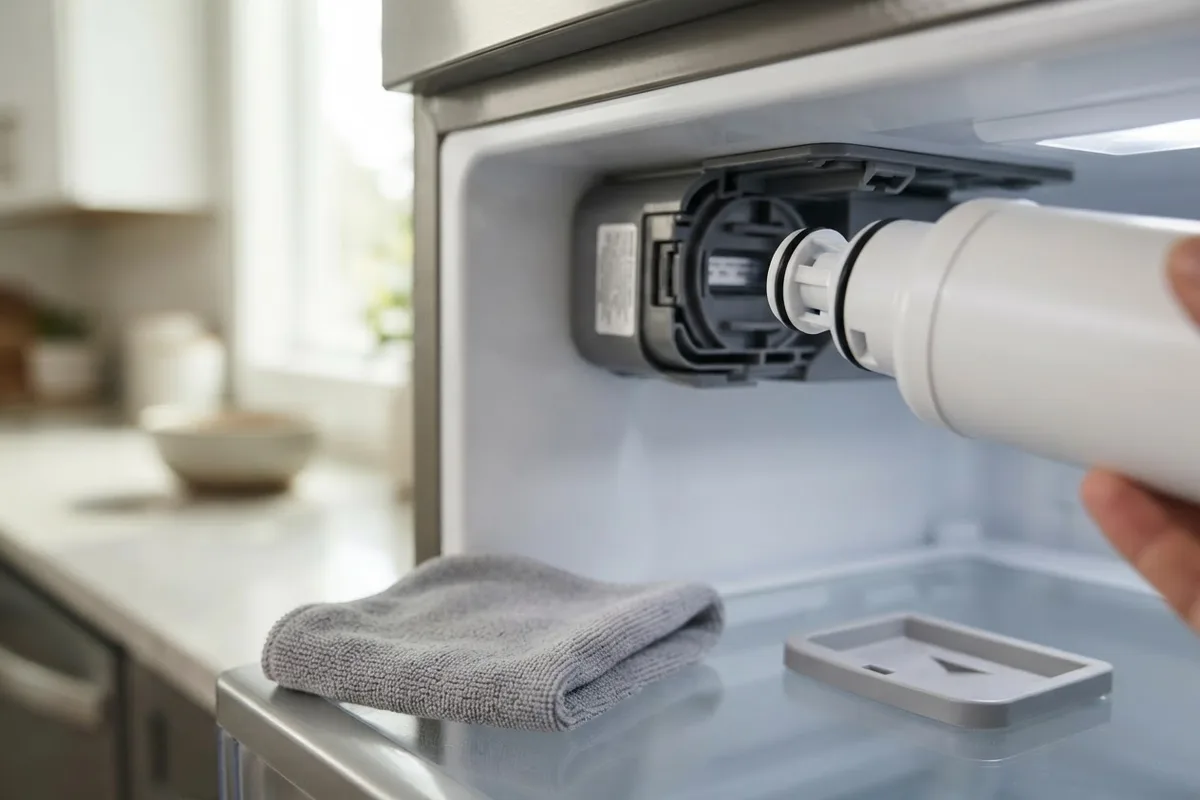
Loosen Hard Water Mineral Scale
In homes with moderate to hard tap water, calcium carbonate and magnesium deposits build up around the rubber O-rings at the neck of the filter. When water seeps past tired seals, it evaporates and leaves behind a chalky crust that acts like natural glue inside the receiver socket.
- Turn off the water supply valve and unplug the refrigerator.
- Dampen a clean microfiber cloth in a 50/50 mix of warm tap water and plain white distilled vinegar.
- Press the warm, damp cloth firmly around the exposed neck or rim where the filter enters the housing for 5 to 10 minutes to soften the scale.
- Take a clean, dry washcloth or a rubber jar gripper and wrap it securely around the base of the cartridge to improve your purchase.
- Apply steady, gradual counterclockwise rotational torque. The vinegar solution softens brittle mineral bonds, allowing the O-rings to slide free without tearing.
Once removed, shine a flashlight into the empty housing socket. Wipe away any lingering white crust with a vinegar-moistened cotton swab before inserting your replacement filter.
Align the Filter Guide Tracks
A misaligned cartridge is another frequent culprit, especially on twist-and-lock styles located in the upper right interior ceiling or bottom kickplate. If the previous filter was inserted slightly off-axis, the locking tabs can bind against the plastic guide tracks rather than sitting seated in the release channel.
- Check the alignment indicator marks printed on the filter body against the alignment arrows molded into the refrigerator ceiling or housing lip.
- If the filter is cocked at an angle, gently push the cartridge further inward toward the back of the socket to take stress off the tracking ears.
- Rotate the filter slightly back toward the "locked" direction (clockwise) by a fraction of an inch to center the locking tabs.
- Once realigned within the track, apply smooth, firm counterclockwise pressure until the tabs hit the designated release groove.
- Pull straight outward without tilting the cylinder.
If your dispenser has also been dripping or hesitating, you may want to review our guide on why your fridge water dispenser is dripping to catch related valve wear early.
Adjust the Internal Manifold Housing
On select refrigerator configurations, the filter head sits inside an articulated plastic cradle that swings down from the interior liner ceiling. If the hinge mechanism fails to drop completely to its 45-degree service angle, an automatic internal mechanical interlock keeps the filter locked in place to prevent water spills.
- Clear the top shelf of all food items, glass jars, and containers to give yourself complete visibility and two-handed working room.
- Support the swing-down housing door and inspect the small hinge pins on either side for cracks or dislodged pivot pins.
- Pull the housing gently downward until you hear or feel a definite stop; many assemblies require the door to open a full 90 degrees before releasing the rear cartridge clamp.
- Check the rear water line connections visible behind the hinge to ensure a pinched tube is not pulling the manifold backward.
- With the cradle fully lowered, pull the cartridge firmly straight toward the front of the refrigerator.
| Stuck Filter Cause | Key Symptom | Primary DIY Fix |
|---|---|---|
| Water Pressure Lock | Cartridge won't twist or budge; dispenser still flows | Shut water off; purge dispenser lever for 45 seconds |
| Hard Water Scale | White crust near housing rim; filter twists slightly then binds | Apply warm water/vinegar wrap to dissolve scale |
| Jammed Release Button | Button feels stiff or doesn't kick cartridge out | Push filter inward while pressing button fully |
| Misaligned Track | Filter appears crooked or stuck midway through turn | Re-center tabs, turn slightly clockwise, then pull straight |
| Manifold Angle Lock | Swing-down door fails to release cartridge | Lower door fully to its service stop before pulling |
Maintaining your cooling equipment requires consistent attention. Integrating filter swaps into your broader annual appliance maintenance checklist prevents stubborn sediment build-up across all your kitchen water fixtures.
When to Call a Pro
If you have bled the line pressure, checked the alignment, and treated mineral deposits, but the filter remains immovable, do not use heavy pliers, pipe wrenches, or pry bars. Metal tools easily crush the thin plastic walls of the filter or fracture the water manifold behind the back wall.
A cracked water filter housing can cause immediate internal flooding, soaking insulation panels and dripping down into lower electrical harnesses. In most cases, a damaged filter head assembly requires replacing the complete water inlet valve and manifold cluster. Professional repairs for a cracked refrigerator water housing typically range between $150 and $350, depending on the refrigerator brand and replacement part availability.
If your filter housing is cracked, the release pawl is broken off, or water continues to leak inside the compartment, stop work and shut off the main water line. True Appliance Repair can match you with an independent local appliance pro to inspect the manifold and safely install the correct parts.
FAQ
Can I run my refrigerator without a water filter installed?
Most modern refrigerators include a built-in automatic bypass plug or internal bypass valve that closes when the filter is removed, allowing the water dispenser and ice maker to function normally without a cartridge. Check your owner's manual to confirm whether your specific model requires a physical bypass cap.
How often should I replace my refrigerator water filter?
Most manufacturers recommend replacing refrigerator water filters every six months or after dispensing 200 to 300 gallons of water. If you live in an area with heavy mineral content, or notice slower water flow, you may need to replace the filter every three to four months to prevent scale build-up inside the housing.
Why does my new filter make a loud banging noise after installation?
Loud knocking or banging right after a filter change usually indicates trapped air pockets moving through the lines and water valve. Run two to three gallons of water continuously through the door dispenser into a large pitcher to flush air out of the system and stop the noise.