
Neglecting routine maintenance forces major home appliances to work twice as hard, consuming excess electricity and shortening their usable lifespan. By committing to simple monthly and seasonal upkeep habits, you can keep your home running smoothly while keeping utility costs low.
Taking preventative action is far easier and less expensive than dealing with a sudden breakdown. Here are essential home appliance care habits every homeowner should adopt to maximize efficiency and avoid premature equipment failure.
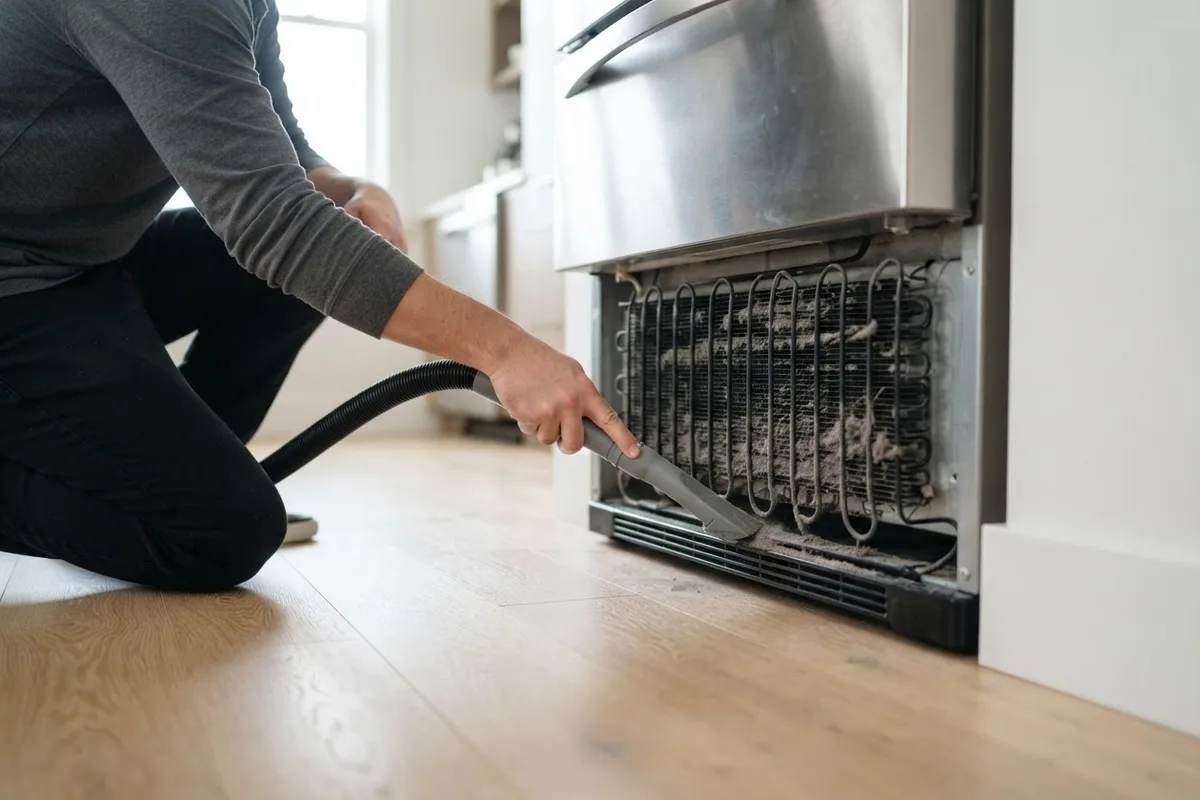
Vacuum Dust From Refrigerator Condenser Coils
Dust, pet hair, and kitchen grease accumulate on refrigerator condenser coils over time. When these coils are coated in debris, the compressor cannot dissipate heat efficiently, causing the cooling system to run almost continuously and inflating your electric bill.
- Power down safely: Pull your refrigerator away from the wall and unplug the power cord from the outlet.
- Locate the coils: Check behind the lower front kick plate or along the back panel of the unit.
- Vacuum thoroughly: Use a narrow vacuum hose attachment or a flexible coil brush to remove dust and hair from the wire grids.
- Clean the surrounding floor: Sweep away loose dirt underneath the cabinet to ensure clear airflow before plugging the power cord back in.
Cleaning these coils every six months improves cooling performance and reduces mechanical stress on the compressor. If your unit is already struggling to maintain temperature, review our guide on why your refrigerator is running constantly for additional troubleshooting steps.
Clean Dryer Lint Filters and Exhaust Ducts
Lint buildup in your clothes dryer is more than a fire hazard—it restricts airflow, forcing the machine to run longer drying cycles and consume excessive electricity or gas.
- Clear the screen after every load: Pull the lint filter out before or after every cycle and roll off accumulated fuzz.
- Wash the filter screen quarterly: Scrub the mesh screen in warm, soapy water using a soft brush to remove invisible film left behind by fabric softeners and dryer sheets.
- Disconnect and clear the vent duct: Unplug the dryer (and shut off the gas valve if applicable). Disconnect the exhaust duct from the wall and vacuum out trapped lint using a long brush tool.
- Inspect the outside wall cap: Ensure the exterior vent flap swings freely and is free of bird nests or debris.
If drying times take longer than 45 to 50 minutes per load, check out our guide on 7 signs your dryer is dying to determine whether the issue is simple maintenance or an aging component.
De-Scale Washing Machines and Dishwashers
Hard water deposits, detergent scum, and mineral scale build up inside washing machines and dishwashers over time. This internal buildup clogs spray arms, coats heating elements, and forces pumps to strain against restricted water lines.
- Run a hot vinegar cycle: Pour two cups of white distilled vinegar into the bottom of an empty dishwasher or washer tub and run the hottest heavy-duty wash cycle.
- Bake away odors: Follow up with a short cycle using one cup of baking soda spread across the drum to neutralize lingering smells and scrub residue.
- Clear spray arm nozzles: Inspect the small jet holes on dishwasher spray arms. Use a wooden toothpick to gently poke out hard mineral deposits blocking water flow.
Performing this de-scaling process every two to three months keeps internal sensors accurate, ensures thorough cleaning performance, and lowers energy consumption during heating cycles.
Inspect and Clean Rubber Door Gaskets
Flexible rubber gaskets seal cool air inside refrigerators and keep water contained inside front-load washers and dishwashers. When gaskets become torn, stiff, or coated in food crumbs, cold air leaks out or water seeps onto your floor.
- Wipe down folds: Mix warm water with mild dish soap. Use a microfiber cloth to clean deep inside the rubber folds where dirt, mold, and debris gather.
- Check the seal tightness: Place a dollar bill between the refrigerator door gasket and the frame, then close the door. Pull the bill outward—if it slides out easily without resistance, the magnetic seal is weak and may need replacement.
- Keep seals dry: Wipe front-load washer gaskets dry after your final laundry load of the day, leaving the door cracked open to prevent mildew growth.
Maintaining supple, clean door seals prevents heat infiltration in cooling units and avoids messy water leaks in laundry rooms.
Clear Garbage Disposal P-Traps and Grind Chambers
Garbage disposals frequently slow down or jam when fat, fibrous vegetable peels, or foreign objects accumulate in the grind chamber or lower plumbing lines.
- Shut off power: Always turn off the wall switch and unplug the unit beneath the sink before performing hands-on maintenance.
- Manually rotate the plate: Insert an Allen wrench into the bottom center hex socket underneath the disposal motor. Turn the wrench back and forth to loosen stuck debris.
- Freshen and clean: Drop ice cubes and citrus peels into the sink drain, plug in the unit, run cold water, and turn on the disposal to scrub the internal impellers clean.
Proper disposal care prevents drain line blockages and reduces heavy electrical draw caused by bound impeller plates.
Drain Water Heater Sediment Annually
Storage tank water heaters accumulate sand, rust, and hard water minerals at the bottom of the tank. This sediment layer acts as an insulating barrier between the burner or element and the water, wasting substantial energy.
- Turn off the power source: Turn off the circuit breaker for electric models or set the gas valve to pilot mode.
- Attach a garden hose: Connect a garden hose to the drain valve located near the bottom of the tank and direct the end toward a floor drain or outdoor area.
- Flush the tank: Open the drain valve and allow several gallons of water to discharge until the stream runs clear of sediment.
- Refill before powering on: Close the drain valve, allow the tank to fill completely with water, and verify air is bled from household faucets before restoring power or gas.
| Maintenance Task | Recommended Frequency | Primary Benefit |
|---|---|---|
| Refrigerator Coil Cleaning | Every 6 months | Reduces energy use and protects compressor |
| Dryer Vent Flushing | Every 6-12 months | Prevents fire hazard and restores drying speed |
| Washer & Dishwasher De-scaling | Every 2-3 months | Clears mineral buildup and prevents leaks |
| Door Gasket Inspection | Every 3 months | Maintains temperature seals and prevents moisture damage |
| Water Heater Flushing | Annually | Increases heating efficiency and extends tank life |
When to Call a Pro
While routine surface cleaning and basic filter maintenance are safe DIY tasks, complex appliance issues require professional attention. Always disconnect electrical power and shut off water or gas valves before attempting any hands-on inspection.
Stop work immediately and consult a professional technician if you encounter:
- Gas smells or suspected fuel line leaks near ranges, dryers, or water heaters.
- Burning plastic odors, sparking electrical outlets, or frequently tripping breakers.
- Refrigeration sealed system issues, such as coolant leaks or frost buildup deep inside coils.
- Internal transmission, motor, or main circuit board failures in washers or dishwashers.
When maintenance uncovers a problem beyond simple cleaning, True Appliance Repair can match you with a local appliance pro in your area. For specialized needs, you can also connect with qualified experts through our refrigerator repair or washer dryer repair service channels.
Frequently Asked Questions
How much money can regular appliance maintenance save on energy bills?
Routine maintenance can cut household appliance energy consumption by 10% to 25%. Cleaning coils, flushing dryer vents, and de-scaling heating elements allow appliances to operate at peak efficiency, preventing excessive electricity and gas usage every month.
How often should home appliances be serviced?
Basic homeowner upkeep—like cleaning lint traps and wiping down door gaskets—should happen weekly or monthly. Deep maintenance, such as vacuuming condenser coils and clearing exhaust vents, should occur every 6 to 12 months depending on household size and appliance usage.
What are the warning signs that an appliance is about to fail?
Common warning signs include unusual grinding or squeaking noises, extended cycle times, burning smells, unexpected water leaks, or sudden spikes in utility bills. Address these indicators promptly to avoid complete mechanical failure.
Is it better to repair or replace an old appliance?
A general rule of thumb is the 50% rule: if an appliance is past half its expected lifespan and the repair cost exceeds 50% of the price of a new unit, replacement is usually the smarter long-term financial choice. For further guidance on cost-effective maintenance strategies, review our article on 8 appliance maintenance tasks that save money.