
When you flip your wall switch and hear nothing—or just a low, ominous hum—discovering your garbage disposal not working can derail kitchen cleanups fast. Food scraps quickly pile up in the basin, causing slow drainage and unpleasant odors across your kitchen. Before assuming the motor has completely burned out, several simple troubleshooting methods can resolve common disposal issues safely. This guide covers five practical DIY solutions to clear jams, restore electrical power, and get your sink draining smoothly again.
| Symptom | Primary Cause | Quick DIY Fix |
|---|---|---|
| Completely silent (no sound) | Tripped overload or breaker | Press red reset button / flip breaker |
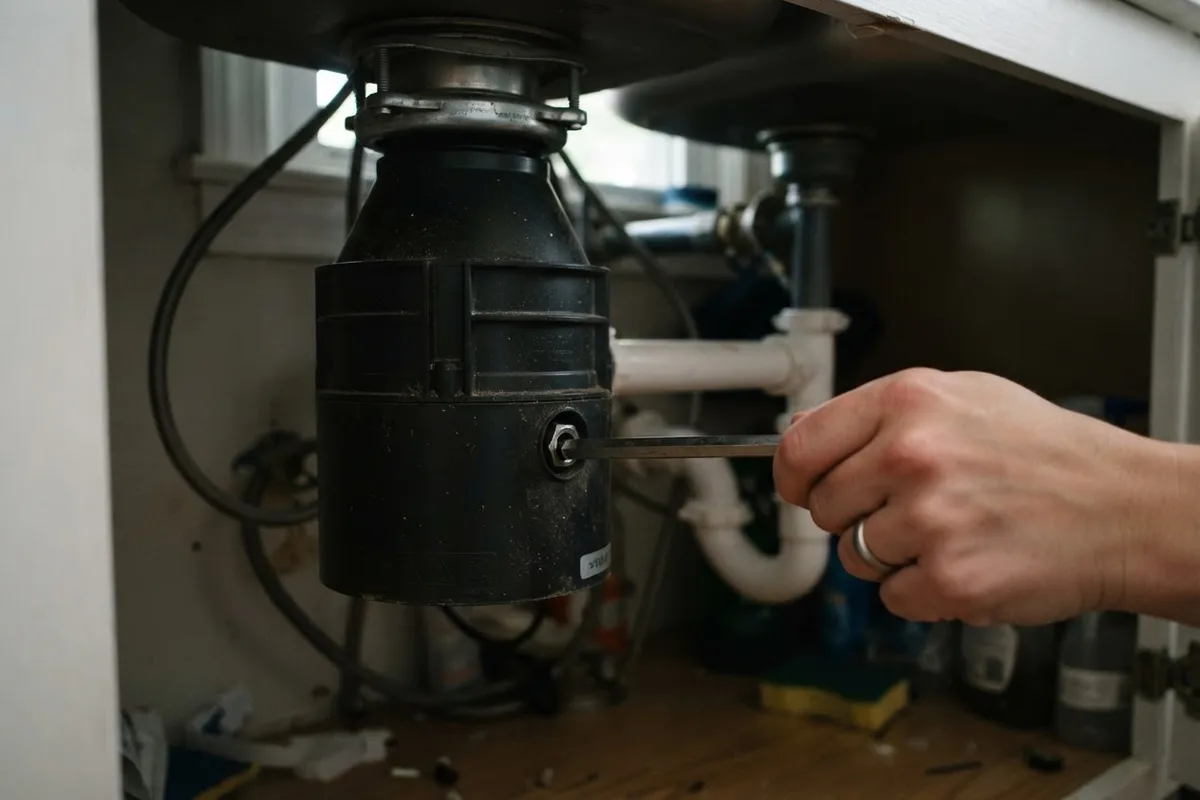
| Humming but blades will not spin | Foreign object jamming flywheel | Turn off power; rotate shaft with hex key |
| Water backing up into sink basin | Drain P-trap or line blockage | Disconnect and clean out P-trap |
| Sticking impellers or bad odor | Starchy buildup or food scraps | Scrub with ice, rock salt, and citrus |
| Water dripping under cabinet | Loose mounting flange or worn seal | Tighten mounting bolts or plumbing fittings |
Press the Red Overload Reset Button
If your disposal produces zero noise when activated, the internal overload protector has likely tripped to prevent the motor from overheating.
- Turn off the wall switch controlling the unit and unplug the power cord from the outlet under your sink (or switch off the dedicated circuit breaker at your home panel).
- Locate the small red reset button on the bottom exterior casing of the disposal housing under your cabinet.
- Push the red button firmly inward until you hear or feel a distinct click. If it refuses to stay down, allow the motor to cool down for 15 minutes before trying again.
- Plug the power cord back into the outlet or switch the circuit breaker back on.
- Run cold tap water into the sink drain and turn on the switch to test operation.
This basic electrical reset resolves a large percentage of non-responsive disposal issues without requiring tool assembly or replacement parts. If you often wonder how long do appliances last, taking quick steps like resetting tripped overload switches helps prevent premature replacement of functional kitchen appliances.
Unjam the Grinding Plate with a Hex Wrench
A disposal that hums continuously without spinning indicates a jam caused by a hard object, such as a fruit pit, bone, or stray piece of hardware lodged between the rotating plate and the outer grinding ring.
- Turn off the disposal wall switch and unplug the unit from the power outlet beneath the sink to prevent accidental startup.
- Locate the 1/4-inch hex socket in the exact center of the bottom base plate on the exterior of the disposal unit.
- Insert a standard 1/4-inch Allen wrench (hex key) into the socket.
- Crank the wrench back and forth in clockwise and counterclockwise directions with steady force until the internal flywheel turns freely a full 360 degrees.
- Reach into the sink drain opening using long tongs or needle-nose pliers—never bare fingers—to remove the dislodged object.
- Restore electrical power, turn on a strong stream of cold water, and flip the switch to confirm normal grinding movement.
Clear Clogs in the Sink P-Trap and Discharge Pipe
When water remains standing in your sink basin even though the disposal motor spins normally, the blockage sits within the downstream drain pipes rather than inside the unit chamber.
- Disconnect power to the unit at the outlet or circuit breaker, and place a shallow bucket underneath the plumbing pipes under the sink.
- Loosen the slip nuts on the curved P-trap pipe connected to the disposal discharge tube using slip-joint pliers or hand pressure.
- Pull the P-trap section free and allow trapped water and sludge to drain directly into your bucket.
- Inspect the inside of the curved pipe for packed coffee grounds, fibrous vegetable strands, or grease buildup, clearing debris with a stiff wire brush or flexible drain snake.
- Reinstall the P-trap, tighten all threaded fittings securely, and run cold tap water to verify that water drains freely without leaks.
Keeping your sink drainage clear protects neighboring kitchen fixtures as well. If you ever find water pooling beneath nearby units, evaluating your main drain line helps rule out broader plumbing backups, similar to diagnosing why is my dishwasher leaking.
Clean Sticky Impellers and Deodorize the Chamber
Over time, starches, soap scum, and mineral scale collect around the rotating impeller blades, causing them to stick in place or emit foul odors into the kitchen.
- Ensure the disposal switch is turned off completely before cleaning.
- Pour two cups of ice cubes followed by one cup of coarse rock salt down into the disposal neck.
- Run a steady stream of cold water and switch on the disposal for 30 to 45 seconds; the grinding action smashes the hard ice against the chamber walls, scrubbing away baked-on grease and food residues.
- Slice a fresh lemon or lime into small wedges, drop them down the drain, and run the unit for another 15 seconds to eliminate stubborn smells.
- For heavy buildup, pour half a cup of baking soda into the chamber, add one cup of white vinegar, let the foaming mixture sit for 15 minutes, and then flush thoroughly with hot water.
Inspect and Tighten Mounting Screws to Stop Leaks
Water dripping underneath your kitchen sink cabinet can rot wood surfaces and lead to mold growth if ignored.
- Unplug the disposal and use a dry towel to wipe down the exterior motor housing and surrounding plumbing connections.
- Shine a bright flashlight beneath the sink and run cold tap water down the drain to pinpoint where water droplets originate.
- If water drips from the top metal collar near the sink flange, use a screwdriver to tighten the three mounting bolts evenly, compressing the upper rubber sink seal.
- If the leak occurs at the side discharge tube or dishwasher inlet pipe, tighten the hose clamp or replace worn rubber washers inside the pipe coupling.
- If water seeps directly from the bottom electrical housing or side body seams of the disposal casing itself, internal motor seals have failed, indicating the entire disposal needs replacement.
Practice Smart Daily Care to Prevent Future Jams
Adopting healthy usage habits prevents unexpected motor jams and extends the working life of your kitchen drainage system.
- Always turn on a strong stream of cold water before feeding food scraps, and leave the water running for 15 seconds after grinding finishes to push waste completely through the main sewer pipe.
- Feed scraps slowly into the sink drain collar in small batches rather than stuffing large quantities into the chamber all at once.
- Avoid grinding fibrous items (celery, corn husks, artichoke leaves), expandable starches (cooked rice, pasta), coffee grounds, eggshells, or melted fats and cooking oils.
- Run your disposal every couple of days—even if only with cold water and a drop of dish soap—to keep internal impellers moving and prevent rust formation.
Maintaining routine care across every fixture in your home reduces repair costs significantly. To keep all your major household equipment running reliably, follow a structured seasonal appliance maintenance checklist.
When to Call a Pro
While clearing a stuck impeller plate or resetting an overload button is easy to handle at home, certain technical problems require professional hands. If your disposal repeatedly trips your main electrical breaker, produces persistent electrical burning odors, or leaks water from the internal motor shell, the unit has reached the end of its useful lifespan or suffered severe internal electrical failure.
When facing complex plumbing adjustments or electrical faults, True Appliance Repair can match you with a local appliance pro to inspect your sink system safely. An expert technician can help you choose between swapping out internal mechanical parts or installing a new, high-torque garbage disposal that fits your household needs. To connect with experienced technicians in your area, request service through our appliance repair directory.
FAQ
Why is my garbage disposal humming but not spinning?
A humming noise without blade movement means electrical power reaches the unit, but a jammed object or stuck impeller plate prevents the motor from turning. Unplug the unit immediately to avoid overheating the motor, then use an Allen wrench in the bottom center socket to free the flywheel manually.
Can I use chemical drain cleaner in a garbage disposal?
No, you should never pour caustic chemical drain cleaners down a garbage disposal. Harsh chemicals can corrode the internal metal components and rubber seals, leading to permanent leaks. Additionally, standing chemical liquid can splash back out of the drain opening during operation, posing severe safety hazards to skin and eyes.
How do I know if my garbage disposal motor is burned out?
If you press the red overload reset button, verify that the outlet has active power, and turn the switch on, but the disposal makes no sound and shows zero signs of life, the internal motor coil has likely burned out. Internal motor failures require replacing the garbage disposal unit.
How much does it cost to repair or replace a garbage disposal?
Garbage disposal repair or replacement typically costs between $150 and $400 nationwide, depending on brand horsepower, mounting style, and regional labor rates. DIY repairs like resetting buttons or clearing simple jams cost nothing extra beyond basic household tools.